Mapping the Invisible Vectors Behind Cassava Mosaic Disease in Mozambique
Published in Plant Science and Agricultural & Food Science
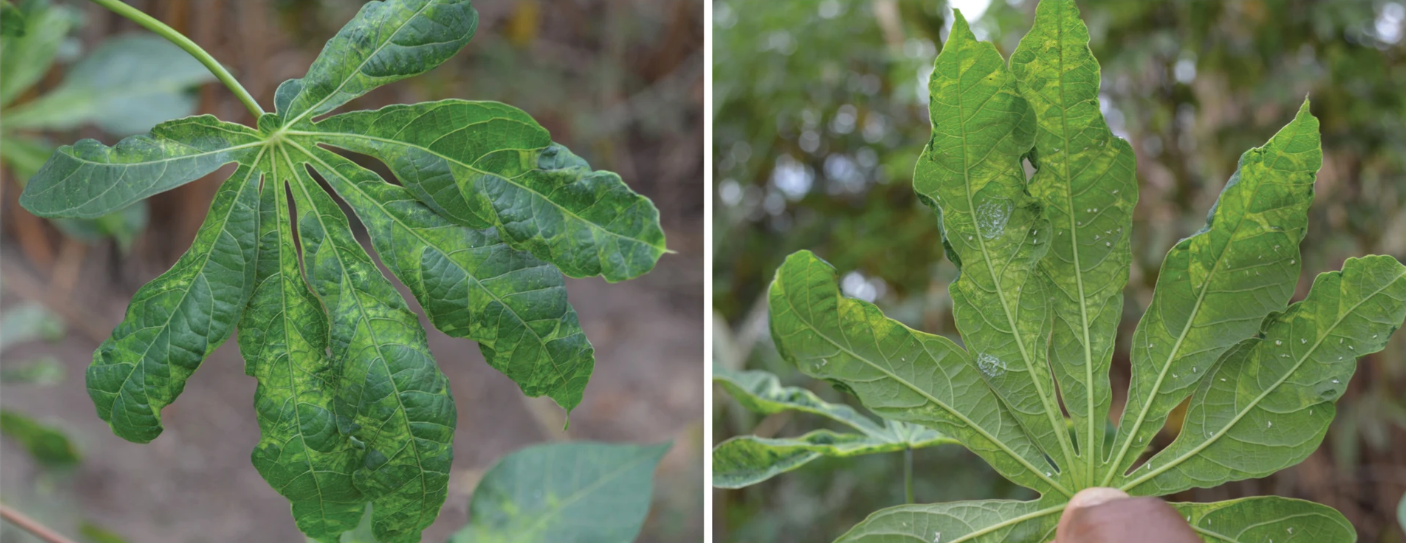

Cassava is a cornerstone of food security in Mozambique, yet one of its most persistent threats is cassava mosaic disease (CMD). Although the disease has been studied for decades, knowledge about the insects responsible for spreading the viruses has remained surprisingly limited. A new study set out to address that gap by providing the first comprehensive overview of the whitefly populations associated with CMD across the country's main cassava-growing regions.
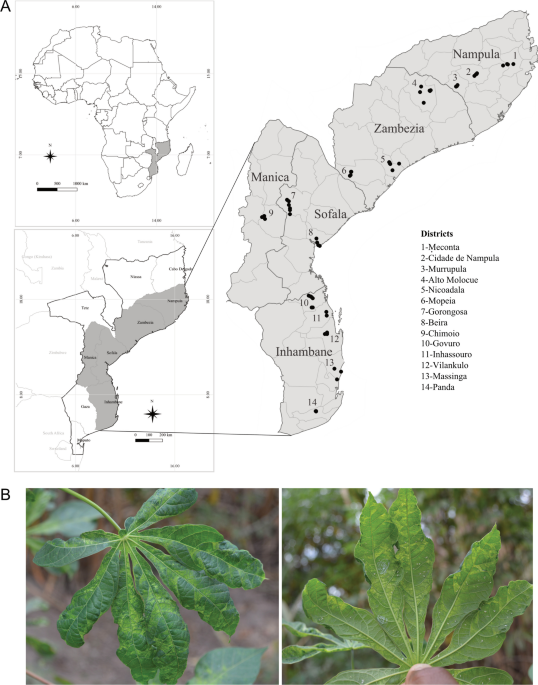
To build this picture, researchers carried out an extensive survey across five provinces, visiting dozens of smallholder cassava fields where CMD symptoms were present. The effort generated one of the most detailed datasets to date on whiteflies associated with cassava in Mozambique, combining field observations with molecular analyses to understand how these insect populations are distributed across the landscape.
The results confirmed that CMD remains widespread, but they also revealed an unexpectedly diverse community of whiteflies. Analysis of mitochondrial DNA showed that the cryptic species SSA1-SG3 is by far the dominant whitefly associated with cassava in Mozambique, accounting for most individuals sampled across the country.
At the same time, the survey uncovered findings that extend well beyond a simple distribution map. The researchers reported Bemisia afer in Mozambique for the first time and identified a genetically distinct lineage that may represent a previously unrecognised member of the Bemisia tabaci complex, provisionally named SSA21. These discoveries highlight how much remains to be learned about the insects that shape the epidemiology of important crop diseases.
Multiple lineages
A key strength of the study was its geographic reach. Sampling locations spanned major cassava-producing regions, allowing the researchers to compare populations across very different environments and identify areas where multiple whitefly lineages coexist. The resulting dataset provides a valuable national baseline for future monitoring and surveillance efforts.
Beyond documenting whitefly diversity, the work underscores a broader lesson for plant health research. Understanding crop disease requires more than identifying the pathogens involved; it also depends on understanding the organisms that move those pathogens through agricultural systems. By mapping the invisible vectors behind CMD, this study provides an important foundation for future research and for developing more effective disease-management strategies in Mozambique and across southern Africa.
Author's note: I used Copilot to assist in creating this post.

Follow the Topic
-
Tropical Plant Pathology
Tropical Plant Pathology is an international journal focused on publishing research on plant diseases impacting agricultural, forest, ornamental crops in tropical and subtropical regions, and strategies to promote crop protection.

Related Collections
With Collections, you can get published faster and increase your visibility.
Disease Profiles
Emerging plant diseases pose a growing threat to food and cash crops that are essential to global food security. Safeguarding agricultural productivity depends on the effective prevention and management of these diseases.
In this Collection we invite authors to submit reviews on important, particularly emerging plant diseases of impact to global agricultural and forest production in the tropical and subtropical regions of the world.
Disease Profiles should address, but are not limited to, the following topics:
- Significance and impact
- Causal agent(s)
- Symptomatology
- Disease cycle
- Epidemiology
- Management strategies
- Current challenges and future perspectives
Manuscripts should be prepared in accordance with the journal’s submission guidelines and submitted through the online submission system.
Authors are requested to indicate in their cover letter that their manuscript is being submitted to the Disease Profiles Collection.
For further information about the scope of this Collection or any related inquiries, please contact the journal.
Publishing Model: Hybrid
Deadline: Ongoing
Biology, Ecology and Management of Plant-Parasitic Nematodes in the Tropics
Plant-parasitic nematodes are among the most important constraints to crop production in tropical and subtropical regions, where favorable environmental conditions, intensive cropping systems, diverse host ranges, and year-round cultivation promote their survival, reproduction, and spread. Despite their considerable economic importance, nematode-associated diseases are frequently underestimated because symptoms may be nonspecific, infections often occur belowground, and accurate identification often requires specialized diagnostic approaches.
Tropical agricultural systems harbor a remarkable diversity of plant-parasitic nematodes, including widespread and economically important genera such as Meloidogyne, Pratylenchus, Rotylenchulus, Radopholus, Heterodera, Aphelenchoides, Helicotylenchus, and several other groups whose biological and economic significance remains insufficiently understood. Changes in agricultural practices, expansion of crop production into new areas, movement of plant material, international trade, and environmental change are contributing to shifts in nematode distribution and the emergence or re-emergence of species of phytosanitary concern. Furthermore, plant-parasitic nematodes frequently interact with fungal, bacterial, and other soilborne pathogens, contributing to complex disease syndromes that can substantially increase crop losses.
Major developments in taxonomy, molecular diagnostics, genomics, population biology, ecology, plant–nematode interactions, and management are transforming plant nematology. Integrative approaches that combine morphological, morphometric, biochemical, molecular, and genomic information are improving species identification and delimitation. New diagnostic technologies are enabling faster and more sensitive detection, while advances in genomics and molecular biology are providing unprecedented insights into nematode diversity, pathogenicity, host adaptation, and mechanisms of parasitism. At the same time, increasing demand for environmentally sustainable crop protection is stimulating the development of biological, cultural, genetic, and biotechnology-based approaches for nematode management.
This Topical Collection of Tropical Plant Pathology aims to bring together recent advances in the biology, ecology, diversity, diagnosis, epidemiology, and management of plant-parasitic nematodes, with particular emphasis on tropical and subtropical agricultural systems. The Collection will serve as a platform for both fundamental and applied research addressing economically important, emerging, invasive, and historically overlooked nematode species, as well as their interactions with crops, pathogens, and production environments.
We welcome original research articles, review papers, and short communications addressing topics including, but not limited to:
- Biology, ecology, life cycles, pathogenicity, and host range of plant-parasitic nematodes;
- Taxonomy, systematics, phylogeny, and integrative species delimitation;
- Morphological, biochemical, molecular, and genomic approaches for nematode identification and diagnosis;
- Diversity, geographic distribution, population structure, and evolutionary biology of plant-parasitic nematodes;
- Emerging, re-emerging, invasive, and quarantine nematode species;
- Surveillance, epidemiology, and phytosanitary risks associated with nematode dissemination;
- Nematode diseases affecting tropical and subtropical annual and perennial crops;
- Plant–nematode interactions and molecular mechanisms involved in parasitism and host responses;
- Interactions between plant-parasitic nematodes and other plant pathogens in disease complexes;
- Host resistance and genetic approaches for nematode management;
- Biological control and interactions between nematodes, antagonistic microorganisms, and the plant microbiome;
- Cultural practices, crop rotation, green manures, cover crops, and integrated nematode management;
- Chemical and biorational nematicides and their integration into sustainable management programs;
- Innovative approaches based on biotechnology, RNA interference, nanotechnology, and other emerging technologies;
- Precision agriculture, remote or proximal sensing, and data-driven approaches for nematode detection and management;
- Effects of climate, soil, cropping systems, and environmental change on nematode ecology, distribution, and disease development;
- Sustainable management strategies for economically important plant-parasitic nematodes in tropical and subtropical agriculture.
By integrating classical nematology with ecological, molecular, genomic, and technological approaches, this Topical Collection aims to provide an updated perspective on the diversity, ecology, and management of plant-parasitic nematodes in tropical agriculture. We particularly encourage contributions that improve our understanding of nematode biology and ecology, address emerging phytosanitary challenges, advance diagnostic capabilities, elucidate interactions with other plant pathogens, or contribute innovative and sustainable solutions for nematode management.
Manuscripts should be prepared in accordance with the journal’s submission guidelines and submitted through the online submission system.
Authors are requested to select the Collection in the dropdown menu during the submission process.
For further information about the scope of this Collection or any related inquiries, please contact the journal.
Publishing Model: Hybrid
Deadline: Apr 30, 2027