The Coastal Habitats Shaping the Next Generation of Sharks
Published in Earth & Environment and Ecology & Evolution
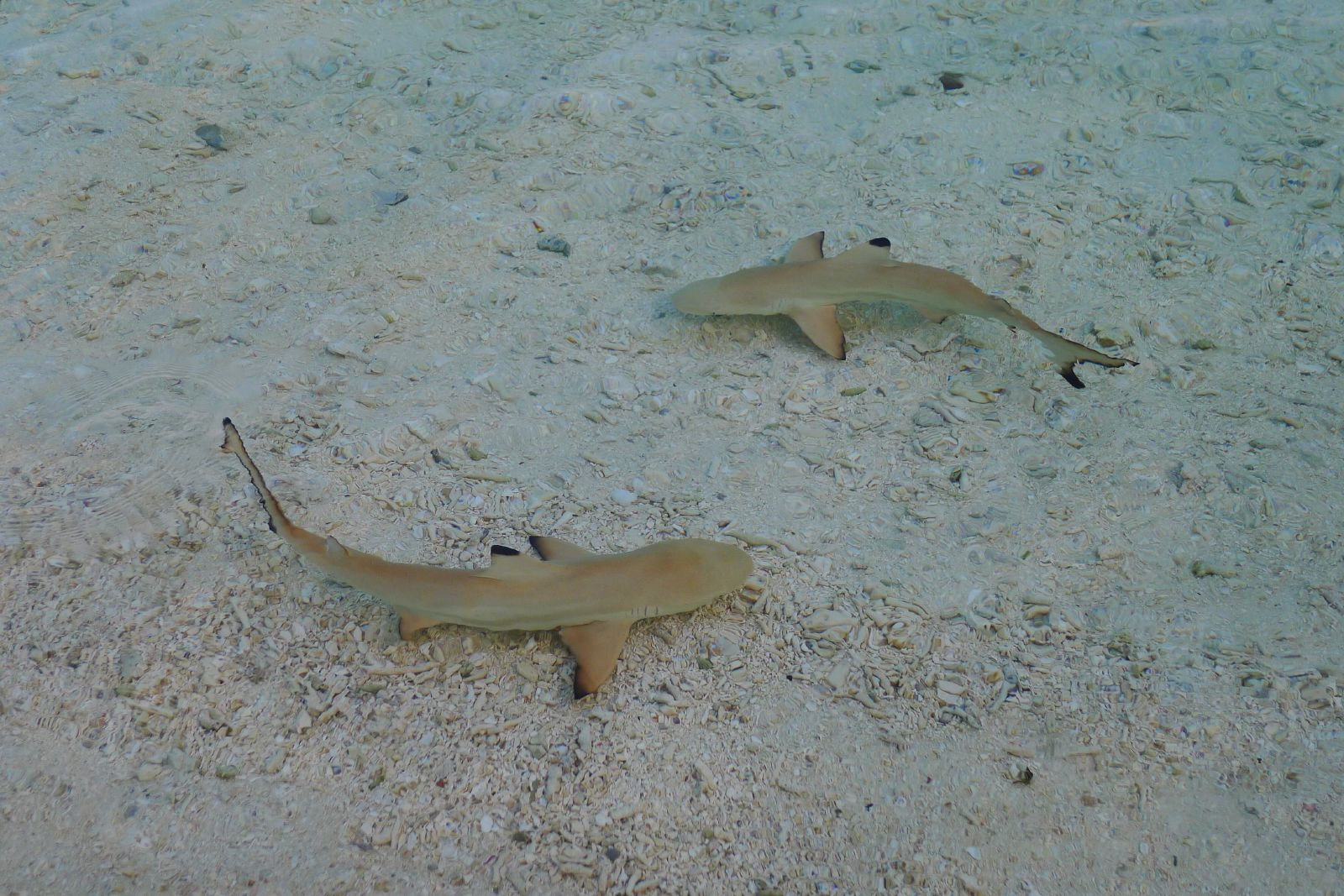
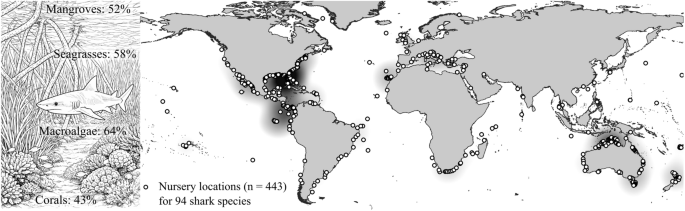

For many shark species, survival depends on much more than what happens in the open ocean. The earliest months and years of life are often spent in sheltered coastal habitats that offer food, protection, and suitable conditions for growth. These areas, known as shark nurseries, have long been recognized as important, but until recently there had been no global picture of where they are located and how they are being used.
A new, open access review published in Reviews in Fish Biology and Fisheries brings together evidence from 538 peer-reviewed studies, identifying 443 shark nurseries across 62 countries and documenting their use by 94 shark species. The result is the most comprehensive synthesis of shark nursery habitats assembled to date, providing a valuable reference for researchers, conservation practitioners, and policymakers working on shark conservation.
The study shows that most shark nurseries are found in nearshore environments, particularly bays, estuaries, lagoons, and river systems. Mangroves emerged as especially important in tropical regions, while seagrass meadows and macroalgal habitats were also common features of nursery areas worldwide. These habitats often support multiple shark species at the same time, suggesting that protecting a single nursery can benefit entire coastal shark communities.
Habitat change and fishing pressure
One finding that stands out is the persistence of many nursery areas. A substantial proportion have been used repeatedly across decades and by numerous generations of juvenile sharks. At the same time, the authors report evidence that some nurseries have experienced declines or even local losses of sharks, often linked to habitat alteration and fishing pressure.
The review also highlights how much remains unknown. Based on the authors' analyses, more than a third of shark nurseries worldwide may still be undocumented, and many shark species have yet to be evaluated for nursery habitat use. Knowledge gaps are particularly evident in regions that have received less research attention, including parts of the Indian Ocean, the Indo-Pacific, Western Africa, and South America.
As efforts to conserve sharks increasingly move beyond individual species and toward the protection of essential habitats, understanding where young sharks grow and develop becomes ever more important. This review provides a global foundation for that work, offering both a synthesis of what is currently known and a roadmap for future research in regions and species that remain understudied.
Author's note: I used Microsoft Copilot to assist in creating this post.
Image: Timo Newton-Syms CC-BY-SA 2.0

Follow the Topic
-
Reviews in Fish Biology and Fisheries
Reviews in Fish Biology and Fisheries is an international journal that publishes original and review articles on various aspects of fish biology, fisheries, and aquaculture.

Related Collections
With Collections, you can get published faster and increase your visibility.
Sustaining Life Below Water: Conserving, managing, and protecting our marine and freshwater resources
In support of the UN Sustainable Development Goal SDG14 we are calling for submissions for this new collection on Sustaining Life Below WaterPlastic waste, overfishing, ocean acidification, increasing eutrophication are some of the major threats endangering our oceans, rivers and lakes. With this collection we aim to create a cross-disciplinary home for research articles, perspectives, and emerging topics addressing the conservation and sustainability of the use of our marine and freshwater resources. By putting scholarship supporting this UN Goal in the spotlight we hope to increase the scientific knowledge and awareness of the targets and indicators set by the UN Goal such as reducing marine pollution, strengthening resilience, restoring coastal ecosystems, minimizing the impacts of ocean acidification, reducing destructive fishing practices, providing access for small-scale fishers to marine resources and markets and more.
We call for submissions on (but not limited to) the following topics:
•Biotelemetry and bio-logging
•Dam removal policy and development
•Economic benefits to Small Island developing States and least developed countries through sustainable management of fisheries, aquaculture and tourism
•Effects of reef degradation on ecosystem goods and services
•Environmental DNA and RNA
•Environmental flows
•Fish migration and passage
•Fisheries-induced evolution
•Floodplain management
•Hydropower mitigation
•Links between reef health and human health
•Methods and case studies and their scientific assessment, to manage, protect, and restore wetlands, to prevent and significantly reduce wetland pollution, in particular from land-based activities, including sedimentation from poor land-use, plastic and nutrient pollution
•Physiology and health of wild fish
•Preventing and reducing (plastic) pollution/waste in particular from land-based activities, including marine debris and nutrient pollution
•Policy development in river and lake management
•Reducing/minimizing ocean acidification
•Regulating harvesting, ending of overfishing and destructive fishing practices, and science-based management plans to restore fish stocks
•Restoration goals in lake management River and lake restoration
•Strengthening resilience and restoration of coastal ecosystem Understanding and improving sustainable use of coral reef resources.
How to submit? Please use the Submit to this journal link from the participating journals. These journals can be viewed in the right menu. During submission you will be asked if you would like your article to be included in a Topical Collection. Select ‘Yes’ and select the name of this collection from the drop down menu: TC: Sustaining Life Below WaterSubmissions to the collection may be original research articles, perspectives or review articles. Please read the submission guidelines for each journal before submitting. Each submission will undergo thorough and rigorous peer review according to each journal’s peer review editorial policy. Accepted articles will be published in their respective journal and will benefit from being cross-linked as well on the collection page.
The following journals are participating in this collection:
•Aquatic Ecology
•Aquaculture International
•Aquatic Sciences
•Coral Reefs
•Environmental Biology of Fishes
•Estuaries and Coasts
•Fish Physiology and Biochemistry
•Fisheries Science
•Hydrobiologia
•Journal of Applied Phycology
•Journal of Coastal Conservation
•Journal of Ocean University China
•Limnology
•Marine Biology
•Marine Biotechnology
•Maritime Studies
•Ocean Science Journal
•Reviews in Fish Biology and Fisheries
•Thalassas: An International Journal of Marine Sciences
•Wetlands Ecology and Management
Publishing Model: Hybrid
Deadline: Ongoing