Fruits of mind after the 2nd International Conference on Metabolomics and Health
Published in Chemistry and Protocols & Methods

The 2nd International Conference on Metabolomics and Health was held in Shanghai from April 27–30, 2026. The organizers—Professor Huiru Tang, Professor Yulan Wang, and Professor Jia Li—graciously provided BMC Medicine with the opportunity to attend the conference as a visitor.
In summary, the conference featured cutting-edge presentations on recent advances and insights across several domains:
-
Advances in Metabolomics Technologies
-
Metabolomics in Pathophysiology
-
Host–Microbiota Symbiotic Interactions
-
Exposome and Health
The conference assembled experts, students, and journalists from around the world. The majority of presentations were delivered in English. This experience afforded me a broad understanding of newly developed mass spectrometry–based techniques for omics studies at the single-cell scale and beyond, the application of metabolomics and microbiota characterization in disease diagnosis and precision medicine, and the correlation between the exposome and disease development across different stages of the human lifespan. I greatly appreciated the diversity of topics addressed.
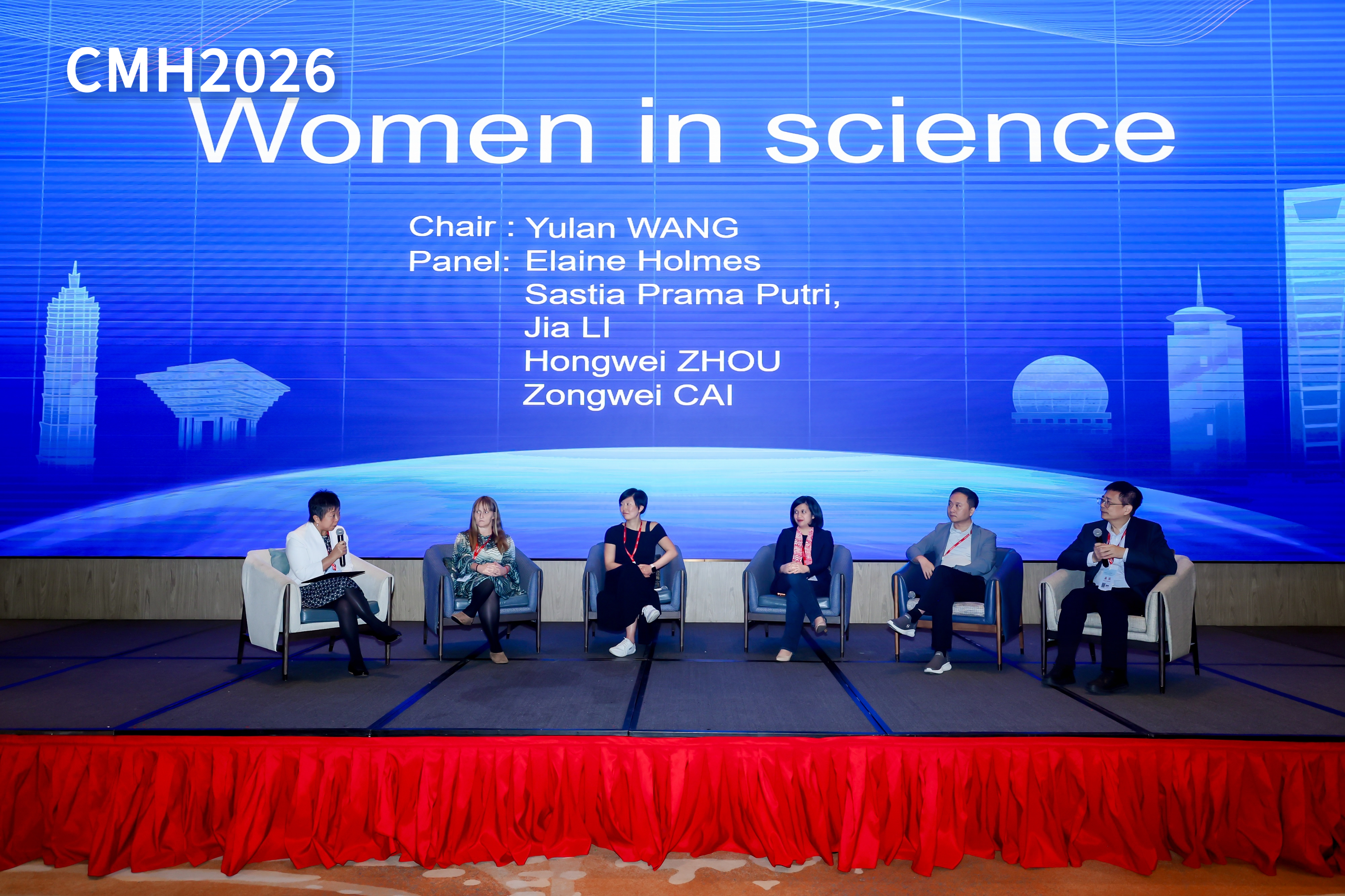
Additionally, at the conference also features "Women in Science" session, during which Prof. Yulan Wang, Jia Li, Elaine Holmes, Sastia Prama Purti (female) , and Prof. Hongwei Zhou, Zongwei Cai (male) voiced their opinions on how to help women develop their careers in science. They shared stories about the support they received from other women throughout their careers. They encourage all to bravely make requests for promotions, salary increases, and co-authorship. The dilemma mentioned for women is the overlapping timelines between career development and family responsibilities. At the end of the session, they envision a society in which all collaborate to foster a more friendly environment, helping women's development, and where men and women share equal responsibilities for the care of the elderly and offspring.
Below, I highlight two compelling talks.
I was pleased to meet Professor Zhigang Liu in person, as he has served as an editorial board member for the Gastroenterology section of BMC Medicine. His research interests span gut microbiome–host interactions, novel therapeutic interve6ntions, and epidemiological data analysis. His talk addressed the role of metabolites as active regulators of gut inflammation and their implications in the pathogenesis of inflammatory bowel disease (IBD), integrating findings from experimental models and human cohorts. His results provided additional evidence for a unifying model in which host–microbiota co-metabolism constitutes a regulatory axis driving intestinal inflammation.
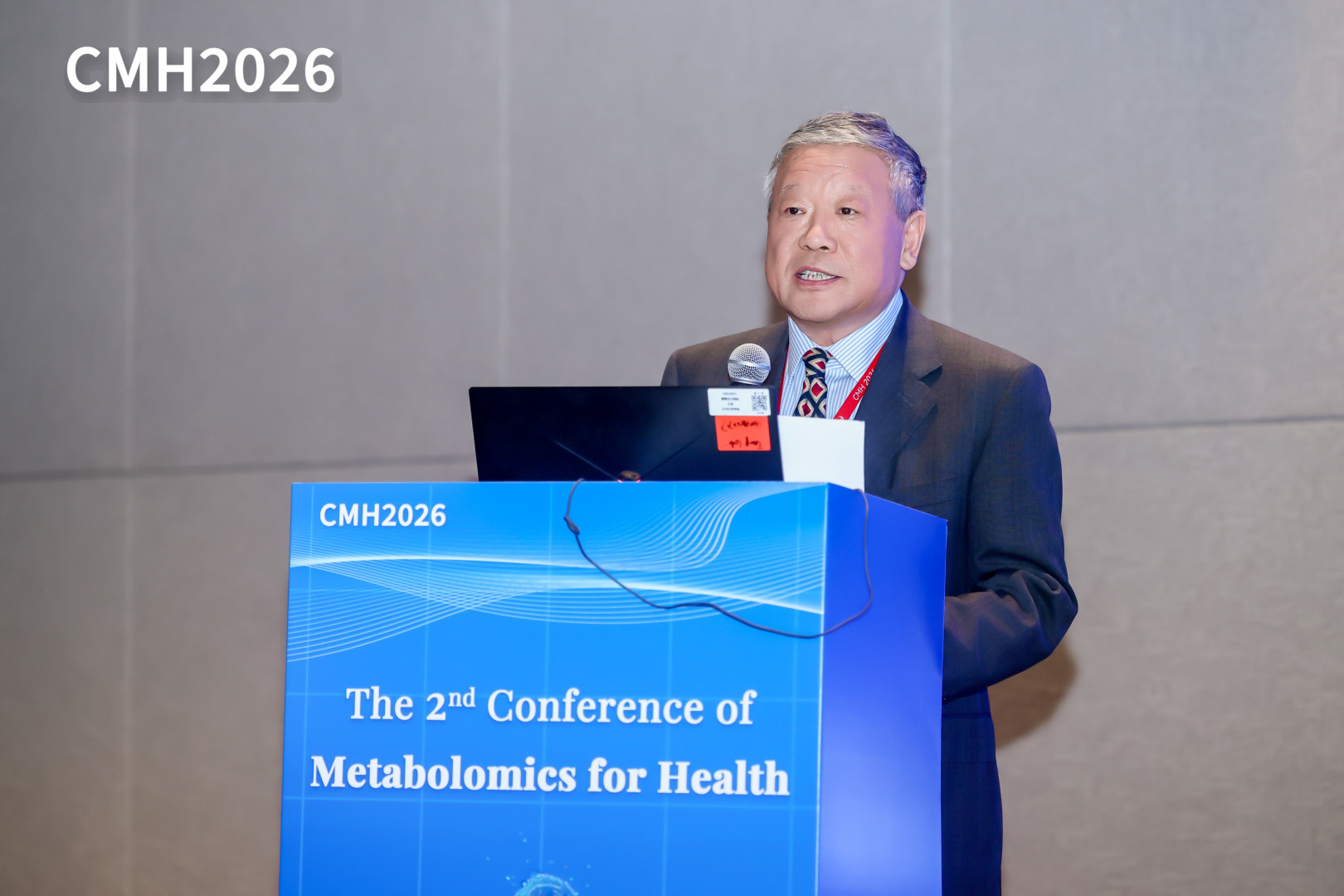
Another noteworthy presentation was delivered by Professor Huiru Tang, a well-recognized figure in metabolomics and systems biology. I attended two of his talks—one during the pre-conference technical training sessions and another during the main conference. Professor Tang's research group has made substantial efforts to develop quantitative techniques for trace metabolomics in complex mixtures. They have developed novel probes to elucidate unknown metabolite structures, thereby providing metabolomic phenotypic insights into major diseases using advanced NMR- and MS-based methodologies. A recent publication from his group proposed a metabolome-derived score that predicts metabolic dysfunction-associated steatohepatitis (MASH) and liver disease mortality.
Given the strong implications of metabolomics and the gut microbiota in multiple diseases, a growing number of studies have focused on modeling microbiome or metabolomic data to predict disease risk, diagnosis, prognosis, and treatment response. Some have concerns over the accuracy and generalizability of such models given the heterogeneity of populations and on patient level. This raises a critical question: What are the current challenges of modeling metabolomics and gut microbiota statistics for disease risk prediction and precision medicine? Please share your comments below.
Written by Yonghong Ding, an editor of BMC Medicine

I am a journal editor at BMC Medicine responsible contents from Gastroenterology and Oncology sections.
Follow the Topic
-
BMC Medicine
This journal publishes outstanding and influential research in all areas of clinical practice, translational medicine, medical and health advances, public health, global health, policy, and general topics of interest to the biomedical and sociomedical professional communities.

Introducing the Palgrave Macmillan Campaign for the Humanities
At Palgrave Macmillan we publish cutting-edge humanities research that has real-world impact. This research community brings together the voices of our authors and editorial team to highlight and publicize the value of the humanities and humanities research in our world today.
Continue reading announcementRelated Collections
With Collections, you can get published faster and increase your visibility.
Advancing research and management of menopause
BMC Medicine is calling for submissions to our new Collection, Advancing research and management of menopause, focusing on new perspectives and care practices that support individuals during this significant life transition. This Collection seeks to advance the understanding and management of menopause by gathering clinical research on its physiological, psychological, and social dimensions. We welcome submissions that explore topics such as perimenopause, menopausal symptoms, early menopause, and menopausal hormone therapy (MHT) but also innovative interventions that help individuals navigate menopause beyond pharmacological treatment.
The menopause journey, encompassing the climacterium and the natural conclusion of reproductive years, is a pivotal phase in the lifecycle that impacts health and well-being. This Collection aims to consolidate research that addresses the multifaceted aspects of menopause, including its physiological, psychological, and social dimensions, thereby offering a comprehensive view of the experiences faced during this transition.
Advancements in the understanding and management of menopause have opened new avenues for improving health. Research indicates that the heterogeneity of menopause (surgical, spontaneous, induced, early) as well as the heterogeneity of MHT (formulations, duration, age of initiation relative to menopause onset, cyclicity, progestrogen/progestin) can differentially affect outcomes, yet are not as well understood or studied. Studies on menopausal symptoms have enhanced our understanding of their prevalence and impact on daily life. Research on menopausal hormone therapy has evolved, shedding light on its benefits and risks, while growing evidence highlights a number of other effective options for managing common menopausal symptoms. Additionally, the focus on long-term effects of menopause, e.g. osteoporosis and prevention strategies, underscores the necessity for ongoing research and tailored interventions during and after this transition.
Continued exploration in this field promises to yield significant insights, potentially leading to the development of novel therapeutic options, personalized management strategies, and a broader understanding of the heterogeneity of menopause and individuals’ experiences. As research progresses, we may see improved guidelines for addressing early menopause and premature ovarian insufficiency, ultimately empowering individuals to navigate this life stage with confidence and health.
Topics of interest include but are not limited to:
- Management strategies for menopausal symptoms
- MHT: risks and benefits
- Post-menopausal osteoporosis prevention
- Ovarian aging and its implications
- Understanding early menopause and premature ovarian insufficiency
This collection supports and amplifies research related to SDG 3: Good Health & Well-Being and SDG 5: Gender Equality.
Publishing Model: Open Access
Deadline: Jul 17, 2026
Cardiac immunity and inflammation
BMC Medicine invites submissions to a new Collection focused on the interplay between cardiac immunity and inflammation. We welcome original research, translational studies, and comprehensive reviews that elucidate the underlying mechanisms, clinical consequences, and therapeutic opportunities arising from immune-cardiac interactions. By highlighting the importance of this link, we aim to foster collaboration and advance our understanding of how to improve patient outcomes in heart disease.
The intersection of immunity and cardiovascular biology represents a transformative frontier in modern medicine. Recent studies have highlighted the role of immune responses in various heart conditions, including myocarditis, cardiac xenotransplantation, and heart failure. Inflammation is increasingly recognized as a contributing factor to the pathogenesis and residual risk factor of cardiovascular diseases. This Collection aims to explore the mechanisms by which immune responses influence cardiac function, the role of clonal hematopoiesis and heart disease, and the implications of such interactions for cardiac outcomes.
Understanding cardiac immunity and inflammation is crucial for developing more targeted therapies and accurate CVD risk prediction. Past advances provided insights into the inflammatory processes involving cardiovascular conditions, leading to innovative approaches for diagnosis and treatment. For instance, the identification of biomarkers such as C-reactive protein enhances our ability to assess inflammation in patients with cardiovascular disease. Furthermore, the intersection of cardio-oncology has opened new avenues for research into how cancer therapies influence cardiac immune responses, emphasizing the need for a multidisciplinary approach to patient management.
Continued research in this field holds promise for unveiling drug discovery targets and strategies to mitigate inflammation-related cardiac damage. As we deepen our understanding of the immune mechanisms at play, we may see the development of more clinically relevant models of human disease and precision medicine approaches tailored to individual patients. The integration of this knowledge with advancements in technology, such as biomarker discovery and imaging techniques, could revolutionize the way we approach cardiac care.
Topics of interest include (but are not limited to):
- Role of immunity in cardiovascular biomedicine
- Systemic and cardiac-specific inflammatory pathways
- Residual inflammatory risk, e.g. “SMuRF-less but inflamed”
- Cross-organ communication and immune crosstalk
- Structural and functional cardiac remodeling driven by inflammation
- Novel biomarkers and prediction models
- Clonal hematopoiesis
- Cardio-oncology & therapy-induced immune modulation
- The role of immunity in cardiac xenotransplantation including partial heart transplantation
- Exposome/environmental exposures
- Epigenetic regulation of cardiac immunity and inflammation
- Immune memory and trained immunity in cardiovascular contexts
- Multi-omics integration (epigenomics, transcriptomics, proteomics) in cardiac disease
All manuscripts submitted to this journal, including those submitted to collections and special issues, are assessed in line with our editorial policies and the journal’s peer review process. Reviewers and editors are required to declare competing interests and can be excluded from the peer review process if a competing interest exists.
This Collection supports and amplifies research related to SDG 3 (Good Health and Well Being).
Publishing Model: Open Access
Deadline: Feb 01, 2027


Please sign in or register for FREE
If you are a registered user on Research Communities by Springer Nature, please sign in