Fruits of mind after the 2nd International Conference on Metabolomics and Health
Published in Chemistry and Protocols & Methods
The 2nd International Conference on Metabolomics and Health was held in Shanghai from April 27–30, 2026. The organizers—Professor Huiru Tang, Professor Yulan Wang, and Professor Jia Li—graciously provided BMC Medicine with the opportunity to attend the conference as a visitor.
In summary, the conference featured cutting-edge presentations on recent advances and insights across several domains:
-
Advances in Metabolomics Technologies
-
Metabolomics in Pathophysiology
-
Host–Microbiota Symbiotic Interactions
-
Exposome and Health
The conference assembled experts, students, and journalists from around the world. The majority of presentations were delivered in English. This experience afforded me a broad understanding of newly developed mass spectrometry–based techniques for omics studies at the single-cell scale and beyond, the application of metabolomics and microbiota characterization in disease diagnosis and precision medicine, and the correlation between the exposome and disease development across different stages of the human lifespan. I greatly appreciated the diversity of topics addressed.
Additionally, at the conference also features "Women in Science" session, during which Prof. Yulan Wang, Jia Li, Elaine Holmes, Sastia Prama Purti (female) , and Prof. Hongwei Zhou, Zongwei Cai (male) voiced their opinions on how to help women develop their careers in science. They shared stories about the support they received from other women throughout their careers. They encourage all to bravely make requests for promotions, salary increases, and co-authorship. The dilemma mentioned for women is the overlapping timelines between career development and family responsibilities. At the end of the session, they envision a society in which all collaborate to foster a more friendly environment, helping women's development, and where men and women share equal responsibilities for the care of the elderly and offspring.
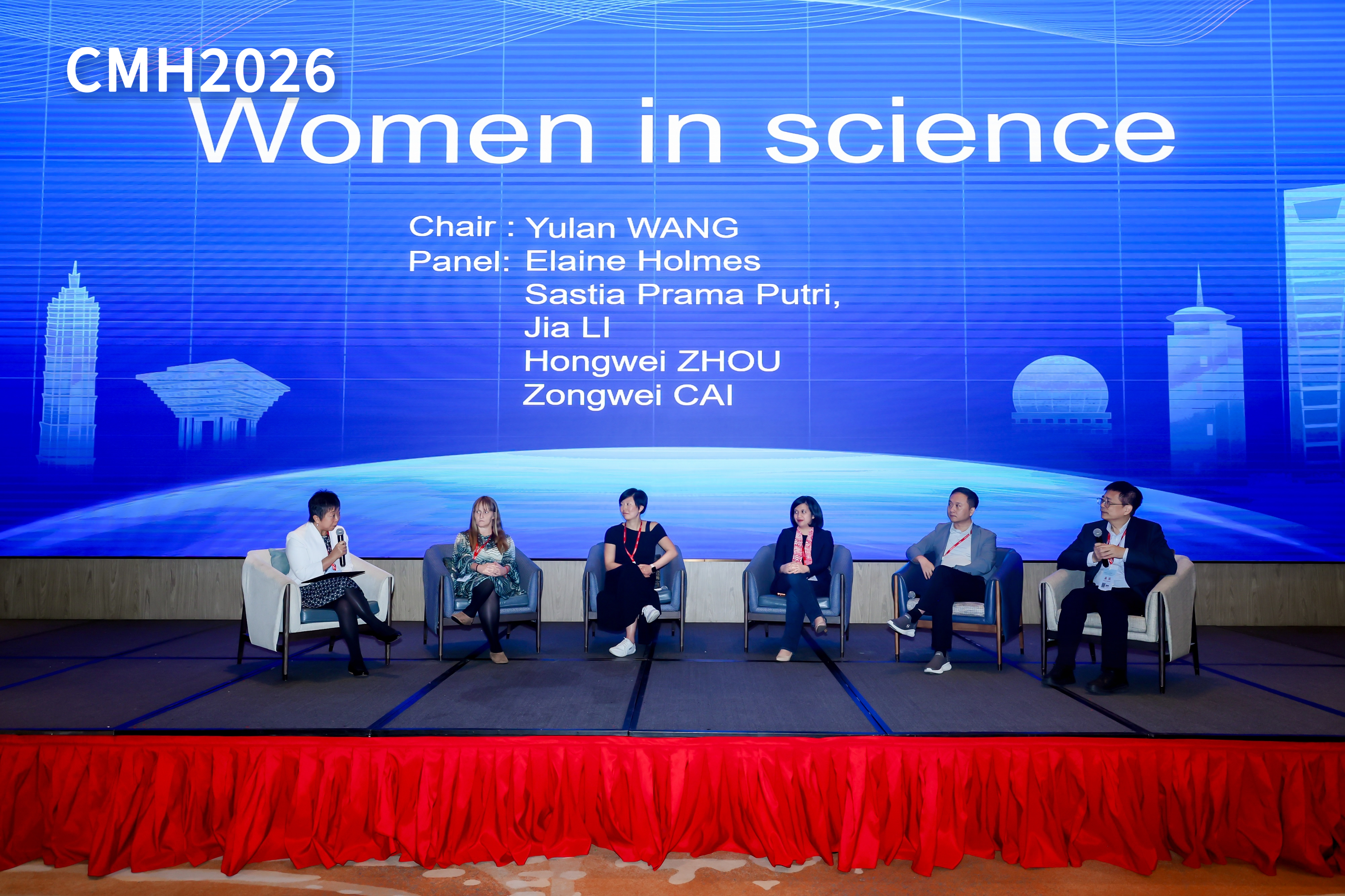
Below, I highlight two compelling talks.
I was pleased to meet Professor Zhigang Liu in person, as he has served as an editorial board member for the Gastroenterology section of BMC Medicine. His research interests span gut microbiome–host interactions, novel therapeutic interve6ntions, and epidemiological data analysis. His talk addressed the role of metabolites as active regulators of gut inflammation and their implications in the pathogenesis of inflammatory bowel disease (IBD), integrating findings from experimental models and human cohorts. His results provided additional evidence for a unifying model in which host–microbiota co-metabolism constitutes a regulatory axis driving intestinal inflammation.
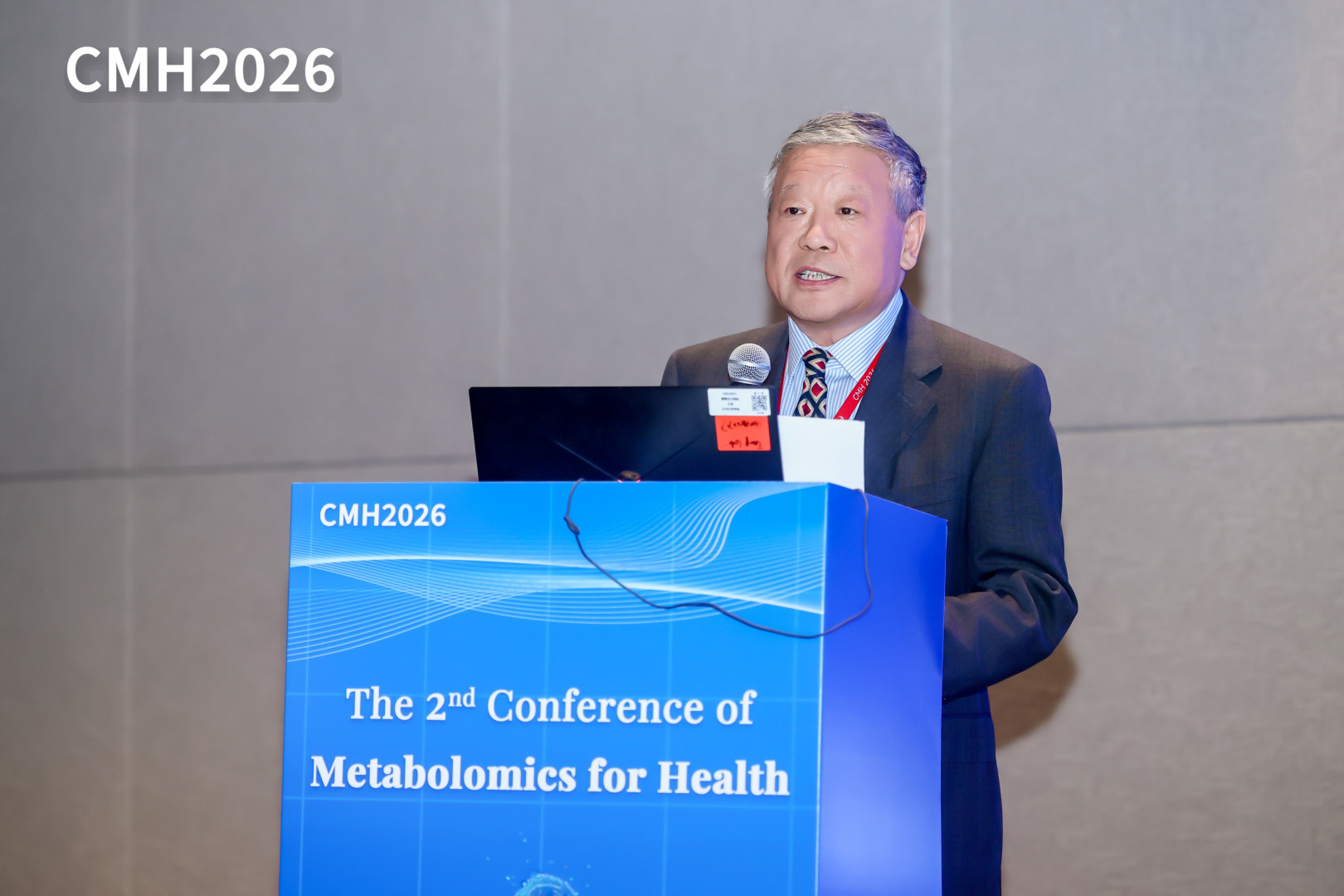
Another noteworthy presentation was delivered by Professor Huiru Tang, a well-recognized figure in metabolomics and systems biology. I attended two of his talks—one during the pre-conference technical training sessions and another during the main conference. Professor Tang's research group has made substantial efforts to develop quantitative techniques for trace metabolomics in complex mixtures. They have developed novel probes to elucidate unknown metabolite structures, thereby providing metabolomic phenotypic insights into major diseases using advanced NMR- and MS-based methodologies. A recent publication from his group proposed a metabolome-derived score that predicts metabolic dysfunction-associated steatohepatitis (MASH) and liver disease mortality.
Given the strong implications of metabolomics and the gut microbiota in multiple diseases, a growing number of studies have focused on modeling microbiome or metabolomic data to predict disease risk, diagnosis, prognosis, and treatment response. Some have concerns over the accuracy and generalizability of such models given the heterogeneity of populations and on patient level. This raises a critical question: What are the current challenges of modeling metabolomics and gut microbiota statistics for disease risk prediction and precision medicine? Please share your comments below.
Written by Yonghong Ding, an editor of BMC Medicine
I am a journal editor at BMC Medicine responsible contents from Gastroenterology and Oncology sections.
Follow the Topic
Introducing the Palgrave Macmillan Campaign for the Humanities
At Palgrave Macmillan we publish cutting-edge humanities research that has real-world impact. This research community brings together the voices of our authors and editorial team to highlight and publicize the value of the humanities and humanities research in our world today.
Continue reading announcement


Please sign in or register for FREE
If you are a registered user on Research Communities by Springer Nature, please sign in