Giving a voice to vocal fold regeneration
Published in Biomedical Research

I have worked on laryngeal and tracheal regenerative medicine since 2000. With this new discovery, I hope to move closer to therapies that may one day restore voices that have been lost.
What allows us to speak, sing, laugh, and express emotion through sound? The answer lies in the larynx, or voice box, and especially in the delicate vocal folds that vibrate to create our voice. But when these tissues are damaged by injury, aging, or surgery for head and neck cancer, they are notoriously difficult to heal. Damage can severely affect quality of life.
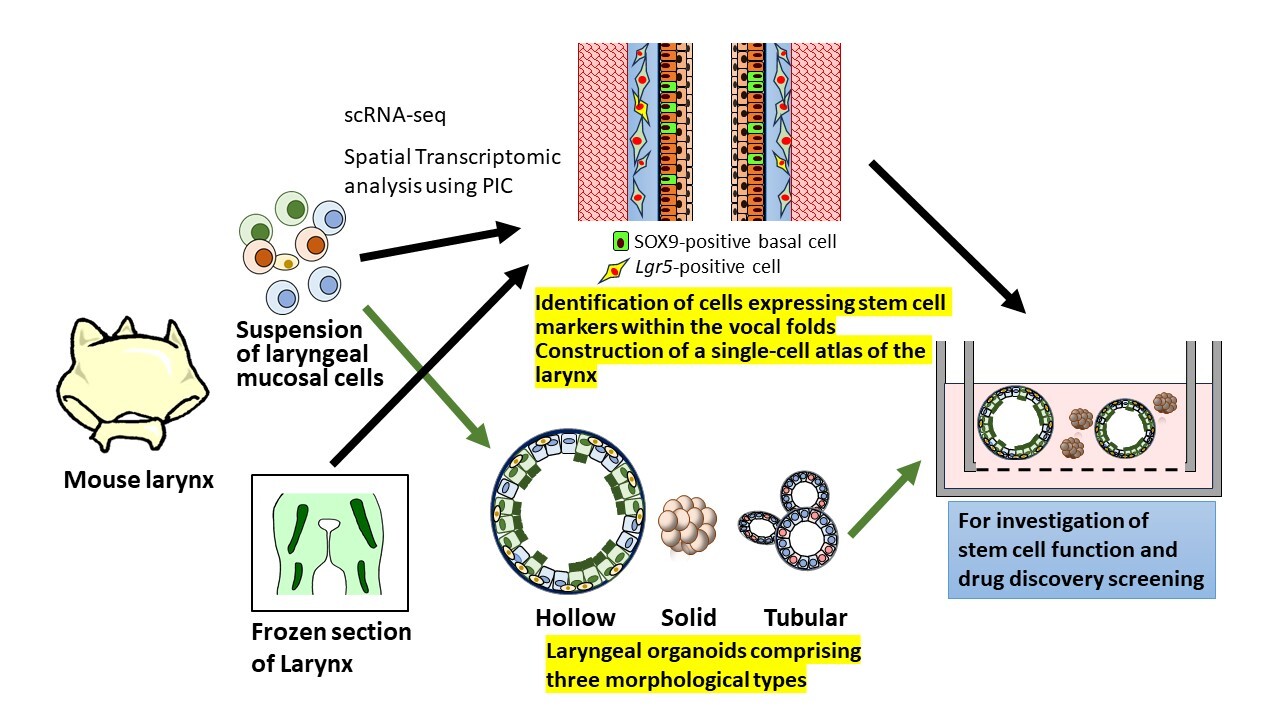
We have identified previously unknown cell populations in the vocal folds that could play a key role in tissue repair and regeneration.
Using cutting-edge technologies such as single-cell RNA sequencing and spatial transcriptomics, the researchers mapped the cellular composition of the laryngeal mucosa. We discovered two especially promising groups of cells:
- SOX9-positive basal cells in the vocal fold epithelium
- Lgr5-positive cells in the vocal fold lamina propria
Both are considered strong candidates for stem or progenitor cells—cells that may help maintain and repair vocal fold tissue.
Even more impressive, our team successfully created three types of laryngeal organoids—miniature lab-grown tissue models that mimic parts of the larynx. These organoids could become powerful tools for studying disease and testing future therapies.

Follow the Topic
-
Nature Communications
An open access, multidisciplinary journal dedicated to publishing high-quality research in all areas of the biological, health, physical, chemical and Earth sciences.

Related Collections
With Collections, you can get published faster and increase your visibility.
Women's Health
Publishing Model: Hybrid
Deadline: Ongoing
Biosensing
Publishing Model: Hybrid
Deadline: Jun 30, 2026


Please sign in or register for FREE
If you are a registered user on Research Communities by Springer Nature, please sign in