Global soil salinization: impacts on bacterial communities and nutrient cycling
Published in Earth & Environment






The Journey: From Global Meta-Analysis to Regional Ground Truth
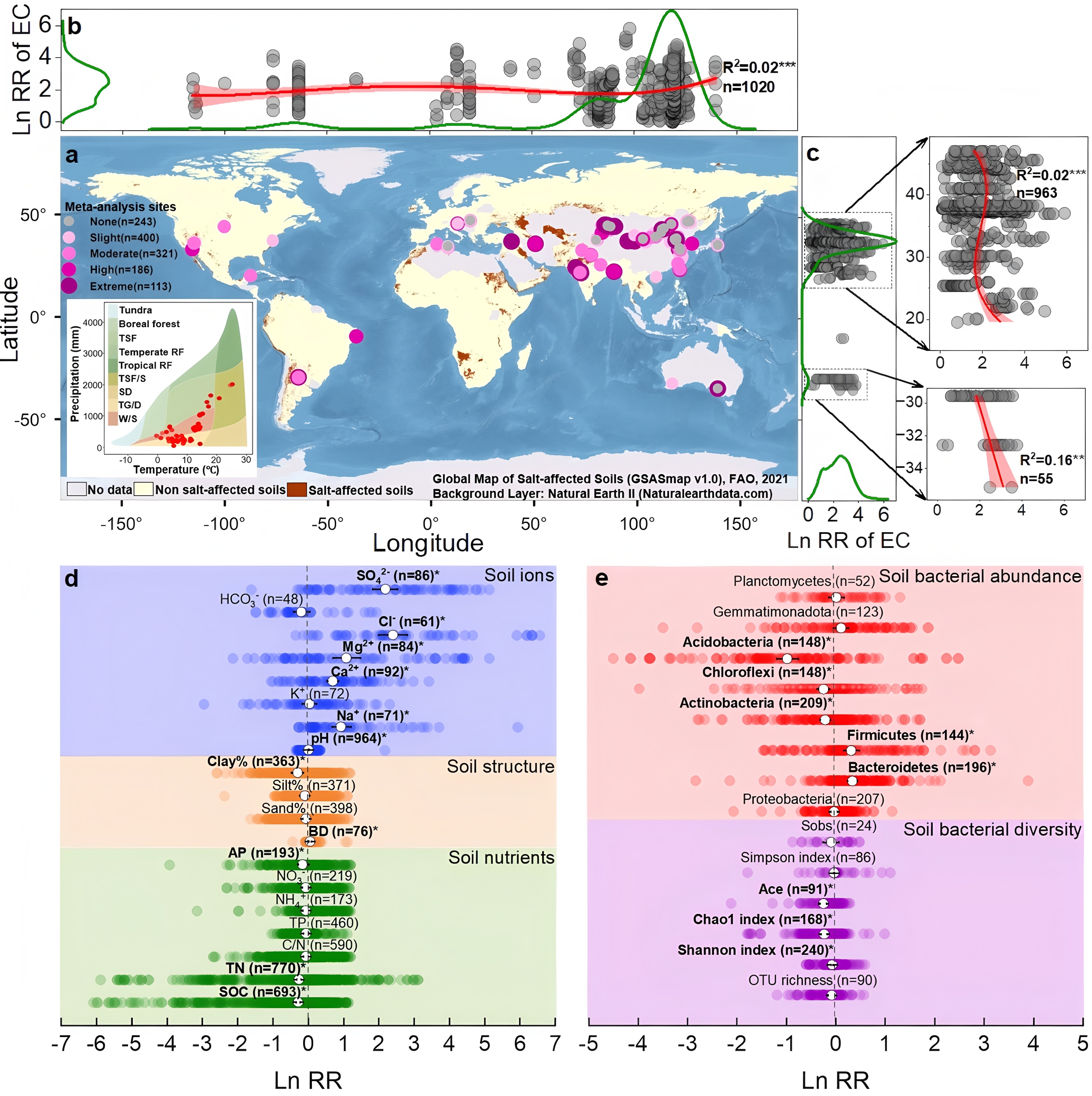
Our research began with a simple but ambitious goal: move beyond scattered local studies to deliver a global, mechanistic understanding of salinity’s effects on soil bacteria. We started by systematically synthesizing 89 published studies, compiling 1,263 datasets spanning croplands, forests, grasslands, and wetlands across every continent. This global meta-analysis revealed stark, consistent patterns: salinity raised soil pH and bulk density while depleting clay and nutrients, and triggered a dramatic shift in bacterial communities—salt-tolerant Bacteroidetes and Firmicutes surged, while sensitive Acidobacteria and Actinobacteria collapsed. Most importantly, we identified a global critical threshold at 2.58 dS/m: beyond this point, bacterial diversity plummeted nonlinearly, marking an irreversible tipping point for soil microbial health.
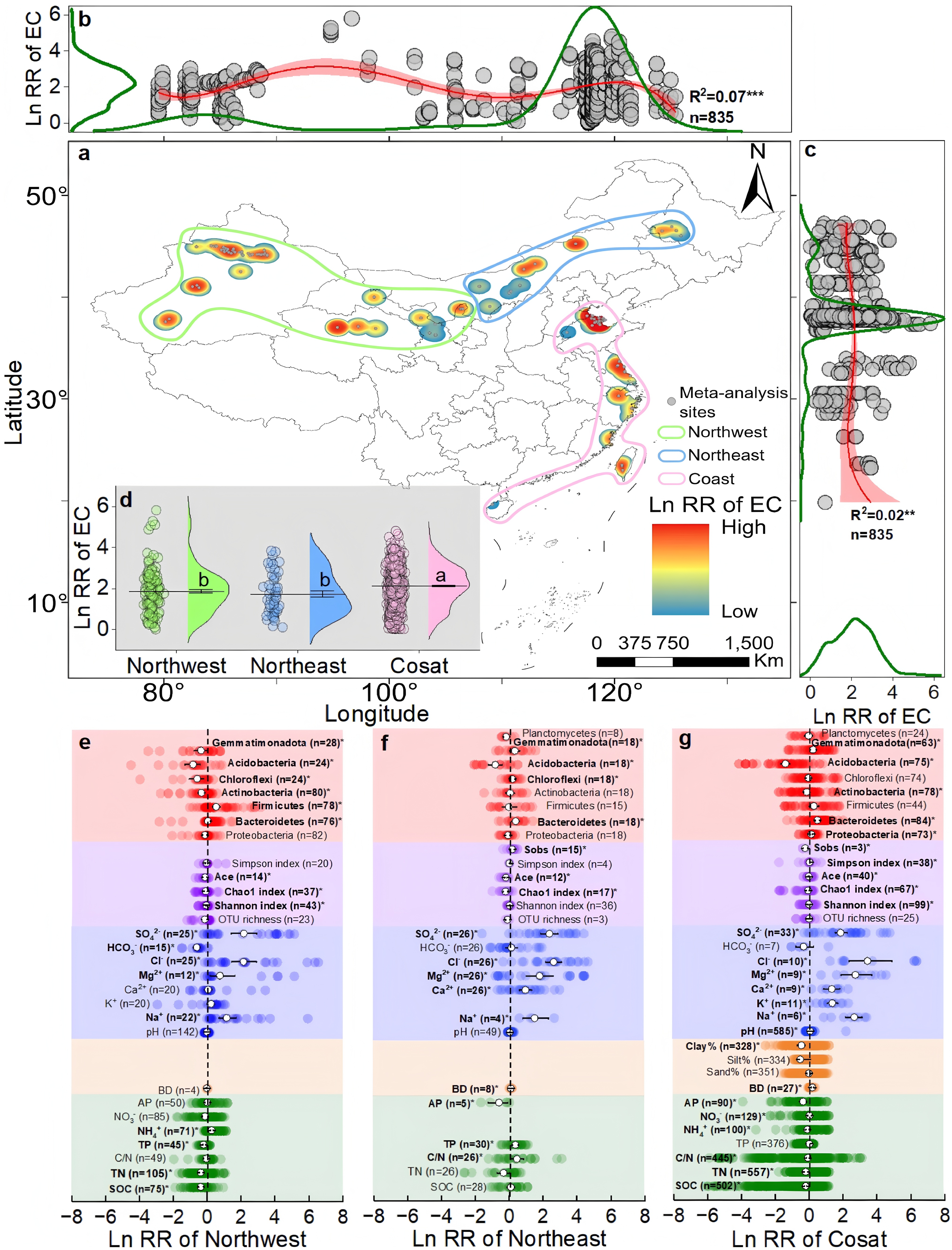
But global patterns only tell part of the story. China’s saline soils are geographically diverse—northwestern sulfate-chloride dominated deserts, northeastern soda-saline plains, and eastern coastal chloride-rich wetlands—each with unique soil chemistry and microbial responses. To ground our global findings in regional reality, we analyzed 835 datasets from China’s three major saline zones, uncovering region-specific drivers: sodium ions dominated arid northwest soils, magnesium shaped coastal communities, and pH controlled northeastern soda-saline systems.
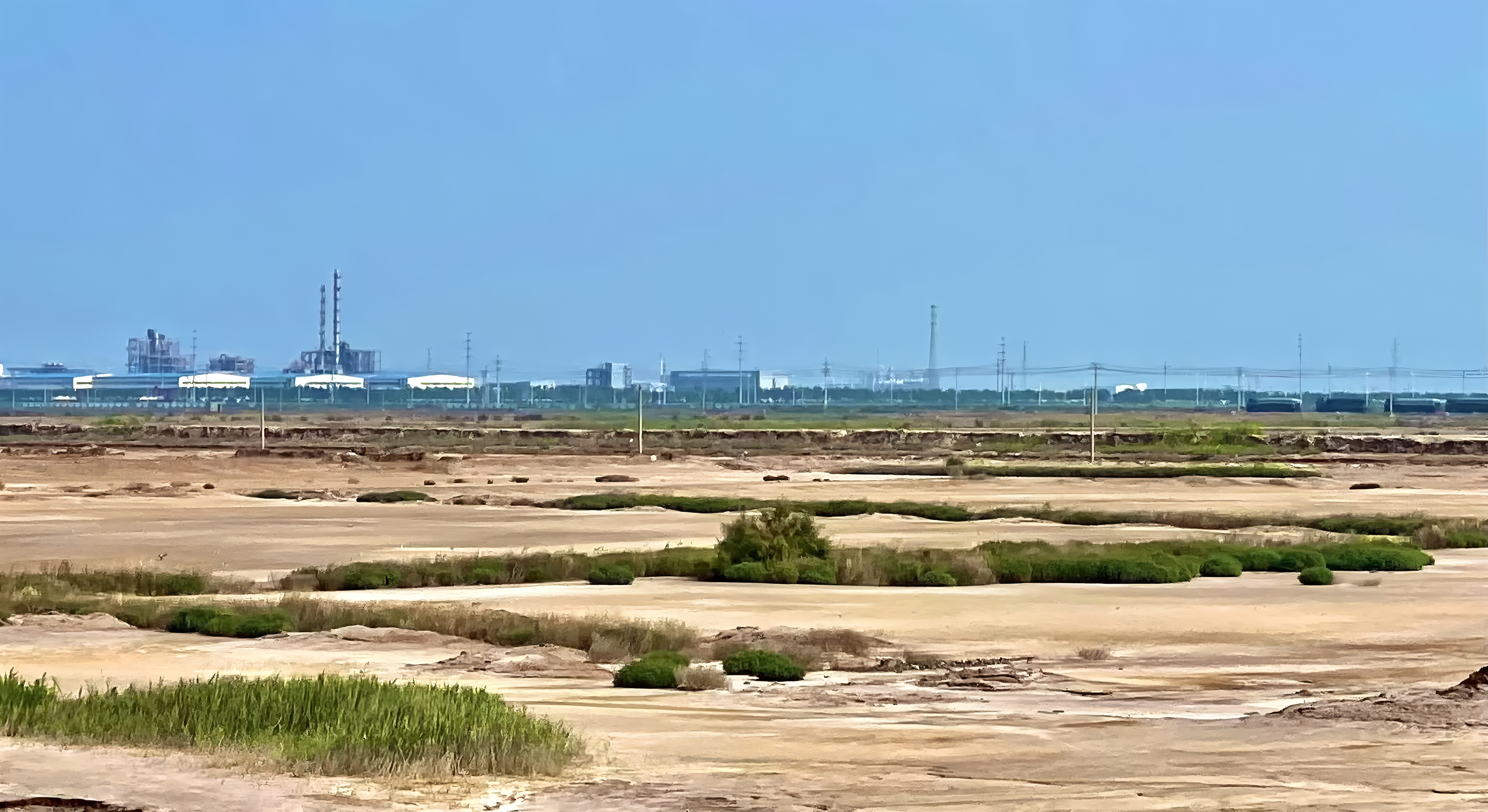
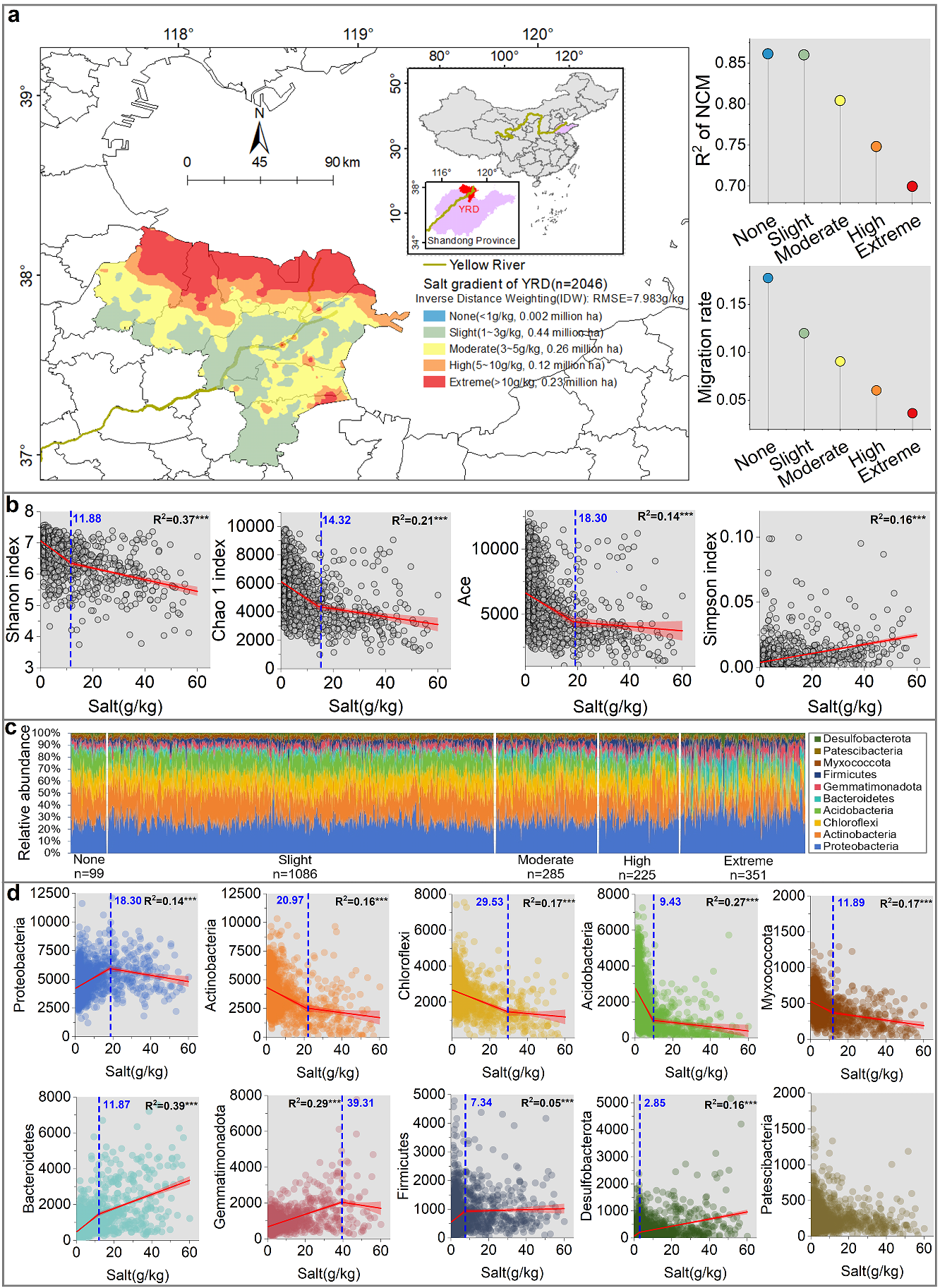
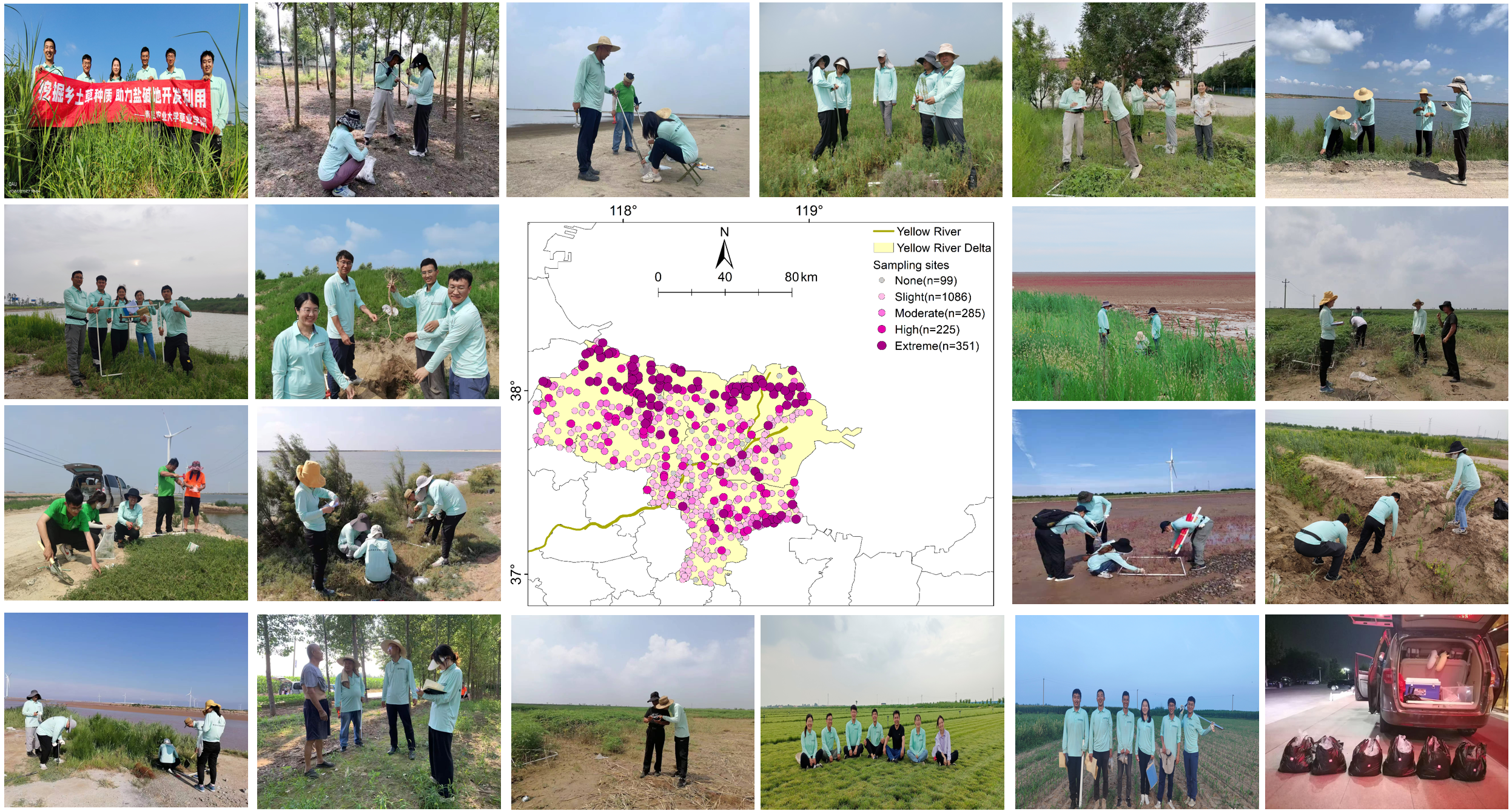
The most intensive phase of our work unfolded in the Yellow River Delta, China’s youngest and most extensive coastal saline region, where over 60% of land is salt-affected. Over two years, our team collected 2,046 soil samples across seven counties, spanning five salinity gradients from non-saline to extremely saline. Fieldwork was grueling: coastal mudflats were muddy and inaccessible, extreme heat and humidity tested our endurance, and repetitive sampling required meticulous attention to detail to avoid cross-contamination. Yet this massive dataset was invaluable—it confirmed a regional diversity threshold at 11.88 g/kg salt, distinct from the global benchmark, highlighting that coastal microbial communities evolve unique salt tolerance.
Teamwork
Over the course of our Yellow River Delta field campaign, faculty and graduate students of the College of Grassland Science came together to tackle the monumental task of sampling across the delta’s vast and challenging landscapes. Day after day, we faced the unforgiving summer sun and sweltering heat, with temperatures often climbing well above 38°C. Under the blazing sky, professors guided sampling protocols and provided on-site technical support, while graduate students worked alongside them to conduct vegetation surveys, soil coring, haul equipment, set up transects, and process samples. This collaboration was a powerful reminder that tackling even the most local environmental challenges requires the same spirit of collective effort: bringing together diverse expertise, supporting one another through adversity, and working toward a common goal for the health of our planet.
Overcoming Key Challenges
This study was not without hurdles, and three challenges stand out as defining our journey. First, defining “stabilized salinity effects” was a major barrier. Previous studies used inconsistent salinity metrics and terminologies, making global synthesis nearly impossible. We solved this by adopting standardized operational definitions and unifying analytical methods, ensuring all data were comparable—a foundational step for our global analysis.
Second, disentangling confounding drivers proved complex. Salinity rarely acts alone; it interacts with soil pH, texture, nutrients, and climate. Traditional correlation analyses failed to isolate salinity’s unique impact, so we turned to random forest modeling and piecewise regression. These advanced tools allowed us to pinpoint sodium and magnesium ions as the primary drivers of bacterial diversity loss. Critically, we found ion-specific effects matter more than EC alone—a paradigm shift for salinity research.
Third, scaling from genes to ecosystems required integrating multi-omics and network analysis. Predicting functional gene shifts with PICRUSt2 revealed that salinity suppressed carbon, nitrogen, and phosphorus cycling but stimulated sulfur metabolism—a unique adaptation to coastal sulfate-rich soils. Co-occurrence networks further showed that salt stress reduced microbial network complexity, yet core carbon metabolism functions remained resilient, sustained by keystone taxa like Bacteroidetes. This functional persistence, even as diversity declined, was a surprising and hopeful discovery.
Implications for Future Research and Action
For future research, three directions stand out: (1) exploring microbial adaptation mechanisms, especially how halotolerant taxa maintain biogeochemical functions under extreme salinity; (2) integrating metagenomics and metabolomics to validate predicted functional shifts; (3) modeling climate change interactions to predict how warming will lower salinity thresholds.
In closing, soil bacteria are the unsung heroes of ecosystem health, driving the nutrient cycles that sustain life on Earth. Salinization threatens these vital communities, but our work provides a roadmap to understand and mitigate its impacts. By uncovering the hidden links between salinity, bacterial diversity, and biogeochemical imbalance, we hope to inspire targeted, science-based actions to protect and utilize saline soils.
Follow the Topic
-
Communications Earth & Environment
An open access journal from Nature Portfolio that publishes high-quality research, reviews and commentary in the Earth, environmental and planetary sciences.

Related Collections
With Collections, you can get published faster and increase your visibility.
Ecological resistance and resilience under global change
Publishing Model: Open Access
Deadline: Apr 07, 2027
Hazards in Mountain Regions
Publishing Model: Open Access
Deadline: Nov 02, 2026