High-yield induced ovulation in the adult marsupial fat-tailed dunnart (Sminthopsis crassicaudata)
Published in Research Data

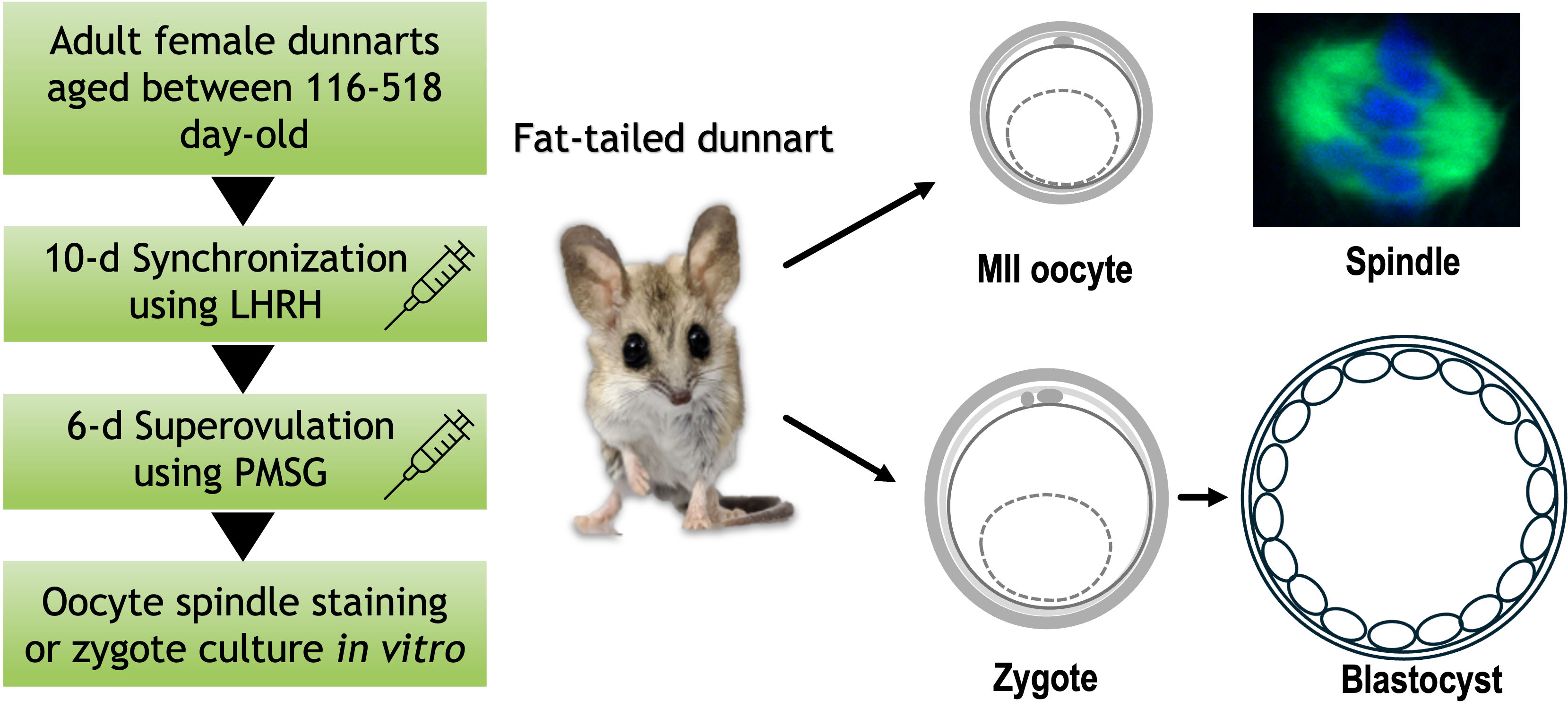
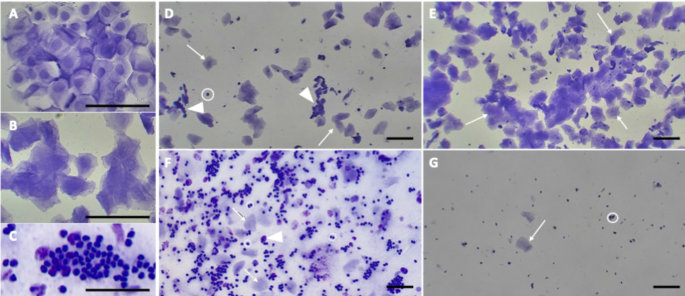

Our first study showed we could superovulate prepubertal dunnarts reliably. But prepubertal animals aren't always available, and working with adult cycling females opens up a much larger pool for ART. The challenge: adult females have their own hormonal cycles running, and those cycles have to be brought into sync before you can stimulate them.
This paper solves that. Using LHRH to synchronize estrous cycles in adult dunnarts, followed by PMSG-hCG stimulation, we achieved 77.8% ovulation success and an average of 20 MII oocytes per animal.
Full paper in Scientific Reports: https://www.nature.com/articles/s41598-026-42752-0
Here's the core challenge with adult animals that most people outside reproductive biology don't appreciate.
Dunnarts cycle every 31 days. If you stimulate them with gonadotrophins at the wrong point in that cycle, the exogenous hormones collide with endogenous ones — and you get a poor, unpredictable response. Some animals ovulate, some don't, and you have no idea which group you're in until you open the dish.
The solution is synchronization: get all your animals to the same point in their cycle before you stimulate them. Then the starting conditions are equivalent, and the response is predictable.
In livestock this is standard practice. In marsupials, nobody had made it work reliably. Until now.
Key results from this study:
36 adult female dunnarts enrolled 88.9% synchronized to diestrous stage following LHRH treatment 77.8% ovulation success after PMSG-hCG stimulation Average of 20.1 MII oocytes per animal.
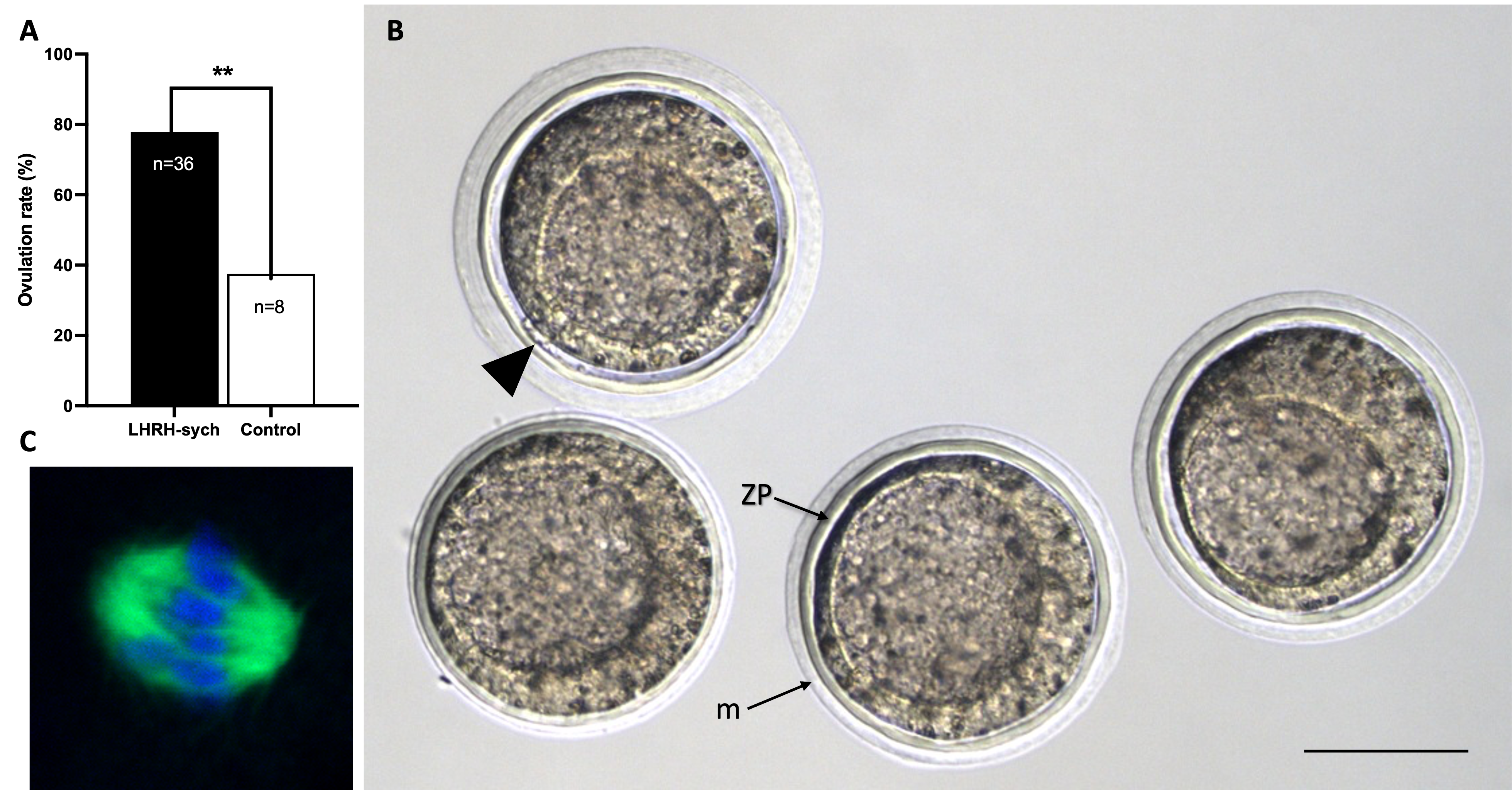
That last number is meaningful. Twenty oocytes per adult female, on a predictable schedule, from a cycling colony animal — not a prepubertal juvenile. That's enough to run IVF, ICSI, and embryo CRISPR reagent injection experiments in parallel.
Every marsupial conservation program that involves ART — IVF, gamete banking, genetic rescue — has the same upstream dependency: you need eggs, and you need them reliably.
For threatened species that can't be housed in large numbers or subjected to invasive procedures, a lab model that can be used to develop and refine protocols first is invaluable. The dunnart fills that role.
The two protocols we've now published represent back-to-back steps in building out that capability. Prepubertal superovulation in 2025. Adult synchronization and superovulation in 2026. The pipeline is being built piece by piece.
What comes next: IVF, ICSI, embryo cryopreservation, and ultimately transgenic dunnarts as a platform for testing genetic rescue strategies in marsupials.
In 2025 we published a superovulation protocol for prepubertal fat-tailed dunnarts. In 2026 we published synchronization and superovulation in adults.
Taken together, these papers mean that researchers working with dunnarts now have a real toolkit for oocyte production — one that covers both age classes, is validated to blastocyst-stage developmental competence, and doesn't depend on daily body weight monitoring or waiting out a 31-day cycle.
The toolkit is built. Now we use it.
Follow the Topic
-
Scientific Reports
An open access journal publishing original research from across all areas of the natural sciences, psychology, medicine and engineering.

Related Collections
With Collections, you can get published faster and increase your visibility.
Cancer Prevention and Control
Publishing Model: Hybrid
Deadline: Feb 19, 2027
AI in clinical decision-making
Publishing Model: Open Access
Deadline: Nov 28, 2026