How a misunderstanding knocked 30 years of collectivism research off course
Published in Behavioural Sciences & Psychology, Statistics, and Business & Management

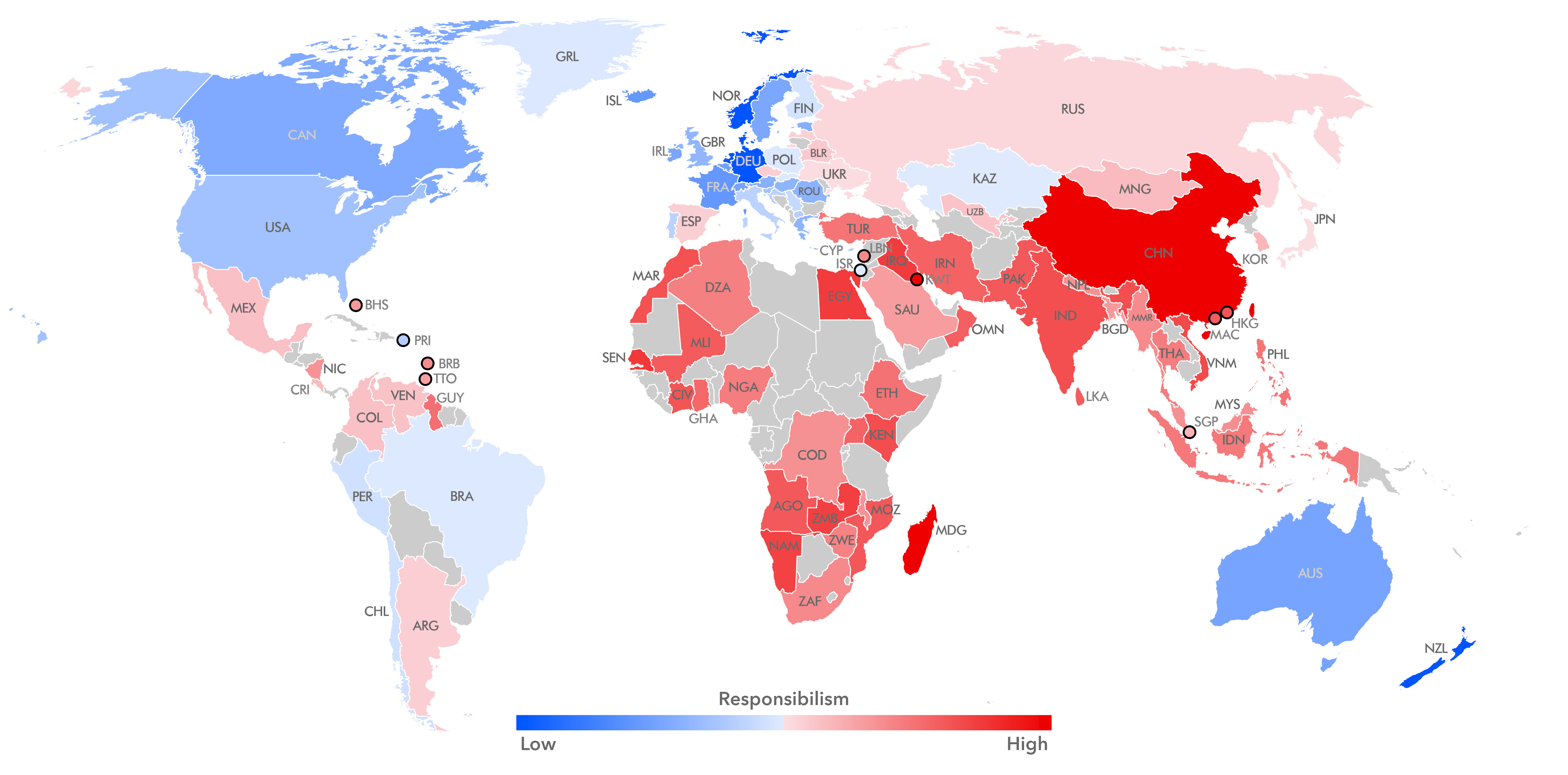
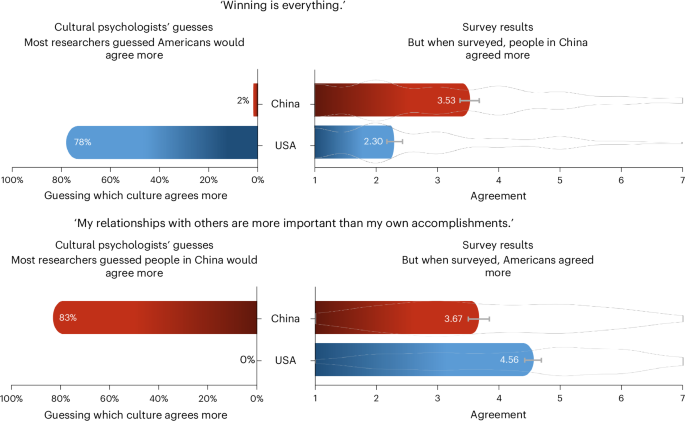

Collectivism is the most widely studied cultural difference, but it has been fundamentally misdefined, according to a new study in Nature Human Behaviour from my research team. Researchers and regular people alike have confused two opposing visions of collectivism--one that focuses on generalized warmth and another that focuses on pragmatic duties in close relationships. Separating these two, the study argues, can solve a vexing puzzle going back 30 years.
The seed of the idea goes back 20 years, when I was a bright-eyed research assistant at the University of Michigan. I was lucky to be there because I got to work with some of the top cultural psychologists in the world. That meant I got to learn about an insider secret: collectivism scales "don't work." So don't use them, they told me.

When they said the scales "don't work," they meant they produced weird results. For example, in one study researchers asked people in China and the US how much they valued independence. In one study, they found no difference. In their second study, participants in China said they valued independence more.

In one study, researchers put together all the studies they could find where people in East Asia and North America took surveys of individualism or collectivism. Across 76 studies, they found no reliable differences in collectivism between East Asia and the West.

Earlier Explanations
Researchers offered explanations. One explanation was response styles. For example, there's evidence that people in some cultures tend agree more survey items, even when those items are contradictory. That can throw off comparisons.
Another explanation is what researchers call the "reference group effect." The idea is that, for example, Americans answering surveys are comparing themselves to other Americans, so they think, "Well actually, I'm more collectivistic than THEY are."

A Problem in Our Heads
These explanations have evidence behind them, but I thought they missed the more fundamental problem. The problem was in our heads--in our concepts.
One fun way to get at this question is to do a simple Google image search for "collectivism" and see what pops up. Here's what that looks like.

A lot of those images reflect what I call "warm fuzzy" collectivism. Those toothy smiles are hard to miss.
Another thread I see in those pictures is the relationships. The relationships are big groups, people, "the many" that Spock talks about.

I call these intuitions "warm fuzzy" collectivism. Of course, Google image searches aren't serious research, but you can see those same warm fuzzy intuitions in survey items that serious researchers use. Here's one.
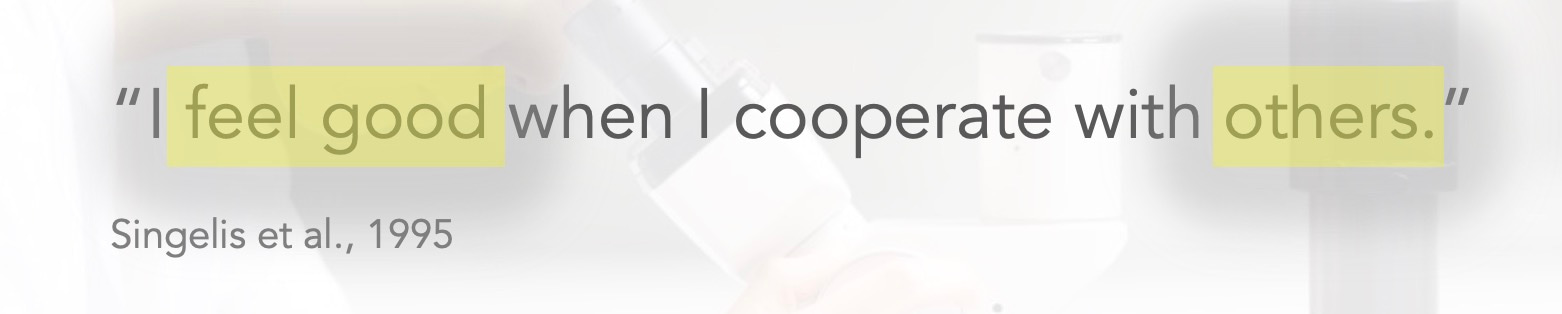
Here's another.
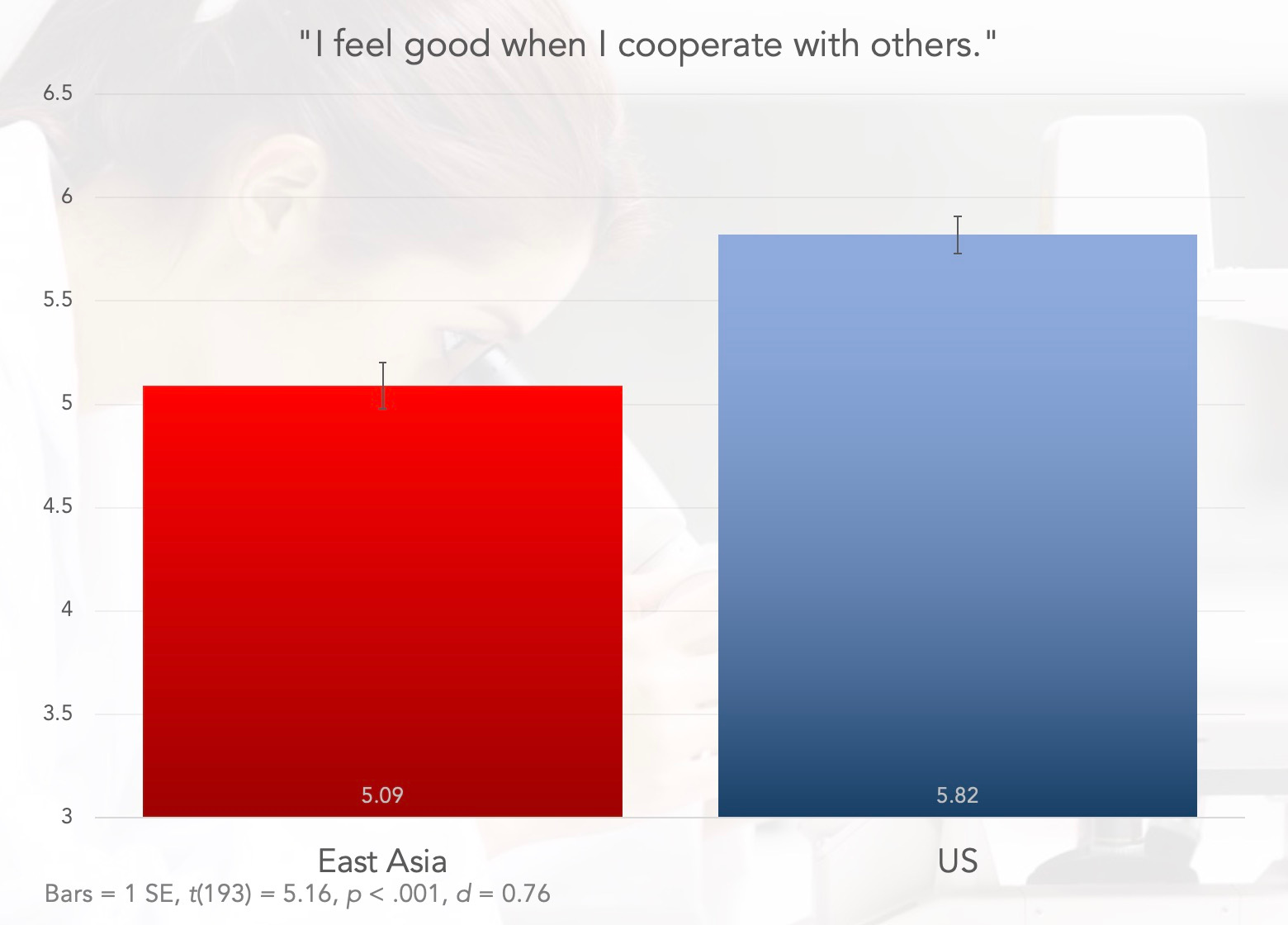
 Researchers created these items based on a theory of collectivism in East Asia, but when researchers gave these survey questions to people around the world, it's actually people from Western cultures who agree more with the warm fuzzies.
A Second Vision of Collectivism
In other words, the warm fuzzy intuition does not map onto the cultural difference researchers were trying to describe. But warm fuzzies aren't people's only intuition about collectivism. There's a completely different intuition that you can see in this survey item.

And when researchers give this item to people across cultures, the results are flipped from before.
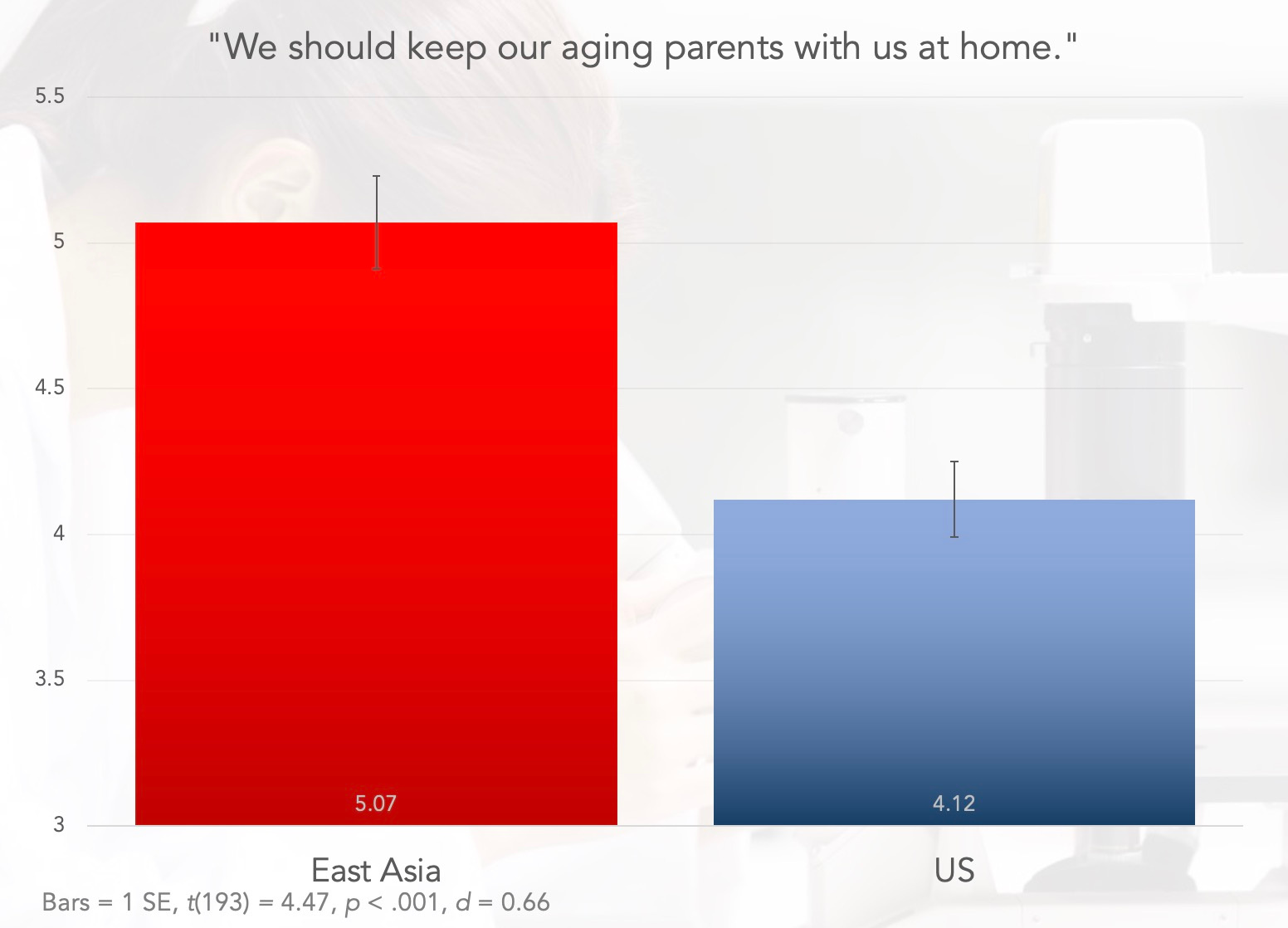
I call that version "responsibilism." Responsibilism emphasizes concrete duties in close relationships, with less duty toward acquaintances and strangers.
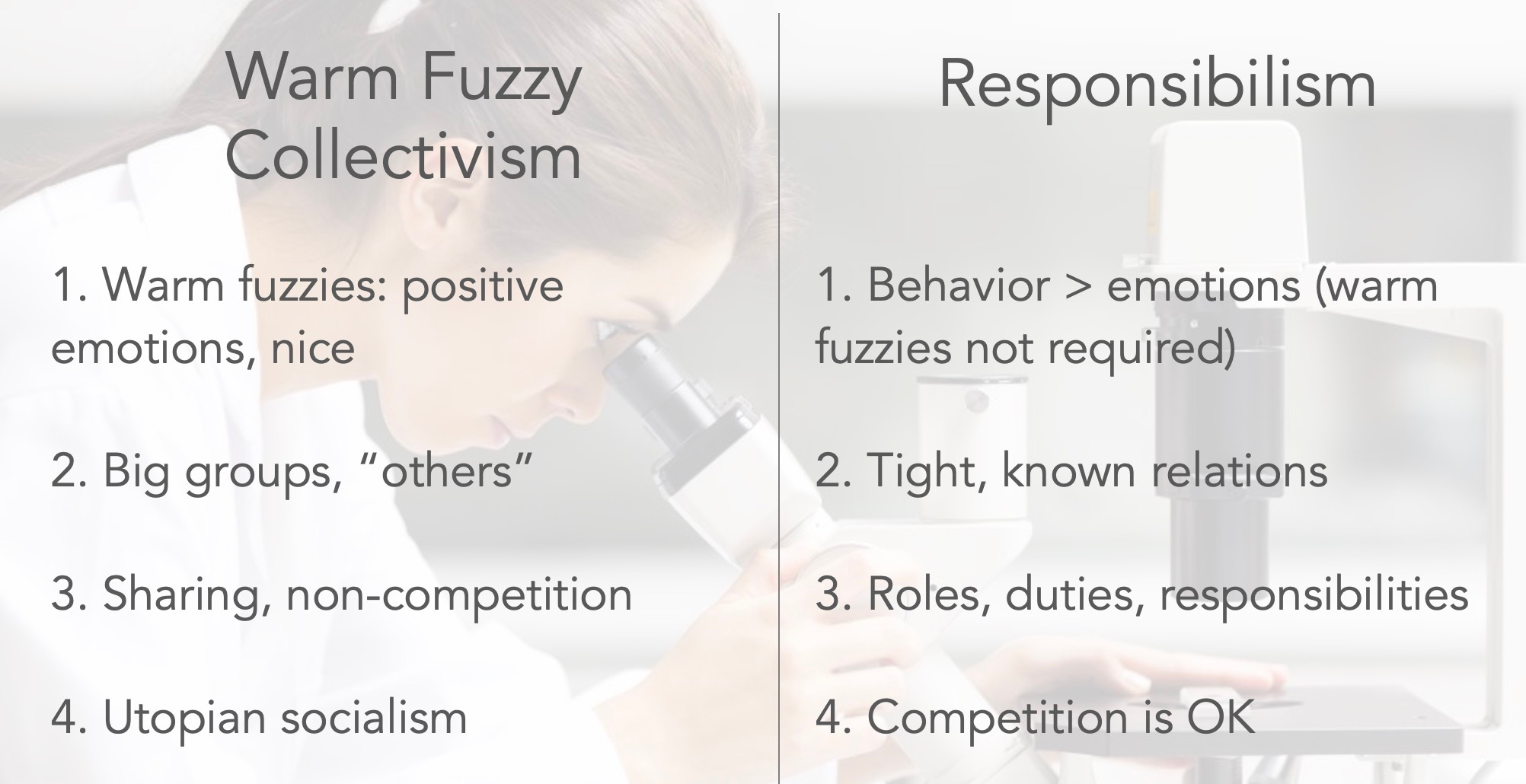
If We Clarify The Concept, Will The Results Follow?
That leads to the entire idea by the new study. If we understand collectivism as responsibilism (and not warm fuzzies), can we find the differences those 76 studies failed couldn't manage to find?
So I set to work. I created a survey to measure responsibilism. Since relationships are critical in responsibilism, I thought it was important to define the situation and the relationship concretely. Here's one item.

Over several years with 108 co-authors and 12,000 participants, we found were able to map responsibilism scores across 100 cultures.
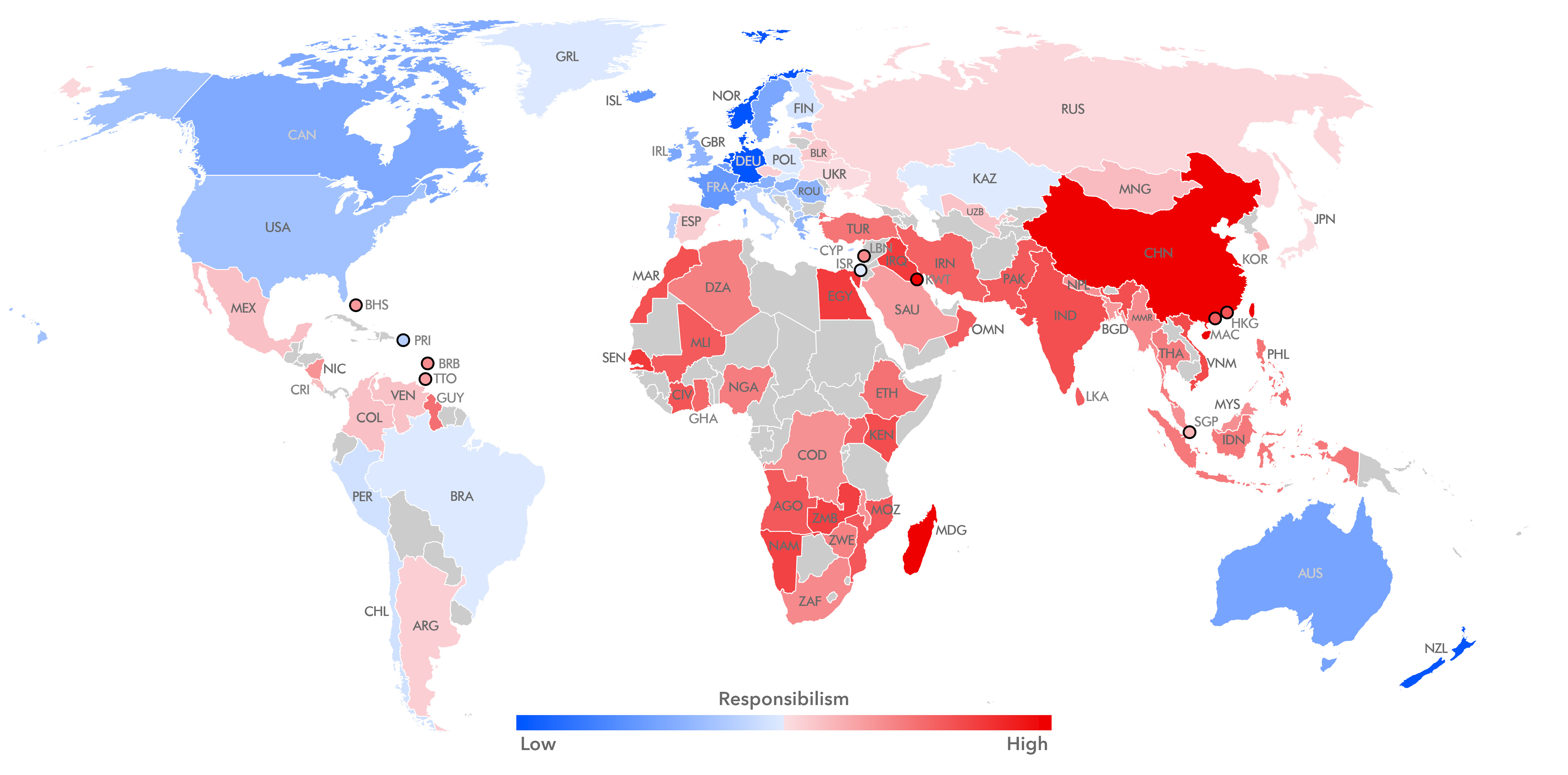
The cultural differences were large--over a standard deviation (d > 1). They also held up in an independent replication study.
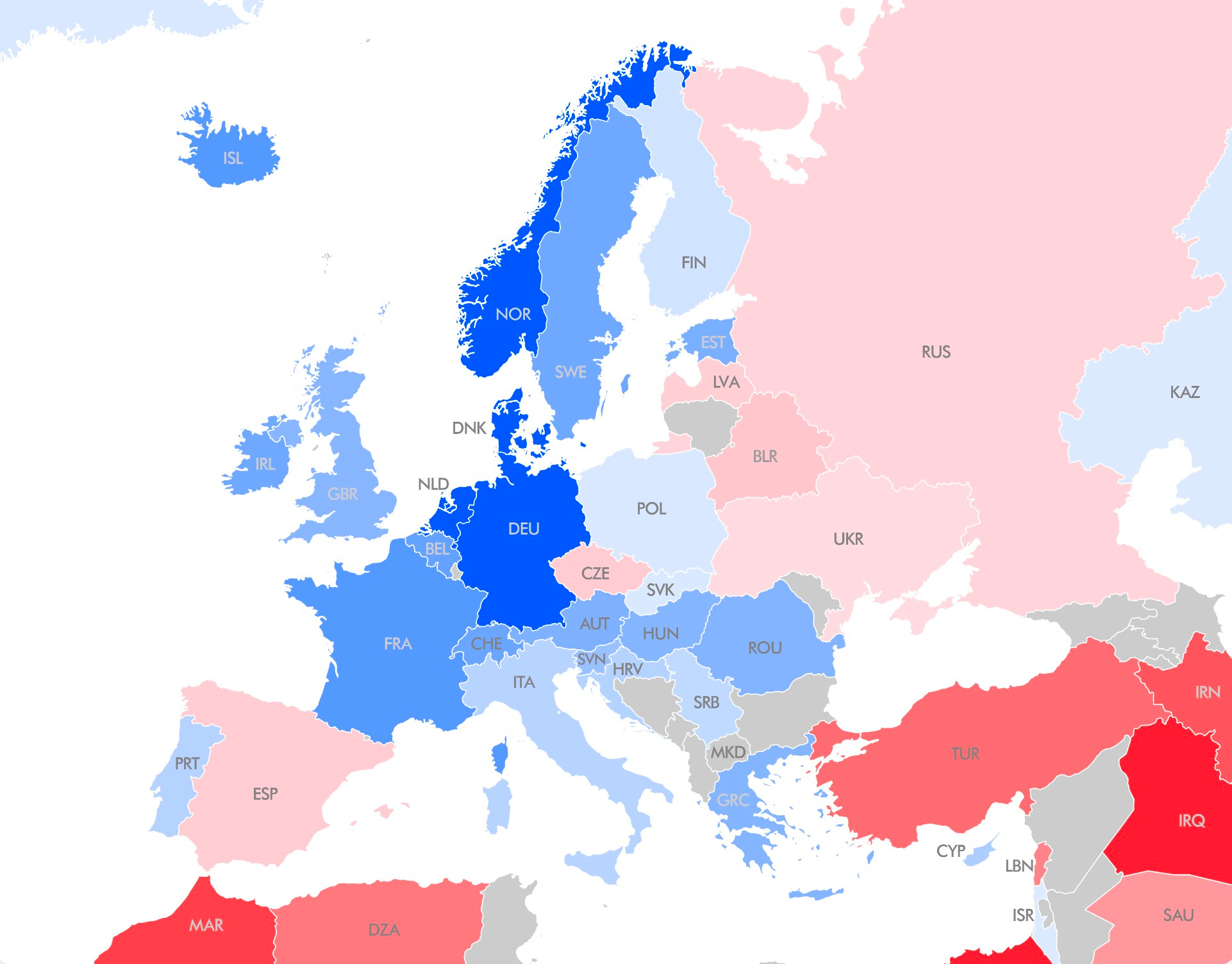
The data revealed interesting variation within Europe, such as south versus north and east versus west.
Responsibilism Picks Up on Class and Political Divides
Of course, responsibilism isn't just a country thing. For example, there were differences between participants in the northern US and southern US. 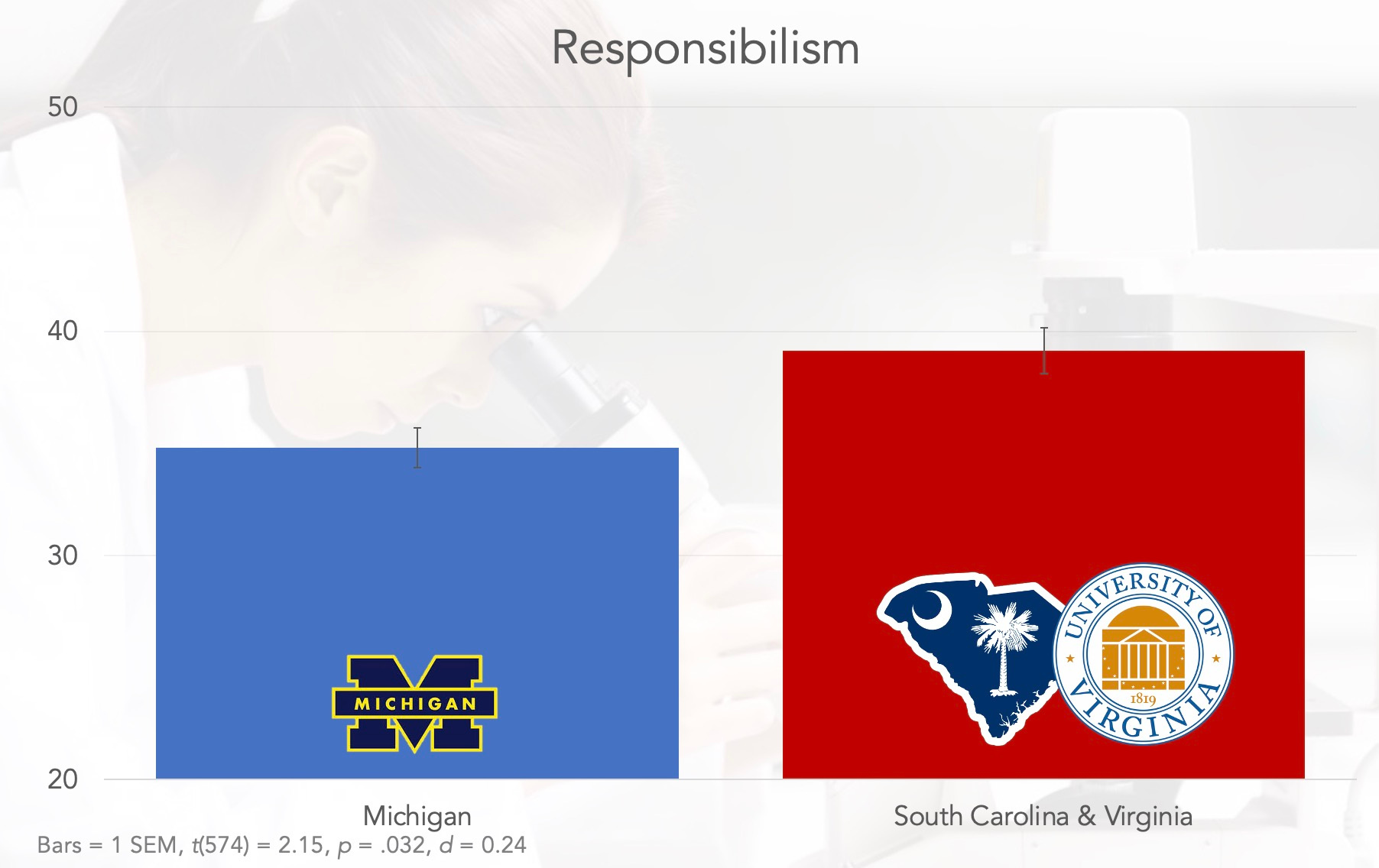
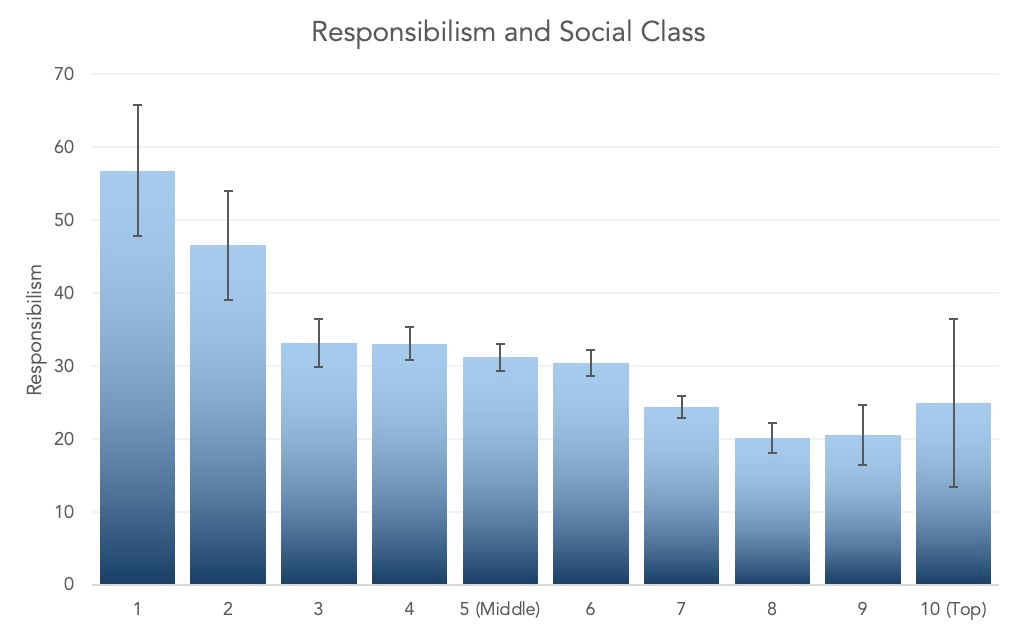
Responsibilism also varies between individuals. As another example, people from working class backgrounds in the US tend to score higher on responsibilism.
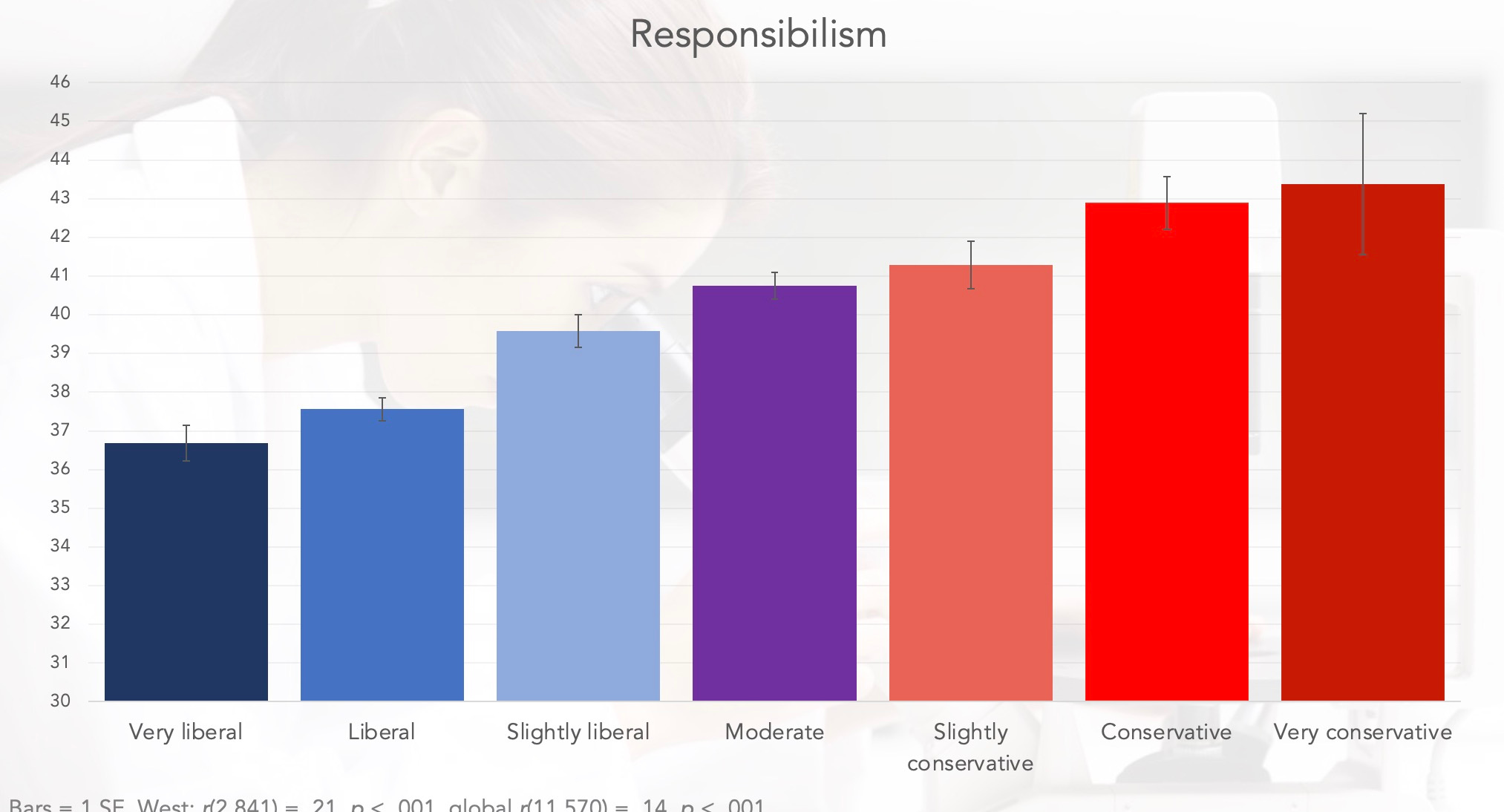
Responsibilism also divided people from different political stripes. Social conservatives scored higher than liberals.
What Is Responsibilism Really Measuring?
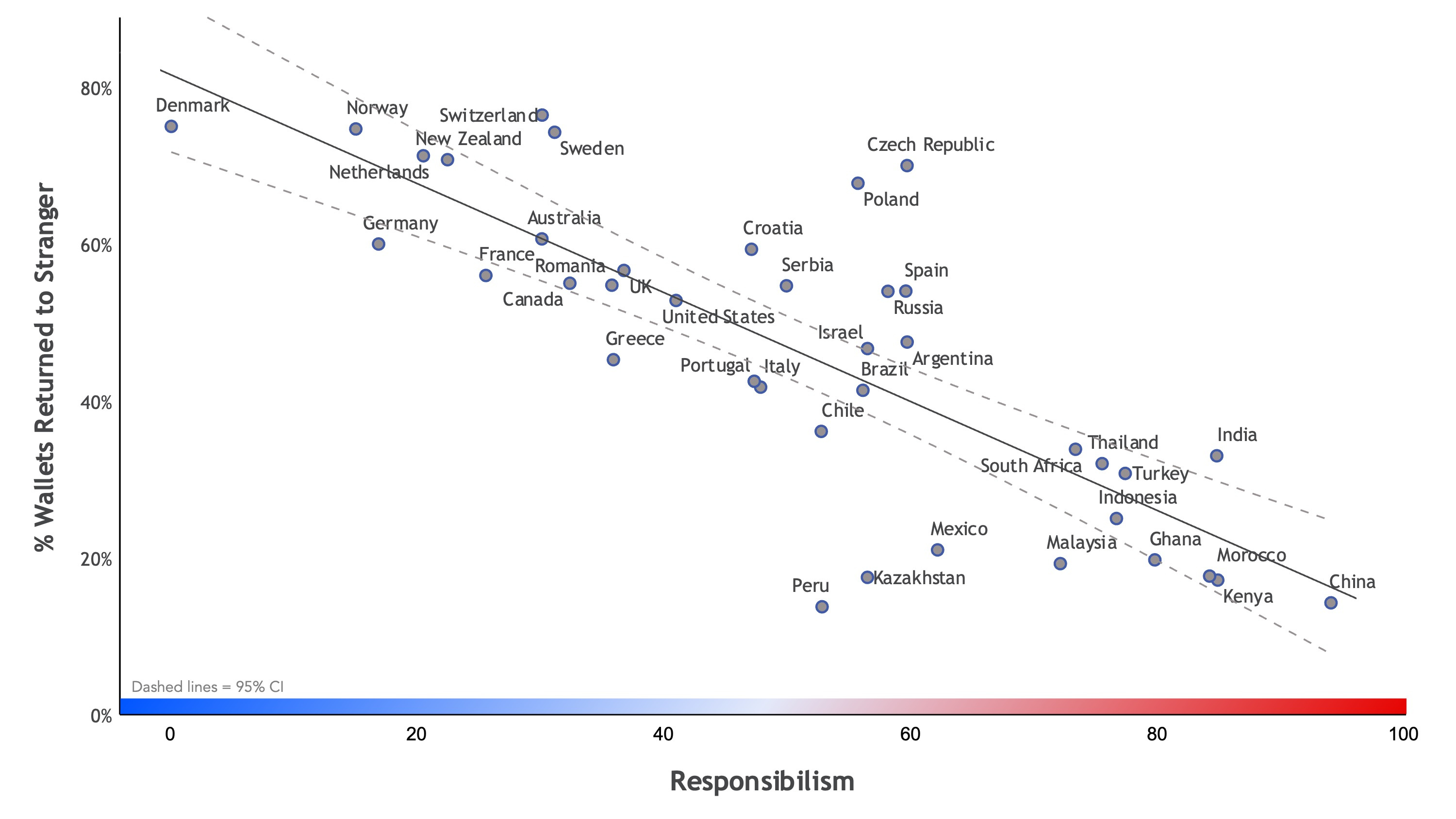
One reasonable critique is that finding East-West differences doesn't prove responsibilism is actually measuring what we're saying it measures. To test that, we tested how well responsibilism scores correlated with societal differences that it should reflect, like living with extended family, kinship systems, and lower rates of donating blood to strangers or returning lost wallets to strangers. (Remember that the relationship is key.)
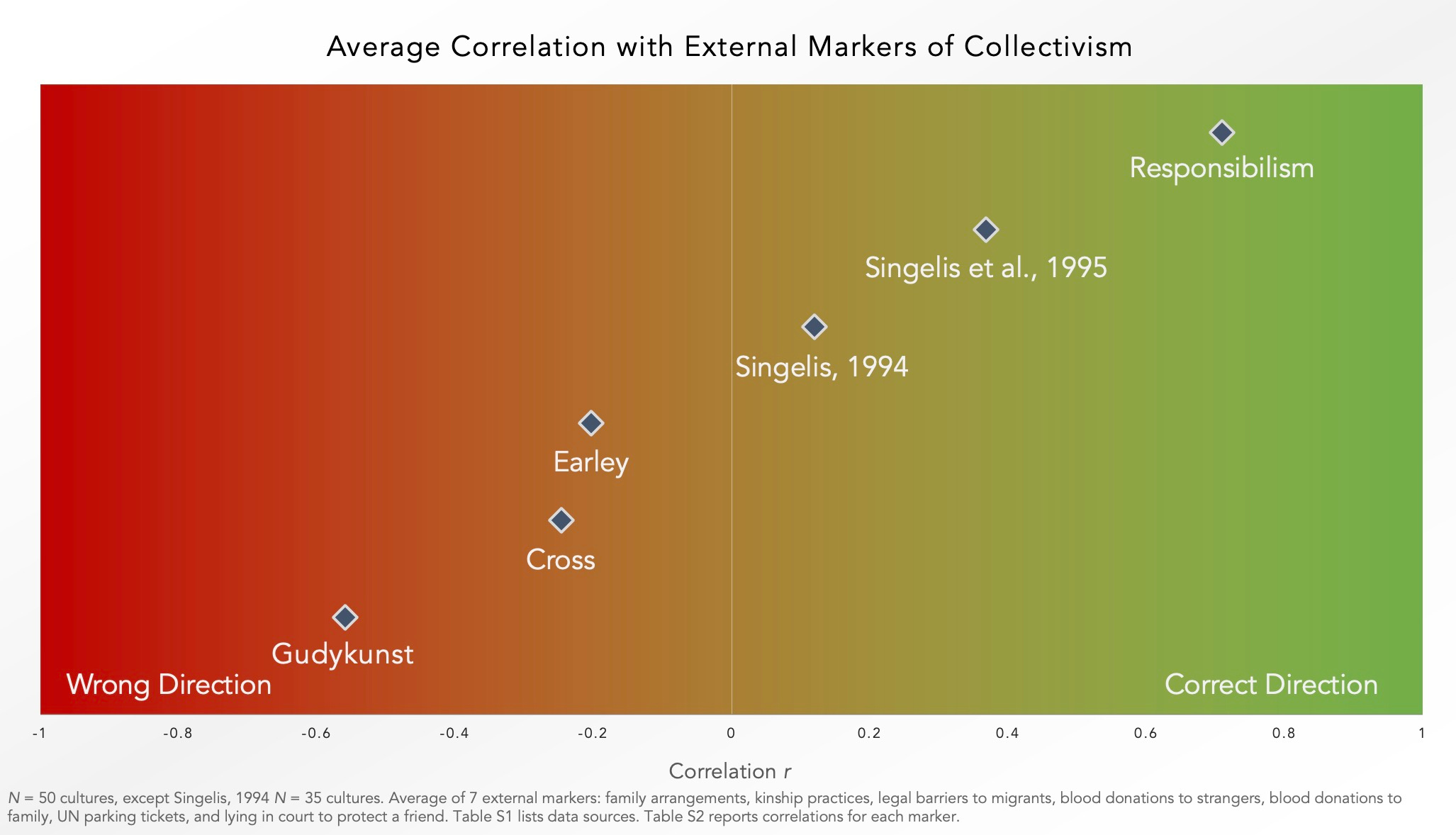
We also gave participants around the world the top 5 most-used collectivism scales. These were the ones that include "warm fuzzy" items, so we expected them to perform worse on these societal correlations. The results were weaker for the earlier scales, with three actually correlating in the wrong direction on average (such as cultures scoring higher on collectivism having lower rates of living with extended family).
Righting The Ship
My hope is that these results can help make it clear that people (and the most-used surveys) contain these conflicting versions of collectivism. If we want to make progress understanding differences across societies, we have to keep these versions separate. If we continue to conflate these two types of collectivism, we'll producing confusing results.
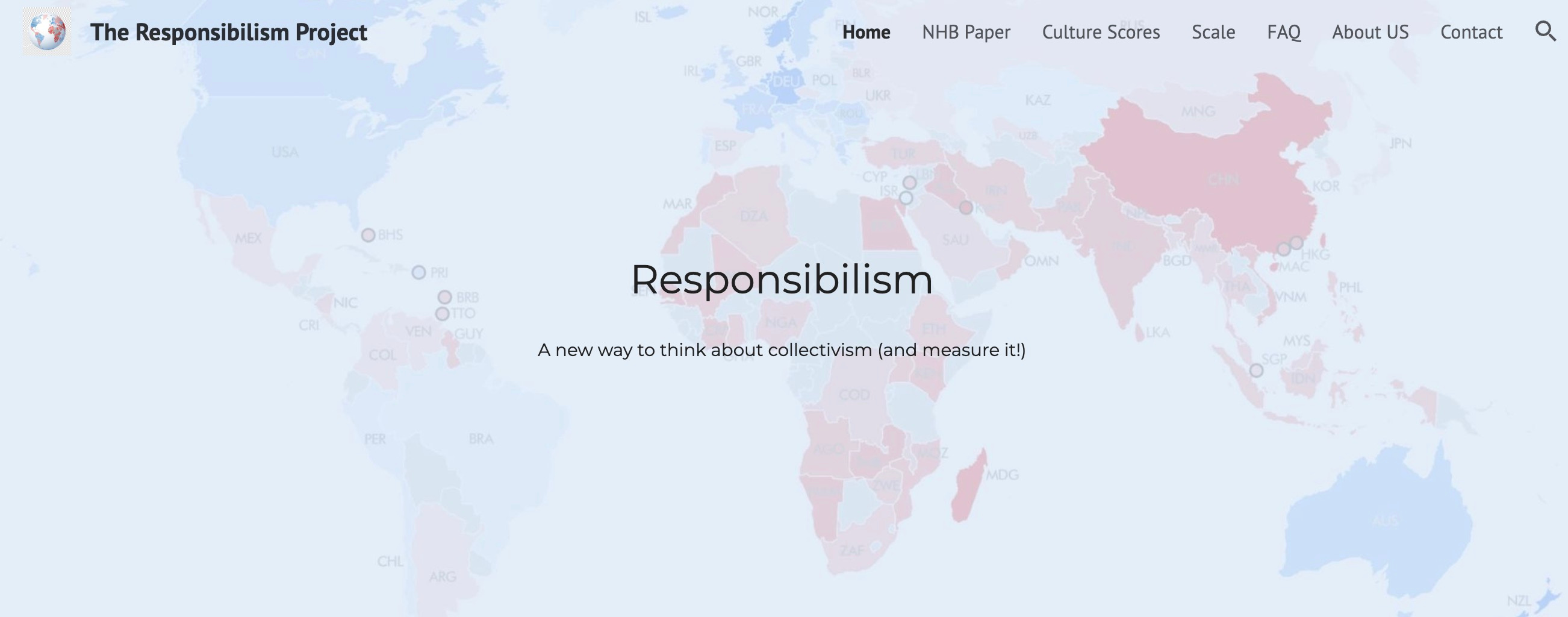
As one step toward what I hope is a more productive future, our team put the data, culture scores, and the survey available for all researchers to use at https://www.responsibilism.net/. It's time to retire the old surveys and the intuitions that have been causing people to talk past each other.
Follow the Topic
-
Nature Human Behaviour
Drawing from a broad spectrum of social, biological, health, and physical science disciplines, this journal publishes research of outstanding significance into any aspect of individual or collective human behaviour.

Related Collections
With Collections, you can get published faster and increase your visibility.
Digital Media and Mental Health
Publishing Model: Hybrid
Deadline: Oct 30, 2026
Basic Psychological Needs and Well-Being
Publishing Model: Hybrid
Deadline: Nov 27, 2026