Rediscovering a cave species lost from view for three decades
Published in Ecology & Evolution and Zoology & Veterinary Science
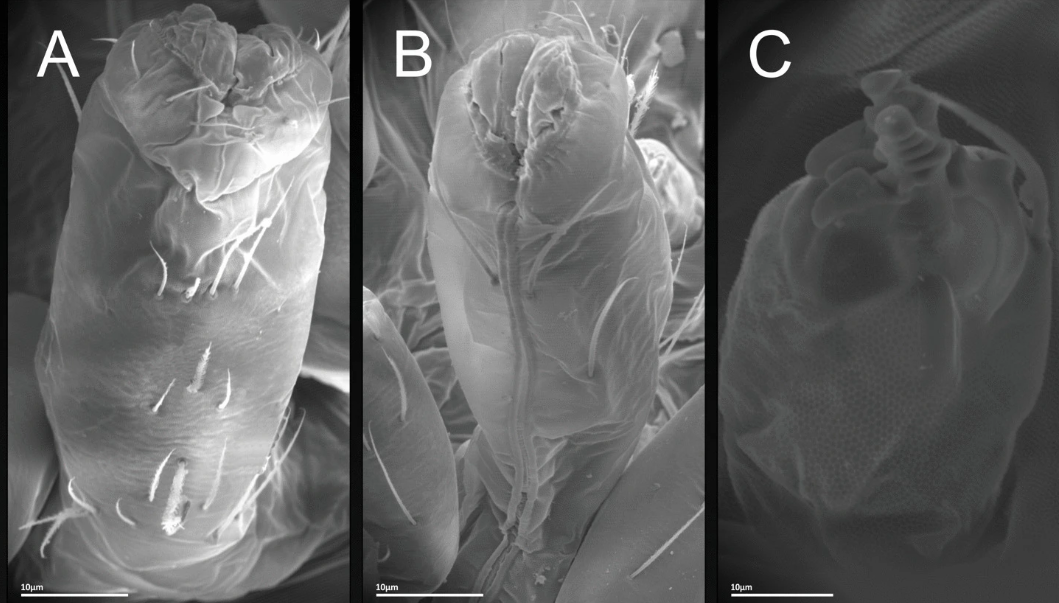

Species can be described, named and even assessed for conservation while remaining surprisingly poorly known. This was the case for Troglobius brasiliensis, a cave-dwelling springtail described in 1995 from specimens collected in northern Brazil several years earlier. After its original collection in 1988, the species was not recorded again, leaving major questions about its distribution, ecology and even its continued existence. Those questions became particularly important after the species was listed as Critically Endangered in Brazil. The story is told in a recent, open access paper published in Neotropical Entomology.
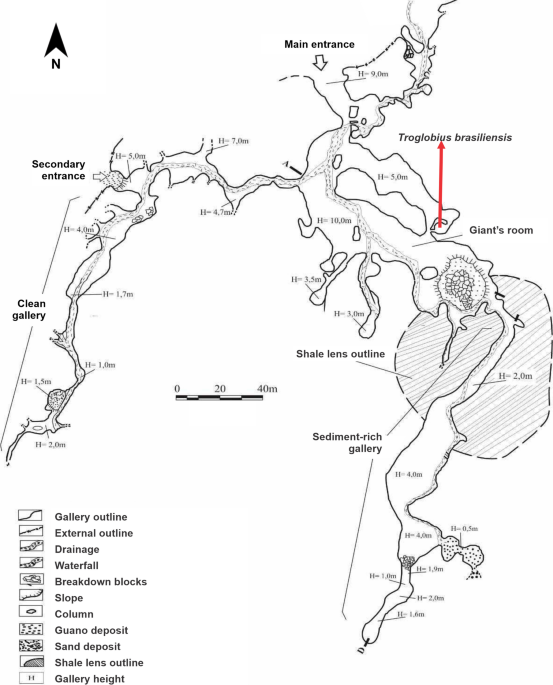
To address these uncertainties, researchers returned to Limoeiro Cave, in the Brazilian Amazon, with a straightforward but challenging objective: determine whether T. brasiliensis could still be found. Their surveys confirmed that the species survives, but they also revealed how restricted its world appears to be. Despite additional searches in nearby caves and examinations of museum collections, the springtail was found only in a small section of a single cave, along the bank of an underground stream.
A home in the dark
The rediscovery allowed the authors to move beyond the fragmentary information available from the original description. Adults and juveniles were observed in the cave, indicating a reproducing population, while detailed field observations revealed that the species occupies a very specific habitat associated with moist sandstone surfaces near the stream. Rather than being concentrated around bat guano deposits, as is common for many cave organisms, T. brasiliensis appears to be associated with biofilm-covered rock surfaces in a small sector of the aphotic zone.
The study also provided the first insights into the species' ecological interactions. The authors documented a predation event involving a pseudoscorpion nymph, offering a glimpse into the food web of this subterranean environment. Such observations help transform the species from a name attached to a handful of specimens into a living component of a functioning cave ecosystem.
Alongside these ecological findings, the paper presents a comprehensive redescription of the species based on scanning electron microscopy and DNA barcode data, providing a much stronger framework for future taxonomic and conservation work. Perhaps the most important contribution, however, is that the rediscovery replaces decades of uncertainty with evidence. Researchers now know where this species lives, how limited its distribution is and why protecting the cave and its hydrological conditions may be essential for its survival.
Author's note: I used Copilot to assist in creating this post.

Follow the Topic
-
Neotropical Entomology
Neotropical Entomology is an international journal focusing on fundamental and applied research in Entomology and Acarology, with a focus on the Neotropical region. Fauna from other regions is welcome as long as its impact is globally relevant.

Related Collections
With Collections, you can get published faster and increase your visibility.
Emerging Technologies in Entomology
Please check the Call for Papers here.
Publishing Model: Hybrid
Deadline: Nov 30, 2026