How far is safe? Rethinking emergency exit distances in tunnel fires
Published in Civil Engineering


Behind the Paper
What happens if a fire breaks out in a road tunnel and visibility suddenly drops to zero? In such a moment, people are forced to make critical decisions under stress, often with very limited information. The distance to the nearest emergency exit can become the difference between safe evacuation and serious harm.
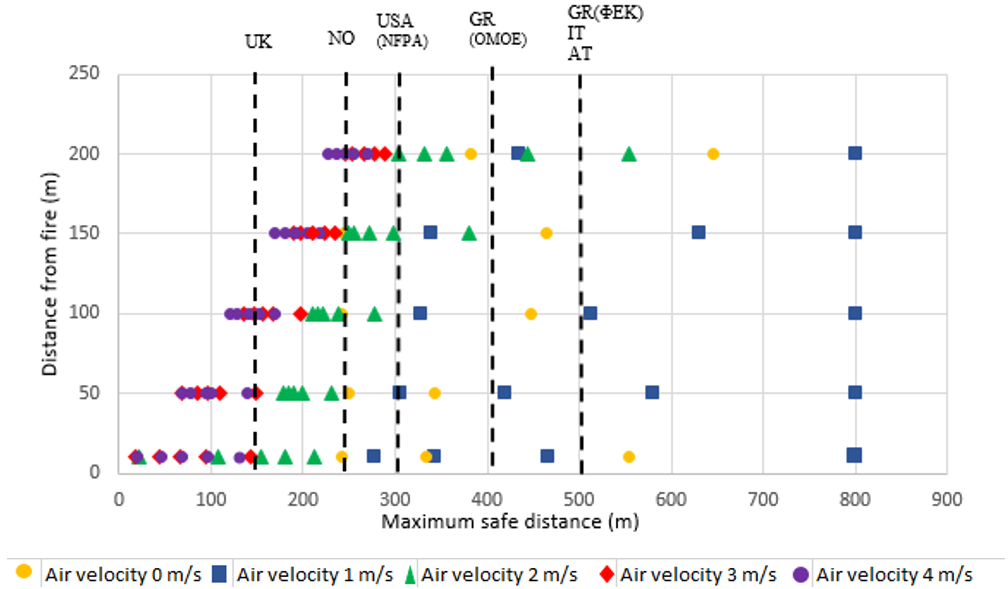
Road tunnels are essential parts of modern infrastructure, yet they also represent one of the most challenging environments in terms of fire safety. Their confined geometry, limited escape options, and the rapid spread of smoke make evacuation particularly complex. While safety regulations exist worldwide, one issue quickly became apparent to us: there is no clear consensus on how far apart emergency exits should be placed. Depending on the country, this distance can vary significantly—from 150 meters to as much as 500 meters—often without a transparent or universally accepted methodology.
This observation led to a simple but important question: Can we define emergency exit spacing based on actual safety conditions rather than fixed, prescriptive values?
From question to methodology
This research began during a postgraduate course, where we had the opportunity to explore real-world fire safety challenges together with a student working on her diploma thesis. With guidance from the supervising professor, we decided to focus on tunnel evacuation during fire incidents—an area where engineering, human behavior, and safety regulations intersect.
Rather than relying on existing rules, we aimed to develop a performance-based methodology. In other words, instead of assuming a “safe” distance, we wanted to calculate it based on what people actually experience during a fire.
To do this, we combined two advanced simulation tools:
- A fire simulation model to represent how heat and smoke spread inside a tunnel
- An evacuation model to simulate how people move and react under those conditions
We evaluated safety using key factors such as:
- Temperature, which can quickly become life-threatening
- Toxicity of smoke, which affects a person’s ability to breathe and function
- Visibility, which directly influences how fast and effectively people can move
A key concept in our work was determining when conditions become untenable—that is, when they exceed what a person can safely tolerate.
What we discovered
One of the most striking findings was that visibility plays a dominant role in evacuation safety. As smoke spreads through the tunnel, visibility rapidly decreases, causing people to slow down significantly. This reduction in movement speed leads to longer evacuation times and increased exposure to hazardous conditions.
Ventilation also proved to be a critical factor—but not always in the way one might expect. While ventilation is generally intended to improve conditions, increased airflow can actually accelerate the spread of smoke throughout the tunnel. In many cases, this resulted in smoke filling the entire cross-section more quickly, reducing the time available for safe evacuation and shortening the maximum distance a person can travel.
Another important factor is reaction time. The longer people delay before starting to evacuate, the worse the conditions become. As the fire develops, temperatures rise and toxic gases accumulate, significantly reducing the safe distance that can be covered.
Interestingly, we also observed specific cases where moderate airflow created slightly improved conditions for people located close to the fire, due to temporary layers of cleaner air. However, this effect was limited and did not change the overall conclusion: smoke propagation is the main threat to safe evacuation.
From simulations to practical insights
Based on our results, we developed a structured approach—a kind of practical framework—that can be used to:
- Estimate the maximum safe distance between emergency exits
- Evaluate the impact of ventilation conditions
- Highlight the importance of fast and effective alarm systems
- Support decision-making in tunnel design and safety planning
This approach allows engineers and authorities to move beyond fixed numbers and instead base their decisions on measurable safety criteria.
To better understand the implications of our findings, we compared our calculated safe distances with existing international regulations. The differences were significant.
Why this matters
Ultimately, this research highlights a key idea: safety should not rely on arbitrary numbers. Instead, it should be grounded in a clear understanding of how people and hazards interact in real conditions.
By adopting a performance-based methodology, it becomes possible to design safer tunnels, optimize emergency exit placement, and support more consistent and scientifically justified regulations across different regions.
In environments where seconds matter and visibility can disappear in moments, designing for realistic conditions is not just an engineering challenge—it is a necessity.
https://www.doi.org/10.1007/s10694-026-01900-8

Follow the Topic
-
Fire Technology
Fire Technology is a leading research journal dedicated to resolving problems in fire safety and fire engineering.

Related Collections
With Collections, you can get published faster and increase your visibility.
Fire Safety during Building Construction and Renovation
Construction and renovation phases present unique fire safety challenges that can differ from those encountered in completed and operational buildings. Temporary installations, evolving geometries, exposed structural elements, changing materials, and highly dynamic site activities can create elevated fire risks that are poorly addressed by existing codes and design methods. Recent large-scale incidents worldwide underscore the need for deeper scientific understanding and improved mitigation strategies.
This Topical Collection focuses on advancing knowledge of fire hazards, fire dynamics, human behaviour, regulatory gaps, and engineering solutions related to construction-phase and renovation-phase environments. The collection aims to highlight emerging research, practical lessons, and innovations that can reduce fire risk during these critical stages of the built environment.
Submission guidelines
All papers must be prepared in accordance with the Submission Guidelines. Articles for this Topical Collection should be submitted via our submission system, Snapp. During the submission process you will be asked whether you are submitting to a Collection, please select "Fire Safety during Building Construction and Renovation" from the dropdown menu.
Submitted papers should present original, unpublished work, relevant to one of the topics of the Topical Collection. All papers will be evaluated on the basis of relevance, significance of contribution, technical quality, scholarship, and quality of presentation by at least two reviewers. It is the policy of the journal that no submission, or substantially overlapping submission, be published or be under review at another journal or conference at any time during the review process. Final decisions on all papers are made by the Editor-in-Chief.
Publishing Model: Hybrid
Deadline: Dec 31, 2026
Fire Science Reviews
Fire Science Reviews, a curated collection within the journal Fire Technology, focuses on comprehensive reviews of current research in fire science. It covers various topics such as fire dynamics, fire safety engineering, materials' flammability, and fire detection systems. The reviews aim to synthesize recent advancements and highlight significant findings, providing valuable insights for researchers, practitioners, and policymakers.
This collection is curated by the Editor-in-Chief based on article publications based on article's merit and contributions. Authors cannot submit to it directly.
Publishing Model: Hybrid
Deadline: Ongoing