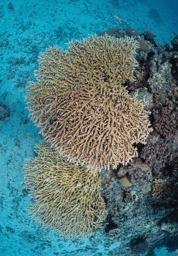
How seahorses change colour, one habitat at a time
Published in Zoology & Veterinary Science and Anatomy & Physiology
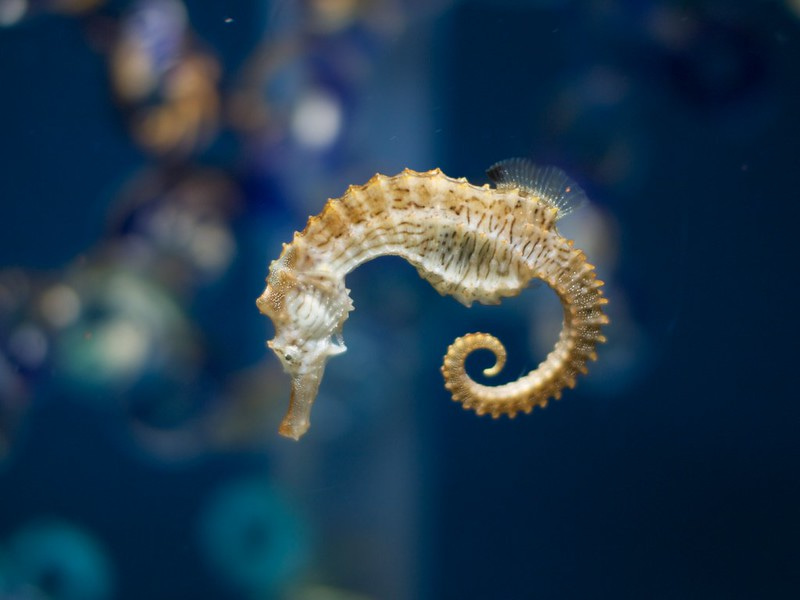


Seahorses are often celebrated for their unusual shape, but another remarkable feature tends to receive less attention: their ability to alter body colour in response to their surroundings. For animals that spend much of their lives anchored to seagrasses, corals, and other coastal structures, blending into the background can be an important part of staying unnoticed. A new study published in Reviews in Fish Biology and Fisheries takes a closer look at how this process unfolds and what may be happening behind the scenes.
Using the lined seahorse (Hippocampus erectus), the authors exposed individuals to different background environments and monitored their appearance over time. Rather than changing colour within seconds or minutes, as seen in some marine animals, the seahorses gradually shifted from dark coloration to yellow, red, or grey forms over several days. Most colour transitions occurred within the first five days, after which the response approached a plateau.
To better understand the biological basis of these changes, the researchers combined behavioural observations with microscopy, comparative genomics, and gene expression analyses. Their results suggest that colour shifts are associated less with the production of new pigment and more with changes in the distribution and organisation of existing pigment granules within pigment cells. Dark individuals showed densely distributed melanophores, whereas lighter colour morphs exhibited reduced pigment coverage and more aggregated pigment granules.
Visual input
The study also explored the possible role of vision. In a separate experiment, seahorses whose eyes were covered did not show detectable colour changes during the 72-hour observation period. The authors are careful to note the limitations of this experiment and do not interpret it as definitive proof. Nevertheless, when considered alongside the genomic and transcriptomic data, the findings are consistent with a possible contribution of visual input to background-associated colour change.
One of the most interesting aspects of the work is its broader evolutionary perspective. By comparing seahorses with colour-changing reptiles and amphibians, the researchers identified shared genetic signatures linked to visual perception, neural signalling, cytoskeletal remodelling, and pigment transport. Although the mechanisms differ among groups, the study suggests that similar biological pathways may repeatedly contribute to adaptive colour modulation across vertebrates.
Beyond the evolutionary questions, the findings may also be relevant for aquaculture and the ornamental fish sector. The authors propose that carefully designed visual environments, including substrate and background colour, could help influence body coloration in captive seahorses while working with their natural behavioural responses. At the same time, the study offers a reminder that camouflage is not simply a matter of colour. It may depend on an intricate interaction between perception, physiology, and the environment itself.
Author's note: I used Microsoft Copilot to assist in creating this post.
Image: shellac, CC-BY 2.0

Follow the Topic
-
Reviews in Fish Biology and Fisheries
Reviews in Fish Biology and Fisheries is an international journal that publishes original and review articles on various aspects of fish biology, fisheries, and aquaculture.

Related Collections
With Collections, you can get published faster and increase your visibility.
Sustaining Life Below Water: Conserving, managing, and protecting our marine and freshwater resources
In support of the UN Sustainable Development Goal SDG14 we are calling for submissions for this new collection on Sustaining Life Below WaterPlastic waste, overfishing, ocean acidification, increasing eutrophication are some of the major threats endangering our oceans, rivers and lakes. With this collection we aim to create a cross-disciplinary home for research articles, perspectives, and emerging topics addressing the conservation and sustainability of the use of our marine and freshwater resources. By putting scholarship supporting this UN Goal in the spotlight we hope to increase the scientific knowledge and awareness of the targets and indicators set by the UN Goal such as reducing marine pollution, strengthening resilience, restoring coastal ecosystems, minimizing the impacts of ocean acidification, reducing destructive fishing practices, providing access for small-scale fishers to marine resources and markets and more.
We call for submissions on (but not limited to) the following topics:
•Biotelemetry and bio-logging
•Dam removal policy and development
•Economic benefits to Small Island developing States and least developed countries through sustainable management of fisheries, aquaculture and tourism
•Effects of reef degradation on ecosystem goods and services
•Environmental DNA and RNA
•Environmental flows
•Fish migration and passage
•Fisheries-induced evolution
•Floodplain management
•Hydropower mitigation
•Links between reef health and human health
•Methods and case studies and their scientific assessment, to manage, protect, and restore wetlands, to prevent and significantly reduce wetland pollution, in particular from land-based activities, including sedimentation from poor land-use, plastic and nutrient pollution
•Physiology and health of wild fish
•Preventing and reducing (plastic) pollution/waste in particular from land-based activities, including marine debris and nutrient pollution
•Policy development in river and lake management
•Reducing/minimizing ocean acidification
•Regulating harvesting, ending of overfishing and destructive fishing practices, and science-based management plans to restore fish stocks
•Restoration goals in lake management River and lake restoration
•Strengthening resilience and restoration of coastal ecosystem Understanding and improving sustainable use of coral reef resources.
How to submit? Please use the Submit to this journal link from the participating journals. These journals can be viewed in the right menu. During submission you will be asked if you would like your article to be included in a Topical Collection. Select ‘Yes’ and select the name of this collection from the drop down menu: TC: Sustaining Life Below WaterSubmissions to the collection may be original research articles, perspectives or review articles. Please read the submission guidelines for each journal before submitting. Each submission will undergo thorough and rigorous peer review according to each journal’s peer review editorial policy. Accepted articles will be published in their respective journal and will benefit from being cross-linked as well on the collection page.
The following journals are participating in this collection:
•Aquatic Ecology
•Aquaculture International
•Aquatic Sciences
•Coral Reefs
•Environmental Biology of Fishes
•Estuaries and Coasts
•Fish Physiology and Biochemistry
•Fisheries Science
•Hydrobiologia
•Journal of Applied Phycology
•Journal of Coastal Conservation
•Journal of Ocean University China
•Limnology
•Marine Biology
•Marine Biotechnology
•Maritime Studies
•Ocean Science Journal
•Reviews in Fish Biology and Fisheries
•Thalassas: An International Journal of Marine Sciences
•Wetlands Ecology and Management
Publishing Model: Hybrid
Deadline: Ongoing