How Seasons Shape ‘Syrah’ Grapevines in a Tropical Terroir
Published in Plant Science and Agricultural & Food Science
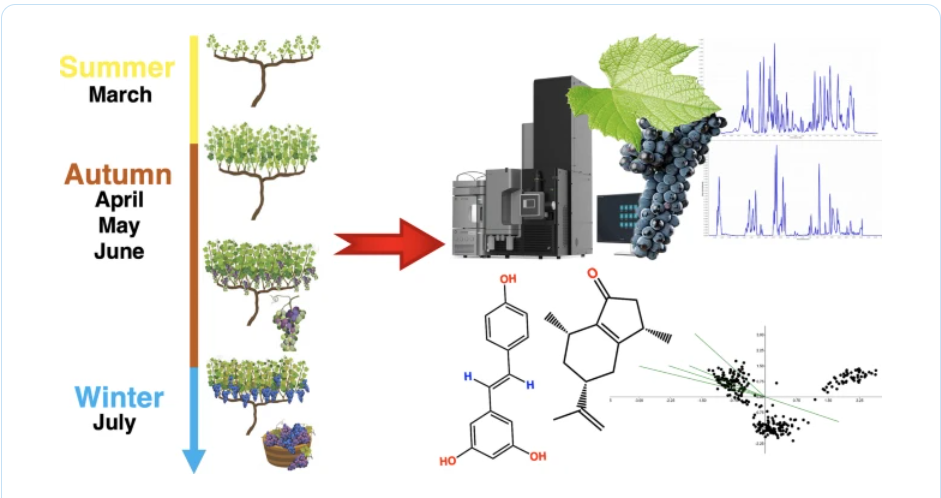
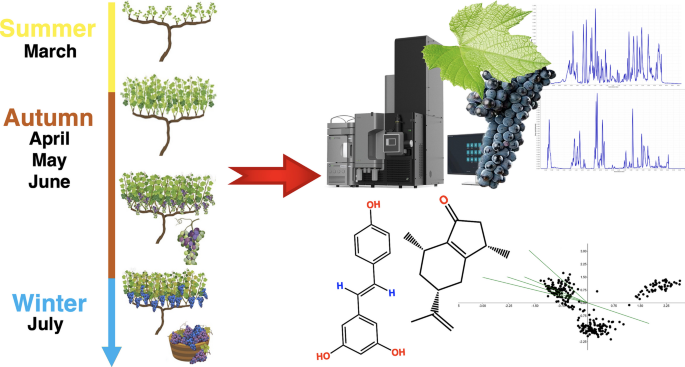

Viticulture is often associated with temperate landscapes and clearly defined seasons. Yet wine production is also developing in regions with very different climates. In Ribeirão Preto, in southeastern Brazil, hot and rainy summers alternate with dry winters, creating distinctive conditions for grapevine cultivation. A recent, open access article published in Revista Brasileira de Farmacognosia examines how ‘Syrah’ grapevines respond metabolically to this tropical environment.
In Seasonal Metabolic Shifts in ‘Syrah’ Grapevines from an Emerging Tropical Terroir Revealed by LC-MS Metabolomics, the researchers followed leaves and grapes over two production cycles in vines managed using a double-pruning system. This approach shifts the grape-ripening and harvest period away from the rainy summer and towards the drier winter months. The study therefore offers an opportunity to investigate how plant development and changing environmental conditions are reflected in the chemical composition of the vine.
Using untargeted liquid chromatography–mass spectrometry metabolomics, the team analysed 370 leaf extracts and 187 grape extracts. The resulting profiles revealed metabolic variation associated with sampling periods and climatic conditions. The compounds highlighted in the study included anthocyanins, amino acids, and phenolic compounds connected with grape maturation, plant responses to stress, and characteristics relevant to wine composition.
Pepper aroma
The researchers also detected rotundone, a compound associated with the characteristic black-pepper aroma of ‘Syrah’. According to the authors, this is the first report of rotundone in grapes produced under this tropical double-pruning system. Its detection adds a sensory dimension to the metabolic analysis and provides another point of connection between vineyard conditions, grape chemistry, and the attributes eventually expressed in wine.
The value of the study lies in the detailed picture it provides of metabolic change across the growing cycle. Rather than treating grape composition as a fixed property of a cultivar, the work shows how it varies alongside development and seasonal conditions. This perspective may be useful for researchers studying plant adaptation, fruit maturation, terroir, and the application of metabolomics to crop monitoring. Previous research has similarly shown that climate and growing region can influence grapevine phenology and the phenolic composition of ‘Syrah’ grapes and wines.
The article also illustrates the contribution that pharmacognosy and natural-product analysis can make to questions extending into agriculture and food science. By documenting the chemistry of ‘Syrah’ cultivated in an emerging tropical wine region, the authors provide a foundation for further research on harvest timing, climatic variation, grape quality, and the characteristics of wines produced under these conditions.
Author's note: I used Microsoft Copilot to assist in creating this post.

Follow the Topic
-
Revista Brasileira de Farmacognosia
The Revista Brasileira de Farmacognosia-Brazilian Journal of Pharmacognosy is an international peer reviewed journal that covers a wide-range of research on Pharmacognosy, the study of plants, animals and microorganisms as a possible source of bioactive natural products.




Please sign in or register for FREE
If you are a registered user on Research Communities by Springer Nature, please sign in