"I'd Rather Just Push Through It": Why So Many Young Women Avoid Period Pain Medication
Published in Public Health and Paediatrics, Reproductive Medicine & Geriatrics


A pain almost every young woman knows
If you've ever doubled over with period cramps, missed a class, or quietly powered through a workday while gripping a hot water bottle under your desk, you already know what dysmenorrhea feels like even if you've never heard the clinical name for it.
It's one of the most common health complaints among young women anywhere in the world, with global prevalence estimates ranging from 45% up to 95% depending on the population studied. In Nigeria, studies among young women put the number at roughly 68–72%. And yet, despite how common it is, dysmenorrhea is still frequently brushed aside by patients, and sometimes by the health systems meant to help them, as just something you're supposed to endure.
What surprised us most in this study wasn't that so many young women experience painful periods. It's that so many of them, even when medication was available and known to help, chose not to take it.
The question we wanted answered
Medical guidelines are fairly clear: over-the-counter anti-inflammatory painkillers (NSAIDs) are the first-line, evidence-based treatment for period pain, and they work by directly reducing the uterine contractions that cause the cramping in the first place.
But clinical guidelines only matter if people actually feel comfortable following them. We wanted to know: how many young women experiencing period pain are hesitant to take medication for it? What's driving that hesitation? And are some groups of students more affected than others?
To find out, we surveyed 273 female undergraduate students at the University of Abuja, one of Nigeria's largest public universities, asking about their menstrual health, their medication habits, their beliefs about treatment, and the alternative methods they turn to instead.
What we found
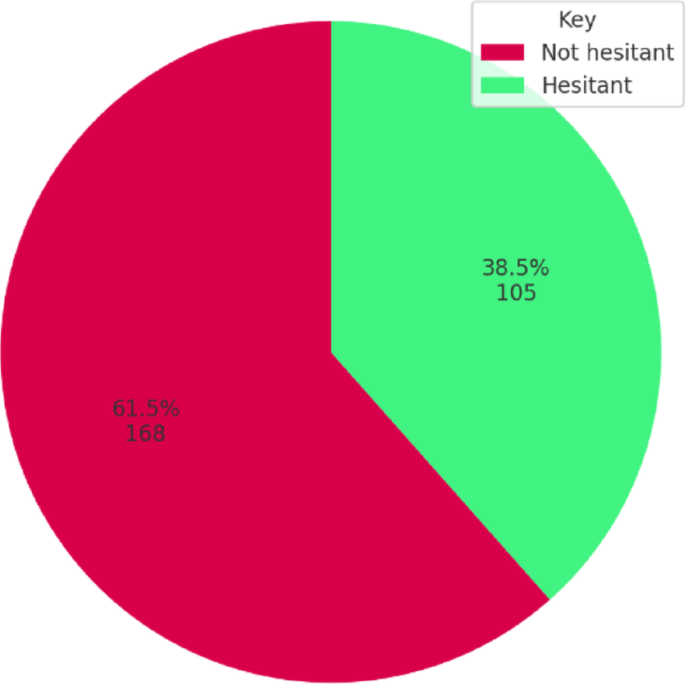
Almost 4 in 10 students said no to medication. Of the students who experienced menstrual pain, 38.5% reported that they simply don't use medication to manage it despite it being both available and effective.
The reasons weren't really about the pain itself — they were about fear. When we asked why, the top answers weren't about cost or access. They were about trust:
- 81.9% feared side effects
- 66.7% worried the medication could lead to addiction
- 51.4% feared it might affect their future fertility
- 43.8% cited religious or cultural beliefs
None of these fears are supported by clinical evidence. Standard doses of NSAIDs for period pain don't cause addiction, and there's no established link between short-term NSAID use for dysmenorrhea and infertility. But the fears were real, common, and clearly shaping behavior.
Most turned to something else instead. More than half of students (55.3%) said they use alternative approaches to manage their pain, where heat therapy (25.2%) and simple relaxation techniques (16.6%) were the most popular, followed by exercise (15.2%) and supplements (13.9%). These aren't bad choices on their own. Heat therapy in particular has decent evidence behind it for mild pain, but it's often not enough on its own for moderate-to-severe cramping, and many students seemed to be leaning on it as a full replacement for medical treatment rather than a complement to it.
Trusting medicine and avoiding medicine weren't opposites. Here's the part that really stood out to us: 73.6% of students actually had a positive view of medical treatment for dysmenorrhea overall. But that positive attitude had no statistically significant relationship with whether they actually took medication when they were in pain. In plain terms, believing medicine works and actually using it turned out to be two very different things. Fear and cultural belief were doing more of the driving than logic or trust.
Some students believed they should "wait it out." A meaningful number of respondents felt medication should only be used once pain became severe, a belief that, in practice, likely means many students are suffering longer than they need to before reaching for something that could help.
Cultural background mattered. This was one of our clearest findings. Compared with Yoruba students, Hausa students were over 2.5 times more likely to report medication hesitancy, and Igbo students were roughly 3 times more likely. Age, religion, and even a student's own positive perception of medicine didn't significantly predict hesitancy but ethnicity did. This tells us something important: this isn't simply a knowledge gap that a single generic pamphlet can fix. It's shaped by specific cultural narratives and beliefs that differ meaningfully across communities.
Why this actually matters
Untreated period pain isn't just a personal inconvenience. It's linked to missed classes, reduced concentration, and lower academic performance—real costs stacking up quietly, semester after semester, often in silence, because menstruation is still a topic many young women hesitate to talk about openly.
If a large proportion of students are avoiding a safe, effective, and accessible treatment purely out of misplaced fear, that's a solvable problem, but only if the solution speaks directly to the actual fears people hold in a way that fits their specific cultural context.
What needs to happen next
Based on what we found, a single, one-size-fits-all "period pain awareness" poster campaign probably won't move the needle much. What's more likely to help:
- Culturally tailored health messaging — speaking directly and respectfully to specific fears (like fertility concerns) within the communities where those fears are strongest, rather than assuming every student needs the same message.
- University health services stepping in—offering real menstrual health counseling as a normal part of campus healthcare, not an awkward afterthought.
- Peer-led education — students often trust other students, especially when messaging comes through familiar cultural and community channels rather than generic institutional messaging.
Period pain is common. Effective treatment for it exists. The gap between those two facts is filled almost entirely by fear, belief, and silence, and that gap is exactly where good, culturally aware health education can make a real difference.
Read the full open-access paper here: https://doi.org/10.1186/s12982-025-01231-z

Follow the Topic
-
Discover Public Health
This is an open access journal publishing research from all fields relevant to public health.

Related Collections
With Collections, you can get published faster and increase your visibility.
Mental and Behavioral Health in Conflict-Affected Settings: Coping, Resilience, and Social Influences
Conflict-affected settings are characterized by chronic instability, economic hardship, and social disruption, all of which profoundly impact mental and behavioral health. In such contexts, individuals are often exposed to cumulative stressors that increase vulnerability to psychological distress, maladaptive coping strategies, and health-risk behaviors. Understanding the mechanisms that shape mental health outcomes in these environments is essential for developing effective public health interventions.
This Collection aims to advance knowledge on the psychological and behavioral determinants of mental health in conflict-affected populations, with a particular emphasis on personality traits, coping strategies, resilience, and social influences. These factors play a critical role in shaping how individuals perceive, respond to, and adapt to adversity. Personality traits may influence vulnerability or protection against mental health disorders, while coping mechanisms and resilience determine the capacity to manage stress and maintain psychological well-being. In parallel, social influences such as stigma, social norms, and perceived acceptability of behaviors contribute significantly to health-related decision-making and risk behaviors.
We welcome original research articles, systematic reviews, and methodological studies that explore mental and behavioral health outcomes in populations exposed to conflict, political instability, or socioeconomic crises. Studies employing observational, analytical, or longitudinal designs are particularly encouraged, as well as those introducing innovative approaches to measurement and analysis in public health.
By bringing together interdisciplinary research, this Collection seeks to provide a comprehensive understanding of the psychological and social processes underlying mental health in fragile settings. Ultimately, it aims to inform evidence-based interventions, support policy development, and strengthen mental health systems in regions affected by conflict and crisis.
This Collection supports and amplifies research related to SDG 3: Good health and Well-Being.
Keywords: Mental health; Behavior health; Refugees; Conflict-affected populations; Coping; Resilience; Social Influences; Well-being; Psychological distress
Publishing Model: Open Access
Deadline: Mar 05, 2027
Digital Frontiers in Public Health: Data-driven Solutions and Technologies for Efficiency, Effectiveness, and Equity
In recent years, the landscape of public health has been transformed by unprecedented access to high-quality data, advances in data storage and processing, and a growing willingness to share information across jurisdictions. The global response to the COVID-19 pandemic exemplified how coordinated data use and technological innovation can accelerate decision-making, enhance surveillance, and save lives. These developments mark a new era in which the application of modern data analytics in evidence-driven public health practices is not only possible but essential.
Building on this momentum, contemporary innovations are contributing to significant improvements in the three Es of public health: efficiency, effectiveness, and equity. Improved efficiency enables resources to be allocated and managed in a manner that generates the maximum attainable outputs; enhanced effectiveness ensures that public health policies, interventions, and practices achieve the expected health outcomes; and strengthened equity promotes fair access to healthcare and public health services across all populations. Together, these dimensions reflect the evolving priorities and capabilities of modern public health systems.
This Collection, “Digital Frontiers in Public Health: Data-driven Solutions and Technologies for Efficiency, Effectiveness, and Equity,” invites contributions that explore these themes through empirical studies, methodological advancements, case studies, and policy analyses. We seek manuscripts that highlight innovative data applications, cross-sector collaborations, digital health initiatives, and strategies that enhance equity through technology and data integration, as well as collaborative public health practices.
Topics of interest include, but are not limited to:
- Applications of novel data linkage and analytics methods in public health
- The role of participation and co-creation in addressing public health issues
- Digital and technological innovations in public health
- Complete or partial assessments of triple Es in public health
- Economic evaluations of public health interventions
By showcasing diverse approaches from around the world, this Collection aims to provide a comprehensive overview of how data-driven innovations are reshaping public health practice today, and in the future. Researchers, practitioners, and policymakers are encouraged to share their insights and experiences to contribute to this critical dialogue on the future of public health.
This Collection supports and amplifies research related to SDG 3.
Keywords: digital applications; data sharing; data infrastructure; economic evaluations; health equity; public health; policy analysis; health informatics
Publishing Model: Open Access
Deadline: Sep 30, 2026