Is it IBS, or is it a "Hidden Guest"?
Published in Microbiology, General & Internal Medicine, and Public Health
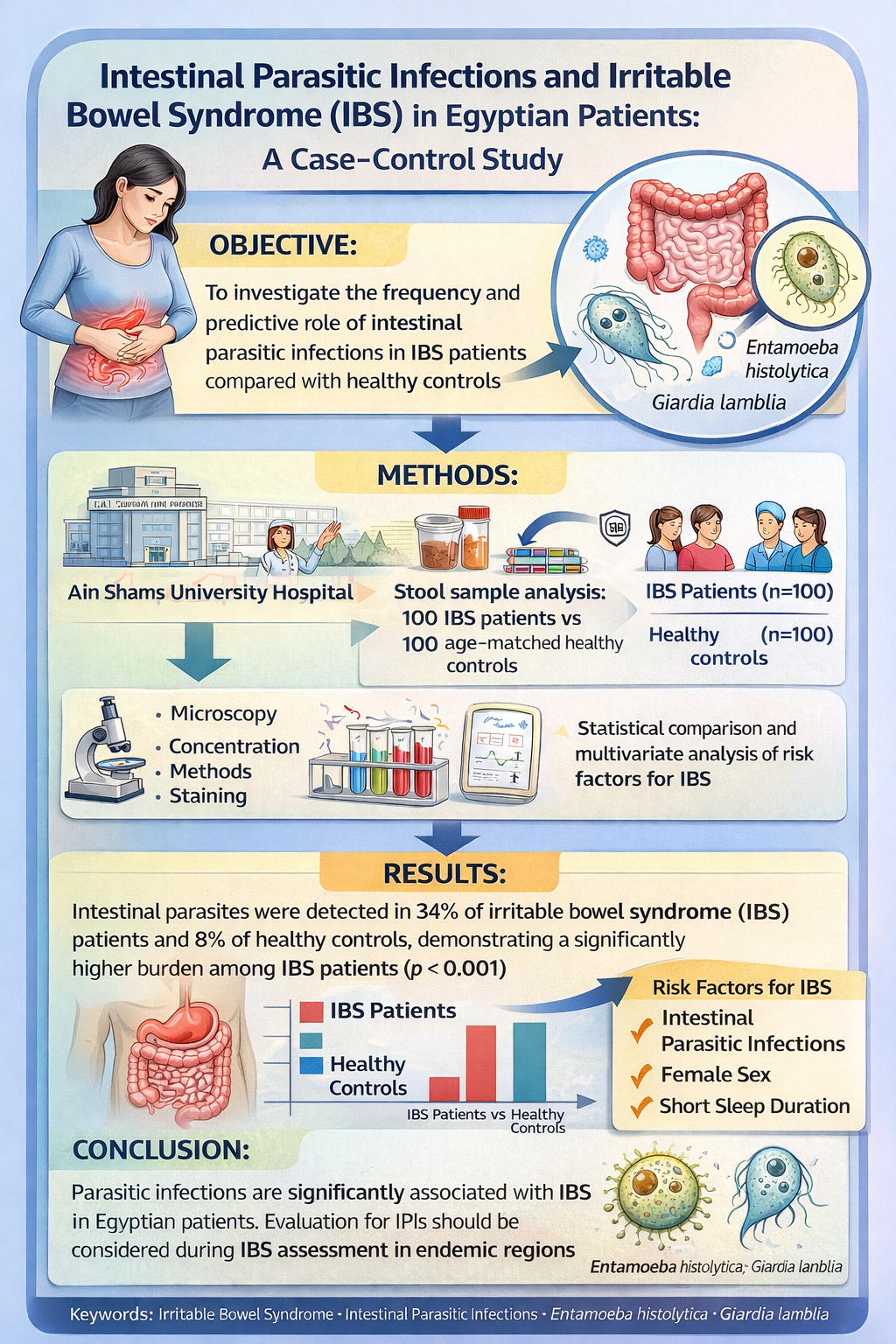

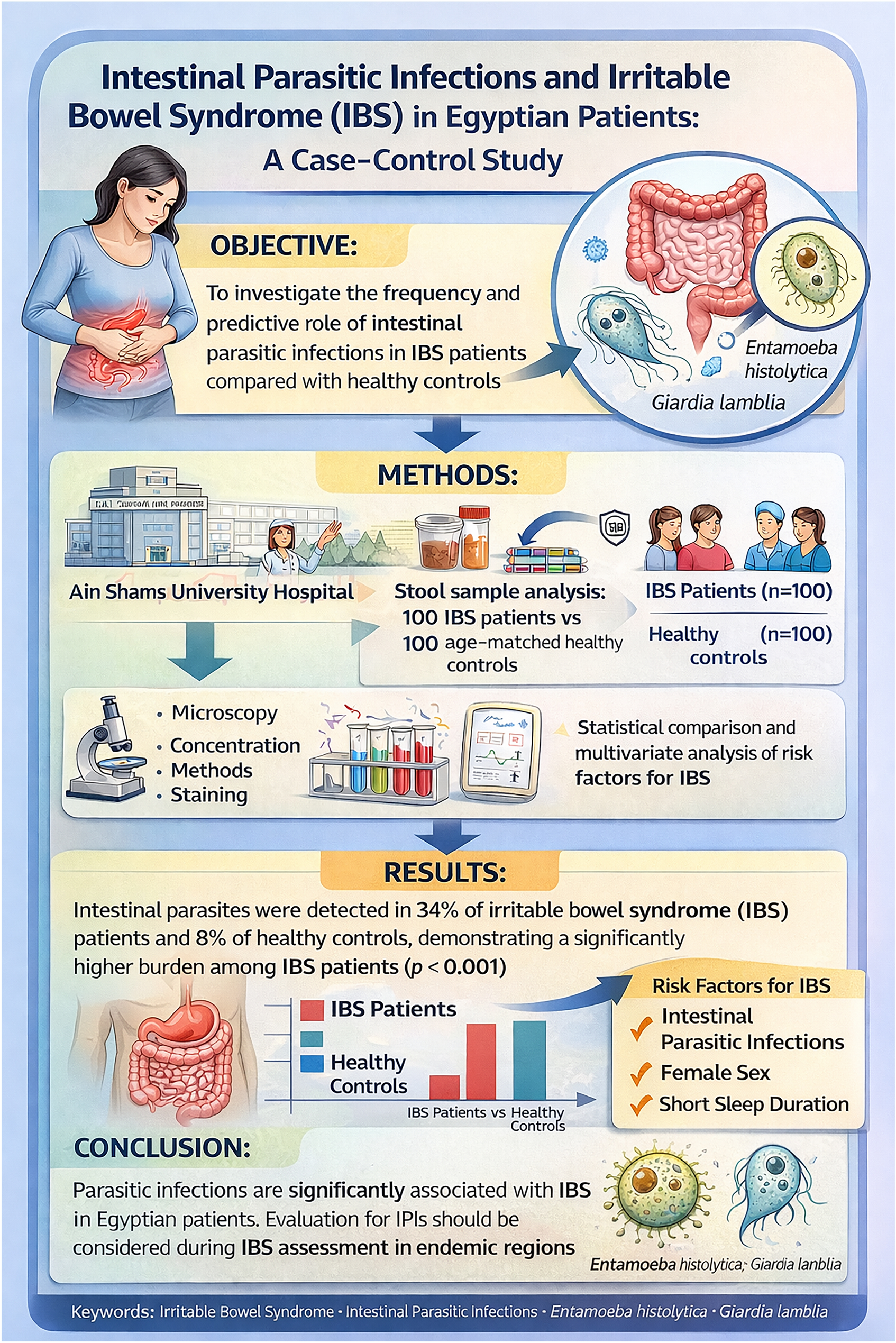

In our latest study published in Infection, we took a closer look at the relationship between intestinal parasites and IBS symptoms in Egyptian patients. The results were eye-opening and suggest we might need to rethink how we diagnose gut health in our region.
Our research compared a group of IBS patients with healthy individuals. We found that over one-third (34%) of those with IBS were actually carrying intestinal parasites, compared to only 8% of the healthy group. The most frequent "uninvited guests" were Entamoeba histolytica and Giardia lamblia. For many of these patients, their "IBS" might actually be a persistent, treatable infection.
The label of "IBS" can sometimes be a dead end for patients. If a patient is treated for IBS symptoms but the root cause is a parasite, they may never find true relief. Our study highlights three critical takeaways:
Geography is Key: In endemic regions like Egypt, a "standard" IBS diagnosis should always include a deep dive into parasitology.
Beyond the Gut: We found that factors like female sex and short sleep duration were also linked to higher IBS frequency, reminding us that the gut-brain-lifestyle axis is always at play.
A Path to a Cure: Unlike chronic IBS, many parasitic infections can be cleared with the right medication. This shifts the conversation from "management" to "recovery."
If you are struggling with chronic bloating, pain, or bowel changes, don't settle for a generic diagnosis. Our research advocates for a more precise, investigative approach to gastrointestinal health.
It’s time to stop guessing and start testing.
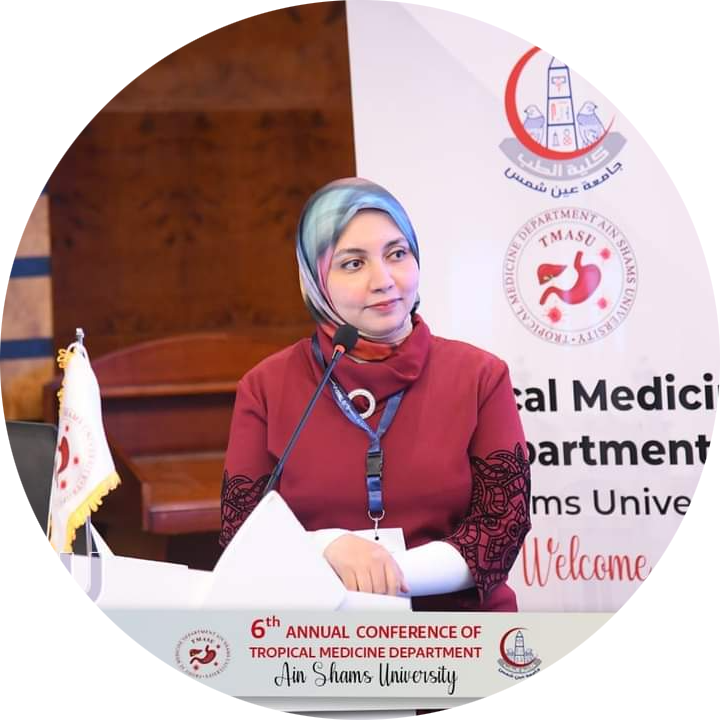
I am so grateful to be a young Egyptian lecturer and woman with a passion for the field of Hepatology,Gastroenterology and Infectious diseases.
_Lecturer (Consultant) of Tropical Medicine, Gastroenterology, and hepatology, Ain Shams University,
Cairo Egypt.
_Lecturer member at Hepatoma group, Ain Shams University, Cairo, Egypt.
_Member of EASL organization / the home of hepatology
_Supervisors of valuable theses (master's and doctorate).
_Cofounder and president of D. Nourhan Badwei Clinic (Liver/GIT/Infectious diseases).
_Early career editor in Gene Expression - The Journal of Liver Research (Awarded an outstanding early career editor 2023 and 2025), Guest editor in OBM transplantation journal (2023-2025), Editorial board member in Edelweiss Applied Science and Technology.
_Published valuable research in the field of hepatology and gastroenterology, particularly liver cancer, transplantation and irritable bowel syndrome for example;
I. Badwei, N., Molecular Clues For Prediction Of Hepatocellular Carcinoma Recurrence After Liver Transplantation, Journal of Clinical and Experimental Hepatology (February 2023). DOI: 10.1016/j.jceh.2023.02.006.
I. Badwei, N., Hepatocellular Carcinoma Gene Expression: The New Era, Where It goes? (December 2022), iLIVER journal. DOI: 10.1016/j.iliver.2022.12.001.
I. Badwei N. Challenges related to clinical decision-making in hepatocellular carcinoma recurrence postliver transplantation: Is there a hope? World J Transplant 2024; 14(3): 96637.
I. Gado MS, Moez ATA, El-Khazragy N, Salem HEDM, Badwei N. The Potential Oncogenic Role of Serum-derived hsa_circ_101555 as a Non-invasive Diagnostic/Prognostic Marker in Patients with Hepatocellular Carcinoma. Gene Expr. 2025;24(2):102-118. doi: 10.14218/GE.2025.00012.
I. Badwei N, Moez ATA, El-Khazragy N, Gado MS. Serum-derived hsa_circ_101555 as a Diagnostic Biomarker in Non-hepatocellular Carcinoma Chronic Liver Disease: A Phase II Cross-sectional Study. Gene Expr. 2025;24(4):e00040. doi: 10.14218/GE.2025.00040.
I. Badwei, N., Abdelsalam, A., Wassif, G.O. et al. Frequency and predictive role of intestinal parasitic infections with irritable bowel syndrome in Egyptian patients: a case–control study. Infection (2026). https://doi.org/10.1007/s15010-026-02724-y.
I. Badwei, N., Abdelsalam, A., Wassif, G. O., & El‐Din, H. E. S. (2026). Quality of Life and Psychological Burden in Irritable Bowel Syndrome: The Impact of Intestinal Parasitic Infections (Phase II Study). Tropical Medicine & International Health. https://doi.org/10.1111/tmi.70079.
_Guaranteed Peer reviewer for over 100 papers in high quartile journals for Hepatology (HCC/LT) and Gastroentrology field; Oncologie, Cureus, Journal of Clinical and Experimental Hepatology, Discover Oncology, Journal of Hepatocellular Carcinoma, World Journal of Surgical Oncology, Journal of Inflammation Research, ecancer medical science, Patient Preference and Adherence, Journal of Medical Case Reports, PLOS One, Biomolecules and Biomedicine, Pharmacogenomics and Personalized Medicine, Biologics: Targets and Therapy, BMC Cancer, Scientific Reports, Annals of Medicine, Egyptian Liver Journal, BMC Gastroenterology, Journal of Biochemical and Molecular Toxicology, European Journal of Medical Research, Journal of Translational Gastroenterology, Clinical and Experimental Medicine, Annals of Hepatology, Diabetology & Metabolic Syndrome, Heliyon, Oncotarget, Clinical Epigenetics, Cellular and Molecular Gastroenterology and Hepatology, Journal of Cancer Research and Clinical Oncology, Hepatology International, Supportive Care in Cancer, Journal of Gastrointestinal tract.
_Won the best abstract presentation of the international ISCO 2025 (held in Cairo Egypt) under the patronage of the Gustave institute.
_Member, SciPinion Scientific Community (Expert Peer Reviewer) since February 2026.
_Scientific Expert Assessor in Metascience Novelty Indicators Challenge (MetaNIC) UK Metascience Unit / Elsevier / blind Challenge Works to assess the novelty of selected publications within my expertise in hepatology.
_Participated in many national/ international conferences (as speaker/ moderator/co-ordinator) and workshops (as trainer) in Liver/GIT/Infectious diseases related field
Follow the Topic
-
Infection
This is a peer-reviewed journal dedicated to presenting and discussing clinically relevant information on infectious diseases globally.

Related Collections
With Collections, you can get published faster and increase your visibility.
Monkeypox
Since early May 2022, cases of monkeypox have been reported from countries where the disease is not endemic, and continue to be reported in several countries where cases have historically been reported. Since then, the number of outbreaks has continued to increase, and as of July 2022 there are more than 16.000 reported cases from 75 countries and territories, which has led to the World Health Organization declaring monkeypox a public health emergency of international concern (PHEIC) on 23rd July 2022.
As the WHO Director-General states, the global community is currently in need of scientific principles, evidence, and other relevant information related to the outbreak and spread of monkeypox.
INFECTION has therefore dedicated a collection of all publications in the journal addressing monkeypox to ensure that all relevant research published in the journal can easily be found in one place.
The article collection on monkeypox is open to submissions. Manuscripts can be submitted to the journal and will be added to the collection upon online publication. All submissions on monkeypox are subject to the same rigorous peer review practices that all submissions to the journal undergo.
Publishing Model: Hybrid
Deadline: Ongoing