Isosilybin B: a potential novel therapeutic agent with hepatoprotective, anticancer and antifibrotic properties
Published in Cancer, Cell & Molecular Biology, and Biomedical Research





Since I was a child, I have been fascinated by the unknown in nature. Finding something new always felt a bit like Indiana Jones discovering the Holy Grail - I just hoped mine would be something natural. That curiosity pulled me toward science and, eventually, to a project on milk thistle (Silybum marianum). The seeds of this plant contain silymarin, a mixture of molecules called flavonolignans. The most abundant one is silybin, usually 40–60% of the extract. It was the first to be characterized and naturally became the most studied of all silymarin compounds. But silymarin is more than silybin. Less abundant compounds are hiding in plain sight, for example isosilybin B, typically below 5%. Earlier papers hinted that isosilybin B might have selective anticancer properties, sometimes outperforming silybin. That was the spark for our work: to compare isosilybin B (IB), silybin (SB), and whole silymarin (SM) head-to-head in liver tumor cells (Hepa1-6, HepG2) and non-tumor hepatocytes (AML12).
What we found?
-
A strong killer of cancer cells
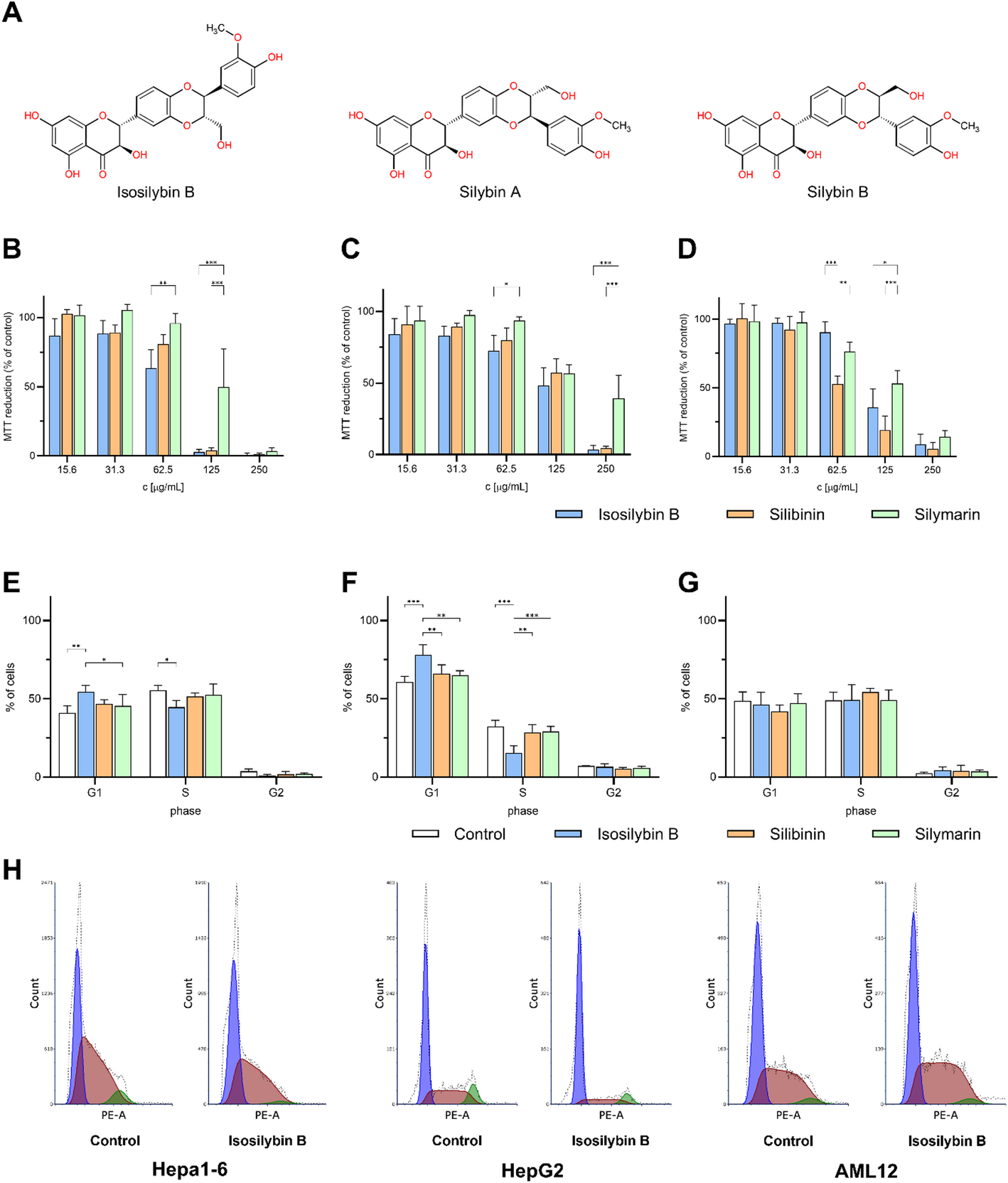
IB was more toxic to tumor cells than SB or SM, while being gentler on healthy hepatocytes. That’s the kind of split we want in an anticancer lead: tough on cancer, kinder to healthy tissue. -
Tumor-specific “arrest”
At a non-toxic concentration, IB arrested the cell cycle of Hepa1-6 and HepG2 cells but left AML12 unchanged. Under the same conditions, SB/SM didn’t show this tumor-selective effect. Mechanistically, this suggests that IB is “wired” into tumor cell biology in a different way. -
Antifibrotic signals went down
When we stimulated cells with TGF-β1 to mimic a profibrotic environment, IB lowered mRNA levels of Acta2 (α-SMA) and Col1a1 (collagen I), in some cases more strongly than SB or SM. At the protein level (fibronectin released into the medium), IB’s effect looked weaker at a single 24 h snapshot but was dose-dependent, hinting that timing and kinetics matter. -
The antioxidant paradox
In a simple chemical DPPH test, the ranking was SM > SB > IB (IB the weakest antioxidant; IC₅₀ ≈ 500 μg/mL). Yet IB produced the largest drop in extracellular ALT (a hepatocyte injury marker) at a non-toxic concentration. The take-home: IB’s hepatoprotection isn’t just “antioxidant”, and is more likely tied to its antifibrotic effects and other cellular processes that a tube test can’t capture.
Why this matters?
Liver disease often involves fibrosis and, for many patients, the looming risk of hepatocellular carcinoma. A molecule that is tough on tumor cells, gentler on healthy hepatocytes, and dampens profibrotic signaling could be valuable across that spectrum. From early liver injury to cancer risk. For a constituent present at only a fraction of silybin’s abundance, IB showed a surprising amount of promise.
There’s also a broader lesson: in mixtures like silymarin, the most abundant compound is not always the most important. Minor constituents can have different 3D shapes (stereochemistry) and different pharmacokinetics. Those small differences can translate into very different biology. IB and SB, for example, have the same atoms arranged differently.
The part you won’t see in the manuscript
At the start, we debated: Is it worth the time and cost to chase a minor constituent? IB is harder to source and more expensive than SB. Early antioxidant runs made IB look underwhelming; they forced us to ask if we were measuring the right thing. The turning point came with the cytotoxicity assays. That was the moment we realized we were seeing a molecule that might truly matter for patients.
What this could change
If IB’s profile holds up in animal studies and, eventually, in clinical settings, it could push milk-thistle research beyond silybin. For patients, the ideal would be a dual-action agent, one that slows tumor growth and eases fibrotic stress in the liver, without punishing healthy hepatocytes. IB might be one such candidate. Even if IB itself is not the endpoint, the concept that lesser-known flavonolignans may outperform the “star” is an important shift in thinking.
What’s next
These are in vitro results, so the next step is in vivo (mouse models) to see whether the tumor-selective, antifibrotic, ALT-lowering profile appears in a living liver. In parallel, we’re exploring delivery strategies, for example, nano-enabled formulations, that could help IB reach the right cells and persist at useful concentrations. We also want to learn more about its mechanism (which pathways trigger the tumor-specific G1 arrest?) and pharmacokinetics (how IB moves and clears in vivo). Finally, we’re curious about combination strategies, can IB work synergistically with existing antifibrotic or anticancer agents?
If those pieces come together, IB could help move silymarin research beyond silybin, and remind us that the “quiet” molecules in a mixture can sometimes carry the loudest signal. While our study focused on milk thistle, the same principle almost certainly applies more broadly; in many medicinal plants, the “minor” compounds may hold major, overlooked therapeutic potential.
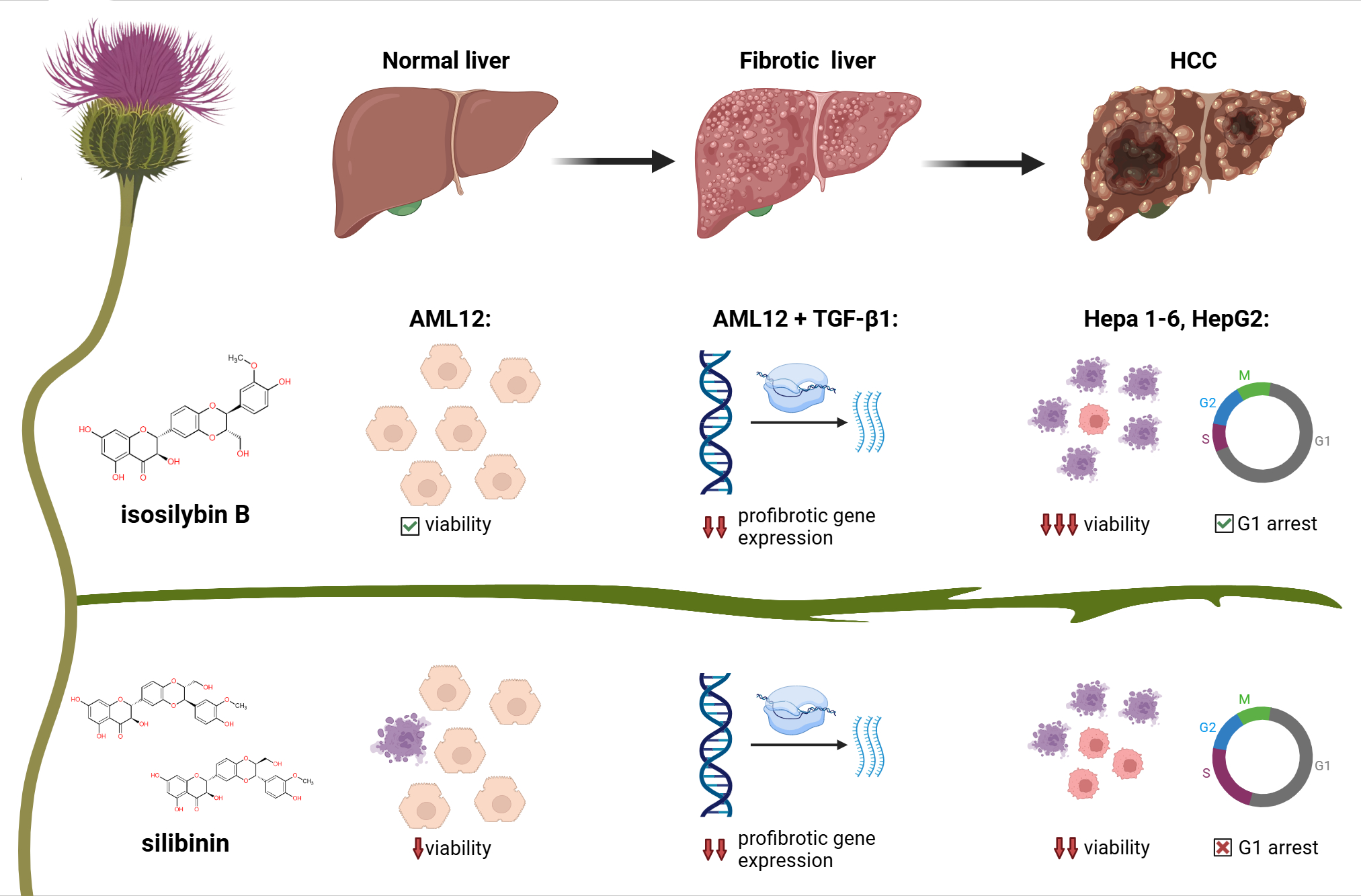
Figure 1: Isosilybin B from milk thistle shows stronger tumor selectivity and antifibrotic effects than silybin or whole silymarin. IB preserves normal hepatocyte viability, reduces profibrotic gene expression, and induces tumor-specific G1 arrest, suggesting advantages in the treatment of liver disease.

Follow the Topic
-
Discover Oncology
This is a fully open access general oncology journal that aims to provide a unified forum for researchers and clinicians. The journal spans from basic and translational science, to preclinical, clinical, and epidemiology, and welcomes content that interfaces at all levels of cancer research.

Related Collections
With Collections, you can get published faster and increase your visibility.
Advances in Gastrointestinal and Neuroendocrine Malignancies
Gastrointestinal (GI) cancers and neuroendocrine neoplasms (NENs) represent a diverse and clinically challenging group of malignancies with rising global incidence especially among younger individuals. Colorectal, gastric, pancreatic, biliary tract, and hepatocellular carcinomas together account for a major proportion of cancer-related deaths worldwide. Similarly, NENs—once considered rare—are rising in incidence with heterogeneity in biology, clinical course, and response to therapy. Despite major progress in systemic treatments, surgical techniques, and molecular profiling, outcomes remain suboptimal for many patients.
In recent years, comprehensive molecular profiling has not only provided novel insights into tumor biology and resistance mechanisms but also helped uncover several actionable therapeutic targets. Parallel advances in immunotherapy, targeted therapies, and radiopharmaceuticals have reshaped the treatment landscape for select patient populations. At the same time, efforts to better understand tumor–microenvironment interactions, clonal evolution, and mechanisms of therapeutic resistance are yielding new opportunities for translational research.
This Collection aims to highlight recent advances in the biology, diagnosis, and management of GI cancers and NENs. We invite contributions spanning molecular and cellular mechanisms, biomarker discovery, innovative therapeutic strategies, clinical trial design, and translational approaches that bridge the gap from bench to bedside. Together, these works will underscore the evolving paradigms that hold promise for improving outcomes in these complex diseases.
Keywords: Gastrointestinal cancers, neuroendocrine neoplasms, biomarkers, tumor microenvironment, immunotherapy, radiopharmaceuticals, precision oncology, translational research
Publishing Model: Open Access
Deadline: Nov 06, 2026
The Evolving Landscape of Lung Cancer: Advances in Diagnosis, Treatment Strategies, and Simultaneous Care
Lung cancer remains one of the leading causes of cancer-related mortality worldwide, although recent years have seen remarkable progress in its clinical management. This Collection aims to deepen the evolving landscape of lung cancer through a comprehensive lens, including early diagnosis, molecular profiling (through liquid and tissue), therapeutic innovation, and simultaneous care strategies. The Collection will gather original research, reviews, short reports or letters and case studies focused on:
advances in early detection and biomarker discovery and development;
the evolution of precision oncology and molecular profiling;
updates on systemic therapies, including immunotherapy and targeted agents;
novel treatment combination strategies,
the increasing integration of simultaneous care into multidisciplinary models for improving patient outcomes.
Keywords: lung cancer; precision oncology; immunotherapy; molecular diagnostics; simultaneous care
Publishing Model: Open Access
Deadline: Dec 04, 2026