JMCR: Highlight
Published in Biomedical Research
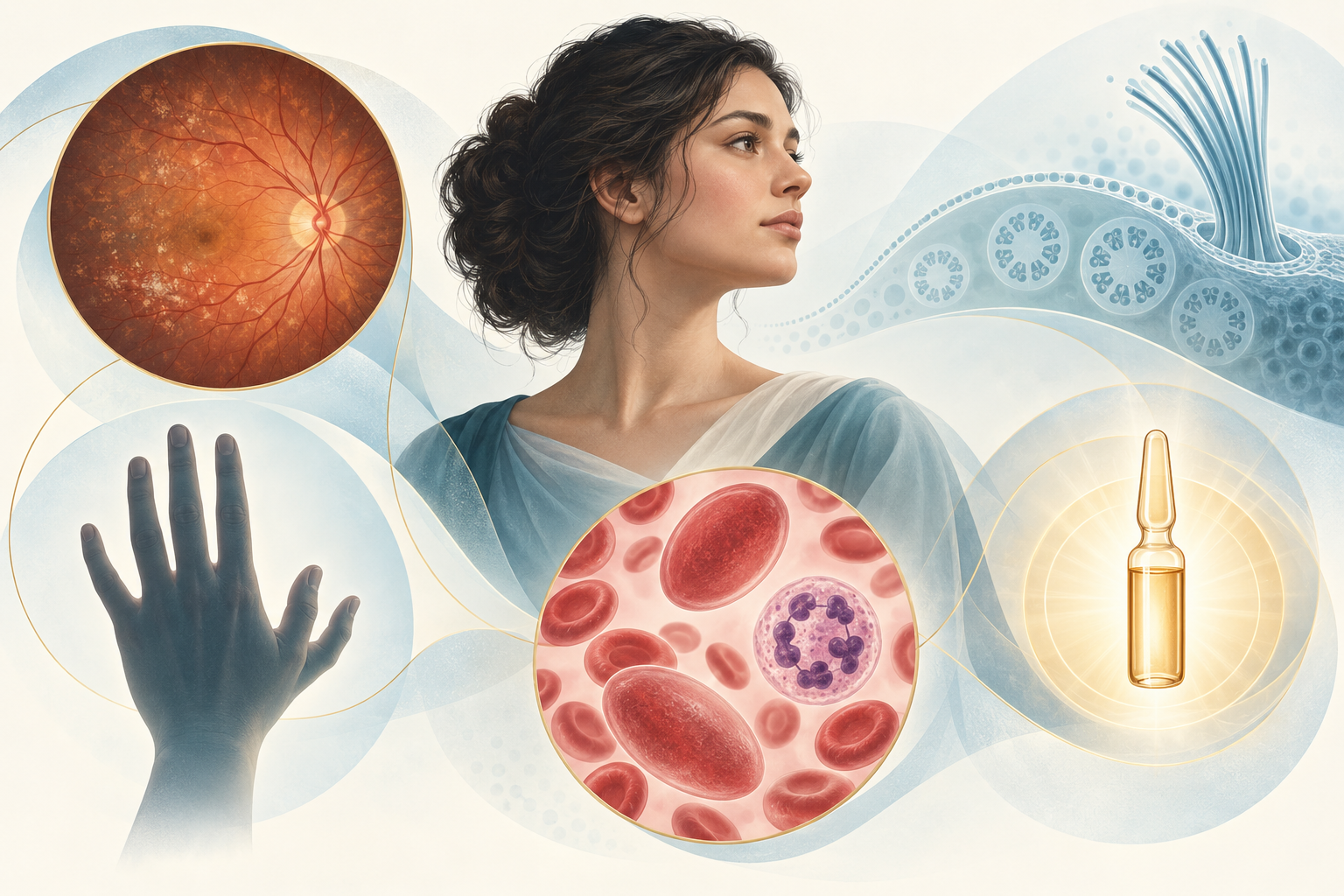

An 18-year-old woman presenting with profound macrocytic anemia was found to have antibody-confirmed pernicious anemia—and a constellation of findings fulfilling all six major clinical criteria for Bardet–Biedl syndrome.
Imran and Ali describe a Pakistani woman from a consanguineous family who presented with four months of progressive fatigue, weakness, pallor, and exertional dyspnea. Her hemoglobin was 4.7 g/dL, with macrocytosis, vitamin B12 deficiency, macro-ovalocytes, and hypersegmented neutrophils. Positive anti-intrinsic factor and anti-parietal cell antibodies supported the diagnosis of autoimmune pernicious anemia.
A more detailed history revealed childhood-onset retinal dystrophy progressing to blindness, postaxial polydactyly, obesity, developmental delay, primary amenorrhea, diabetes mellitus, bilateral small kidneys, albuminuria, and a similarly affected sibling. Together, these findings fulfilled all six major and two minor clinical criteria for Bardet–Biedl syndrome.
Molecular confirmation was unavailable because of financial and logistical limitations. The case therefore illustrates the continuing value of established clinical diagnostic criteria in settings where genetic testing cannot readily be obtained.
The co-occurrence of Bardet–Biedl syndrome and autoimmune pernicious anemia is rare. Emerging evidence suggests that ciliary dysfunction may influence immune regulation, but this single case cannot establish a causal relationship. The association remains biologically plausible and hypothesis-generating.
The patient improved following packed red-cell transfusion and intramuscular cyanocobalamin and was discharged on lifelong vitamin B12 replacement with multidisciplinary follow-up.
Clinical Take-Home Message
In patients with Bardet–Biedl syndrome or a compatible ciliopathy phenotype, macrocytic anemia and vitamin B12 deficiency should prompt evaluation for pernicious anemia rather than being attributed automatically to nutritional deficiency or chronic disease. Early recognition and treatment may prevent irreversible neurologic complications.
Reference
Imran J, Ali M. Autoimmune pernicious anemia in clinically diagnosed Bardet–Biedl syndrome: a case report and brief literature review. Journal of Medical Case Reports. 2026.
https://doi.org/10.1186/s13256-026-06593-9
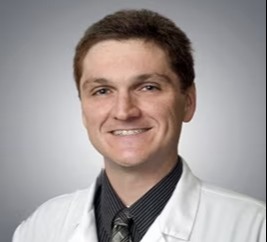
Richard Alan Rison is the interim Editor-in-Chief of Journal of Medical Case reports. He is also an associate neurology editor (editorial board) for BMC Neurology, and the former lead editor for case reports of BMC Research Notes (currently on the editorial board). His scholarly work focuses on medical case reporting, reporting standards, and editorial methodology. Dr. Rison participated in the development and dissemination of the CARE guidelines for clinical case reporting and has authored numerous publications addressing both neurological disorders and the role of case reports in advancing medical knowledge. Dr. Rison practices general neurology and served as the founding medical director of the PIH Health Hospital-Whittier Stroke Program and the PIH Health Hospital-Whittier Non-Invasive Vascular Laboratory, is a clinical assistant professor of neurology at the University of Southern California Keck School of Medicine and Los Angeles County Medical Center, and is a Fellow of the American Academy of Neurology, the American Neurological Association, and the American Association of Neuromuscular and Electrodiagnostic Medicine. Dr Rison is board-certified by the American Board of Psychiatry and Neurology in neurology and vascular neurology, and neurocritical care and neuroimaging by the United Council of Neurologic Subspecialties. He is also board-certified by the American Board of Electrodiagnostic Medicine in electrodiagnostic medicine. Dr. Rison is a former president of the Los Angeles Neurological Society.
Follow the Topic
-
Journal of Medical Case Reports
This journal will consider any original case report that expands the field of general medical knowledge, and original research relating to case reports.