Leukaemia and sperm, a connection most unlikely.
Published in Cancer and Cell & Molecular Biology
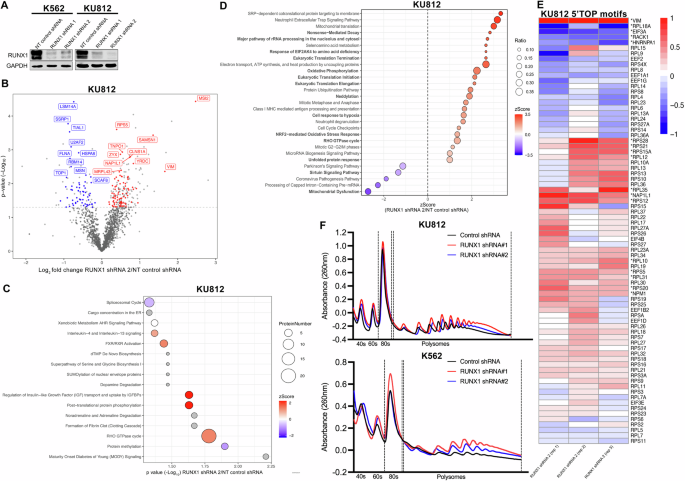

When looking back over our post-2023 publication plans it's safe to say we were not expecting RUNX1 and spermatogenesis to appear on the same manuscript, but this is the nature of scientific research; you never quite know which direction you'll take...
Origins
When embarking on this project, myself and lead author, Clinical PhD Fellow Dr David Palmer, never really intended this to be a CML study. Our aim was always clear, we wanted to undertake a novel exploration of RUNX1 (Runt-related transcription factor 1) impact on the post-transcriptional landscape of leukaemia cells, however our firm intention was for this to be studied in acute myeloid leukaemia (AML); a devastating disease with poor survival, and frequent RUNX1 mutations. But in the words of Mike Tyson "Everyone has a plan until they get punched in the face."
In our case, the proverbial knock out came when none of the AML cell lines we tested survived genetic depletion of RUNX1. Indeed, it soon became apparent that our model system would have to be CML, since these cells were the only that could tolerate RUNX1 loss. Not a major problem, although considerably rarer than AML, BP-CML remains a deadly stage of the disease with limited treatment options. Behind BCR::ABL (the founding molecular mutation in CML), RUNX1 is the most frequently enriched molecular aberration as the disease progresses from the chronic, to highly aggressive blast phase, suggesting it plays a key role in disease progression.
OOPS!...I Did It Again.
As with any good study, collaboration is key. Our central hypothesis was that RUNX1 modulation may alter the scope and abundance of RNA-bound proteins in the cell. Inspired by the pioneering use of Orthogonal Organic Phase Separation (OOPS) deployed by the Mardakheh lab to analyse the RBPome of KRAS mutant cells (and the opportunity to drop a Britney Spears pun into our research) David visited Faraz's lab at QMUL (now at Oxford) to learn the OOPS technique. This method had been well optimised for adherent cell lines, but required careful optimisation for leukaemic blasts which are fluid in culture and have much higher nuclear:cytosol ratios than solid tumour cells.

After weeks of optimisation David generated viable samples for analysis at the amazing University of Bristol Proteomics Facility where Maz and Kate confirmed significant enrichment of RNA-binding proteins (RBP). In collaboration with Bioinformatician Phil, we interrogated the most commonly altered RBPs across RUNX1-depleted CML cells revealing SPATS2L for the first time.
Enter SPATS2L
When discussing targets for further investigation, I don't think David was altogether thrilled at the prospect of having to drop 'Spermatogenesis' into future presentations, however as with all good science we followed an unbiased approach. Actually, the links between SPATS2L and reproductive health are fairly tenuous. I can only find one study that links SPATS2L polymorphisms to pig litter size (apologies for any I've missed). However, its becoming increasingly clear this molecule has substantial roles in key cellular processes including RNA binding, interferon and neural signalling, influencing diseases like cancer, asthma and lupus. Indeed, ours wasn't the first study to link leukaemia and SPATS2L. Part of our rationale for pursuing SPATS2L came from a previous report linking it to adverse prognosis and chemosensitivity in AML. After showing that RUNX1 loss increased the proportion of RBPs on RNA that are associated with stress responses, rRNA processing and translation we set about determining SPATS2L function in this setting.
Unlocking new RUNX1 biology
Name a cellular process not impacted by RUNX1 modulation? You'll probably struggle, however we may have added another to the growing list with stress granule (SG) formation. Our validation studies showed that SPATS2L was consistently induced upon RUNX1 loss, including alternative modes of RUNX1 repression like that imparted by the t(3;21) fusion product RUNX1::EVI1 , a frequent chromosomal abnormality observed in BP-CML (skillfully cloned into CML cells with help of Helen Webb and Michelle West). Helped by a talented cohort of MSci/MSc projects students in the School of Life Sciences at University of Sussex we were able to show SPATS2L regulated the growth and survival of CML cell lines (thank you Davy, Sanjana, Nehir and Anya). Given an alias for SPATS2L is Stress Granule and Nucleolar Protein (SGNP), we assessed its contributions to SG formation. SGs are membraneless foci comprised of critical mRNAs, ribosomal subunits and RBPs that package up important translational machinery, protecting them from acute stress exposures including temperature, pH, oxidative, etc. Upon cessation of this stress, SG's rapidly disassemble allowing immediate translation of these critical survival proteins. They have an emerging role in cancer and are likely to provide malignant cells with a vital survival advantage to navigate various microenviromental insults such as nutrient/hypoxia stress or chemotherapy exposure. Their role in leukaemia was largely unexplored, and we found SPATS2L was important for their formation, and RUNX1 deficient myeloid cells had a higher SG-forming capacity (which was dependent on SPATS2L).
Clinical relevance
Great, but who cares. With his clinician's hat on David set about establishing the clinical relevance of these findings given these were mainly cell line based observations at this point. He recalled that an old translation inhibitor called homoharringtonine (HHT), or omacetaxine mepesuccinate, with a history of use in AML/CML, was likely to block SG assembly through its established mechanism blocking the Ribosomal A-site and locking 80s ribosomes onto mRNA (preventing condensing into SGs). After demonstrating that HHT exposure near completely eradicated SG formation (using fluorescence microscopy tracking G3BP1 - an SG constituent), we tested it against RUNX1-depleted CML cell lines which were preferentially sensitised. Next we needed to test our hypothesis in primary BP-CML patient samples which presented the biggest challenge (and limitation) of our study.
There are around ~800 cases of CML/annum in the UK and only around 10% of these will progress to blast phase leaving around 80 patients nationwide. From this cohort we might expect 15-20% to carry RUNX1 mutations narrowing our pool of interest to a vanishingly small 12-16 patients per year. Thankfully, up stepped Dr Gillian Horne and Prof Mhairi Copland from the Paul O'Gorman Leukaemia Research Centre at the University of Glasgow, along with their wonderful lab team Rachel and Amy, who supplied both RUNX-mutant and wild type patient samples stored from the UK MATCHPOINT trial. Through dogged determination and initiative (pay attention aspiring PhD students) David was able to supplement this cohort with further samples from the University of Helsinki, kindly shared by Satu Mustjoki, Kimmo Porkka and Shady Adnan-Awad. This took us to the dizzy heights of 4 x RUNX1wt versus 5 x RUNX1mut samples (good for BP-CML!) for HHT testing which David tested across two trips to the PO'G in Glasgow. He showed the RUNX1mut patient samples appeared more HHT-sensitive, with the runt-homology domain (RHD) mutants displaying the greatest susceptibility.
Putting the 'stress' into stress granules.
There is a journey of personal toil behind every published manuscript and David's was no different. Being a Clinical Fellow, late nights, weekend working and dark nights in the microscopy suite were balanced with clinical duties, getting married, welcoming his first born, sitting his FRCP exams and securing his new post at Brighton & Sussex Medical School (BSMS). His hard work and diligence have been rewarded with three selected oral abstracts at the BSH (Liverpool, April) EHA (Stockholm, June) and ASH (New Orleans, December) annual meetings in 2026, a BSH Early Stage Research Start-up grant and, of course, this latest manuscript. He serves as a Co-Investigator on an Early Detection & Diagnosis project we were recently awarded from Cancer Research UK to continue this exciting research in a rewarding collaboration with Dr Sophie Kellaway at the University of Nottingham.
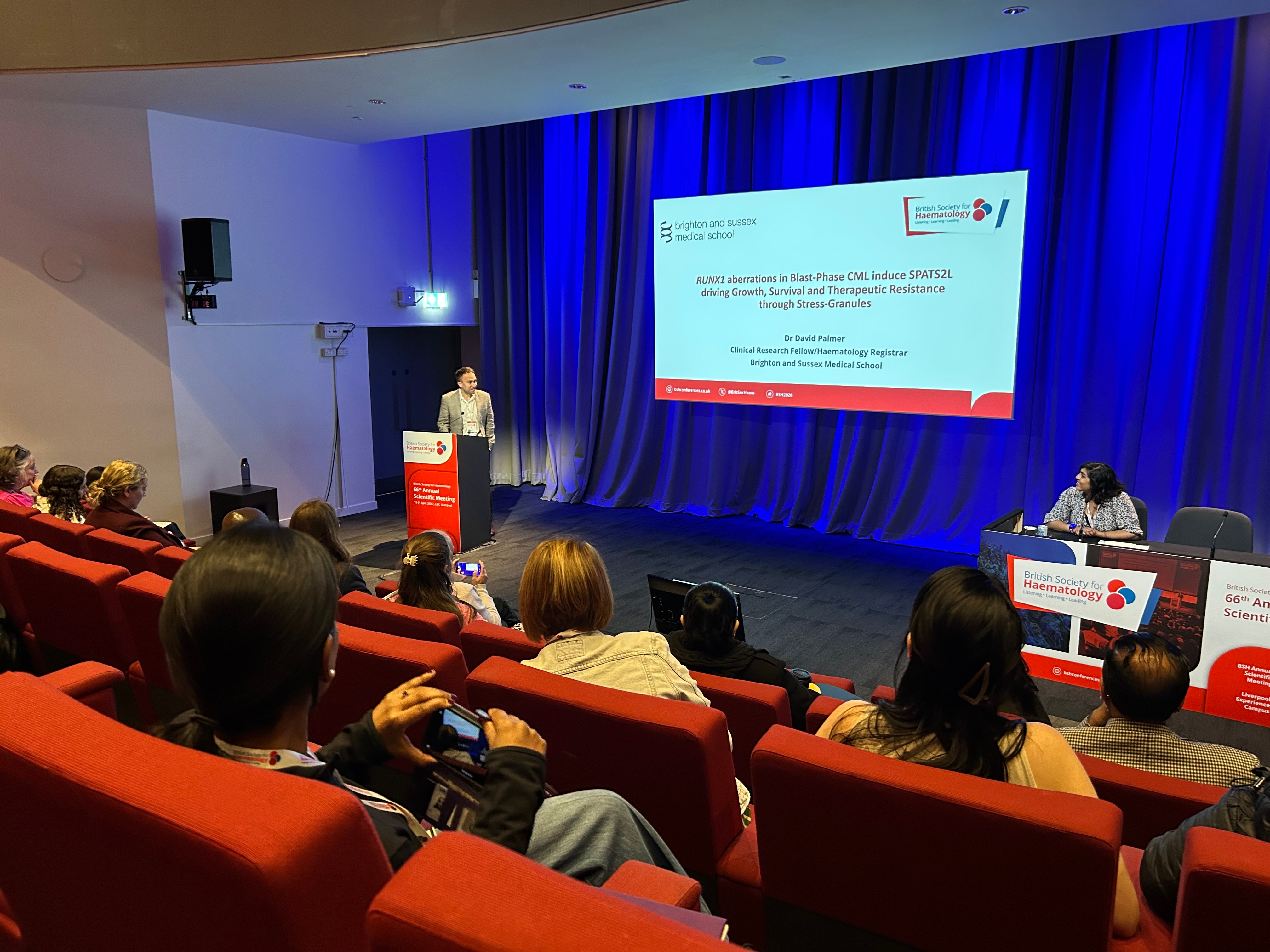
Society for Haematology at the Annual Meeting in Liverpool, April 2026
We are also grateful to Alex Tonks for further RUNX1 guidance and Timothy Chevassut for serving as David's clinical mentor. Okan and Lauren were excellent in handling experimental revisions and Ben provided the usual constant source of wisdom around RNA biology and gene expression.
Limitations and final thoughts
Our study has unlocked new disease biology that could inform new targeting strategies for RUNX1 mutant leukaemias which remains a significant area of unmet need. Targeting critical cellular processes like translation with 'dirty' drugs like HHT could pose unacceptable toxicity risks for patients, however our study has raised the prospect of SG targeting. Indeed, one of the requested revisions for our manuscript was the testing of SG inhibition in combination with TKIs like imatinib; the mainstay of CML treatment for over 25 years. Blocking SG formation using a G3BP1 inhibitor (FAZ-3532) re-sensitised TKI-resistant CML cells to imatinib suggesting SG inhibition could more broadly improve treatment responses across a range of haematological cancers.
Testing more BP-CML samples would have increased the power and relevance of our study as its hard to make solid conclusions from such small patient numbers, however with BP-CML this could be unobtainable. Safety tests of SG inhibition on normal blood stem cells are also required since these cells are also likely to utilise SGs in their defence against cytotoxic agents.
Finally, we'd like to address whether SGs are simply a consequence of cellular stress, or active contributors to leukaemia initiation/survival/resistance? A big step towards understanding this could be on its way from Dr Kristin Hope's research group at University of Toronto with evidence SGs promote the survival of AML stem cells.
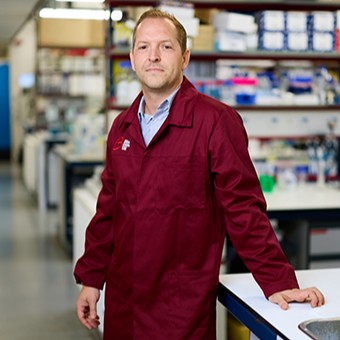
Dr Morgan completed his BSc in Biomedical Science at the University of Portsmouth, before completing a PhD in Haematology at Cardiff University in the world leading Haematology department of Professor Alan Burnett. His thesis examined the role of a Wnt signalling in acute myeloid leukaemia (AML) under the supervision of Professors Alex Tonks and Richard Darley.
From here Rhys joined the School of Cellular & Molecular Medicine at the University of Bristol in 2013 to pursue his interests in signal transduction and cancer biology. Under the supervision of Professors Christos Paraskeva and Ann Williams he undertook post-doctoral studies investigating the role of the stem cell marker LGR5 and Wnt/EGF signal transduction in colorectal cancer.
Whilst at the University of Bristol, Rhys was awarded a Kay Kendall Leukaemia Fund (KKLF) Fellowship in 2016 to examine Wnt/beta-catenin signalling in AML. In 2018 Dr Morgan joined the Department of Biochemistry and Biomedicine at the School of Life Sciences, University of Sussex to establish his own leukaemia research group.
From July 2019 he acquired tenure and continues his research into cell signalling and leukaemia where he has received further funding from the Royal Society, British Society for Haematology, the KKLF, Leukaemia & Myeloma Research UK, Children's Cancer & Leukaemia Group, Cancer Research UK, Blood Cancer UK, the European Commission Horizons MSCA and Worldwide Cancer Research.
Dr Morgan is Co-Director of Sussex Blood Cancer Research, a group established in 2019 to bring together researchers from the School of Life Sciences and Brighton & Sussex Medical School with shared haematological research interests. Dr Morgan served on the Research Review Committee at Leukaemia & Myeloma Research UK between 2020-2026 and is a founding panel member of WntUK, a new scientific society established in 2023 to connect, showcase and progress Wnt signalling based research across the UK.
For more information see the Morgan Lab website.
Dr Morgan is an advocate of stem cell donation and continues to work with Anthony Nolan and Marrow to promote awareness and recruitment onto the bone marrow register. Read more about his recent stem cell donation which reached national news.
Follow the Topic
-
Leukemia
This journal publishes high quality, peer reviewed research that covers all aspects of the research and treatment of leukemia and allied diseases. Topics of interest include oncogenes, growth factors, stem cells, leukemia genomics, cell cycle, signal transduction and molecular targets for therapy.