Listeria Everywhere All at Once
Published in Ecology & Evolution and Microbiology

Explore the Research
Just a moment...
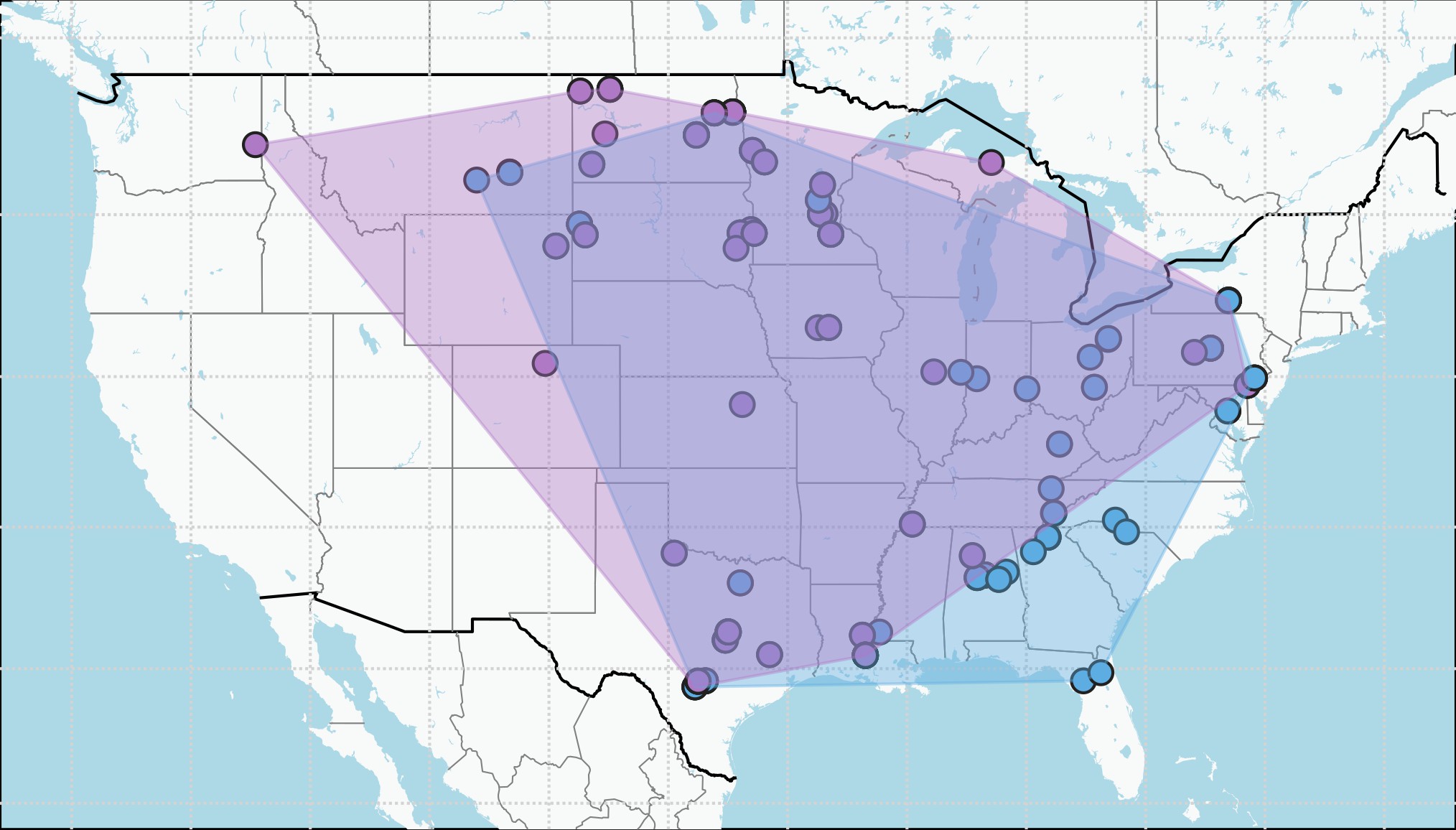
It all started with this map.
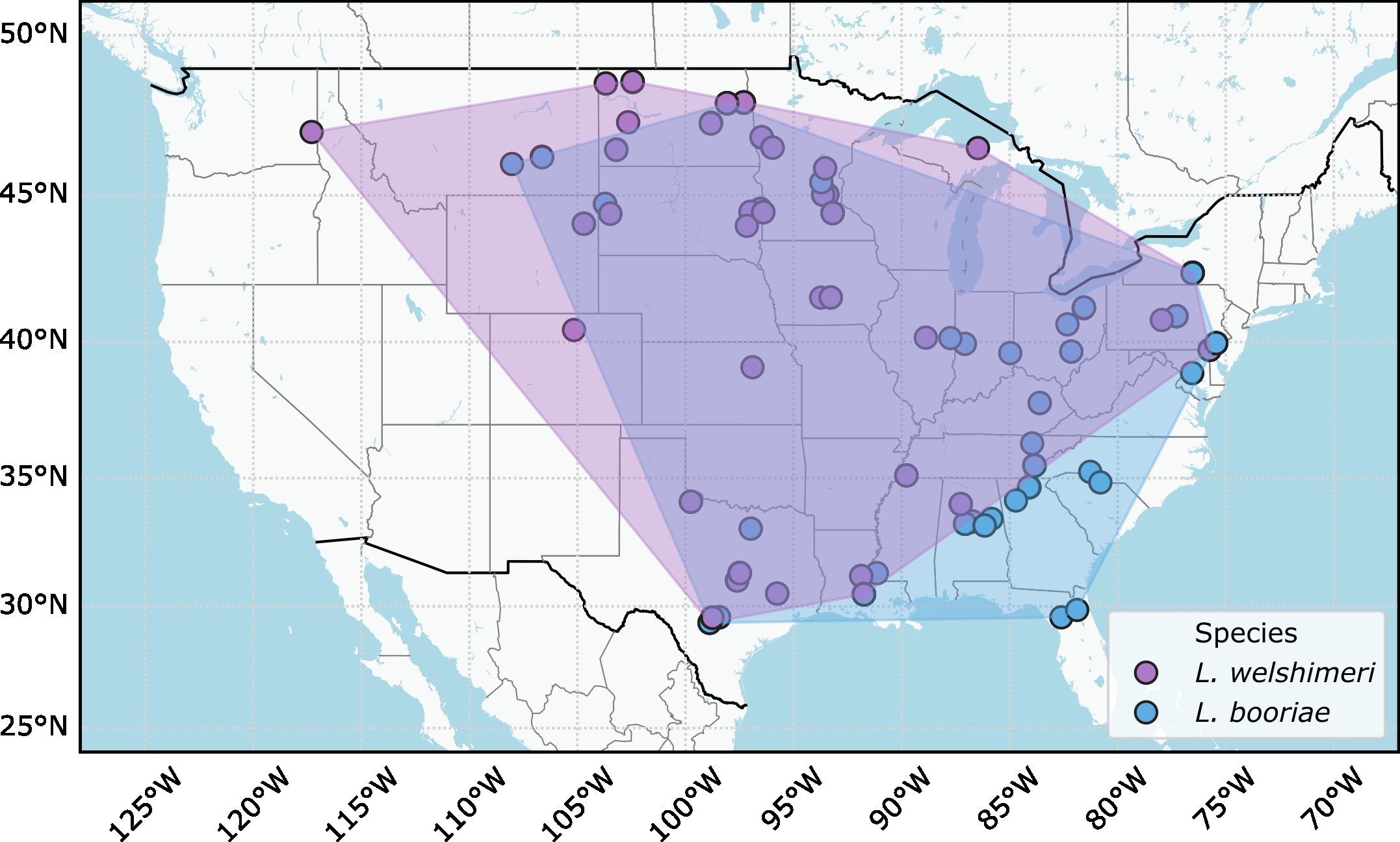
We discovered that two Listeria species are prevalent in soils across the contiguous United States (Liao et al., Nat Microbiol, 2021) despite having fundamentally different ways of getting around. One is Listeria welshimeri, which is equipped with flagella, tiny appendages that act like bacterial legs and allow it to swim through its environment. The other is Listeria booriae, which lacks flagella entirely and is therefore non-motile. Although both species are widespread, their populations are structured very differently. L. welshimeri populations are well mixed across distant locations, whereas L. booriae populations tend to remain confined to particular regions. That contrast suggested the two species may disperse and adapt in very different ways.
From an ecological perspective, being widespread is a major advantage. It acts as a safety net, reducing the risk of extinction when local environments become unfavorable. Yet thriving across distant locations is no easy feat. Climate, soil chemistry, and available nutrients can vary dramatically over hundreds of kilometers, making it challenging for any organism to thrive everywhere. Remarkably, despite their contrasting lifestyles and population structures, both species span geographic ranges averaging about 850 kilometers. To put that into perspective, imagine a microscopic organism, invisible to the naked eye, occurring across a geographic span roughly equivalent to the distance from Chicago to Toronto. So how do two bacteria with such different lifestyles end up becoming equally successful across an entire continent?
For the motile L. welshimeri, we found that movement and environmental sensing, a process known as chemotaxis, provide a strong evolutionary advantage. Genes involved in these functions showed clear signatures of positive selection, suggesting that evolution has repeatedly favored them.
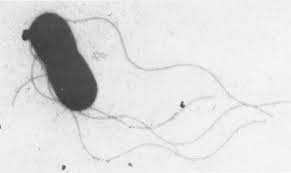
Rocourt & Grimont, Int J Syst Evol Microbiol, 1983.
But there is one obvious problem. Even for humans, traveling hundreds of kilometers is a Herculean task, let alone for a bacterium swimming with its tiny bacterial legs. Soil is also a dense, physically complex environment in which bacteria move far too slowly to make a cross-country trek on their own. This led us to a simple question: If L. welshimeri couldn't walk or swim across the continent, could it be hitchhiking instead?
To test this idea, we identified wildlife known to carry Listeria and modeled their movement across different landscapes. We considered four groups: large mammals, small mammals, regional birds, and continental migratory birds. Among these groups, the movements of regional birds best explained the genetic patterns we observed in L. welshimeri populations.
We then obtained archived L. welshimeri isolates from wild birds, including grosbeaks and pigeons, from a previous study at Cornell's Wildlife Hospital and sequenced their genomes. To our surprise, these bacteria collected from birds were genetically almost identical to bacteria collected from soils in nearby states, including New York, Michigan, Delaware, and Ohio. Together, these findings suggest that L. welshimeri combines active movement through soil with bird-mediated dispersal, hitchhiking on birds to expand its geographic range.
But what about the stationary L. booriae? With no flagella, it cannot move to search for better conditions or catch a flight on a passing bird. How has it become just as widespread?
The answer appears to lie in its genome.
Unlike its traveling cousin, L. booriae possesses an exceptionally open pangenome, meaning that different strains carry a remarkably diverse collection of genes. This flexible genetic toolkit allows the species to solve environmental challenges in a very different way. Rather than investing resources in movement, L. booriae invests in metabolic versatility.
In many ways, these flagella-less bacteria are the ultimate local survivalists. They require fewer essential nutrients for growth and are especially adept at scavenging scarce resources, particularly iron. Instead of searching for better environments, they make better use of the one they already inhabit. This genomic flexibility also allows different populations to adapt to local conditions, especially differences in precipitation and climate.
We also discovered that L. booriae is closely connected to its microbial neighbors. Because it often lives in less diverse microbial communities, interactions with surrounding microbes become especially important. These microbes may cooperate by sharing resources through cross-feeding or compete intensely for limited nutrients such as iron. Together, these interactions likely contribute to the remarkable ecological success of L. booriae.
What fascinates me most is that these two bacteria reached the same destination – a widespread distribution across the United States – by following entirely different evolutionary paths. L. welshimeri expands its world through movement, navigating locally with its flagella and hitchhiking with birds over long distances. L. booriae, in contrast, thrives by adapting, using an exceptionally flexible genome to make the most of the environment it already occupies. While it faces limited long-distance dispersal today, it can still spread passively on regional scales, or perhaps an ancient, already-widespread ancestor explains how this non-motile Listeria conquered the continent.
Evolution rarely settles on a single solution. Faced with the same ecological challenge, these two species evolved entirely different strategies to achieve the same remarkable geographic success. Nature never ceases to humble me with the many ways life can adapt, persist, and thrive. And sometimes, the most interesting discoveries are the questions they leave behind.
Reference
Liao, J., Guo, X., Weller, D.L. et al. Nationwide genomic atlas of soil-dwelling Listeria reveals effects of selection and population ecology on pangenome evolution. Nat Microbiol 6, 1021–1030 (2021). https://doi.org/10.1038/s41564-021-00935-7
Acknowledgement
We would like to thank Carrie Kroehler from the Center for Communicating Science at Virginia Tech for her helpful comments and suggestions to improve this article.
Follow the Topic
-
The ISME Journal
This is a peer-reviewed scientific journal that covers diverse and integrated areas of microbial ecology spanning the breadth of microbial life, including bacteria, archaea, microbial eukaryotes, and viruses.

