Looking beyond averages: Our study of lifestyle, depression, and brain ageing
Published in Neuroscience, Protocols & Methods, and General & Internal Medicine
Explore the Research

 Nature Publishing Group UK
Lifestyle and BrainAGE in adult depression - Translational Psychiatry
Translational Psychiatry - Lifestyle and BrainAGE in adult depression
An opportunity to work with the extensive health, lifestyle, and brain-imaging data available through the UK Biobank led us to ask a deceptively simple question: might differences in lifestyle and physical health help explain why some people with depression have an older-appearing brain than in others?
The question arose from a recurring puzzle in the literature. Although studies have often reported that people with depression have slightly older-appearing brains on average, these differences are generally small and inconsistent. This inconsistency may reflect the substantial heterogeneity of depression, including differences in symptoms, physical health, social circumstances, and daily routines across individuals. This diversity presents a persistent challenge for researchers because comparing everyone with depression to a group without depression may obscure important variation within the depression group itself.
Our study tackled this challenge by harnessing the scale and breadth of information contained in the UK Biobank, a large biomedical database accompanied by extensive details about the health and everyday lives of participants in mid- to late-adulthood.
What does it mean for a brain to look “older”?
Although age-related changes in brain anatomy are expected, individuals vary in the extent to which their brain structure reflects the pattern typically associated with their chronological age. Researchers can study this variation using machine-learning models that estimate a person’s age from magnetic resonance imaging (MRI) brain scans. The difference between the scan-predicted age and the person’s actual age is called the brain-age gap estimate, or brainAGE. A positive brainAGE means that the brain appears older than expected for the person’s chronological age.
Previous research has generally found, on average, slightly elevated brainAGE among people with depression. However, the average difference is modest and varies considerably between studies. BrainAGE differences are also found in many other psychiatric and neurological conditions, suggesting that such differences may reflect broader influences on brain health rather than processes unique to depression. Lifestyle and physical health were therefore natural areas to investigate.
Searching for combinations rather than isolated factors
Rather than focusing on individual characteristics in isolation, we wanted to understand how lifestyle, social, and metabolic factors combine into broader patterns within individuals. Accordingly, our analysis considered a broad set of information about diet, exercise, sleep, smoking, alcohol use, social relationships, pastimes, and physical health in 896 participants with a history of depression and 36,206 participants without a psychiatric illness. The challenge was to find meaningful patterns within this large collection of information.
For this, we used a machine-learning method called Heterogeneity through Discriminative Analysis (HYDRA). Rather than simply grouping people according to their similarities to one another, HYDRA identifies different ways in which members of a clinical population differ in reference to a psychiatrically healthy population. In our case, it looked for distinct lifestyle and fitness profiles among participants with depression relative to participants without a psychiatric diagnosis.
The analysis identified four profiles of people with a history of depression
In this UK Biobank sample, the analysis identified four data-derived profiles amongst the participants with depression. These patterns are not diagnostic subtypes of depression, but are empirically derived profiles that reflect similarities in the available lifestyle and physical-health measures.
The “balanced-active” group was characterized by stronger social support, more frequent exercise, better overall fitness and sleep, a varied but stable diet, and less computer use.
The “low metabolic risk-active” group showed a health-conscious pattern, characterized by higher fruit and vegetable intake, lower meat and salt consumption, greater supplement use, more time outdoors, and less smoking.
The “high metabolic risk-sedentary” group was characterized by higher body mass index (BMI), less exercise, more insomnia, greater TV and computer use, less time outdoors, and lower social engagement. Members also tended to consume more red and processed meat and salt, and fewer fruits, vegetables, and whole grains.
The “frailty-moderately active” group reported some physical activity but also had lower physical strength than the other groups. Their diet was distinguished mainly by greater dairy intake.
Although these groups were defined using lifestyle and physical-health information alone, they also captured differences in current mood. Symptoms were lowest in the balanced-active group and highest in the high-metabolic-risk and frailty groups.
Looking at both the whole brain and specific regions
We first estimated brainAGE for the brain as a whole. On this overall measure, participants with a history of depression had brains that appeared, on average, just four months older than those of the comparison group. The four depression groups also did not differ from one another.
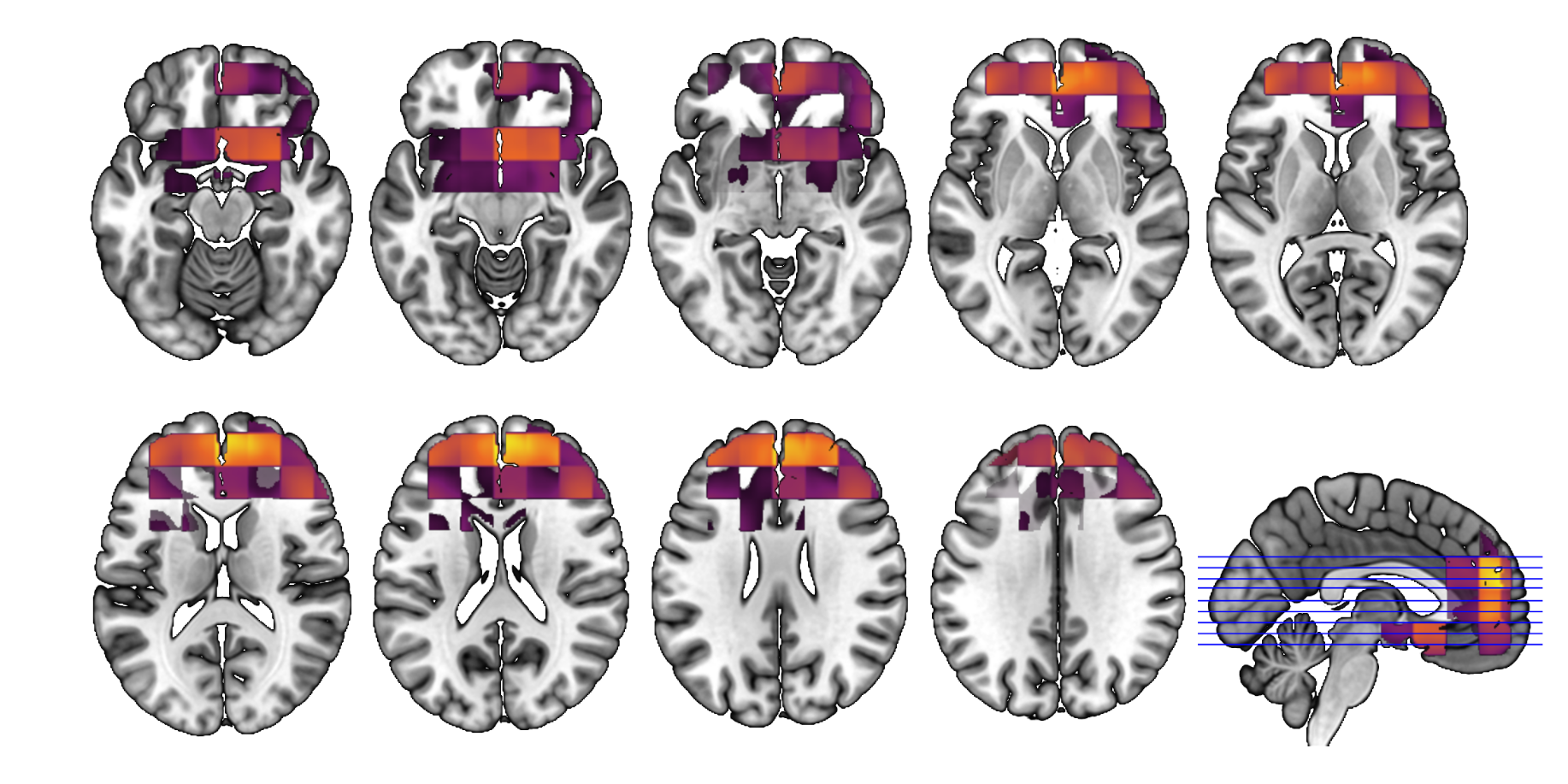
We then estimated brainAGE at a much finer spatial scale which provided a more detailed picture of where ageing-related differences were located. Across participants with depression, the frontal cortex and insula appeared older than expected for age, implicating brain networks involved in emotion regulation that have long been linked to depression.
Looking at the four depression groups separately revealed an additional pattern. Only the "high metabolic risk-sedentary" group showed further brainAGE increases, affecting the prefrontal cortex, parahippocampal region, and thalamus.
For us, this was the most consequential result. The global brainAGE difference was very small, but a more specific regional pattern emerged when we considered heterogeneity within depression.
Where the findings lead next
The findings suggest that brain health in depression is best understood as part of a broader pattern involving physical health, activity, sleep, diet, and social connection. These factors are unlikely to act independently; instead, their combined effects may be more important than any single factor alone. The results do not imply that particular lifestyles cause accelerated brain ageing or depression. Rather, the relationships are likely to be bidirectional. Depression can make it harder to maintain healthy habits and social connections, while long-term metabolic risk may contribute to poorer brain health and mood. Over time, these influences may reinforce one another.
This shifts the question from whether depression is linked to brain ageing to a more useful one: which combinations of health and daily life are associated with the greatest vulnerability, and which may offer the best opportunities for change? The next step is to see whether these patterns hold in other groups and how they change over time.

Follow the Topic
-
Translational Psychiatry
This journal focuses on papers that directly study psychiatric disorders and bring new discovery into clinical practice.

Related Collections
With Collections, you can get published faster and increase your visibility.
Moving Towards Mechanism, Causality and Novel Therapeutic Interventions in Translational Psychiatry
Publishing Model: Open Access
Deadline: Feb 28, 2027