Looking beyond the transcriptome: what do pancreatic cancer cells release into their environment?
Published in Cancer and Biomedical Research
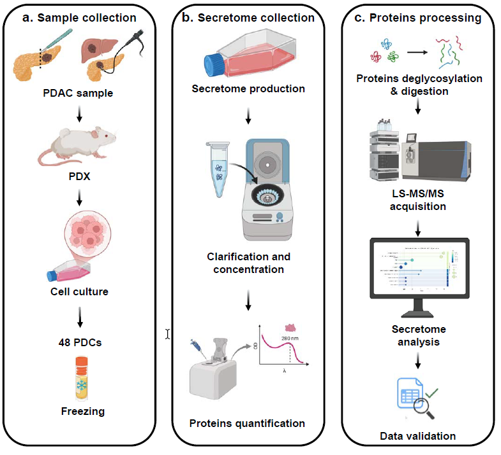

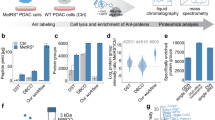

Over the years, our group has built a large collection of patient-derived pancreatic cancer models. These models have been instrumental in our efforts to understand tumour heterogeneity, molecular subtypes and therapeutic vulnerabilities in pancreatic ductal adenocarcinoma (PDAC).
Most of our work has focused on what happens inside tumour cells: transcriptomes, signalling pathways, drug sensitivities and resistance mechanisms.
But tumour cells do not only keep information to themselves.
They continuously communicate with their environment by releasing proteins, extracellular vesicles and signalling molecules. Some of these secreted factors may eventually become detectable in blood and could one day contribute to earlier diagnosis, patient stratification or treatment monitoring.
Surprisingly, despite the growing interest in circulating biomarkers and tumour-derived secreted factors, comprehensive datasets generated from patient-derived pancreatic cancer models remain scarce.
At some point, we realised that although we had spent years characterising these models, we had never systematically explored another important dimension of their biology:
What exactly are these tumour cells releasing?
This apparently simple question rapidly turned into a much larger project than we initially anticipated.
One of the first surprises was the remarkable heterogeneity among models. Some cultures secreted very large amounts of proteins, whereas others appeared almost silent. Standardising experimental conditions while preserving biological diversity became a challenge in itself.
In the end, we generated secretomes from 48 treatment-naïve patient-derived pancreatic cancer cultures and identified more than 4,200 proteins.
Importantly, many of these proteins were associated with extracellular vesicles and known secretory pathways, supporting the biological relevance of the dataset.
For us, however, the main value of this work is not that we have identified a new biomarker.
Instead, we believe that the true value lies in making this resource available to the scientific community.
Patient-derived models are precious. Building such collections requires years of patient inclusion, sample processing, model establishment and molecular characterisation. Large-scale datasets generated from these models should therefore continue to create value beyond a single publication.
We hope that researchers will use these data to address questions that we have not yet considered.
Sometimes scientific progress comes from identifying a new mechanism.
Sometimes it comes from creating resources that enable future discoveries.
After spending many years looking inside pancreatic cancer cells, this project reminded us that some of the most interesting information may actually lie outside them.
Follow the Topic
-
Scientific Data
A peer-reviewed, open-access journal for descriptions of datasets, and research that advances the sharing and reuse of scientific data.

Related Collections
With Collections, you can get published faster and increase your visibility.
10 years of the FAIR principles
Publishing Model: Open Access
Deadline: Nov 14, 2026
Data to support cancer treatment, diagnosis, and disease understanding
Publishing Model: Open Access
Deadline: Jan 02, 2027