Mapping Non-Suicidal Self-Injury in Malaysia: Key Insights, Gaps, and the Path Forward
Published in Social Sciences and Behavioural Sciences & Psychology




Why focus on Malaysia?
Malaysia provides a particularly interesting context for studying mental health. It is a multicultural country where family relationships, religious beliefs, and community values play significant roles in shaping how emotional difficulties are experienced and expressed. At the same time, mental health stigma remains a challenge, often discouraging young people from seeking professional support. Much of what we know about NSSI originates from Western countries. However, cultural context matters. Behaviours associated with emotional distress, attitudes towards mental illness, and help-seeking patterns differ considerably across societies. We therefore wanted to understand what the Malaysian evidence actually tells us, rather than assuming international findings could simply be applied locally.
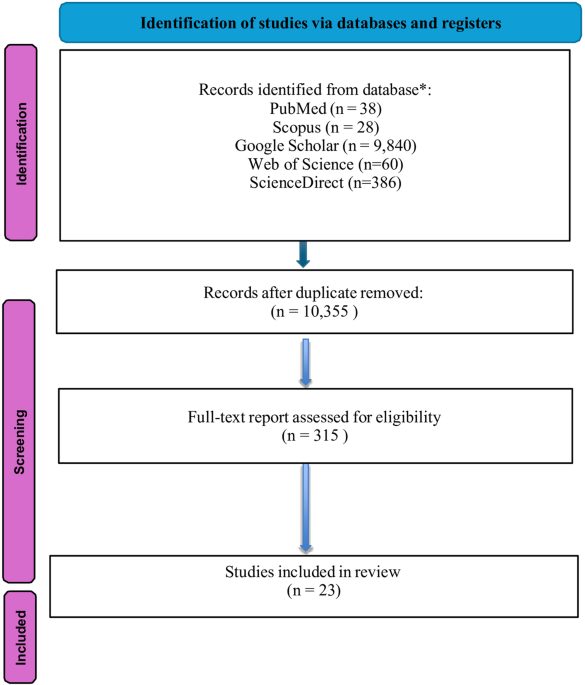
Conducting a scoping review was both exciting and challenging. Rather than examining a single research question, our aim was to map the entire landscape of NSSI research in Malaysia. We systematically searched five major databases such as PubMed, Scopus, Web of Science, ScienceDirect, and Google Scholar. Initially, more than 10,000 records were identified. After removing duplicates and applying strict eligibility criteria, only 23 studies met our inclusion criteria. Although the number may appear modest, those studies provided valuable insights into three important areas namely the prevalence of NSSI, factors associated with the behaviour, and the availability of psychosocial interventions.
What surprised us most?
Perhaps the most striking finding was how much reported prevalence varied across studies. The prevalence estimates ranged from approximately 15% to 21% among secondary school students, while studies using broader behavioural definitions reported considerably higher rates. University students also showed substantial levels of NSSI, and the highest prevalence was reported among LGBT+ individuals. Rather than indicating contradictory findings, these differences largely reflected variations in study populations, assessment tools, and definitions of NSSI. Another important observation was that Malaysian researchers have devoted considerable attention to understanding why young people engage in NSSI. Across studies, emotional dysregulation, psychological distress, depression, anxiety, family conflict, bullying, and interpersonal stress repeatedly emerged as important correlates. Many qualitative studies also described NSSI as an attempt to regulate overwhelming emotions rather than a wish to die. Yet one finding surprised me even more. Apart from the risk factors have been widely studied, relatively little attention has been given to protective factors. A very few Malaysian studies examined resilience, self-compassion, supportive family relationships, adaptive coping, or positive social support. This imbalance raises an important question: instead of asking only why some adolescents self-injure, should we also be asking what enables others facing similar adversity to remain resilient? Understanding strengths may ultimately be just as valuable as understanding risks.
The intervention gap
Perhaps the most concerning finding from our review was the limited evidence on interventions. Despite the increasing awareness of NSSI, we identified only one published psychosocial intervention conducted in Malaysia. No randomised controlled trials, no large-scale school-based intervention studies, and prevention programmes were identified. For practitioners working in schools and mental health settings, this presents a significant challenge. Without locally evaluated interventions, professionals often depend on evidence developed in very different cultural contexts. Although international research provides valuable guidance, interventions should also reflect Malaysian cultural values, family systems, educational environments, and patterns of help-seeking. Our review therefore highlights an urgent need for culturally responsive intervention research that can be implemented within schools and communities.
Where do we go from here?
The review also identified several priorities for future research. Consistency in assessment methods would improve comparisons across studies. Longitudinal research is needed to understand how NSSI develops over time, while greater attention should be directed towards protective factors such as resilience, self-compassion, and social connectedness. Most importantly, Malaysia requires rigorous evaluations of school and community-based psychosocial interventions that are both culturally appropriate and evidence-based.
For me personally, this review represents more than a summary of published literature. It has become the empirical foundation for my ongoing doctoral research, which focuses on developing and evaluating a culturally responsive school-based intervention for children who engage in non-suicidal self-injury. By identifying what is already known and, perhaps more importantly, what remains unknown, we hope to contribute to better prevention strategies and more effective support for vulnerable young people. Research often begins with a simple question. In our case, that question was:
What do we actually know about NSSI in Malaysia? The answer revealed not only important findings, but also significant gaps that deserve collective attention. I hope this review encourages researchers, educators, counsellors, and policymakers to continue building an evidence base that is both scientifically rigorous and culturally meaningful. Ultimately, improving the lives of young people affected by NSSI will require more than documenting prevalence rates. It will require collaboration, culturally informed research, and a shared commitment to translating evidence into practical support for those who need it most.
Read the full article:
Ganaprakasam, C., Kamsani, S. & Ibrahim, N. Non-Suicidal Self-Injury in Malaysian Population: A Scoping Review of Prevalence, Risk and Protective Factors and Psychosocial Interventions. Int J Adv Counselling 48, 36 (2026). https://doi.org/10.1007/s10447-026-09656-0

Hello everyone! I’m Charles Ganaprakasam, a professional educationist and counselor with the Ministry of Education Malaysia, currently pursuing my PhD in Counseling at Universiti Utara Malaysia (UUM) under the HLP KPM national scholarship.
My work bridges psychological theory and real-world educational practice. As the founder of TRIA Research Solutions, I specialize in designing and validating student NSSI intervention frameworks, integrating Rational Emotive Behavior Therapy (REBT) and Motivational Interviewing (MI) to foster cognitive resilience and academic engagement in youth.
Follow the Topic
-
International Journal for the Advancement of Counselling
This journal is published under the auspices of the International Association for Counselling. It promotes the exchange of information about counselling activities throughout the world.