Meet us at the 2026 Annual Meeting of CSCB · ICCB & APOCB Joint Meeting
Published in Bioengineering & Biotechnology and Cell & Molecular Biology

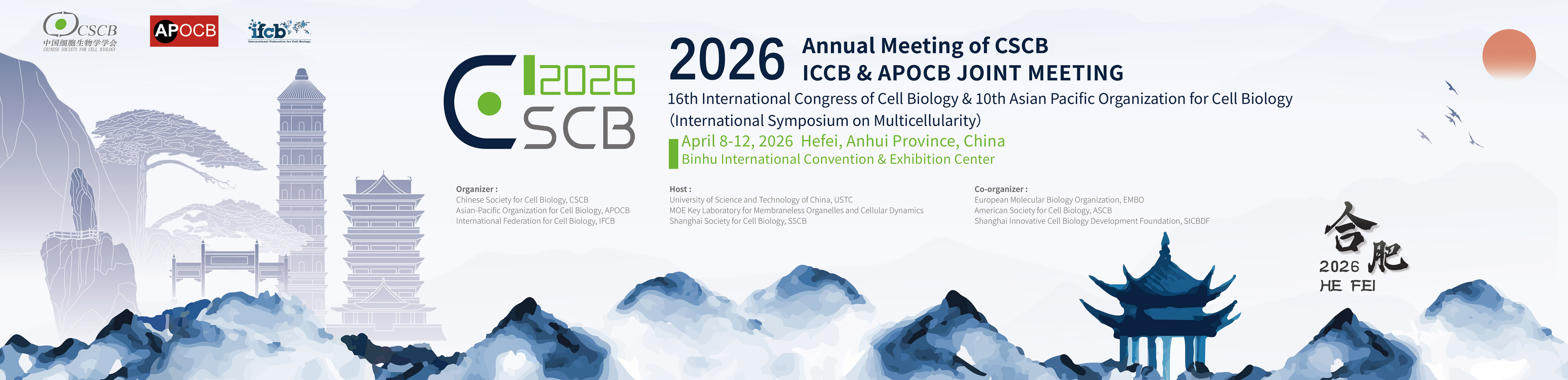
Conference: The 2026 Annual Meeting of Chinese Society for Cell Biology (CSCB)
Date: 8 - 12 Apr 2026
Location: Hefei, Anhui Province, China
The 2026 Annual Meeting of CSCB · ICCB & APOCB Joint Meeting will be held at the Binhu International Convention & Exhibition Center in Hefei, China, from 8 Apr to 12 Apr 2026. This conference, organized by the Chinese Society for Cell Biology, is a major academic event in the field of cell biology in China and the wider Asia-Pacific region. It covers a wide range of disciplines including cell signaling, cellular metabolism, neurobiology, developmental biology, circadian rhythms, stem cells, medicine, organelle interactions, aging, etc. For more information, please visit https://www.cscb.org.cn/2026/index.html .
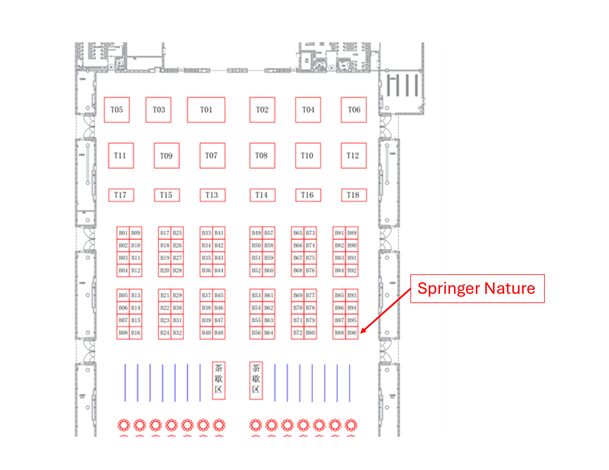
We are delighted to announce that we will be joining the conference and representing a number of Springer Nature journals at this conference. We look forward to meeting researchers from various research areas, exchanging the latest ideas and answering any questions you may have. If you are planning to meet Springer Nature editors at this event, you are welcome to visit us at Booth B96 and speak with editors from different journals.
You may also email us for any publishing queries:
- Karen Cheng, Senior Publisher, Springer Journals (karen.cheng@springernature.com)
- Yao Guo, Associate Editor, Discover Journals (yao.guo@springernature.com)
📌 Event: Meet the Editors at Booth B96
We have invited editors from a number of journals to interact with researchers and students at our booth. You are warmly invited to join us. By taking part in the event, you will have the chance to win a Springer Nature gift.
📚 Journals: Cell Research, Cell Discovery
🧑💼 Editors: Lei Cheng, Wencong Lyu
📅 Date: April 10
⏰ Time: 15:15 - 16:15
📚 Journals: Discover Developmental Biology, Discover Biotechnology
🧑💼 Editor: Yao Guo
📅 Date: April 11
⏰ Time: 15:00 - 16:15
Become an Editorial Board Member of our Discover Journals? Stop by and have a chat with us if you are interested.
📚 Journals: The EMBO Journal, EMBO Reports, Molecular Systems Biology, EMBO Molecular Medicine
🧑💼 Editors: Jingyi Hou, Bernd Pulverer, William Teale
📅 Date: April 9 - 11
.jpg)
📍 Where to find us
We look forward to meeting many of you there!
Follow the Topic
-
Cell Discovery
This journal aims to provide an open access platform for scientists to publish their outstanding original works and publishes results of high significance and broad interest in all areas of molecular and cell biology.
-
EMBO Molecular Medicine
EMBO Molecular Medicine (EMM) publishes breakthrough research in translational and biomedical sciences in the field of experimental medicine.
-
Cell Research
This journal publishes original research results that are of unusual significance or broad conceptual or technical advances in all areas of life sciences, as long as the study is closely related to molecular and cell biology.
-
The EMBO Journal
Launched in 1982, The EMBO Journal is EMBO’s flagship publication, recognised worldwide for its originality, breadth, and enduring contributions to molecular biology.
-
EMBO Reports
EMBO Reports publishes both long- and short-format papers in all areas of molecular-, cell- developmental biology and ecology.
-
Molecular Systems Biology
Molecular Systems Biology publishes leading research in the fields of systems biology, synthetic biology and systems medicine.
-
Discover Biotechnology
This is a fully open access, peer-reviewed journal that supports multidisciplinary research and policy developments across the multidisciplinary fields of biotechnology.
-
Discover Developmental Biology
Formerly Development Genes and Evolution, this journal is a fully open access, peer-reviewed journal supporting multidisciplinary research across all fields of biological development relevant to animals, plants and microorganisms.








Related Collections
With Collections, you can get published faster and increase your visibility.
Molecular Control of Cardiac Development and Congenital Heart Disease
This proposed collection will highlight recent advances in understanding the molecular mechanisms that regulate heart development and how their disruption leads to congenital heart disease. We welcome original research, reviews, and perspectives addressing genetic, epigenetic, transcriptional, and signaling pathways that govern cardiac cell specification, morphogenesis, chamber formation, and functional maturation. Particular interest will be given to studies that connect developmental mechanisms with disease pathogenesis, including work using animal models, stem cell systems, human genetics, and multi-omics approaches. By bringing together studies across basic and translational developmental biology, this collection aims to provide new insights into the origins of congenital heart disease and to promote emerging strategies for diagnosis, modeling, and therapeutic intervention.
Keywords: cardiac development, congenital heart disease, transcriptional regulation, epigenetics, cardiogenesis, animal models
Publishing Model: Open Access
Deadline: Jan 29, 2027
Developmental Programming and Epigenetics: Mechanisms, Implications, and Interventions
Developmental programming refers to the process by which early-life environmental factors influence the long-term health outcomes of an individual, including susceptibility to diseases such as cardiovascular disease, diabetes, and cancer. Epigenetic modifications, which involve changes in gene expression without altering the underlying DNA sequence, have been increasingly recognized as key mediators of developmental programming. These modifications include DNA methylation, histone modifications, and non-coding RNAs, and can be influenced by a variety of factors such as stress, nutrition, toxins, and other environmental exposures during critical periods of development. Notably, epigenetic changes may be heritable, leading to transgenerational effects on health.
This Collection aims to explore the growing body of research examining the connection between developmental programming and epigenetics, with a focus on how exposures during critical period of development can impact gene expression and contribute to disease risk across the lifespan. We invite contributions that advance our understanding of the mechanisms underlying developmental programming and epigenetic regulation, and that offer insights into potential therapeutic approaches for mitigating adverse health outcomes linked to early-life exposures.
Potential topics for this Collection include, but are not limited to:
Mechanisms of developmental programming: How early-life environmental exposures (e.g., nutrition, toxins, stress) induce epigenetic changes and influence long-term health.
DNA methylation and histone modification in developmental programming: Insights into how these epigenetic marks regulate gene expression during critical periods of development.
Transgenerational epigenetic inheritance: Evidence and mechanisms by which epigenetic changes are passed from one generation to the next, affecting offspring health.
The role of non-coding RNAs in developmental programming and epigenetic regulation.
The impact of prenatal and early-life exposures on metabolic programming, neurodevelopment, and immune system function.
The influence of the maternal environment on epigenetic modifications and developmental outcomes.
The potential of epigenetic biomarkers in predicting disease risk and therapeutic interventions for early-life programming.
Epigenetic plasticity and interventions to mitigate the impact of harmful exposures (e.g., lifestyle changes, pharmacological approaches, and environmental modifications).
Keywords: developmental programming, epigenetic modifications, early-life exposures, transgenerational inheritance, disease risk
Publishing Model: Open Access
Deadline: Nov 04, 2026