Microbiota’s BIG role in tick-borne pathogen transmission
Published in Microbiology
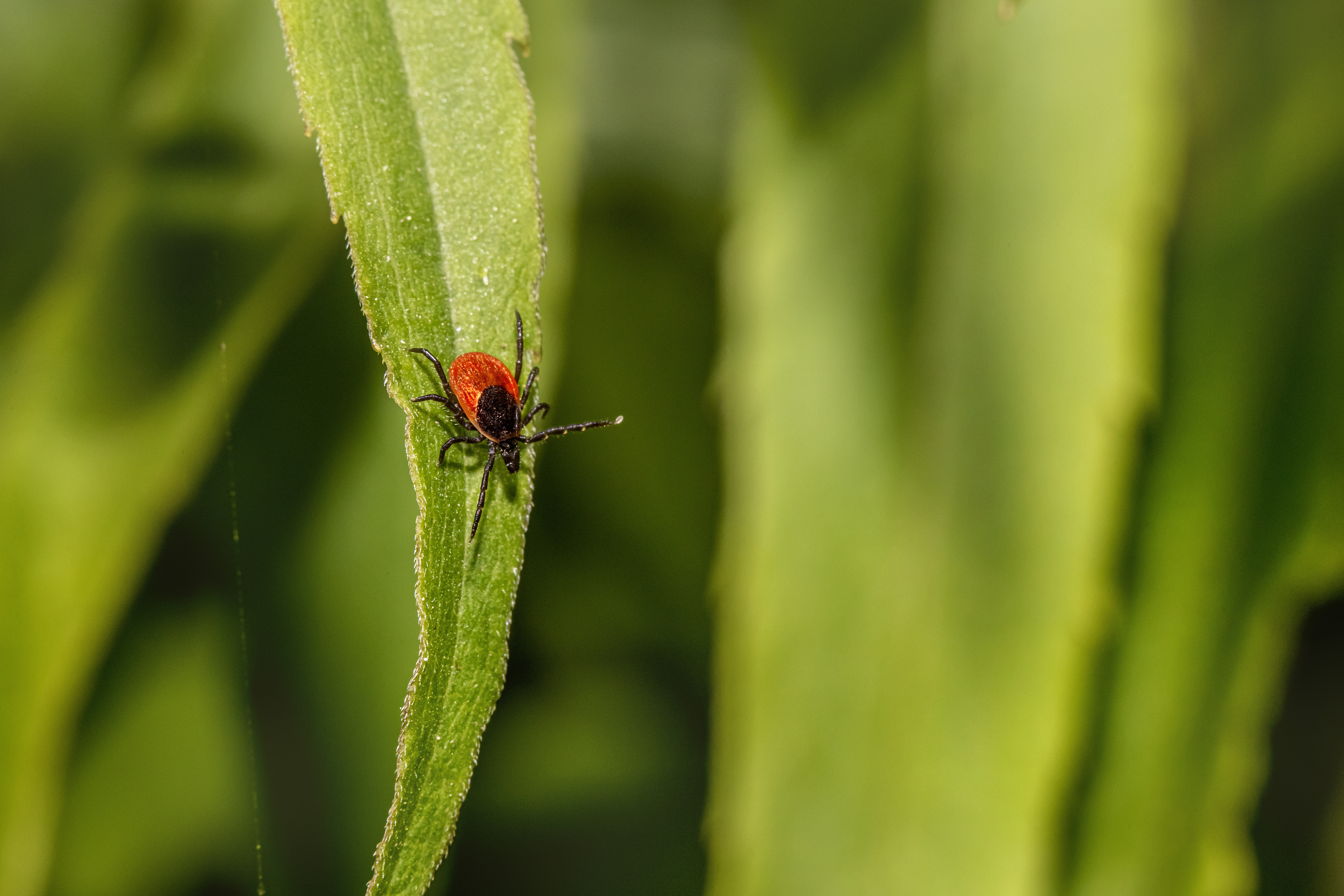
Spring is finally here! ...which means I can no longer use the winter weather as an excuse not to jog. Last weekend I went for a run on a trail I had been avoiding since last year – back then, tall grass lined both sides, and several hours after a jogging session in June I found a tick latched on to my leg. Instantly, my mind started racing with worrisome thoughts about tick-borne diseases (though, as is so often the case with things stressing us out, everything was completely fine).
The grass has now died back, but running there reminded me of my foe, and of a related paper recently accepted in Parasites & Vectors.
In a new review entitled “Interaction between tick and host microbiotas: a four-step waltz” by Baquer and Grillon, the authors explore the microbial factors that play a role with the transmission of tick-borne diseases. It’s easy to think of tick-borne diseases as a three-way affair: between you, the tick, and the pathogen. But Baquer and Grillon suggest that microbiota can also play a big role, especially the tick’s own microbiome and the microbes on our skin.
Their review identifies four aspects that affect the interplay between these two microbiomes when it comes to transmitting tick-borne pathogens—"a metaphorical ‘waltz in four time.’”
The first of these is the tick’s microbiome. Though they may look tiny, ticks host diverse microbial communities, particularly when they haven’t had a meal. Baquer and Grillon group these microbes into three distinct categories: “core endosymbionts," passed down from parents; “facultative/transient microbiota,” acquired from their environments; and “pathogenic or opportunistic microorganisms.”
Much like our own microbiomes, these organisms can impact ticks in serious ways. For example, reducing the number of “symbionts supplying B vitamins alters the development of nymphs into adult stages.” Additionally, elevated levels of certain endosymbionts can contribute to the vector competence of the tick, ex., the bacteria Midichloria mitochondri seems to contribute to a tick passing along Lyme disease.
The second factor is skin microbiota – specifically how it can attract vectors. Ticks detect chemical compounds and can be attracted or repelled by them. Much like mosquitos, carbon dioxide is a big attractant. Interestingly, the presence of pathogens which cause tick-borne diseases can also make a potential host more enticing. It’s unknown why this is, but some speculate that the infection could tweak the cutaneous microbiota, which in turn could make the host more alluring to other ticks.
The third occurs when the tick attaches and begins feeding. Once they bite down, they start to disrupt the skin microbiome. Normally during a cut or injury, the microbiota present at the injury site can assist with healing. But, while a tick is feeding, the “composition of the cutaneous microbiota is progressively altered, and tends to be more similar to the tick's midgut microbiota.” Additionally, their saliva can cause anti-inflammatory effects and disrupt our skin’s healing.
The last aspect is how the skin interacts with vector-borne pathogens. While there is still plenty of ambiguity surrounding how the microbiomes of a tick and our skin interact, studies show that for tick-bitten mice, their cutaneous microbiota showed big changes for up to ten days after the feeding. That’s important, because these communities can impact how our immune system responds, either giving us a boost or helping pathogens gain a foothold.
Further studies are needed, but this review points a way forward for future research, as well as for potential new treatments. As Baquer & Grillon state in their conclusion, “In parallel, the skin microbiota may represent a promising target for novel preventive or therapeutic strategies. Modulating microbial composition to reduce host attractiveness, enhancing local immune response, or developing approaches that disrupt the tick microbiota – such as vaccines directed against tick symbionts – are emerging as potential avenues to reduce pathogen transmission.” Further research could lead to anti-microbiota vaccines, microbiome-based repellents, and more.
In short, “integrating the microbiota as a fourth component of the vectorial system, alongside the host, the tick, and the pathogen, is essential for a comprehensive understanding of tick-borne diseases.”
Cover image credit: Erik_Karts from Pixabay.

Follow the Topic
-
Parasites & Vectors
This journal publishes articles on the biology of parasites, parasitic diseases, intermediate hosts, vectors and vector-borne pathogens.
-
BugBitten
A blog for the parasitology and vector biology community.

Related Collections
With Collections, you can get published faster and increase your visibility.
Translational leishmaniasis
This collection focuses on leishmaniasis as a central model while also encompassing related parasites that share comparable biological traits, pathogenic mechanisms, and clinical relevance. The aim is to create a translational bridge between basic research and practical applications, highlighting insights that can be extended across the spectrum of kinetoplastids and other closely linked parasites.
Topics of interest include:
• Analytical and omics-based advances for parasite detection, monitoring, and characterization.
• Comparative biology of Leishmania and related parasites, with emphasis on shared mechanisms of infection and survival.
• Host-pathogen interactions and immune responses.
• Epidemiology and transmission dynamics, including drawing parallels between leishmaniasis and other parasitic infections.
• Translational strategies in drug discovery, vaccine development, and therapeutic interventions applicable to leishmaniasis and related parasitic diseases.
By linking leishmaniasis with other parasitic diseases of similar characteristics, this collection seeks to foster integrative approaches, stimulate cross-disciplinary dialogue, and accelerate the translation of knowledge into innovative diagnostic, preventive, and therapeutic solutions.
Publishing Model: Open Access
Deadline: Nov 27, 2026
Credelio Quattro
This collection was created to facilitate access to manuscripts published in Parasites & Vectors focusing on Credelio Quattro™ (lotilaner, moxidectin, praziquantel, and pyrantel chewable tablets).
Articles published in the collection have already gone through the systematic peer review process of the journal.
Publishing Model: Open Access
Deadline: Ongoing