Nanoconfined supersaturated reactors turn CO2 to ethanol


Electrochemical CO2 reduction offers a route to store renewable electricity in chemical bonds while producing fuels and chemical feedstocks. Among the possible products, ethanol is particularly attractive because of its high energy density, ease of storage and established industrial applications. Its selective formation, however, remains difficult. The reaction requires C-C coupling between carbon intermediates, followed by hydrogenation while retaining a C-O bond. Insufficient *CO coverage limits C-C coupling, whereas uncontrolled downstream conversion often redirects the pathway towards ethylene.
Most catalyst-design strategies focus on modifying active sites through alloying, defect engineering or surface functionalization. We considered the problem from another perspective: could the nanoscale reaction environment be engineered to control the availability and evolution of carbon intermediates? CO2 has limited solubility in aqueous electrolytes, and its rapid consumption at industrially relevant current densities creates a substantial concentration gradient near the catalyst surface. We therefore sought to construct a confined space capable of capturing CO2, increasing its local concentration and extending the residence time of key intermediates.
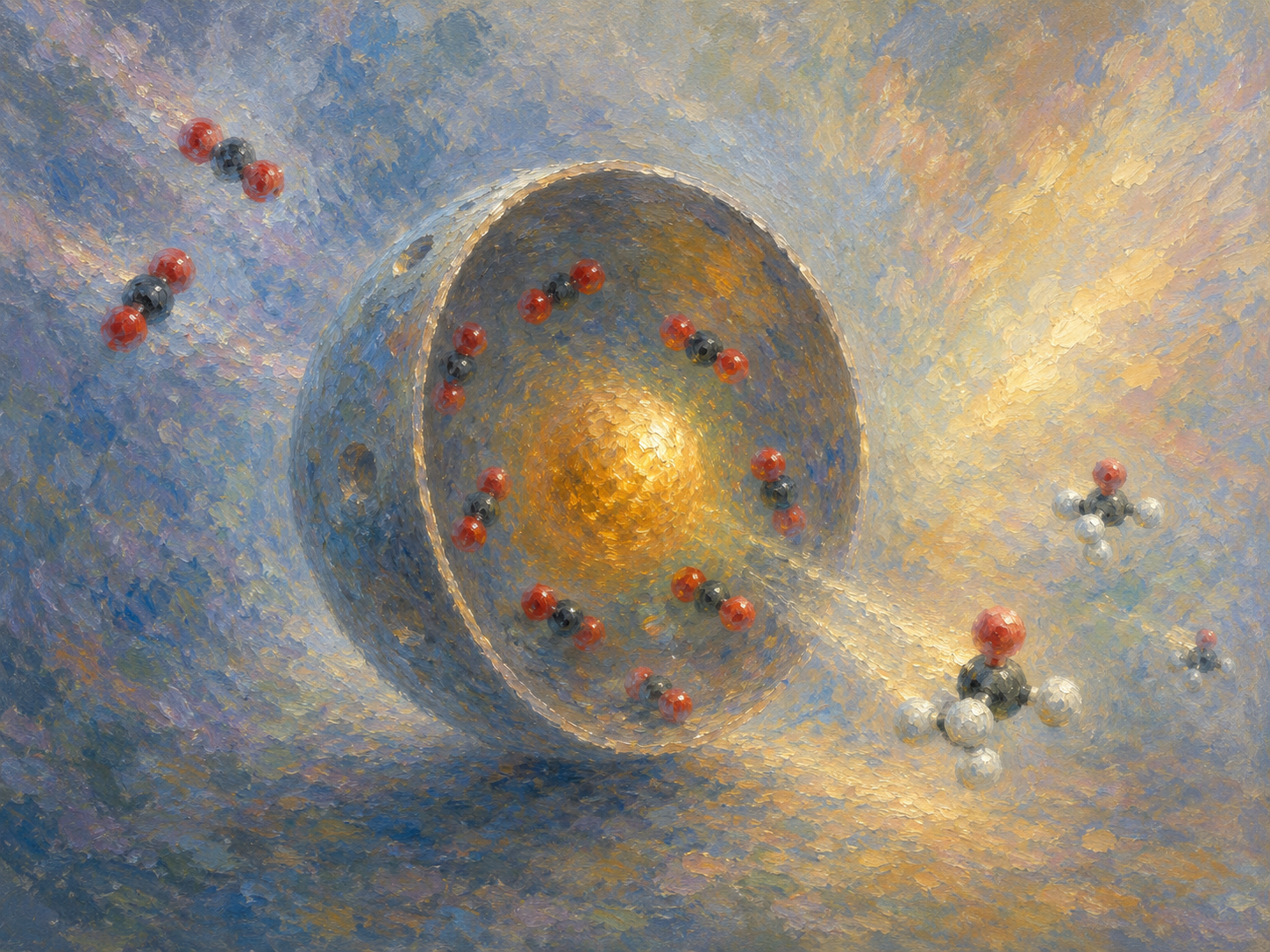
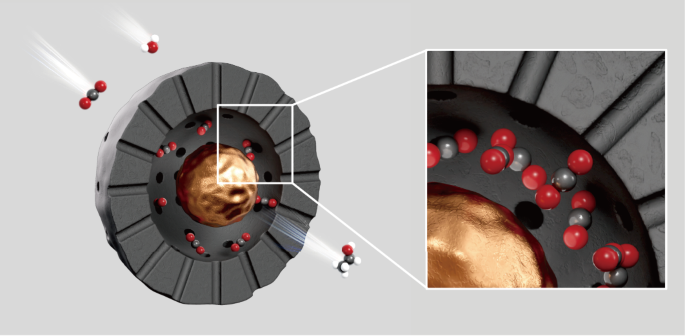
This idea led us to develop a nanoconfined supersaturated reactor with a porous carbon shell, an internal nanocavity and a copper core (Figure 1). The material was prepared from the copper-based metal-organic framework HKUST-1. Thermal treatment produced carbon-encapsulated copper nanoparticles, after which controlled etching created an approximately 8.2-nm cavity between the copper core and the outer carbon shell. Micropores in the carbon shell allowed CO2 to enter the cavity, while the confined space served as a molecular reservoir. We further modified the copper surface with thiol molecules to regulate the interfacial environment.
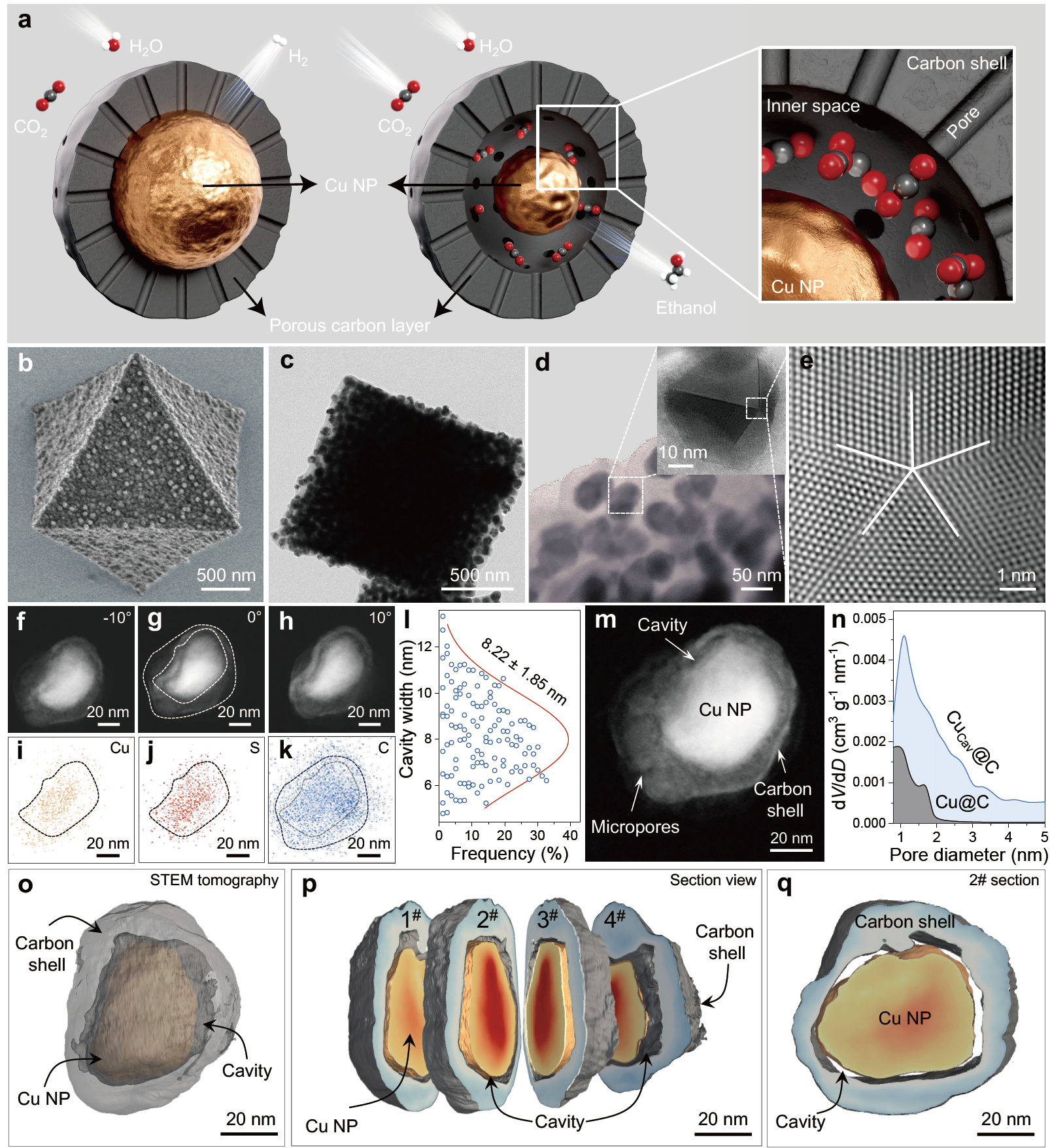
Figure 1. Structures and characterizations of the CuCav-CH3@C nanoconfined reactor
The nanocavity does more than simply provide additional space for CO2 transport. Molecular dynamics simulations showed that CO2 accumulates inside the cavity and reaches a concentration substantially higher than that near an open copper surface. This confinement produces a locally self-pressurized microenvironment in which CO2 remains available close to the active sites. Importantly, self-pressurization here describes the local enrichment generated by confinement rather than the elimination of external pressure. The nanocavity amplifies the local CO2 concentration under the applied reaction conditions and sustains carbon-intermediate coverage during electrolysis.
Under optimized conditions, the nanoconfined reactor achieved an ethanol Faradaic efficiency of 70.3% ± 3.5% and an ethanol partial current density of 245.9 ± 4.2 mA cm−2 (Figure 2). Isotope-labelling experiments confirmed that the carbon in ethanol originated from the supplied CO2. The catalyst also operated continuously for more than 200 h. In a full-cell configuration, it delivered an ethanol energy efficiency of 14.6% at a cell voltage of 2.60 V, with an ethanol production rate of 733.8 μmol h−1 cm−2.
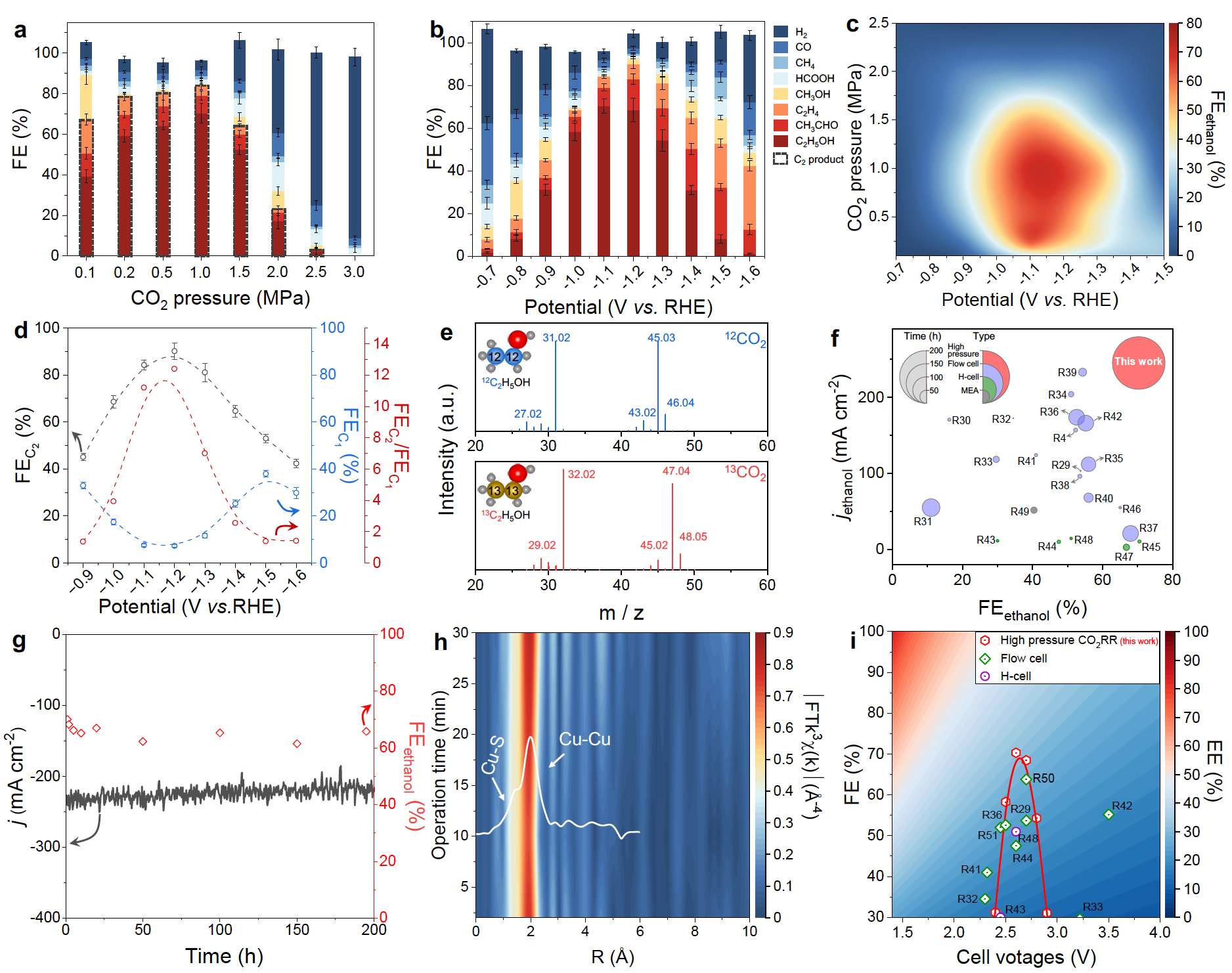
Figure 2. Performance of CuCav-CH3@C under CO2-enriched conditions in a high-pressure electrolyser
In situ attenuated total reflection surface-enhanced infrared absorption spectroscopy provided direct insight into how this confined environment changes the reaction. Compared with the non-confined catalyst, the nanoreactor exhibited stronger CO2- and CO-related signals, indicating enhanced CO2 availability and increased *CO coverage. Because adjacent *CO-derived intermediates are required for C-C bond formation, this high-coverage environment facilitates the formation of multicarbon products.
Promoting C-C coupling alone is insufficient to achieve selective ethanol formation. The subsequent reaction pathway must also preserve the oxygen-containing group. Our spectroscopic measurements identified ethoxy intermediates and revealed that the relative population of bidentate ethoxy species closely followed the ethanol Faradaic efficiency. Thiol modification regulated the local interfacial environment and helped stabilize these ethanol-forming intermediates. The combined effects of nanoconfinement and surface modification therefore addressed two distinct stages of the reaction: cavity-enhanced CO2 enrichment and C-C coupling, while the modified interface favoured the retention and further hydrogenation of oxygen-containing intermediates rather than their deep deoxygenation to ethylene.
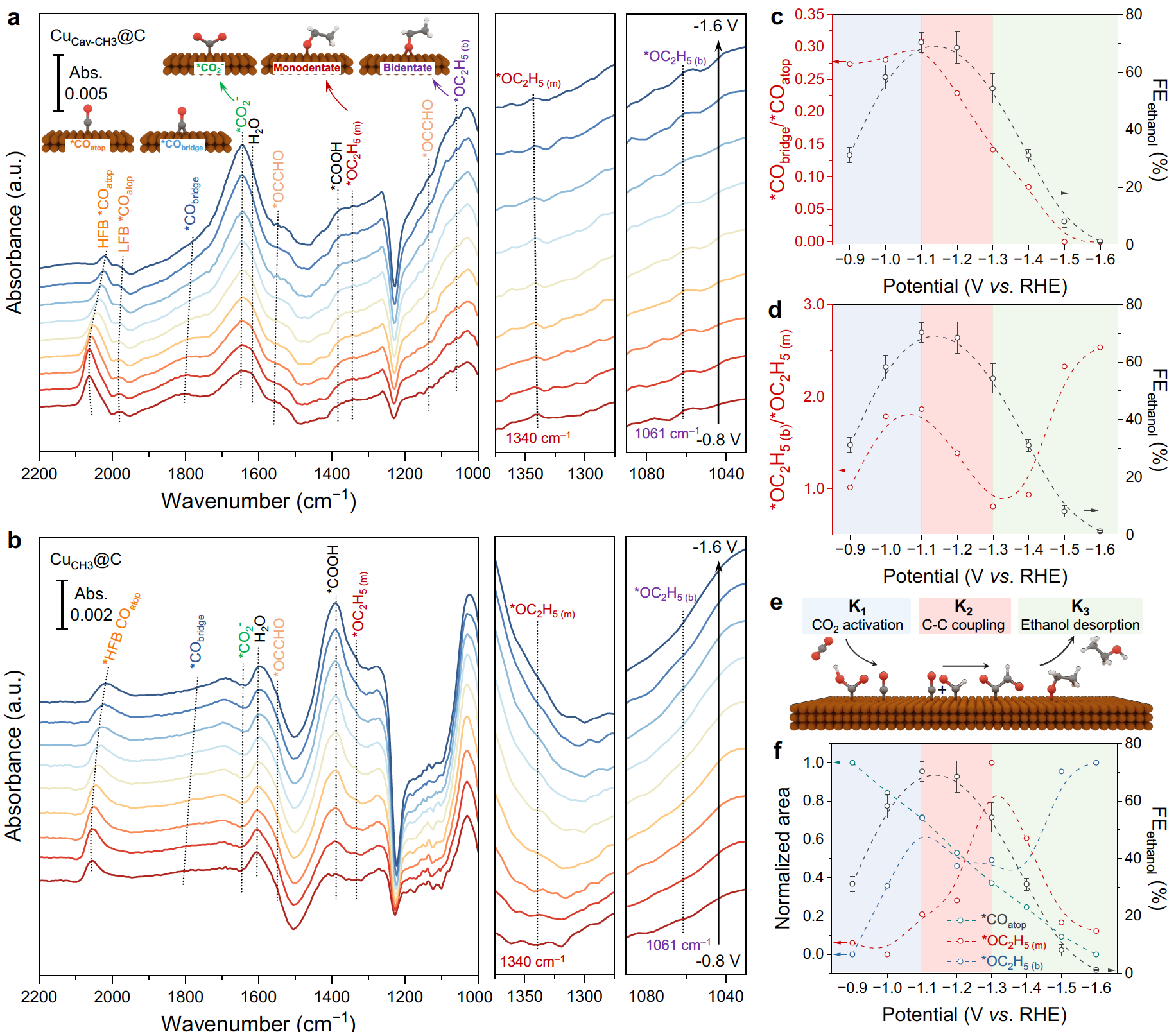
Figure 3. Mechanistic investigation of CO2RR with in situ ATR-SEIRAS
Density functional theory calculations supported this interpretation (Figure 4). Increasing the local CO2 concentration facilitated reaction steps associated with C-C coupling, although the calculations also indicated that excessive crowding of intermediates could hinder subsequent conversion or desorption. This result highlighted an important design principle: maximizing the local reactant concentration is not necessarily optimal. The dimensions of the confined space, its transport channels and the interfacial chemistry must be balanced to maintain sufficient reactant supply without restricting downstream reactions.
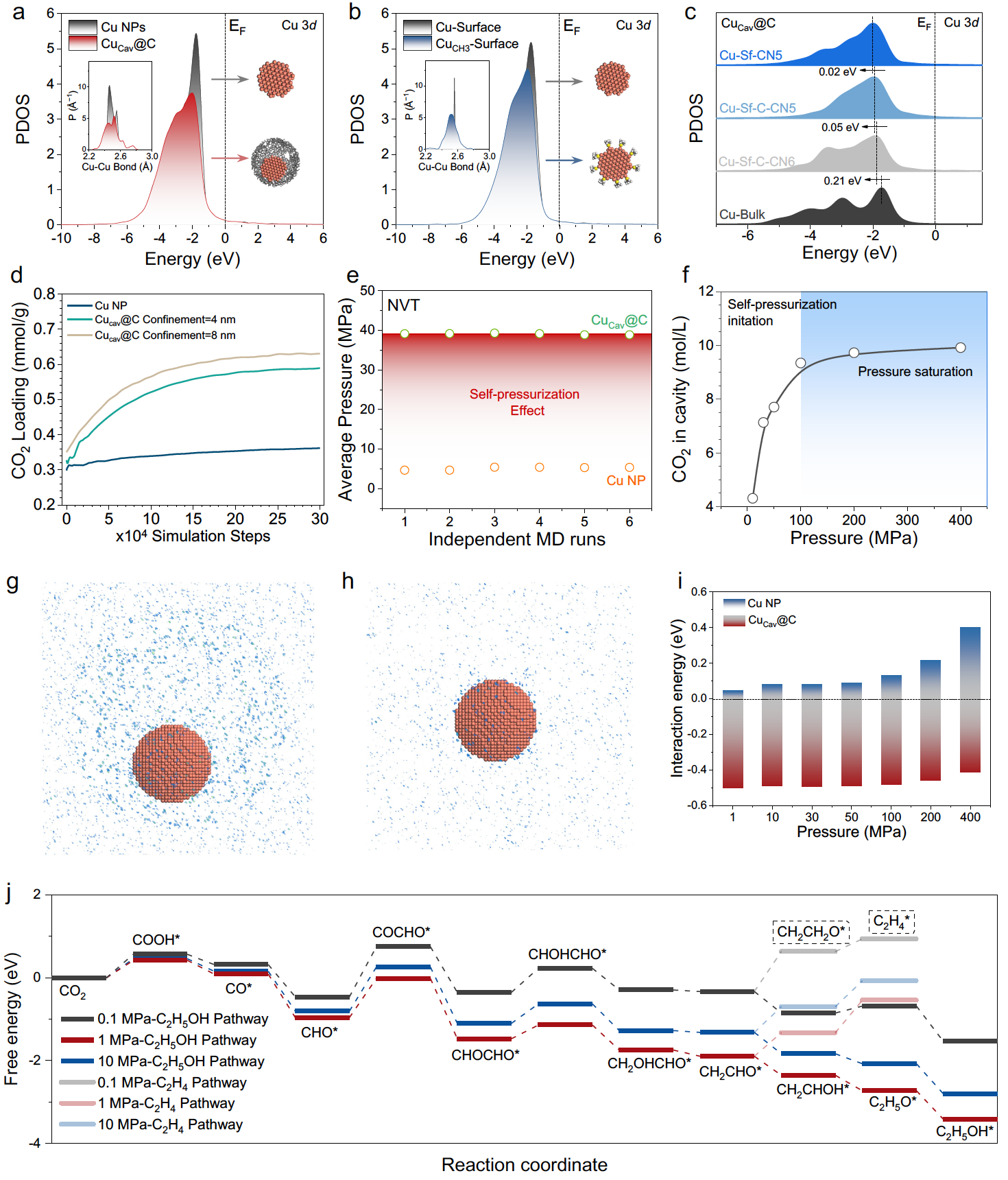
Figure 4. Mechanistic insights into the CO2RR mechanism via DFT and MD simulations
The broader significance of this work lies in treating the catalyst and its local reaction environment as an integrated system. Catalytic selectivity is governed not only by the electronic structure of active sites but also by molecular transport, local reactant concentration, intermediate coverage and interfacial solvation. Nanoconfinement provides a means to regulate these factors simultaneously.
Several challenges remain before this concept can be translated into practical CO2 electrolysers. The dependence on external CO2 pressure should be reduced, and the relationships among cavity size, pore structure, local concentration and product selectivity require more quantitative understanding. Carbon efficiency, full-cell energy efficiency and long-term performance must also be evaluated in larger membrane-electrode assemblies. Nevertheless, our findings show that self-pressurized nanoscale reaction environments can redirect complex reaction networks and provide a general strategy for the selective electrosynthesis of multicarbon products.
This work was financially supported by the National Natural Science Foundation of China (grant no. 22572193), CAS Talent Program Category B Research Grant, the Liaoning Province Excellent Young Scientists Fund (grant no. 2025JH6/101000013) and the DICP (grant no. DICP I202527)
Artical information and link:
Zhaoyong Jin, Tianrong Han, Mingzi Sun, Kun Qi*, Xuyang Zhou*, Bolong Huang*, Xiaoqiang Cui* et al. Nanoconfined Supersaturated Reactors for Efficient CO2-to-Ethanol Electroreduction. Nature Catalysis (2026). DOI: 10.1038/s41929-026-01601-z.
Find me on my twitter @Atome_Kun to discuss more this paper and more works about metastable materials and renewable energy.
Follow the Topic
-
Nature Catalysis
This journal brings together researchers from across all chemistry and related fields, publishing work on homogeneous catalysis, heterogeneous catalysis, and biocatalysts, incorporating both fundamental and applied studies.