Naturally occurring antibiotic resistances in plant microbiomes
Published in Microbiology
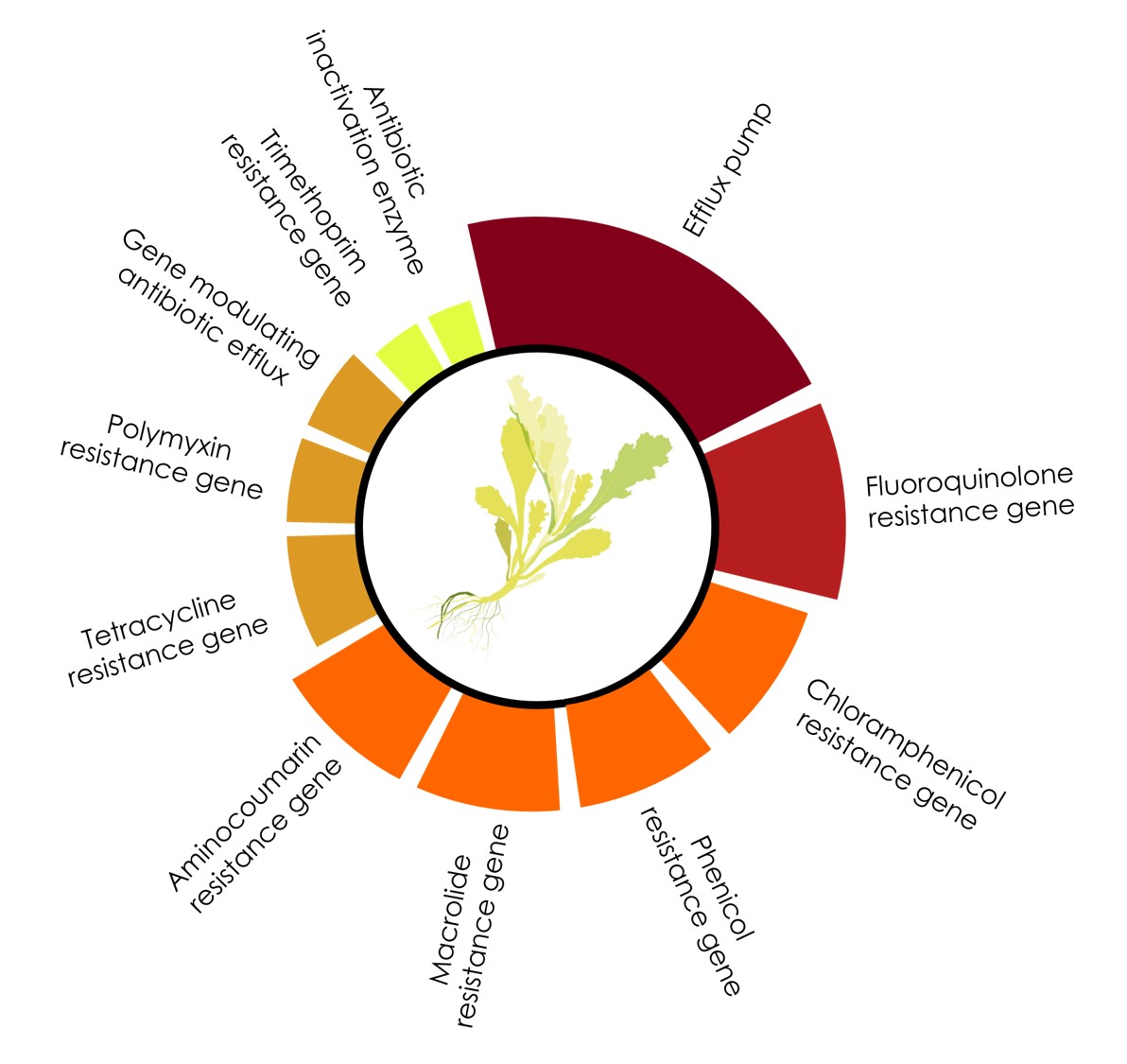


The plant microbiome often harbors highly competitive microorganisms that can shield of pathogens and contribute to the host’s health. In our latest study we have focused on antibiotic resistances in a common salad plant and found that the indigenous enterobacterial community contributes to the highly interesting profile.
The fatal implications of various infections by opportunistic human pathogens were thought of as a burden of the past, especially after several generations of highly effective antibiotics were developed. With the increased occurrence of antibiotic-resistant microorganisms (mostly bacteria), this perception is changing and we are facing once again a problem that requires a long-lasting solution.
This solution will most likely not arise from a new generation of classic antibiotics. In fact, it will require to overthink how we administer antimicrobial agents and how to avoid the natural response of microorganisms when they are attacked. The world health organization (WHO; https://www.who.int) provides frequently updated lists of microorganisms for which antibiotic treatments are urgently required.
Interestingly, many of the bacteria that are found on these lists have close relatives that either occur in our bodies or in natural environments that we use for our food production. Often the only difference is strain-specific and only given by certain genes that can be also located on plasmids.
Previous studies have already shown that many plant-associated bacteria have many similarities with opportunistic human pathogens, mostly due to the fact that they require similar functional repertoires for their survival (Berg et al., 2005). These findings provide the basis to study how these microorganisms are controlled in their natural environments and how this might be transferred to environments that are relevant for our health.
These environments are not only restricted to the clinical field, but also agricultural production and the indoor environment in general. In order to further decipher the occurrence of antibiotic resistances in natural environments, we have selected a common salad plant as a model for our study that included metagenomic profiling and cultivation-based studies in order to confirm the presence of multi-resistant bacteria.
Eruca vesicaria var. sativa (Mill.) Thell., commonly known as arugula, is a popular raw-eaten ingredient in salads due to its peppery, pungent taste. Similar to other leafy green plants, E. sativa is colonized by a vast diversity of microbes, which complement the holobiont’s functioning.
We analyzed the structure, abundance and functioning of the plant-associated microbiota in the arugula phyllosphere, rhizosphere and the corresponding bulk soil in an integrative approach. When compared to the rhizosphere, higher proportions of Gammaproteobacteria, including Enterobacteriaceae were observed in aerial plant parts. Metagenomic profiling of the bacterial population indicated a higher prevalence of antibiotic resistances in plant-derived samples.
We found general resistance mechanisms including various efflux pumps in the datasets, but also specific resistance mechanisms against fluoroquinolone, chloramphenicol and other antibiotics. Our overall findings suggest that antibiotic resistance is common in distinct raw-eaten plants. This provides the basis to further explore how these resistances are formed and how carriers, which are rarely pathogens in such environments, can be controlled in the future.
Berg, G., Eberl, L., and Hartmann, A. (2005). The rhizosphere as a reservoir for opportunistic human pathogenic bacteria. Environmental Microbiology, 7, 1673-1685.

Follow the Topic
-
Microbiome
This journal hopes to integrate researchers with common scientific objectives across a broad cross-section of sub-disciplines within microbial ecology. It covers studies of microbiomes colonizing humans, animals, plants or the environment, both built and natural or manipulated, as in agriculture.

Related Collections
With Collections, you can get published faster and increase your visibility.
Oncobiome
This collection of papers delves into the burgeoning field of oncobiome research, exploring the intricate relationship between cancer and the microbiome. The oncobiome encompasses the diverse microbial communities residing in and on the human body, which influence cancer development, progression, and treatment responses. By examining these interactions, our aim is to unravel the complex mechanisms through which the microbiome impacts oncogenesis and therapeutic outcomes.
This compilation highlights cutting-edge research, offering insights into potential diagnostic markers and novel therapeutic strategies, thereby advancing our understanding of cancer biology and paving the way for innovative, microbiome-targeted cancer treatments.
This is a cross-journal collection between:
Experimental Hematology and Oncology
Articles will undergo the standard peer-review process of the journal to which they are submitted and are subject to either the BMC editorial policies or those of BJC Reports. Articles will be added to the Collection as they are published. The Editors have no competing interests with the submissions which they handle through the peer review process. The peer review of any submissions for which the Editors have competing interests is handled by another Editorial Board Member who has no competing interests.
Publishing Model: Open Access
Deadline: Ongoing
The Apple Microbiome
Microbiome and Environmental Microbiome are calling for submissions to our Collection on the Apple Microbiome.
With world apple production estimated at 84 million tons, the microbiome of the apple has significant implications for agriculture, food security, and human health. Understanding the complex interactions between apple plants and their associated microbial communities can lead to improved crop management strategies, enhanced fruit quality and longevity, and sustainable agricultural practices. Recent advances have highlighted the role of specific bacteria and fungi in promoting plant health and resilience against specific pathogens. Moreover, detailed profiling of these microbial communities, revealing their diversity and functional potential facilitate exciting future developments, such as the identification of beneficial microbial consortia for biocontrol and the formulation of tailored probiotic treatments for both plants and humans. By advancing our collective understanding in this area, we can work towards a more sustainable and resilient agricultural system.
Topics of interest include but are not limited to:
-Microbial diversity and function associated with apples
-Effects of soil health and rhizosphere interactions on apple production
-Impact of climate change on the apple microbiome
-Role of the apple microbiome in fruit quality
-Microbiome-driven strategies for disease resistance
This collection is open for submissions from all authors on the condition that the manuscript falls within both the scope of the collection and the journal it is submitted to.
All submissions in this collection undergo the relevant journal’s standard peer review process. Similarly, all manuscripts authored by a Guest Editor(s) will be handled by the Editor-in-Chief of the relevant journal. As an open access publication, participating journals levy an article processing fee (Microbiome, Environmental Microbiome). We recognize that many key stakeholders may not have access to such resources and are committed to supporting participation in this issue wherever resources are a barrier. For more information about what support may be available, please visit OA funding and support, or email OAfundingpolicy@springernature.com or the Editor-in-Chief of the journal where the article is being submitted.
Publishing Model: Open Access
Deadline: Sep 30, 2026