No Ghosting: How an Online School Fling led to a study on the Great Resignation
Published in Computational Sciences, Behavioural Sciences & Psychology, and Economics


Have you ever gone to a summer school, kicked-off a research project with other students, and actually published your findings? It's quite a rare achievement. Often, once the in-person buzz dims and the final goodbyes are said, projects tend to fizzle out and participants end-up ghosting each other as excitement fades. But for me, this time was different.
I matched with a team and we didn't just keep the conversation going; we published our study on the Great Resignation -- the highest spike in U.S. job quits in three decades. And the most astonishing part? The summer school was completely online.
In 2021, I participated in the Computational Social Science Summer Institute at its London branch organized by Joshua Becker and Mike Yeomanss among others. The format was a week of online (flipped classroom) lectures followed by a week dedicated to project work. I found myself in an interdisciplinary team with psychologists, linguists, sociologists and mathematicians. Our research project? To explore digital traces of work and the impact of unemployment on mental health, using data from Reddit.
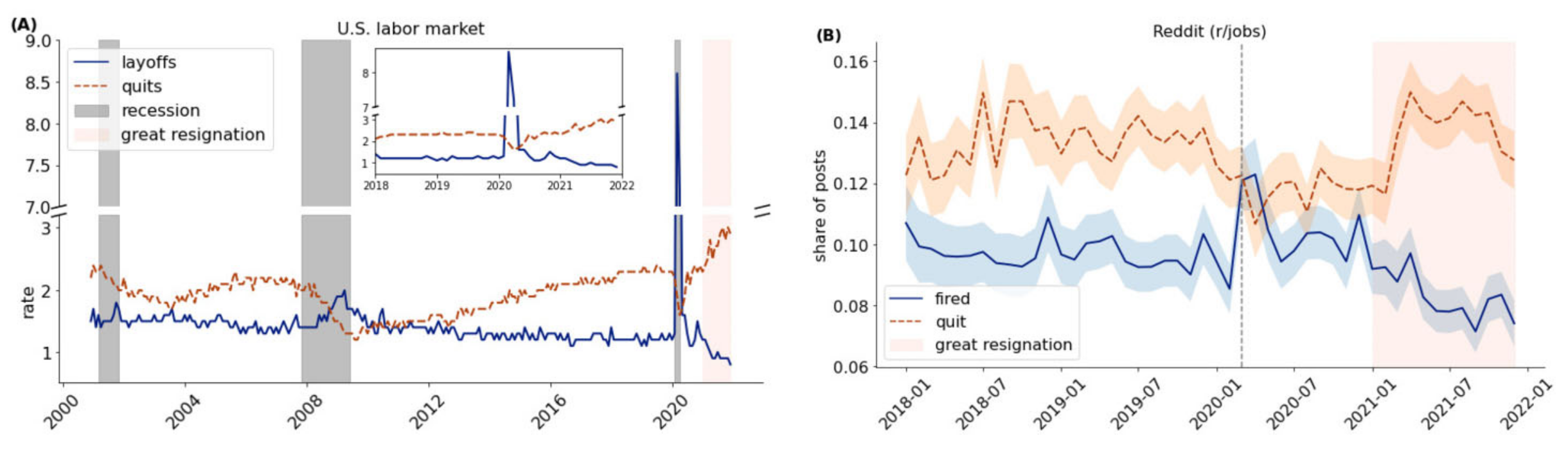
I admit my main motivation for continuing to meet with the team online was that it was fun! With the UK still under strict lockdown measures, these lively online gatherings were a highlight. However, as news of record-high job quits in the US began to surface, we realized that our Reddit data on work discourse was great for understanding the reasons behind the Great Resignation. Reddit mentions of quits and fires showed the same trend in 2020 and beginning of 2021 than the US labor market data.
Using a topic model we found the work discourse shifted during the pandemic and the Great Resignation. We observed an uptick in dialogues about working from home, remote jobs, and mental health, contrasted by a decrease in commuting discussions. But was it these mental health concerns driving the quits? To answer this, we needed a more detailed econometric analysis. It also posed the perfect opportunity to see if our online team chemistry could indeed translate into an effective in-person collaboration and organize a workshop in Vienna.
Meeting the research team in Vienna for the first time felt like a successful first Tinder date – some surprises about each other's heights, but a far better connection in person than online.
This gathering wasn't just about finally putting faces to names. Organized with support from the Complexity Science Hub, in the workshop we received very useful feedback in the workshop, and also caught the interest of Ljubica Nedelkoska – an experienced economist from Harvard and CSH.
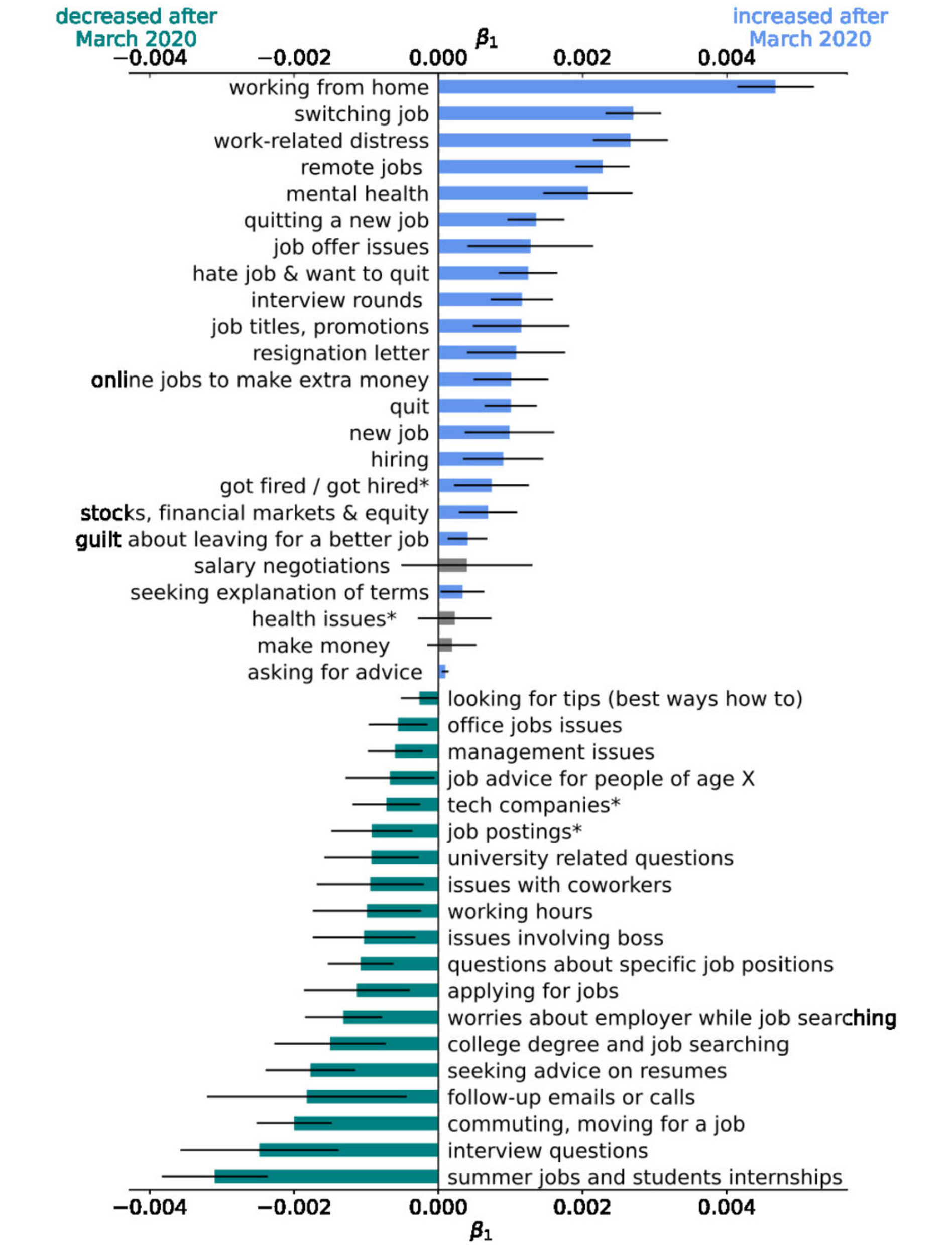
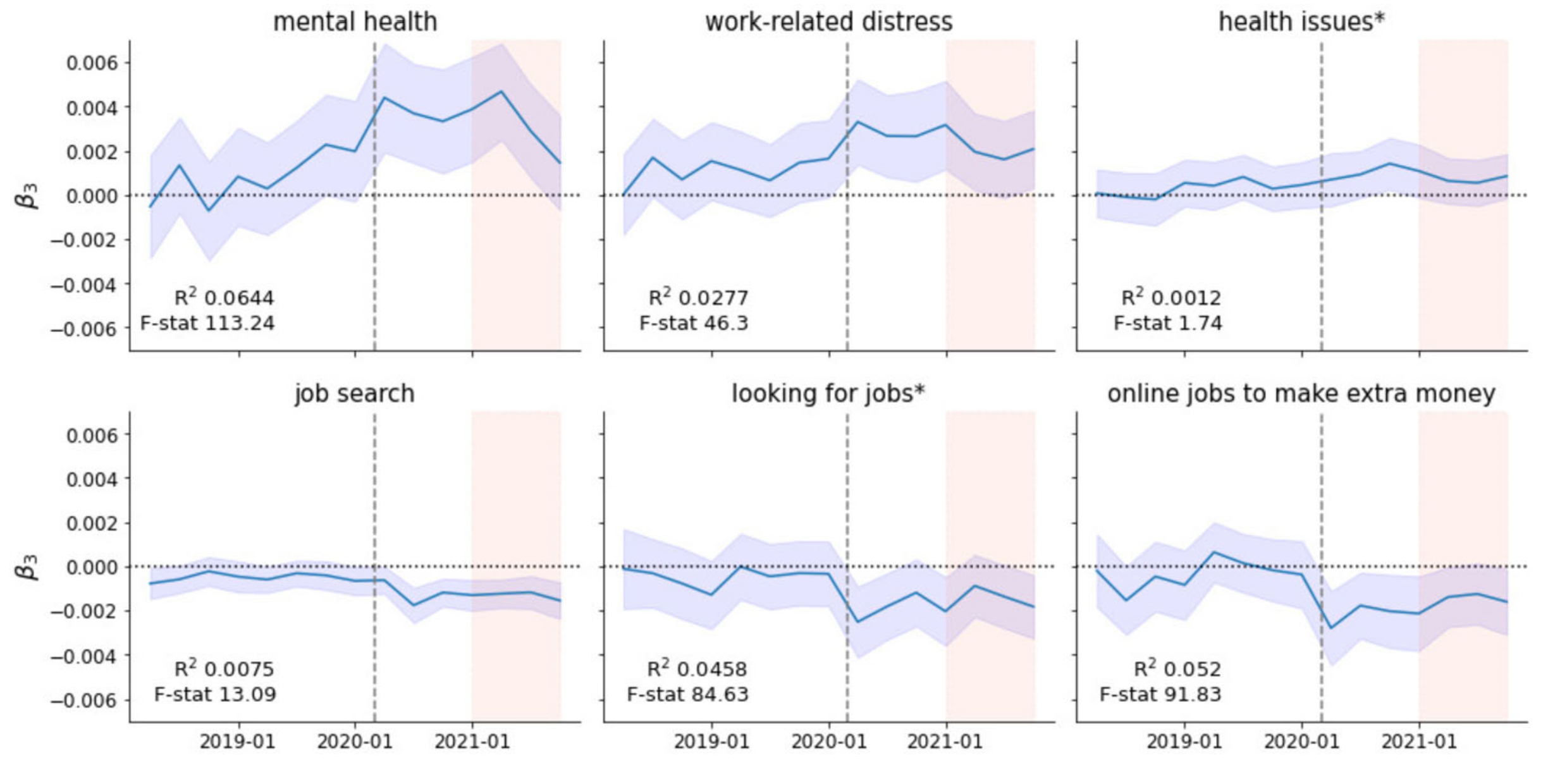
Ljubica joined our team and with her help we conducted a difference-in-differences analysis between groups discussing quitting and control groups. We discovered a significant increase in mental health concerns among those talking about quitting post-pandemic.
The relationship between mental health concerns and quitting remained relatively constant. This suggests that the pandemic did not change the nature of this relationship but rather increased the prevalence of mental health and work-related distress, leading to more quits.
Reflecting on this journey, it's clear why this was the only remote school project that led to a published paper. While in-person chemistry is hard to predict when transitioning to remote collaboration, starting remotely and finding that chemistry can lead to a lasting and productive partnership.

Follow the Topic
-
EPJ Data Science
This journal offers a publication platform to showcase the latest contributions to the study of techno-socio-economic systems, wherein the focus of the journal is on analyzing and synthesizing massive data sets to achieve new insights into societal phenomena and behavior.

Related Collections
With Collections, you can get published faster and increase your visibility.
AI and Computational Approaches for Digital Connectivity
How can the impact of digital connectivity be more effectively mapped, measured, and accelerated? As connectivity becomes a fundamental enabler of economic opportunity, social inclusion, and resilience, there is a growing need for approaches that not only quantify its outcomes but also actively enhance its benefits. We invite contributions that develop innovative methodologies for understanding and shaping the impact of connectivity across diverse environments. This includes work leveraging artificial intelligence, machine learning, and advanced analytics to generate actionable insights, improve decision-making, and enable more adaptive and responsive connectivity ecosystems that better serve communities and users.
This special collection aims to capture advances across the full lifecycle of connectivity, from design and deployment to operation and optimization. We welcome research that addresses both the assessment of impact and the mechanisms through which impact can be amplified, including improvements in network planning, resource allocation, and system intelligence. Contributions may span technical, economic, and policy perspectives, as well as interdisciplinary approaches that link infrastructure and service delivery to real-world outcomes. By bringing together work that both measures and drives impact, this collection seeks to foster a more holistic understanding of how digital connectivity can be made more effective, equitable, and scalable.
Submission Information:
Authors should select the appropriate Collection title “AI and Computational Approaches for Digital Connectivity” under the “Details” tab during the submission stage.
Publishing Model: Open Access
Deadline: Nov 27, 2026