Numerical model for the identification of the convective heat transfer coefficient in cryogenic nitrogen cooling

Calculation of the convective heat transfer coefficient is challenging, especially for asymmetric boundary conditions, due to spatial variability. Numerical procedures are established methods to solve the parabolic heat equation.
Like

Share this post

Choose a social network to share with, or copy the URL to share elsewhere

This is a representation of how your post may appear on social media. The actual post will vary between social networks

Explore the Research

SpringerLink
SpringerLink SpringerLink

Numerical model for the identification of the convective heat transfer coefficient in cryogenic nitrogen cooling - Heat and Mass Transfer

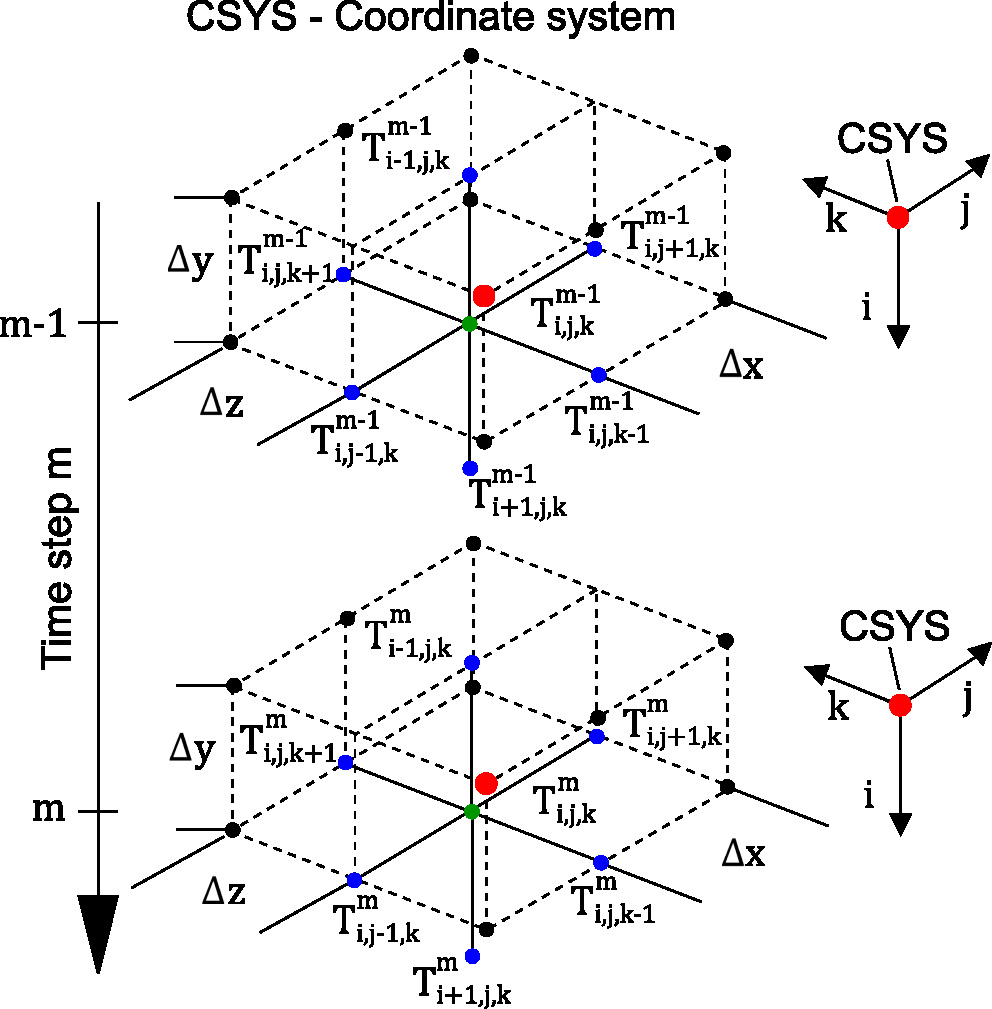
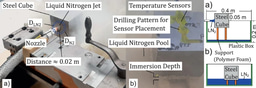
Calculation of the convective heat transfer coefficient is challenging, especially for asymmetric boundary conditions, due to spatial variability. Numerical procedures are established methods to solve the parabolic heat equation. The solution describes the temperature distribution as a function of space and time under consideration of thermal boundary conditions. For asymmetric thermal boundary conditions the application of the one-dimensional heat equation in an algorithm to solve the inverse heat transfer problem is limited. The reasons are the neglected spatial effects. The aim of this work is the development of a numerical method to calculate the convective heat transfer coefficient based on temperature measurements of a cooling process with liquid nitrogen, in two- and three-dimensional setup. The presented innovative algorithm is based on the tangent to the objective function, and is capable to calculate the correct order of magnitude of the convective heat transfer coefficient using finite difference and finite volume methods with a sensor concept that detects spatial heat conduction effects. The procedure was verified with experimental temperature measurements of a cooled cuboid made of non-alloy structural steel (S235). Different cooling methods were investigated, jet and immersion cooling with cryogenic nitrogen. The deviations of the calculated heat transfer coefficient for both numerical methods Finite-Difference and Finite-Volume-Method, compared to Finite-Element-Model reference data, are < 2%. The comparison with values obtained by empirical reference correlations (Asthakov and Breen-Westwater) show a maximum deviation of < 23% for jet cooling and < 10% for immersion cooling.

Our paper presents a novel numerical method to calculate the convective heat transfer coefficient during cooling processes with liquid nitrogen, addressing the challenges posed by asymmetric boundary conditions. Utilizing finite difference and finite volume methods, our algorithm accurately captures spatial heat conduction effects, verified through experiments on a cooled cuboid of non-alloy structural steel (S235). The results show deviations of less than 2% compared to Finite-Element-Model reference data, and a maximum deviation of less than 23% for jet cooling and less than 10% for immersion cooling when compared to empirical correlations. Read the full paper here.

DOI:

https://doi.org/10.1007/s00231-025-03627-8

Please sign in or register for FREE

If you are a registered user on Research Communities by Springer Nature, please sign in

Follow the Topic

Computational Mathematics and Numerical Analysis
Mathematics and Computing > Mathematics > Computational Mathematics and Numerical Analysis
Engineering Thermodynamics, Heat and Mass Transfer
Technology and Engineering > Mechanical Engineering > Engineering Thermodynamics, Heat and Mass Transfer