Open Access Research and Humanitarian Health: Supporting Research Without Borders
Published in Social Sciences, Microbiology, and Public Health

Médecins Sans Frontières (MSF), also known as Doctors Without Borders, is a humanitarian organisation that has been providing medical care in more than 75 countries. Alongside it’s frontline humanitarian work, MSF plays an important role in advancing research and discussion in global health.
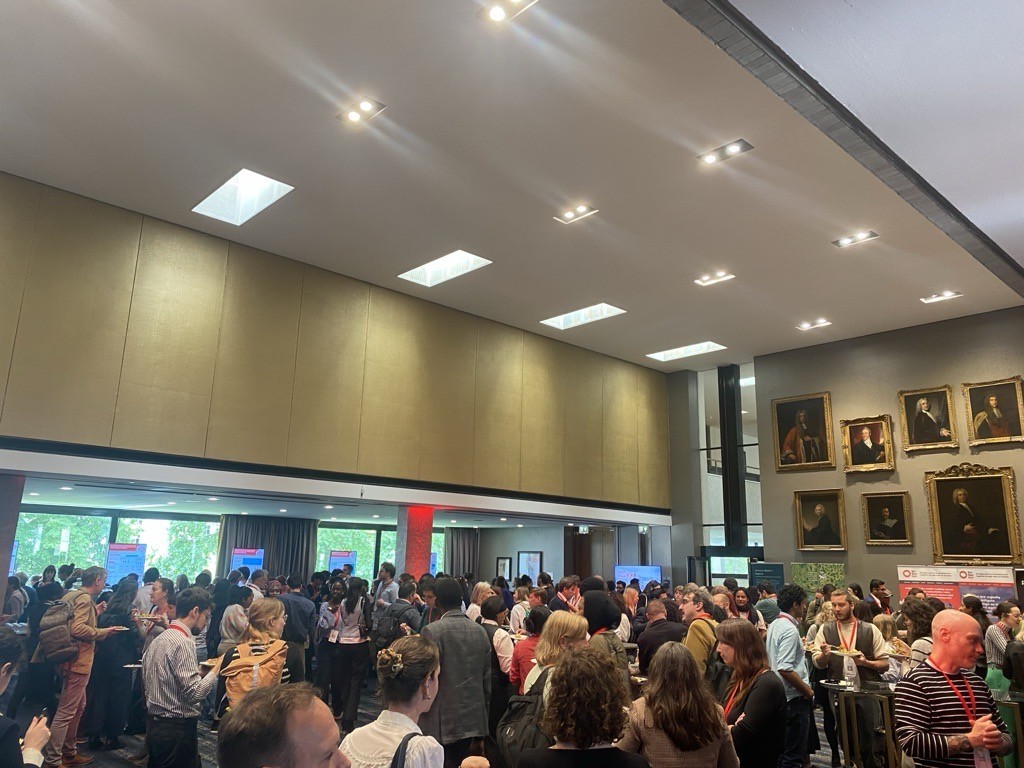
Every year, MSF Scientifics Days bring together those interested in global and humanitarian health. MSF describes them as “conferences without borders” creating a space for healthcare professionals, researchers, humanitarian workers and policy makers to gather and have meaningful discussions about the work of MSF.
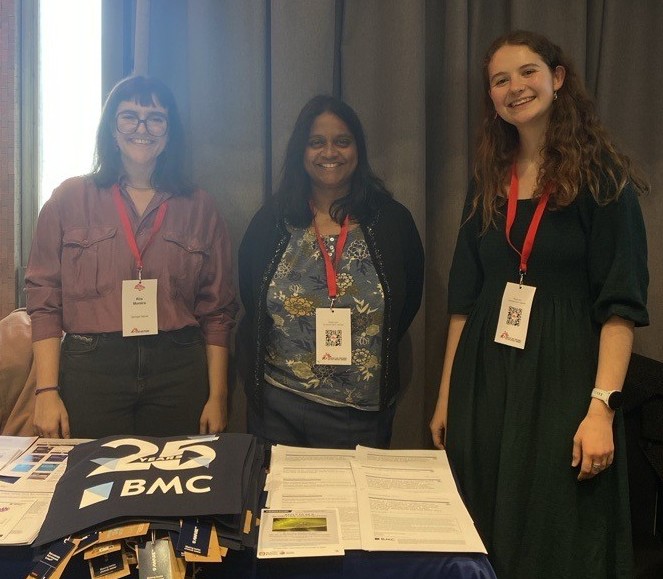
At this year’s conference, some of us at BMC in London had the opportunity to attend sessions and engage with a wide range of global health discussions, highlighting topics such as malnutrition and trauma care in Gaza, malaria vaccines, novel snakebite antivenoms in Ethiopia, maternal healthcare in Pakistan and Sudan, and new approaches for HIV care.
Beyond the scientific and clinical presentations, MSF hosted a panel discussion on medical ethics and how MSF’s research is used. Although a variety of topics were discussed, a common theme emerged throughout: the importance of open access research in supporting frontline healthcare workers responding to crises around the world.
The Importance of Open Access in Humanitarian Health
Open Access is a publishing model which makes research accessible to all, with no subscription fees and no institutional barriers, meaning articles are freely available to anyone anywhere, not just scientists with a Journal subscription. Open Access research allows for collaboration and dissemination of medical data and information, all of which is vital in the context of humanitarian crises, epidemics, natural disasters, and healthcare in conflict settings.
MSF not only advocates for open access publishing, but it also champions open access research; all studies conducted by MFS Operational centres, are openly accessible on their Research Management and Impact Tool (ReMIT). “ReMIT is open access to improve transparency and accountability of MSF research”. Additionally, MSF has their own digital library called MSF Science Portal, where thousands of articles and conference materials relating to MSF’s work are all openly accessible online.
Removing Barriers in Open Access Publishing
Open Access publishing is typically supported through an Article Processing Charge (APC), which helps to cover the costs associated with publishing the article, including production, integrity and long-term accessibility. While the open access model increases accessibility for readers, it can present a financial barrier for some authors, particularly in low- and middle-income countries – and several publishing companies provide assistance to help overcome these barriers.
As the first commercial open access publisher, founded in 2000, BMC recognises the importance of supporting equitable participation in publishing. BMC offers waivers and discounts for eligible authors and has established open access agreements with institutions around the world to support broader participation in research publishing.
Alongside these efforts, Springer Nature also supports wider initiatives focused on improving the visibility, accessibility and impact of global research:
The Sustainable Development Goal (SDG) Programme:
Springer Nature’s SDG Programme, aligned with the United Nations Sustainable Development Goals, aims to connect researchers working on the most difficult challenges with policy makers who can help us shape and improve the world. Covering topics across all 17 SDGs, the programme highlights research related to poverty, hunger, healthcare, sanitation, education, and many more.
Research Communities by Springer Nature:
Research Communities by Springer Nature, an online platform that encourages discussion, collaboration and discovery across global research communities. Through sharing Behind the Paper blogs and keeping up with News and Opinion content, the Research Communities not only provides researchers with the opportunity to connect with others in their field but also engage with wider conversations and perspectives.
BugBitten:
Launched in 2013, BugBitten is a blog for the parasitology, vector biology and global health community, providing a key space for researchers to share personal stories, discuss emerging topics and highlight developments across infectious disease research. A recent post celebrates the 230th anniversary of the first vaccine.
If you are interested in writing a contribution about your research visit the page or get in touch with the team.
Conclusion:
Open access is not just a publishing model, but a powerful tool for equity, enabling critical research to reach those who need it most without barriers. Médecins Sans Frontières’ work deserves to be known widely, as it can have real-world impact in global health. By continuing to support inclusive and accessible publishing practices, the research community can help work towards a more informed and equitable future.
Follow the Topic
-
Journal of Epidemiology and Global Health
The journal aims to impact global epidemiology and international health with articles focused on innovative scholarship and strategies to advance global health policy.
-
International Journal for Equity in Health
This journal presents evidence relevant to the search for, and attainment of, equity in health across and within countries and publishes research which improves the understanding of issues that influence the distribution of health and healthcare within populations.
-
Conflict and Health
This is a highly-accessed, open access journal documenting the public health impacts and responses related to armed conflict, humanitarian crises and forced migration.
-
Reproductive Health
This journal focuses on all aspects of human reproduction, including adolescent health, female fertility, contraception, and maternal health and all articles are open access.
-
Malaria Journal
This journal is aimed at the scientific community interested in malaria in its broadest sense.
-
Parasites & Vectors
This journal publishes articles on the biology of parasites, parasitic diseases, intermediate hosts, vectors and vector-borne pathogens.
-
BugBitten
A blog for the parasitology and vector biology community.







Related Collections
With Collections, you can get published faster and increase your visibility.
Adolescent Sexual and Reproductive Health, Agency, and Protection
Adolescence is a critical period for reproductive health, wellbeing, and future life opportunities. Yet adolescents often face significant barriers to accurate information, protective services, bodily autonomy, and confidential, youth-friendly care. This Collection seeks to highlight research on adolescent reproductive health, agency, and protection, particularly in settings where gender inequality, poverty, stigma, restrictive norms, harmful practices, limited health system capacity, and intersecting forms of exclusion shape young people's reproductive choices, safety, and outcomes.
Progress in adolescent sexual and reproductive health has been driven by investments in comprehensive sexuality education, youth-friendly services, prevention of child marriage and female genital cutting, and gender-transformative programming. However, major challenges persist, including adolescent pregnancy, interpersonal violence (intimate partner violence, dating violence, family violence, sexual coercion, and peer violence), unmet need for services, school dropout, harmful practices, and limited autonomy in decision-making. Adolescents affected by displacement, disability, poverty, humanitarian crises, migration, ethnic minority status, or social marginalization may face compounding and intersecting risks that require tailored, context-sensitive, inclusive, and equity-oriented responses.
A growing body of evidence emphasizes the importance of adolescent agency, empowerment, and resilience as both outcomes and protective factors. Interventions that adopt gender-transformative approaches, utilize social and behavior change communication, address intersecting inequalities, and actively engage young people in design and implementation show promise in shifting harmful norms and improving health outcomes. Continued research is needed to understand how different intervention modalities affect adolescent reproductive health, safety, and empowerment across diverse contexts and among adolescents who are often underserved or excluded from mainstream services.
Future studies may evaluate multi-component interventions that integrate education, health services, community engagement, legal protection, economic strengthening, and social norm change. Evidence generated with meaningful adolescent participation and grounded in local realities will be essential to design services and programs that are acceptable, inclusive, effective, and sustainable.
In this Collection, we invite submissions covering a range of topics, including but not limited to:
Reproductive Health and Services
- Adolescent pregnancy prevention, care, support, and social consequences
- Access to contraception, counselling, and youth-friendly reproductive health services
- Comprehensive sexuality education and school-based reproductive health interventions
- Menstrual health, school participation, and adolescent wellbeing
Harmful Practices and Violence
- Female genital cutting/mutilation: prevalence, consequences, prevention, and support for affected adolescents
- Child marriage prevention and response
- Interpersonal violence, including intimate partner violence, family violence, sexual coercion, and peer violence
- Linkages between violence, harmful practices, and reproductive health outcomes
Agency, Empowerment, and Resilience
- Adolescent agency, decision-making, and reproductive autonomy
- Resilience, coping strategies, and protective factors among adolescents facing adversity
- Gender-transformative interventions and approaches
- Social and behavior change communication strategies targeting adolescents, families, and communities
Intervention Research and Implementation
- Multi-component and integrated intervention models
- Community-based, school-based, health facility-based, and digital interventions
- Intervention effectiveness across different contexts and populations, including adolescents living with disabilities, migrants, ethnic minorities, and other socially marginalized groups
- Implementation science and scale-up of evidence-based programs
Equity and Context
- Adolescent reproductive health in humanitarian, displacement, migrant, and low-resource settings
- Intersecting vulnerabilities: disability, poverty, migration status, ethnic minority status, social marginalization, and other forms of exclusion
- Participatory and adolescent-centered research methodologies, including inclusive approaches that meaningfully engage adolescents from socially marginalized populations
This Collection supports and amplifies research related to SDG 3, Good Health and Well-Being and SDG 5, Achieve gender equality and empower all women and girls.
All submissions in this Collection undergo the journal’s standard peer review process. Similarly, all manuscripts authored by a Guest Editor(s) will be handled by the Editor-in-Chief. As an open access publication, this journal levies an article processing fee. We recognize that many key stakeholders may not have access to such resources and are committed to supporting participation in this issue wherever resources are a barrier. For more information about what support may be available, please visit OA funding and support, or email OAfundingpolicy@springernature.com or the Editor-in-Chief.
Publishing Model: Open Access
Deadline: Apr 30, 2027
Elimination of infectious diseases of poverty as a key contribution to achieving the SDGs
Publishing Model: Open Access
Deadline: Ongoing