Vaccines: Since the Beginning
Published in Social Sciences, Bioengineering & Biotechnology, and Sustainability
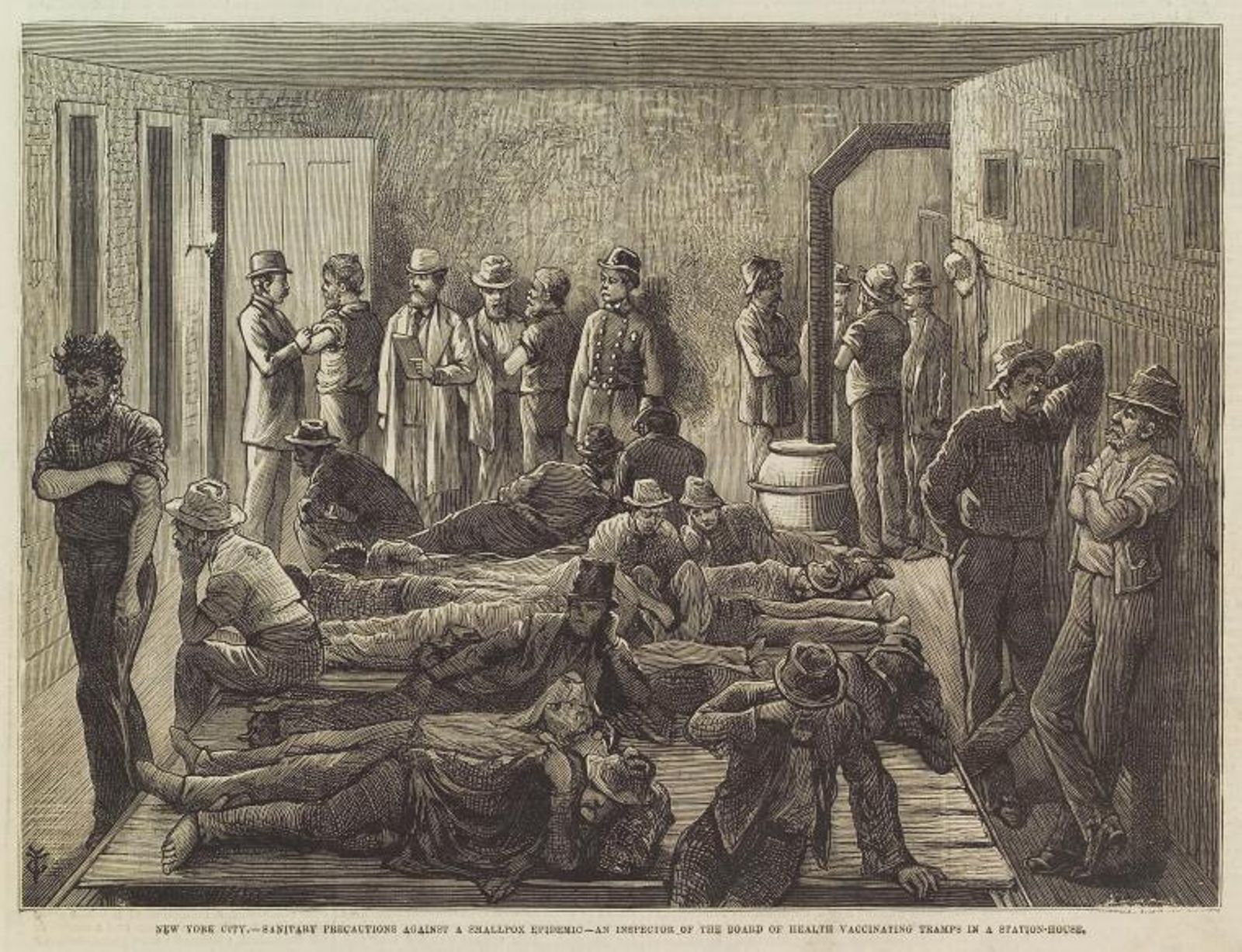
A month ago, on May 17, the world celebrated the 230th anniversary of the first ever vaccine. Just two days before, the Bundibugyo (Ebola) outbreak in the Democratic Republic of the Congo was declared a public health emergency. There is currently no vaccine against this specific strain, but frantic efforts are being made to fund and develop an effective medication.
There has also been a recent uptick in the hesitancy surrounding the administration of vaccines, particularly in the United States. While most of this wariness likely stems from claims coming out of the Health and Human Services (HSS) and the handling of the COVID-19 pandemic, it’s also likely that many people have lost sight of the need for vaccines altogether.
Paradoxically, those with wide-spread and safe access to vaccines can become detached from the reality of viral infection, and may become more wary of vaccines than those who suffer the direct impacts. This has two dire implications; that some have become hesitant about the very product that protects them, and that funding for safe access to life-saving medicines is under threat for those who desperately need it.
Here, to bring some good news to the table, we’ll take a look at the history of the vaccine and explore what advancements are being made today.
History of Vaccines
Pockes, Milkmaids, and the Temple of Vaccinia
Smallpox has followed humanity for thousands of years. Officially named Variola (after the Latin words varius and varus, meaning “dotted” and “pustule” respectively), the disease became commonly known in English as the Small Pockes. Once infected, the victims developed severe fevers and terrible, disfiguring blisters. The few survivors were left with pitted scars.
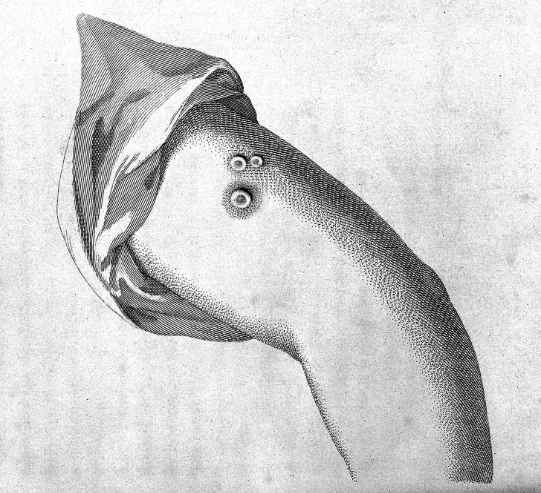
Image: Illustration of a smallpox blister
Techniques of immunization (known as variolation and then, later, inoculation) developed slowly and simultaneously across cultures in Africa and Asia. Variolation involved exposing a healthy person to a very small bit of infected material from someone in recovery. In some areas, people inhaled dried scabs. In others, doctors cut or scraped a healthy person and transferred a small amount of pus from infected blisters into the wound. The process was risky, but when it worked, people proved immune to smallpox for the rest of their lives.
Variolation wasn’t introduced to Western Europe and the Americas until the early 1700s. An aristocrat named Mary Wortley Montagu watched variolation being performed in Turkey and, by having her children inoculated, popularized the procedure in England. An enslaved West African man named Onesimus introduced the procedure to Boston and ultimately saved the town from an epidemic. As inoculation spread, it became both more celebrated and more controversial.
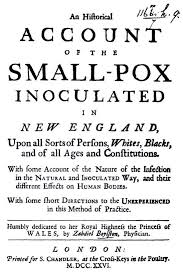
Image: A book written by Zabdiel Boylston in 1730
In 1796, a surgeon named Edward Jenner became aware of local, rural stories of milkmaids becoming immune to smallpox following an infection of cowpox. Knowing this, Jenner discovered that by infecting a healthy person with a small amount of the less severe cowpox, the person indeed became immune to smallpox for life. He named the process vaccination, from the Latin for cow, vacca, and successfully tested the first smallpox vaccine on May 14, 1796.
At the end of his life, he offered free vaccinations to children from a small garden hut, which acted as the first ever vaccination clinic. He called it the “Temple of Vaccinia.”

Image: The Temple of Vaccinia, now known as Dr. Jenner’s House. Photo courtesy of the Jenner Trust.
Weakening the Diseases
From there, the study of vaccines continued steadily. The idea of weakening the viruses before administering inoculation to make them safer had been present even in ancient practice (such as drying the scabs before inhaling them), and now it became the main focus for researchers.
Rabies and Attenuation
In 1885, a man named Louis Pasteur created the first rabies vaccine. Knowing that the virus was weakened by drying, he fed dried infected rabbit spinal cords to healthy rabbits; then, euthanizing those rabbits, he repeated the process again and again. By the end, he had a virus so weak that it would not kill the new rabbits, but potent enough that they became immune to the full-strength virus. He called this weakening process attenuation.
The rabies vaccine, while often life-saving, was still risky. In 1905, an immunologist named Anna Wessels Williams made it possible to diagnose someone with rabies much faster and more reliably. She would later go on to aid in the creation of diphtheria and influenza vaccines, and changed forever the way that people were diagnosed and treated.
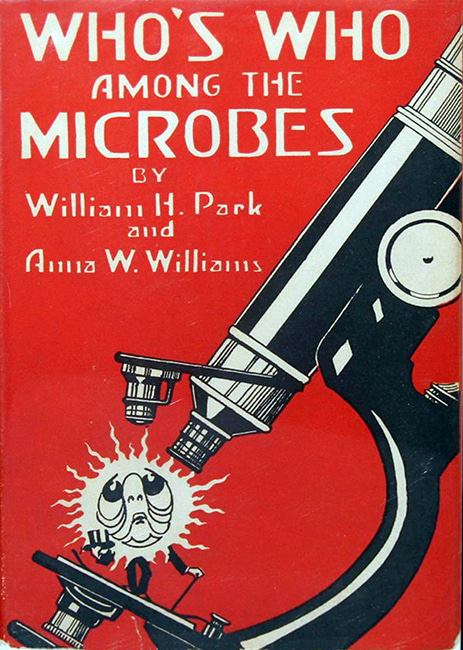
Image: Cover for Who’s Who Among the Microbes, a textbook written
by Anna Wessels Williams and her mentor William H. Park.
Polio
Attenuation continued to improve. In 1938, the March of Dimes was established to support the study of polio and funded the work of two researchers: Jonas Salk, who was developing an inactive (killed) vaccine for both influenza and polio, and Albert Sabin, who developed an attenuated polio vaccine (alive but weakened). Salk’s inactive vaccine was largely funded first, and massive trials began in 1954. Within eight years, the number of polio cases dropped by 93%. Sabin’s attenuated vaccine, however, was cheaper, could be administered orally, and quickly became the favorite method for children. Soon, vaccines were offered for free to children and those in need during what were called “Sabin Sundays.”
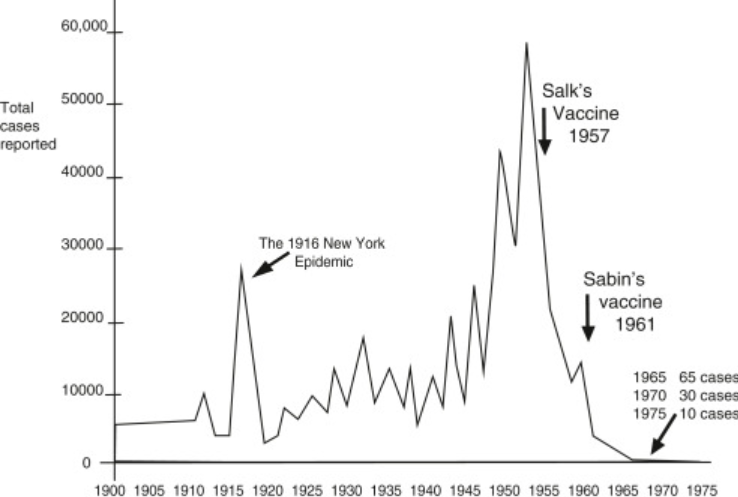
Image: cases of polio in response to Salk and Sabin’s vaccines. Photo courtesy of the CDC.
Human Cells
Alongside polio, the rabies vaccine had improved since Williams’ contributions. Previously, most vaccines had been attenuated by using animal cells, but Dr. Stanley Plotkin instead used a line of human cells. This allowed the vaccine to be safer and more reliable, and he went on to create a new, hugely successful rabies vaccine. Plotkin also improved upon the previously created rubella vaccine, which is still used today.
History, Summed Up
By 1980, humanity’s relationship with disease had changed forever. An influenza vaccine was created in 1945, and polio just ten years later. The measles and mumps vaccines were developed in 1968. The very last case of smallpox (variola major) occurred in 1977, to a girl named Rahima Banu. The modern rubella vaccine was added in 1979 to mumps and measles to create our current MMR vaccine. Yellow fever, diphtheria, plague, typhoid, cholera, tetanus, whooping cough, hepatitis A and B, malaria, and more, all within just a few hundred years, after thousands spent in battle against disease.
There has never been a time in vaccine history that it has not been a controversial topic. Various mishandlings by governmental agencies, unethical or mismanaged trials, and general fear surrounding disease has cast a dark film over the huge strides we’ve made. It remains difficult to simultaneously quell the public’s fear surrounding healthcare, while understanding that mistrust or confusion is not always an invalid reaction.
The key motive that runs through our historical battle against disease is the health of children and the poverty-stricken. From the Temple of Vaccinia to Sabin Sundays, free vaccinations have been instrumental in this movement. Now, the funding that backs these clinics is more important than ever, as both disease and distrust in treatment threatens our progress. It remains crucial that those who have always had access to vaccines not lose sight of the end goal; safety for children, safety for the sick, and for an eventual eradication of some of the worst communicable diseases humanity has faced.
What can I do?
Many organizations are working quickly to slow the Ebola outbreak in the DRC. Right now, funding and education are the two most important elements to success. Below are some organizations that aid in the access to vaccinations, for Ebola and other diseases. Read more from each to see how we can contribute to these efforts.
Rotary Club: one of the leading organizations in ending polio worldwide. They also focus on women's and children’s health, and access to clean water.
The Alliance for International Medical Action - ALIMA: An NGO that works with local health organizations to fund and support the treatment of patients.
Gavi, the Vaccine Alliance: A public–private partnership that focuses on immunizing people around the world in hopes of decreasing child mortality.
UNICEF (United Nations Children's Fund): A UN agency that specializes in supporting children, especially their right to safety and health.
Measles & Rubella Partnership: A partnership between global health organizations that supports measles and rubella vaccinations across the world.
Doctors Without Borders (Médecins Sans Frontières): A global organization that focuses on emergency care to crisis areas.
This blog will contribute to the SDG3 Newsletter group; read more about this on Springer Nature Research Communities.

Follow the Topic
-
BugBitten
A blog for the parasitology and vector biology community.

📢 Introducing: # Mental Health
Mental Health is a Topic created to increase visibility and impact of research in this area and facilitate exchange amongst researchers.
Continue reading announcement