Optimization of study design to isolate light-aversive behaviour and the importance of housing conditions in rats
Published in Neuroscience





When a Simple Problem Stops Good Science
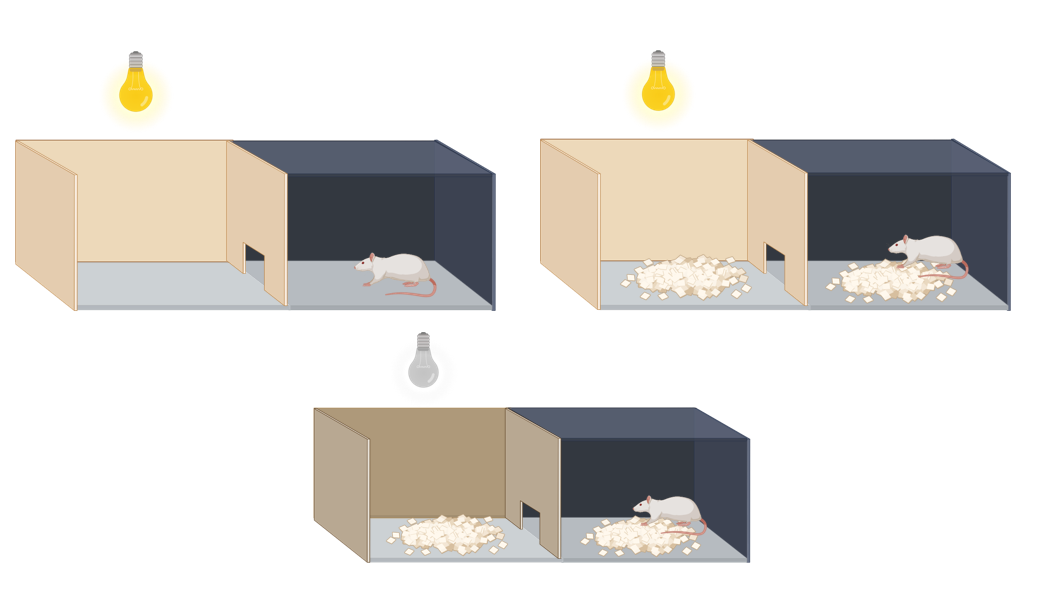
This study began with a deceptively simple problem. During behavioural testing at the research centre in Glostrup, rats placed in the light/dark box rarely entered the illuminated compartment at all. While this behaviour is unsurprising from the animal’s perspective, it posed a major challenge scientifically: if control animals avoid light almost completely, it becomes extremely difficult to detect treatment‑induced changes in light aversion. Before we could meaningfully study photophobia‑like behaviour, we needed a model that separated true light‑driven avoidance from anxiety and novelty stress.
Small Changes, Big Impact: Refining the Model and Rethinking CGRP Delivery
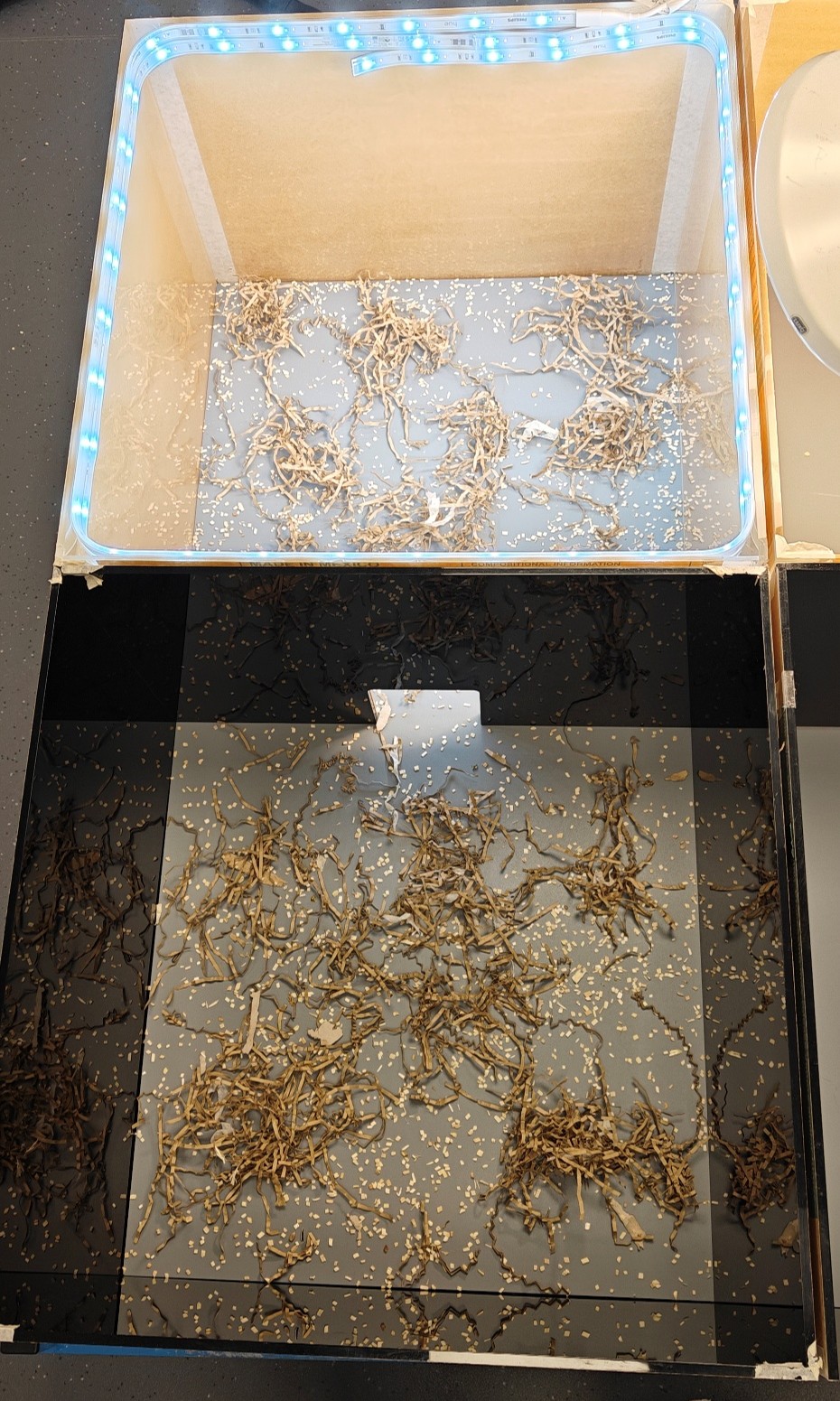
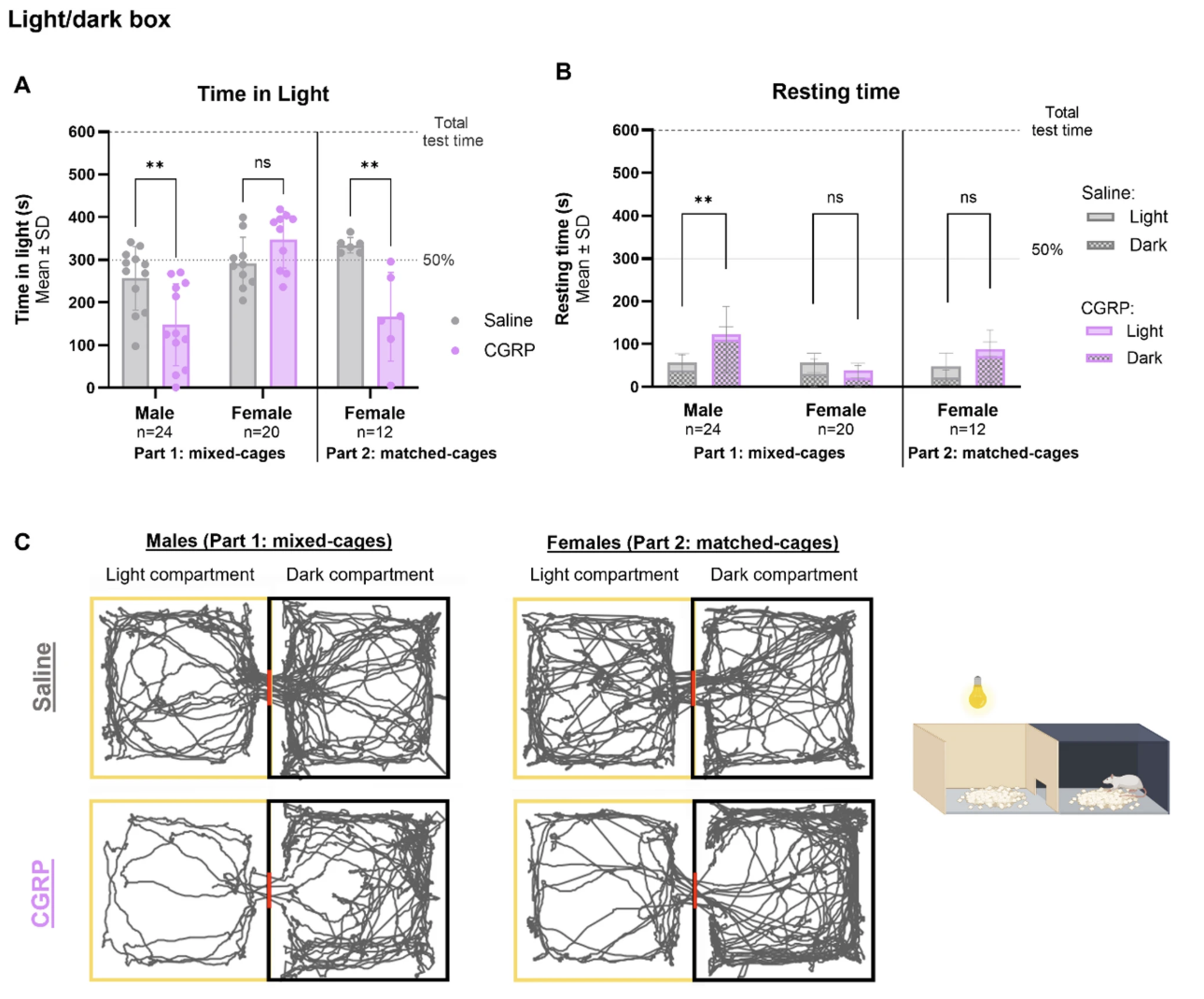
Our initial focus therefore became refinement of the model itself rather than the pharmacology. We explored several ideas, including food‑based motivation and shelters in the bright compartment, but the most effective solution turned out to be the simplest. By adding bedding material from the animals’ own home cages to both compartments of the light/dark box, we markedly reduced novelty‑induced anxiety. The effect was striking: even at high light intensities, naïve rats now spent close to equal time in light and dark. This refinement improved both animal welfare and experimental sensitivity, and notably, it is easy for other laboratories to implement.
With an optimised behavioural setup in place, we turned to addressing another gap in the preclinical migraine literature. While intravenous CGRP is widely used in human provocation studies, preclinical models almost exclusively rely on intraperitoneal or intracranial administration—routes that are either poorly controlled or highly invasive. We could not identify previous rodent studies investigating i.v. CGRP‑induced light aversion, despite the clear translational relevance. We therefore chose to administer CGRP intravenously to awake rats, using a single bolus dose to avoid anaesthesia and additional pharmacological confounders. This allowed us to evaluate CGRP’s effects under conditions that more closely resemble clinical provocation paradigms.
When Results Do Not Match Expectations: The Hidden Role of Housing and Stress
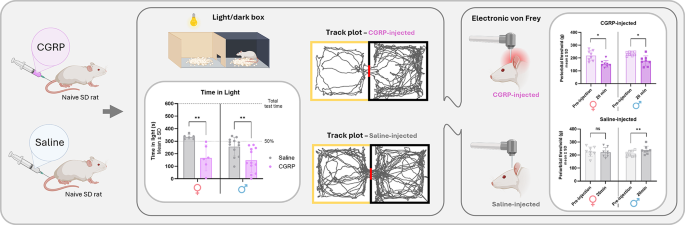
One of the most informative aspects of the study emerged unexpectedly. Based on existing literature, we anticipated that female rats would show equal or greater sensitivity to CGRP than males. Instead, in the first phase of the study, CGRP-injected females did not display the expected light‑avoidant behaviour, but rather appeared to spend slightly more time in the light compartment than the controls. This discrepancy prompted us to reconsider aspects of the experimental design that are often taken for granted, particularly housing conditions. In the initial setup, CGRP‑treated and control animals were co‑housed. When we later housed animals according to treatment group, the CGRP‑induced light aversion became evident in females as well.
This finding underscored the importance of social buffering and emotional contagion in behavioural studies, particularly in female rodents. It also reinforced one of the central conclusions of our work: factors such as housing, handling, and test order are not minor methodological details, but can fundamentally shape behavioural outcomes and even mask true pharmacological effects.
Alongside behavioural testing, we assessed cephalic mechanical sensitivity to determine whether light aversion occurred together with headache‑like pain. When tested in naïve animals housed by treatment group, intravenous CGRP induced clear periorbital allodynia in both sexes, while plantar sensitivity remained largely unaffected. Together with the behavioural findings, this supports activation of CGRP‑sensitive trigeminal pathways and a migraine‑like phenotype characterised by both light aversion and cephalic hypersensitivity. Importantly, these effects were absent or inconsistent when animals had undergone prior testing or mixed housing, again highlighting the influence of stress and experimental history on outcome measures.
Complementary anxiety testing further strengthened the interpretation of our model. While the open field test proved highly stressful for the animals and difficult to interpret, the dim/dark box provided a calmer and more informative control condition. The absence of anxiety-like behaviour in a low‑light but open environment supported the conclusion that the observed behaviour in the light/dark box reflected light‑specific aversion rather than general anxiety.
Beyond the Results: What This Work Teaches Us About Experimental Design
Taken together, our results demonstrate that intravenously administered CGRP induces light‑aversive behaviour and cephalic allodynia in both male and female rats when tested in an optimised and carefully controlled experimental framework. This is the first preclinical rodent study to combine i.v. CGRP provocation with behavioural and sensory readouts in a way that closely parallels clinical protocols. The work highlights that refinement of classic behavioural models can substantially improve both translational relevance and animal welfare, while also revealing how easily subtle design choices can influence experimental outcomes.
Looking ahead, the combined use of the optimised light/dark box and the dim/dark box provide a promising platform for exploring light aversion and evaluating compounds targeting photophobia. More importantly, the process of developing this model highlights a broader point: robust and interpretable behavioural outcomes depend not only on the intervention itself, but on the many experimental choices surrounding it. Throughout this work, we encountered and addressed challenges related to housing, test design, stress, and prior exposure—factors that initially obscured the effects we aimed to study. These experiences highlight that careful refinement and critical evaluation of experimental design, sometimes through simple adjustments, are essential for producing reliable and translationally meaningful results.
From a personal perspective, as veterinarians, this project was particularly meaningful. Working to refine a long‑established behavioural assay allowed us to align scientific robustness with improved animal welfare, while also gaining deeper insight into how sex differences and social context shape behavioural readouts. These lessons will continue to inform how we approach experimental design in future studies.

Follow the Topic
-
The Journal of Headache and Pain
The Journal of Headache and Pain is a peer-reviewed open access journal specifically dedicated to researchers involved in all aspects of headache and related pain syndromes, including epidemiology, public health, basic science, translational medicine, clinical trials and real-world data.

Related Collections
With Collections, you can get published faster and increase your visibility.
Focus India
Headache disorders, especially migraine, constitute a major neurological health challenge and are increasingly recognized as leading contributors to disability worldwide. Their impact extends beyond episodic pain, influencing cognitive performance, emotional well-being, and overall quality of life. India carries a substantial share of the global migraine burden, yet remains affected by significant gaps in awareness, diagnosis, access to specialist care, and research output. Although global research has clarified many aspects of headache pathophysiology, the expression of these disorders varies across populations due to genetic, environmental, cultural, and healthcare access factors in the Indian context.
Migraine, in particular, demonstrates substantial heterogeneity in symptom patterns, triggers, and response to therapy, underscoring the need for population specific data. India’s vast and heterogeneous population offers a unique opportunity to generate locally relevant epidemiological, clinical, and translational insights. In many regions, underdiagnosis and inadequate treatment remain persistent problems, often compounded by stigma and limited awareness. Understanding the burden of headache disorders within specific communities in India is essential for designing effective public health strategies, improving diagnostic pathways, and tailoring management approaches. Moreover, the chronic nature of recurrent headaches places a significant economic burden on individuals and healthcare systems through lost productivity and frequent medical consultations. Through this Collection, we aim to stimulate nationally driven research, foster collaboration across institutions and care settings, and strengthen India’s contribution to global headache and brain health science.
Topics of interest include but are not limited to:
- Epidemiology of migraine in India
- Management strategies of migraine in Indian patients
- Cultural perceptions of tension-type headache
- Treatment approaches for cluster headaches
- Trigeminal autonomic cephalalgias in diverse populations
- Chronic daily headache management strategies
- Impact of lifestyle factors on headache prevalence
- Public health initiatives for headache awareness
- Innovations in headache research methodologies
We welcome submissions from author groups with their main affiliated institution in India. Cross-international authorship groups are welcome to submit their work to The Journal of Headache and Pain outside of this Collection.
This Collection supports and amplifies research related to SDG 3, Good Health and Well-Being.
All submissions in this collection undergo the journal’s standard peer review process. Similarly, all manuscripts authored by a Guest Editor(s) will be handled by the Editor-in-Chief. As an open access publication, this journal levies an article processing fee (details here). We recognize that many key stakeholders may not have access to such resources and are committed to supporting participation in this issue wherever resources are a barrier. For more information about what support may be available, please visit OA funding and support, or email OAfundingpolicy@springernature.com or the Editor-in-Chief.
Publishing Model: Open Access
Deadline: Dec 01, 2026
Focus China
Headache disorders, particularly migraine, represent a significant and growing public health concern with a major impact on disability and quality of life. While research has advanced our global understanding, the specific manifestations, burdens, and management challenges of these conditions within unique populations require dedicated attention. In China, factors such as vast geographical disparities, rapid urbanization, diverse ethnicities, and a unique healthcare system structure present distinctive opportunities and challenges in the recognition, diagnosis, and treatment of headache disorders.
This thematic Collection, “Focus China”, aims to illuminate the landscape of headache medicine in China by exploring epidemiological patterns, clinical characteristics, healthcare access, traditional and integrative medicine approaches, and the socio-economic impact of headache disorders across the country.
We invite submissions of original research, systematic and narrative reviews, editorials, rapid reviews, and commentaries on topics including, but not limited to:
• The epidemiology, burden, and clinical features of migraine and other headache disorders in specific Chinese populations and regions.
• Advanced neuroimaging studies identifying unique endophenotypes, structural and functional brain alterations, and biomarkers of headache disorders in the Chinese cohort.
• Insights into the pathophysiology of headache disorders from a Chinese perspective, including research on epigenetics, neuron-glia interactions, and multi-omics.
• Studies on the integration of Traditional Chinese Medicine (TCM) with conventional headache management.
• Unique cultural, environmental, and genetic factors influencing headache disorders in China.
• The development and validation of diagnostic tools for the Chinese population.
This Collection provides a dedicated platform for researchers and clinicians primarily affiliated with Chinese institutions to share their insights and contribute to the global knowledge of headache science while addressing the specific needs of their region. By fostering collaboration and knowledge exchange, “Focus China” aims to drive meaningful advancements in headache research and patient care across China.
Therefore, the Collection welcomes submissions from author groups with their main affiliated institution in China. Cross-international authorship groups are welcome to submit their work to The Journal of Headache and Pain outside of this Collection.
This Collection supports and amplifies research related to SDG 3, Good Health and Well-Being.
All submissions in this collection undergo the journal’s standard peer review process. Similarly, all manuscripts authored by a Guest Editor(s) will be handled by the Editor-in-Chief. As an open access publication, this journal levies an article processing fee (details here). We recognize that many key stakeholders may not have access to such resources and are committed to supporting participation in this issue wherever resources are a barrier. For more information about what support may be available, please visit OA funding and support, or email OAfundingpolicy@springernature.com or the Editor-in-Chief.
Publishing Model: Open Access
Deadline: Oct 13, 2026

