Catching Elusive Intermediates in Isoprene Ozonolysis
Published in Chemistry and Earth & Environment




A mystery nearly eight decades old
Some of the most important atmospheric chemistry happens too fast to see.
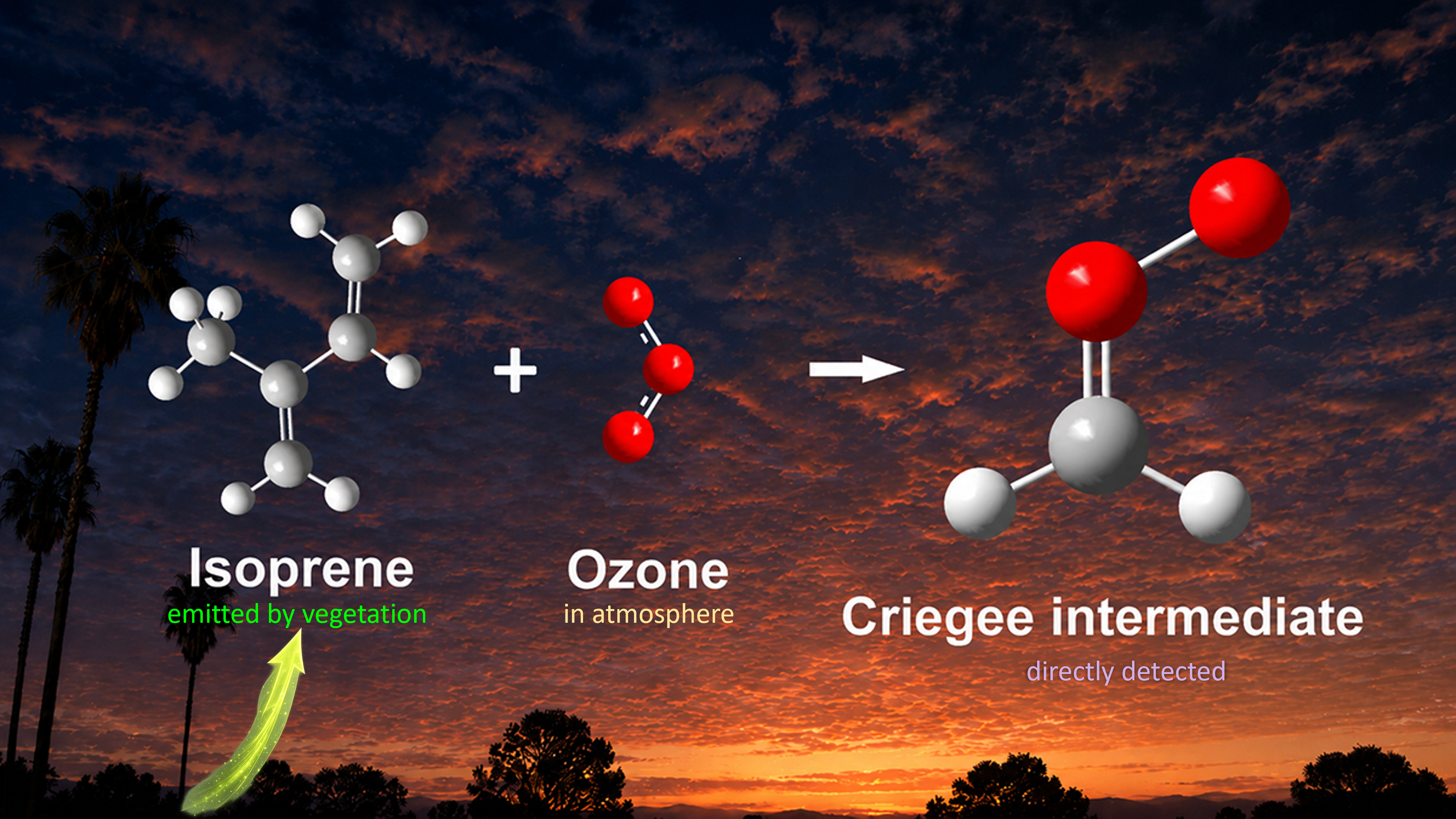
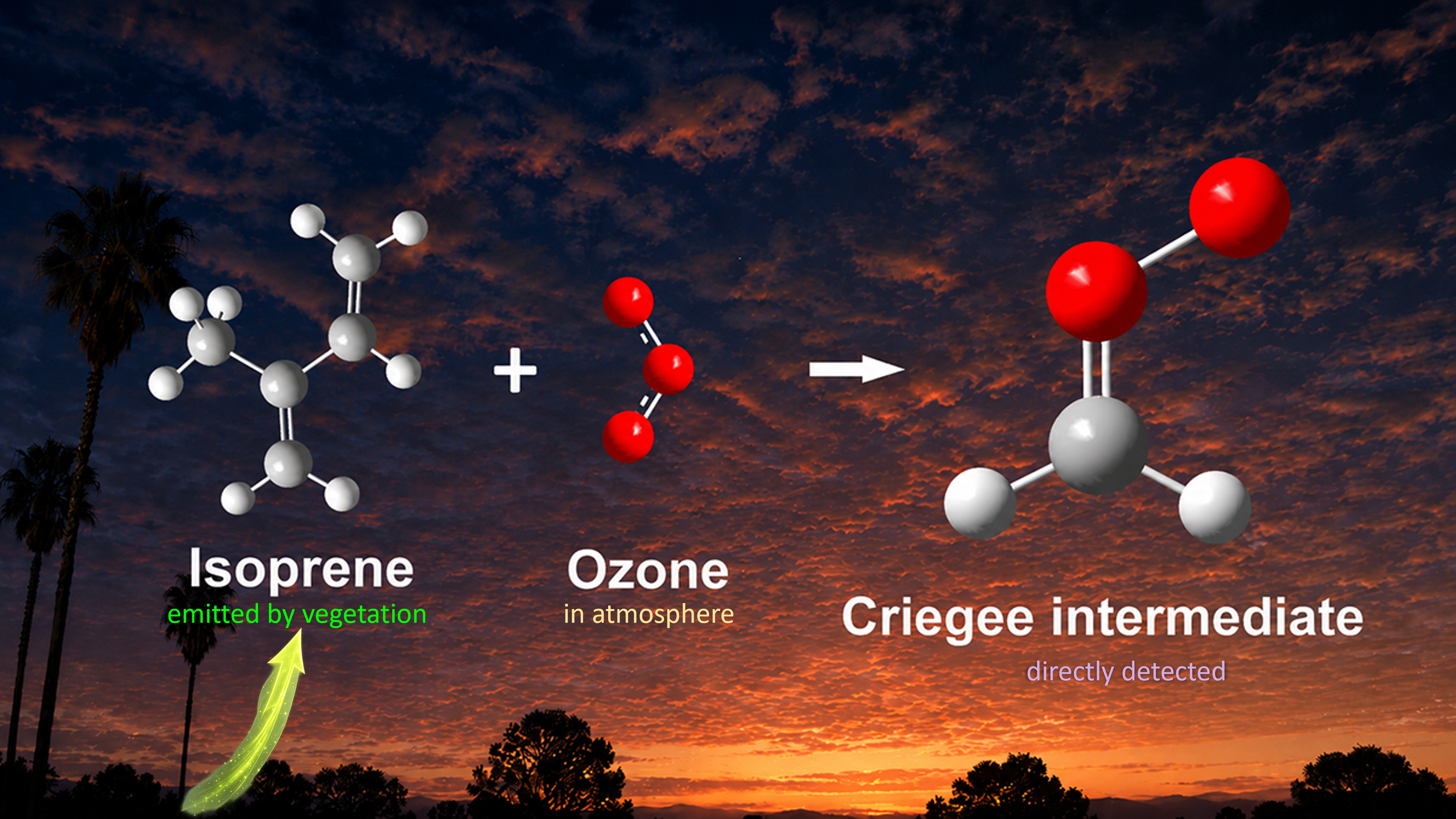
Isoprene, released in immense quantities by vegetation, is the most abundant and dominant unsaturated hydrocarbon in the troposphere. When it meets ozone, a cascade begins that affects atmospheric oxidation, air quality, and secondary organic aerosol. At its center are carbonyl oxides, or Criegee intermediates, important species so reactive that scientists usually infer them from the products left behind.1-3
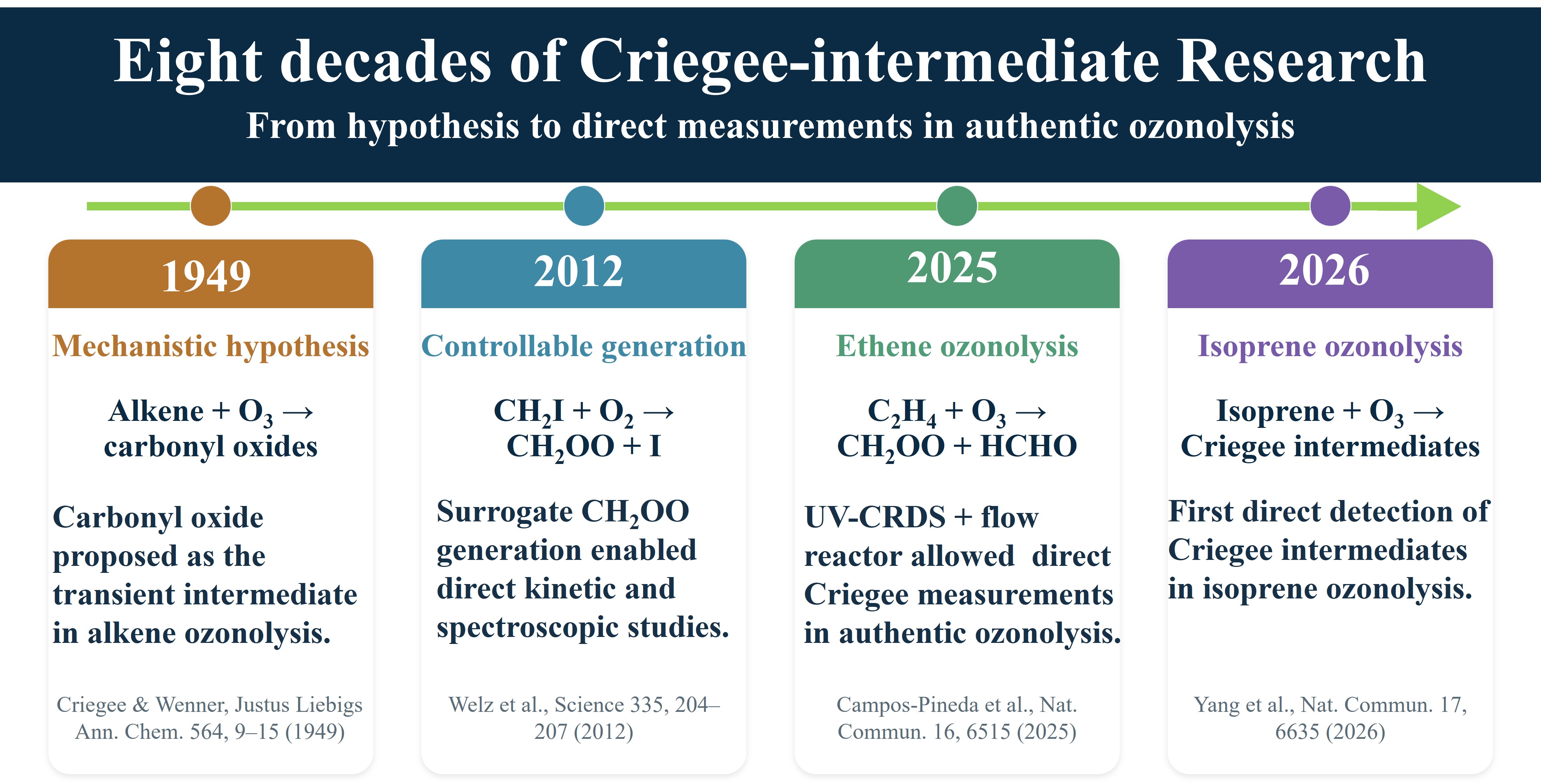
The story reaches back to 1949, when Rudolf Criegee and Gotthilf Wenner proposed a carbonyl oxide as the key intermediate in alkene ozonolysis.1 A major breakthrough came in 2012, when Welz and colleagues generated CH2OO, the simplest Criegee intermediate, by photolyzing diiodomethane in oxygen and measured its kinetics directly.2 That surrogate route triggered a wave of spectroscopic and kinetic studies through the 2010s and 2020s,3 which laid the foundation for understanding the spectroscopic signatures of Criegee intermediates .
Yet a huge gap remained. Atmospheric Criegee intermediates are born inside a highly exothermic, multichannel alkene + ozone reaction. A clean synthetic source reveals intrinsic properties, but yields, branching, and nascent dynamics must ultimately be measured in ozonolysis itself.
Bringing Criegee intermediates into view
The experimental challenge was not simply to see an absorption signal. We needed to show which molecule produced it, separate it from overlapping species, measure its concentration as the reaction unfolded, and connect those measurements to a kinetic model. That required sensitive spectroscopy, short reaction times, and several independent checks.
In 2025, our paper on ethene ozonolysis provided the platform (Campos-Pineda et al. Nature Communications 2025).4 We coupled a fast-flow reactor to near-ultraviolet cavity ring-down spectroscopy (UV-CRDS). A laser pulse bounces many times between highly reflective mirrors; how quickly the trapped light fades reveals very weak molecular absorption. Because the reactor also served as the optical cavity, we measured the CH2OO fingerprint while the reaction unfolded. The signal was strong enough to follow its concentration over time, turning a spectrum into a quantitative measurement.
Extending the method to isoprene
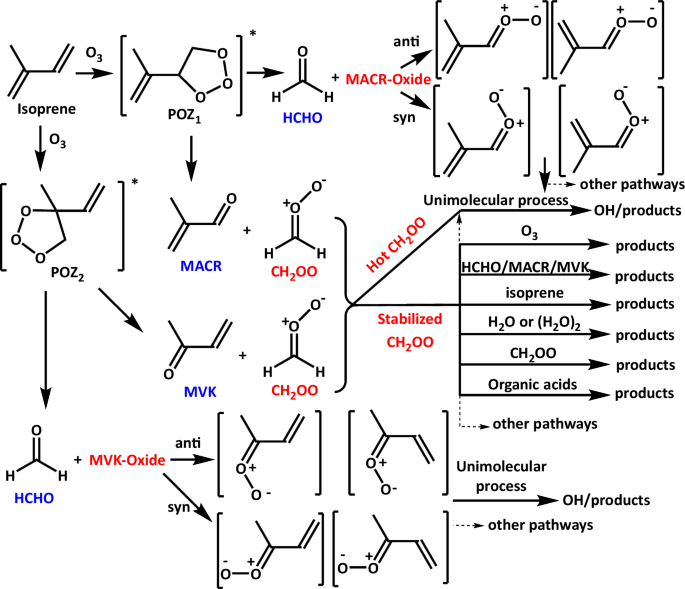
Ethene is the simplest alkene; isoprene is a harder and more atmospherically important target. Its conjugated diene structure create several reaction routes and several possible Criegee products, including CH2OO and the four-carbon methyl vinyl ketone and methacrolein oxides. The intermediates form slowly, disappear quickly, and share the reactor with other absorbing products.
To catch the intermediates before secondary products accumulated, we used residence times shorter than one second in a low-pressure flow reactor.5 We recorded absorption from 363 to 394 nanometers, where CH2OO has a recognizable wave-like pattern, and compared it with the reference spectrum from our ethene study and those from surrogate photolysis methods.5
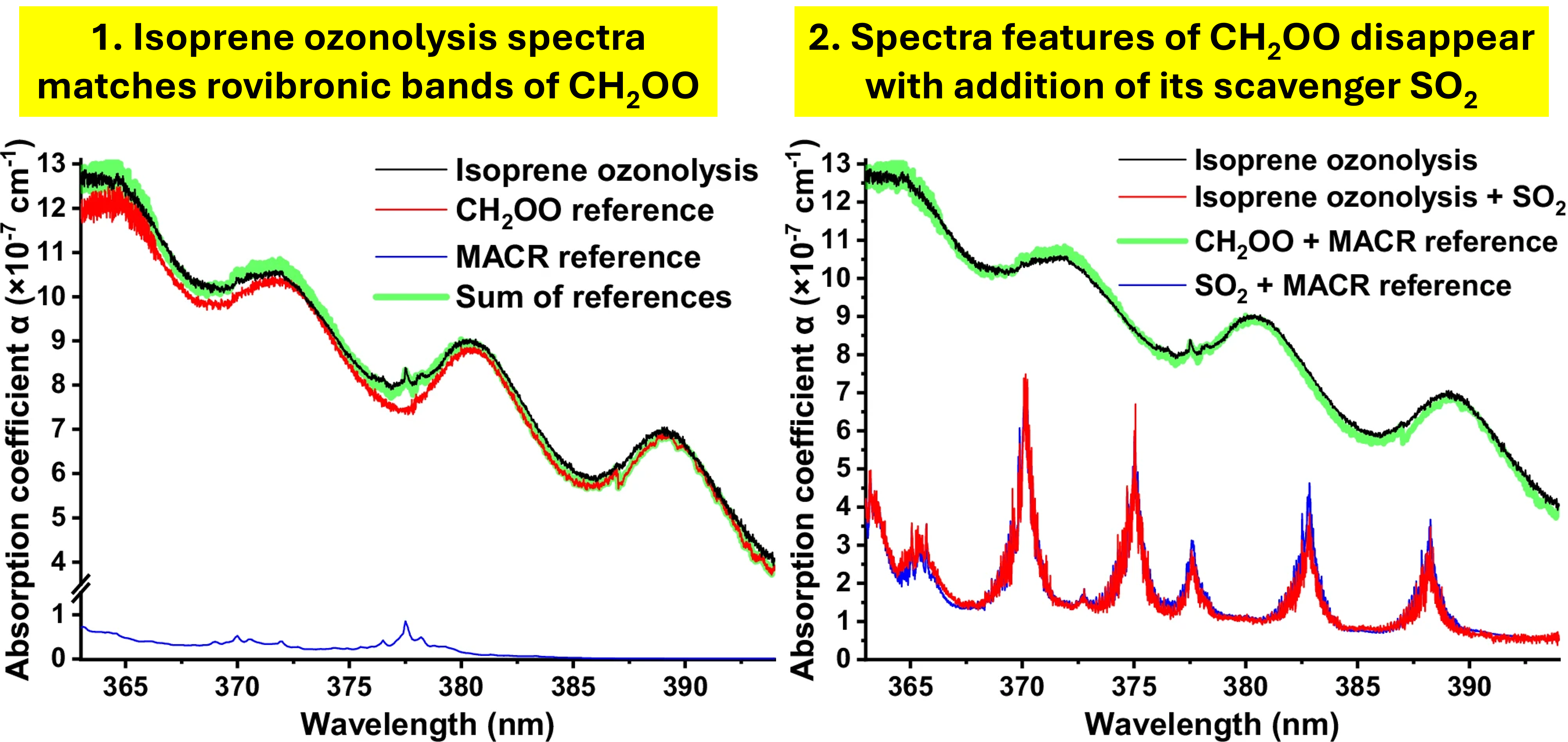
Two checks were especially important. First, the pattern matched CH2OO. Second, adding excess sulfur dioxide (SO2), which reacts rapidly with Criegee intermediates, reduced the CH2OO concentration by more than 95%. It acted like a chemical eraser: remove the intermediate, and the suspected features disappear. We also repeated the measurements at different reaction times and reactant concentrations, monitored formaldehyde and methacrolein, and compared the resulting concentration profiles with a detailed kinetic model.5
What the measurements revealed
At 7.5 Torr, the stabilized CH2OO yield was 21 ± 1%.5 Across 5-13 Torr, an independent measurement placed the total stabilized Criegee-intermediate yield close to 22% from SO2 scavenging.5 Under these low-pressure conditions, essentially all the stabilized intermediates we detected were CH2OO; the larger four-carbon intermediates showed little to no stabilization.5
The measurements are consistent with how energy is shared between products. When CH2OO forms, its larger carbonyl partner can carry away more of the excess energy, leaving some CH2OO cool enough to survive.5 When a four-carbon Criegee intermediate forms with formaldehyde, it is expected to retain more energy and is therefore more likely to rearrange or break apart before collisions can stabilize it.5
This low-pressure result does not mean that four-carbon Criegee intermediates are absent from the atmosphere. At atmospheric pressure, collisions are much more frequent. Previous studies report a total stabilized yield of 61 ± 9% for isoprene ozonolysis at 760 Torr, and pressure-dependent analyses indicate that much of the added stabilization involves the larger intermediates. Because these species react differently with water, sulfur dioxide, and organic acids, they may contribute to tropospheric oxidation and aerosol chemistry. Our measurements provide a firm low-pressure reference point for that broader picture.5
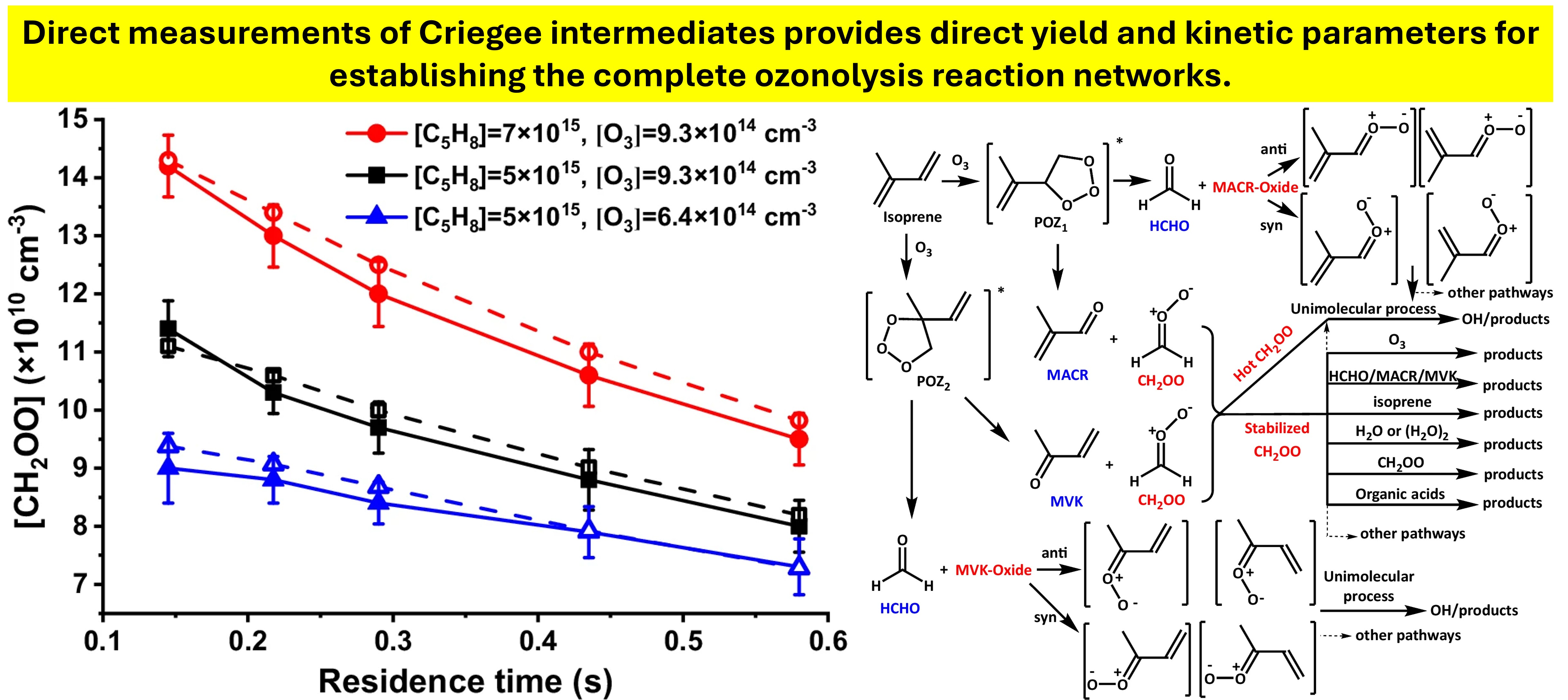
Direct measurements of Criegee intermediates provides direct yield and kinetic parameters for establishing the complete ozonolysis reaction networks, adapted from Ref. 5 ( Yang et al Nat Comm. 2026)
From a black box to a measurable reaction network
This work is not only about identifying one short-lived molecule. Measuring its concentration as it rises and falls turns an ozonolysis mechanism from a black box into a testable reaction network. The time profiles show whether a kinetic model can reproduce CH2OO formation and loss alongside formaldehyde and methacrolein, and they help reveal where reactions or branching pathways may still need refinement.
The main limitation is pressure: these measurements were made at 5-13 Torr, not atmospheric pressure. Reaching higher pressure while preserving sub-second reaction times will require greater pumping capacity and careful control of secondary chemistry.5
Together, our 2025 ethene and 2026 isoprene papers4,5 establish a foundation for direct Criegee measurements within alkene-ozone reactions. The first introduced a quantitative, time-resolved approach in a well-defined system; the second extended it to isoprene's multichannel chemistry. The longer-term goal is to move from controlled reactions toward the pressure and chemical complexity of the atmosphere.
A convincing measurement is built from layers of evidence: a recognizable spectrum, a chemical scavenging test that removes the species, concentration profiles that change as expected, and a kinetic model that can account for those changes. Publication felt like closing a loop that began with Criegee's proposal in 1949. We had brought a fleeting intermediate into view not only as a spectrum, but as a concentration changing in real time inside the reaction that creates it. That combination of seeing and measuring provides a practical way to study Criegee chemistry in increasingly representative atmospheric reaction systems.
The paper5 has now moved from its in-press version to the final published format: https://doi.org/10.1038/s41467-026-73307-6.
References:
[1] Criegee R. and Wenner G., Die Ozonisierung des 9,10-Oktalins. Justus Liebigs Ann. Chem. 564, 9–15 (1949). https://doi.org/10.1002/jlac.19495640103
[2] Welz O., Savee J. D., Osborn D. L., Vasu S. S., Percival C. J., Shallcross D. E., and Taatjes C. A., Direct Kinetic Measurements of Criegee Intermediate (CH2OO) Formed by Reaction of CH2OO. Science 335, 204–207 (2012). https://doi.org/10.1126/science.1213229
[3] a) Su Y.-T., Huang Y.-H., Witek H. A., and Lee Y.-P., Infrared absorption spectrum of the simplest Criegee intermediate CH2OO. Science 340, 174–176 (2013); b) Taatjes C. A., Welz O., Eskola A. J., Savee J. D., Scheer A. M., Shallcross D. E., Rotavera B., Lee E. P. F., Dyke J. M., Mok K. W., Osborn D. L., and Percival C. J., Direct measurements of conformer-dependent reactivity of the Criegee intermediate CH3CHOO. Science 340, 177–180 (2013); c) Liu F., Beames J. M., Petit A. S., McCoy A. B., and Lester M. I., Infrared-driven unimolecular reaction of CH2OO Criegee intermediates to OH radical products. Science 345, 1596–1598 (2014); d) Chao W., Lin J.-T., Lin K., and Lee Y.-P., Direct kinetic measurement of the reaction of the Criegee intermediate CH2OO with water vapor. Science 347, 1509–1512 (2015).
[4] Campos-Pineda M., Yang L., and Zhang J., Direct measurement of the Criegee intermediate CH2OO in ozonolysis of ethene. Nat. Commun. 16, 6515 (2025). https://doi.org/10.1038/s41467-025-61739-5
[5] Yang L., Hatem K., Campos-Pineda M., and Zhang J., Direct measurement of Criegee intermediates in isoprene ozonolysis. Nat. Commun. 17, 6635 (2026). https://doi.org/10.1038/s41467-026-73307-6
Follow the Topic
-
Nature Communications
An open access, multidisciplinary journal dedicated to publishing high-quality research in all areas of the biological, health, physical, chemical and Earth sciences.

Related Collections
With Collections, you can get published faster and increase your visibility.
Women's Health
Publishing Model: Hybrid
Deadline: Ongoing
Tumor Microenvironment Crosstalk and Therapeutic Implications
Publishing Model: Hybrid
Deadline: Nov 02, 2026


