Our inner musical landscapes: The Mind Melodies project
Published in Computational Sciences, Behavioural Sciences & Psychology, and Arts & Humanities






Why does one melody feel sunny and hopeful, while another sounds dark or mysterious, even when the instruments, tempo, and volume are the same? For centuries, musicians have understood that musical modes (specific types of scales) carry distinctive emotional and imaginative flavors. But how can we actually measure what these sound palettes make people think and feel, without forcing them into rigid questionnaires?
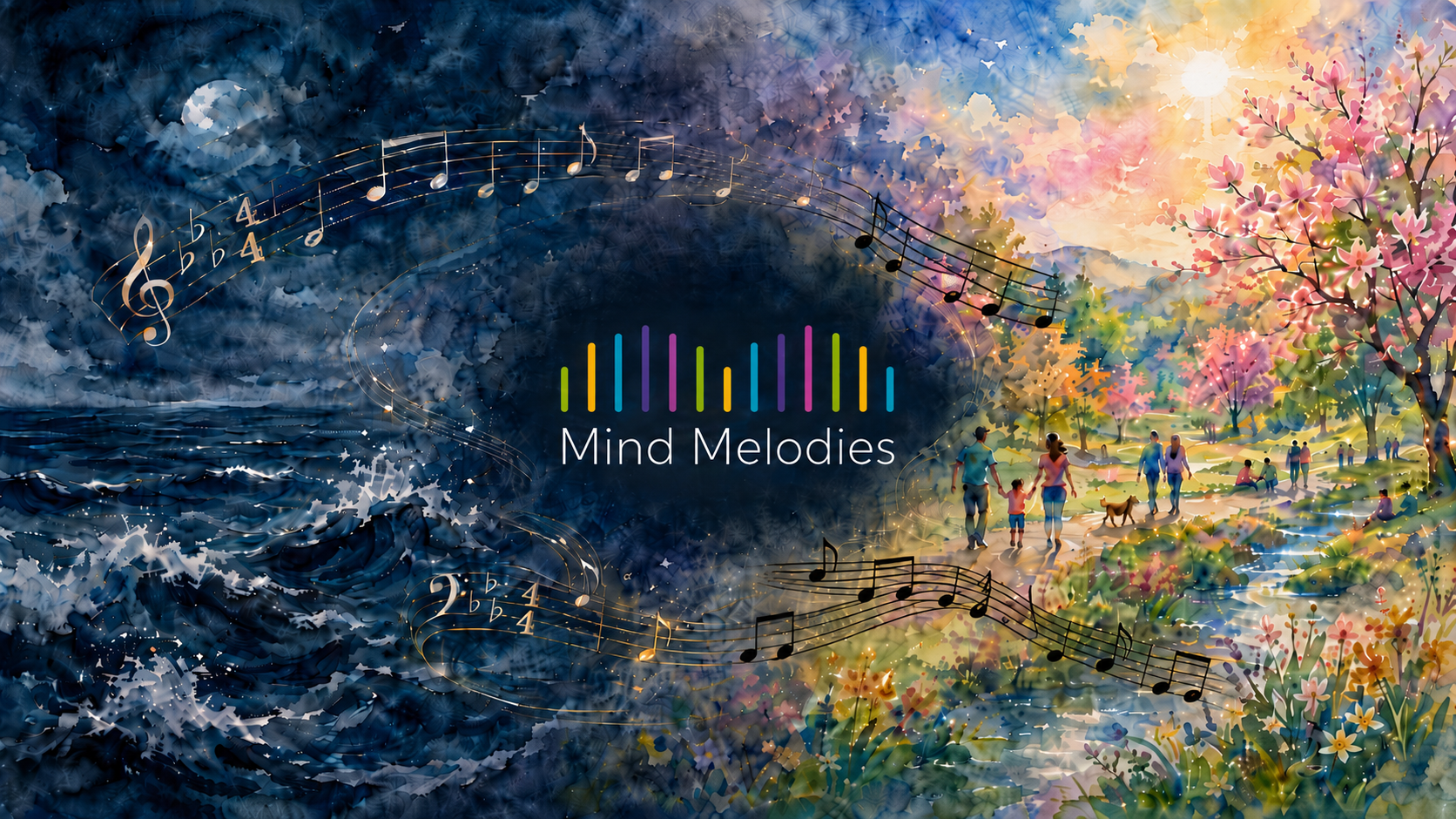
This question inspired Mind Melodies, an interactive platform that blends music, cognitive science, and artificial intelligence to explore how different musical modes shape our inner worlds. Described in our recent Behavior Research Methods paper, the project turns a timeless musical idea into a living, data-driven experience.
The secret life of notes
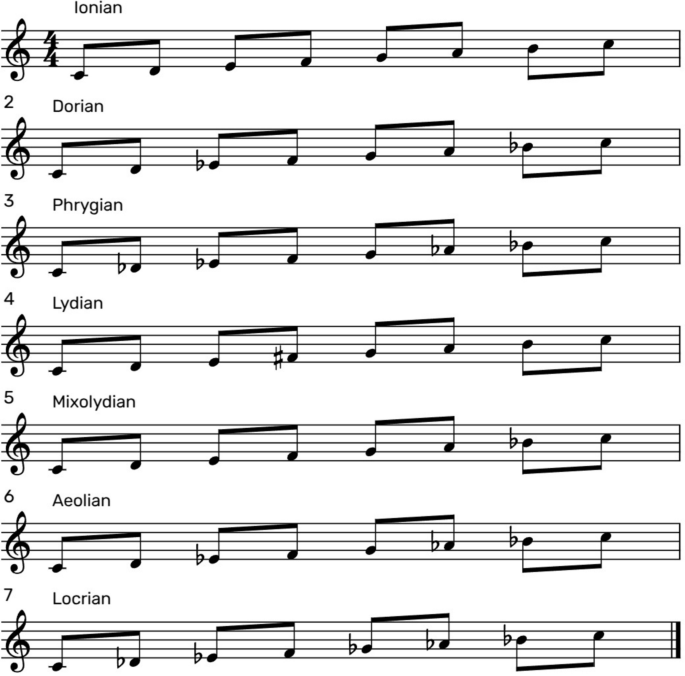
Mind Melodies starts with a simple invitation: listen. Participants sit down with headphones and hear short, carefully composed piano melodies. Each melody is written in one of the seven so-called Greek modes (Ionian, Dorian, Phrygian, Lydian, Mixolydian, Aeolian, and Locrian). Apart from their underlying scale structure, the pieces are nearly identical: same tempo, same rhythm, same length, same instrument. This strict control ensures that any differences in people’s reactions are driven by the mode itself.
Next, participants do something refreshingly human: they write. Instead of ticking boxes or rating emotions on a scale, they freely describe the scenes, feelings, and images that came to mind during listening. A forest at sunrise. A lonely walk at night. Friends laughing in the street. These spontaneous descriptions are the raw material of Mind Melodies.
Once the text is written, artificial intelligence takes over. Natural language processing tools analyze the words to identify recurring concepts (“sun,” “dark,” “home”), emotional tones (joy, sadness, fear, and more), and deeper patterns of meaning. The system even turns participants’ words into AI-generated images, creating visual snapshots of what the music evoked.
The platform works on two levels. Individually, participants can see how their own experience compares to others— that is, how unique or common their musical imagination might be. Collectively, large screens display real-time summaries of how each musical mode tends to resonate across the group, revealing shared emotional and semantic fingerprints. This way, the private side of music becomes public, the invisible becomes visible.
What do musical modes evoke?
A pilot study with 142 participants offered a first glimpse into these patterns. Even with people of varied musical backgrounds, clear trends emerged. The Ionian mode (whose structure replicates the familiar major scale) was strongly linked to ideas of life, daylight, and everyday activity. Words like “sunny,” “spring,” and “family” were common, and joy clearly dominated the emotional profile. At the other end of the spectrum, Aeolian (the natural minor scale) gravitated toward depth and mystery, with frequent references to darkness, cold, and introspection. Sadness was its most prominent emotion.
Other modes occupied an intriguing middle ground. Lydian, known for its slightly “bright” sound, evoked nature imagery (forests, walks, sunlight) alongside joy. Phrygian leaned toward solitude and tension, often accompanied by sadness and fear. Dorian and Mixolydian blended opposing qualities, pairing joy with sadness and themes of connection with moments of isolation.
Also, when we looked at how modes related to each other overall, a familiar divide appeared: major-type modes clustered together, as did minor-type modes. Yet, there were also unexpected bridges, hinting that subtle overlaps in scale structure may shape imagination in surprising ways.
Why this matters
Mind Melodies is more than a study. It offers a fresh methodological leap for music cognition research. Traditionally, scientists have relied on questionnaires with predefined emotional labels. While useful, those tools can flatten the richness of musical experience. By analyzing people’s own words, Mind Melodies captures nuance, imagery, and meaning that would otherwise be lost.
The project also opens doors beyond the lab. It is an installation combining art, science, and real-time visualization, already deployed in public events. At the same time, the underlying data can inform fields like music information retrieval, emotion-aware music recommendation, and even therapeutic applications.
Perhaps most importantly, Mind Melodies reminds us that music is not just something we hear, but rather something we imagine, feel, and narrate. By letting listeners speak in their own voices and using AI to listen back at scale, the project offers a new way to map the inner landscapes that music shapes every day.
Follow the Topic
-
Behavior Research Methods
This is a dedicated outlet for the methodologies, techniques, and tools utilized in experimental psychology research.