Through the Neural Network Looking Glass: A Curated Dataset of Singapore’s Hidden Fungal Diversity
Published in Ecology & Evolution, Microbiology, and Computational Sciences

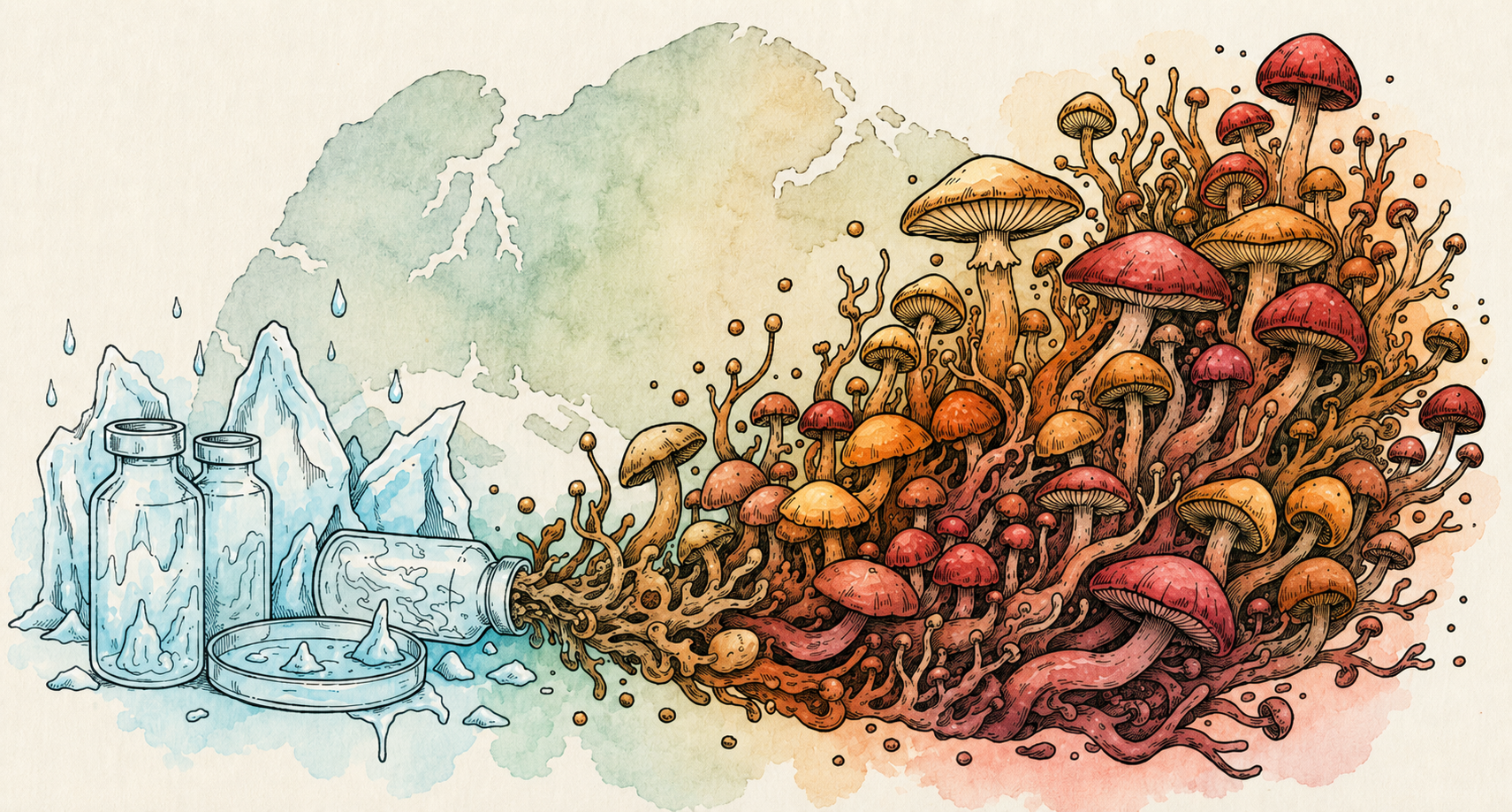





When I think about fungi, my first association is usually mushrooms: portobello, chanterelles, shiitake, lion’s mane, and other familiar names that sit comfortably in soups and stir-fries. Yet fungi are much more than culinary companions.
All Mushrooms are Fungi, but not all Fungi are Mushrooms
Fungi are also prolific producers of bioactive molecules. Classic examples include the antibiotic penicillin from Penicillium chrysogenum and the cholesterol-lowering lovastatin from Aspergillus terreus, but these represent only a tiny drop in the fungal chemical ocean. As one of Nature’s great chemists, fungi have quietly produced molecules that have shaped medicine, biotechnology, and our everyday life.
Despite this immense potential, much of the fungal world remains poorly documented, a gap more pronounced in tropical regions. So, we started looking closer to home and asked: what diverse fungi have been living around us in Singapore, and how can we begin to make sense of them?
A Tropical Fungal Trove
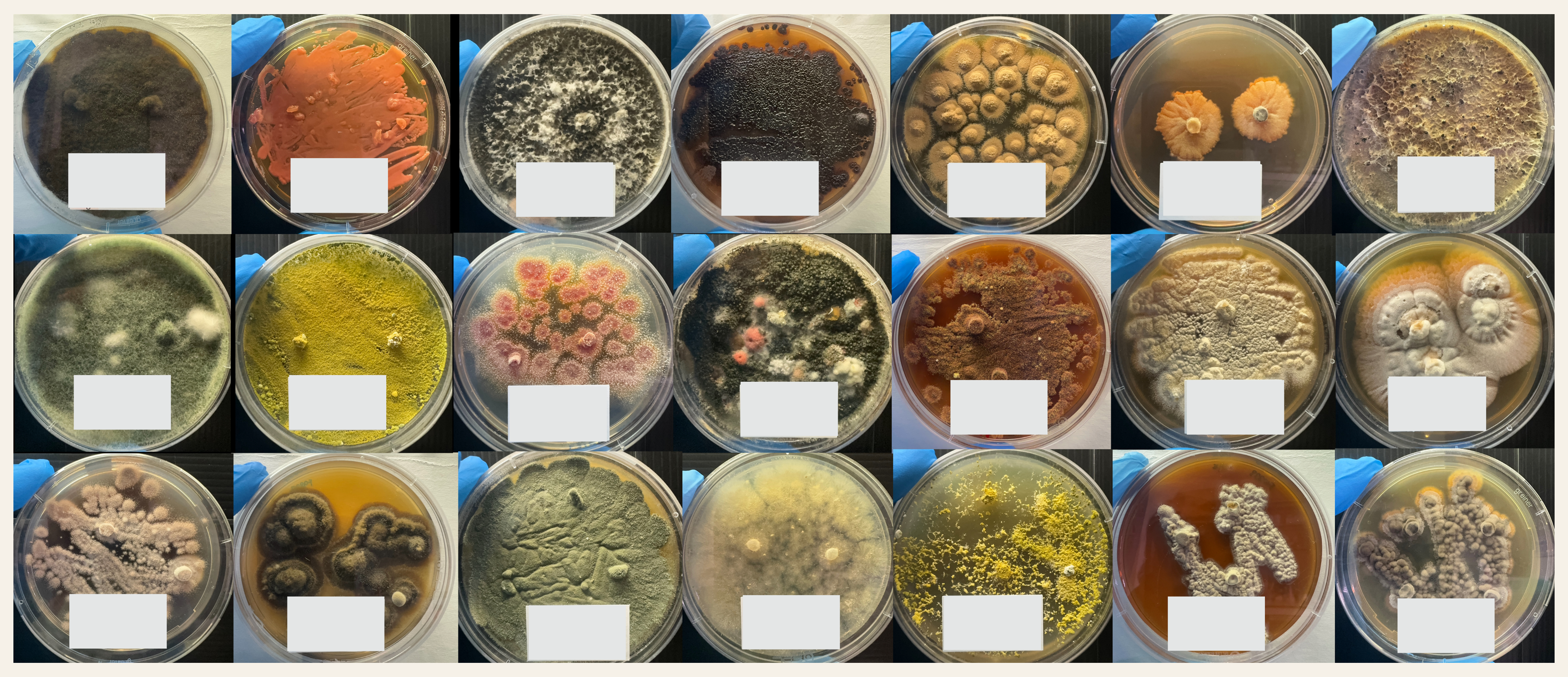
Collecting fungi from the wild begins with a systematic process known as bioprospecting. These trips are never simple undertakings; they require extensive planning, site permissions, logistical coordination, and careful handling to keep samples viable from forest floor to freezer. Thankfully, we were not starting from scratch. We had the privilege of building on a preserved organism collection shaped by generations of field researchers and collection teams in Singapore, now housed as part of A*STAR’s Natural Organism Library strain collection.
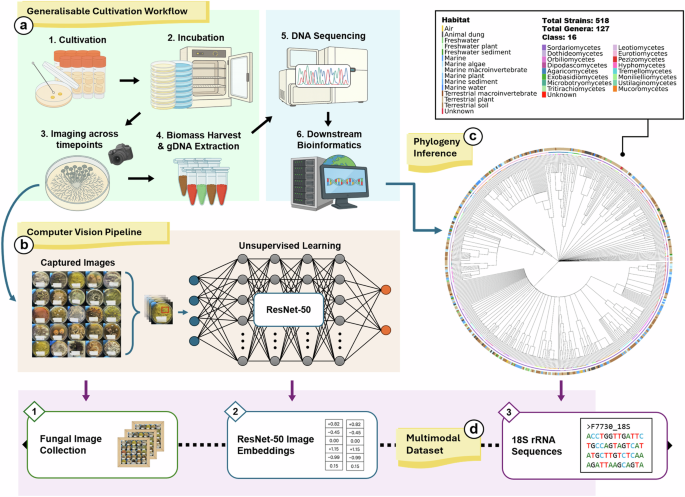
From this foundation, we worked to regrow fungal strains in the lab, document what they looked like, and connect those visible traits with genetic information. As more cultures came to life, we photographed them across key timepoints, gradually building our digital photobook of cultivated fungi.
Assigning a Name (Genomic Data) to the Face (Pre-harvest Images)
After DNA sequencing came the due diligence: screening for contamination, removing non-fungal sequences, and retaining only strains with a complete digital photobook. From this process emerged a curated collection of 518 fungi, each paired with pre-harvest colony images and corresponding genomic data.
Together, they formed a Singapore-centric fungal atlas spanning 127 unique genera across habitats ranging from soils and freshwater systems to coastal and marine environments. The collection offered a snapshot of fungal life across Singapore, reminding us that remarkable biodiversity is not always somewhere far away. Sometimes, it is quietly growing right here on our island.
The Digital Curator: Through the Lens of ResNet-50
With our atlas at hand, we wondered: could an artificial intelligence help us “see” our dataset differently?
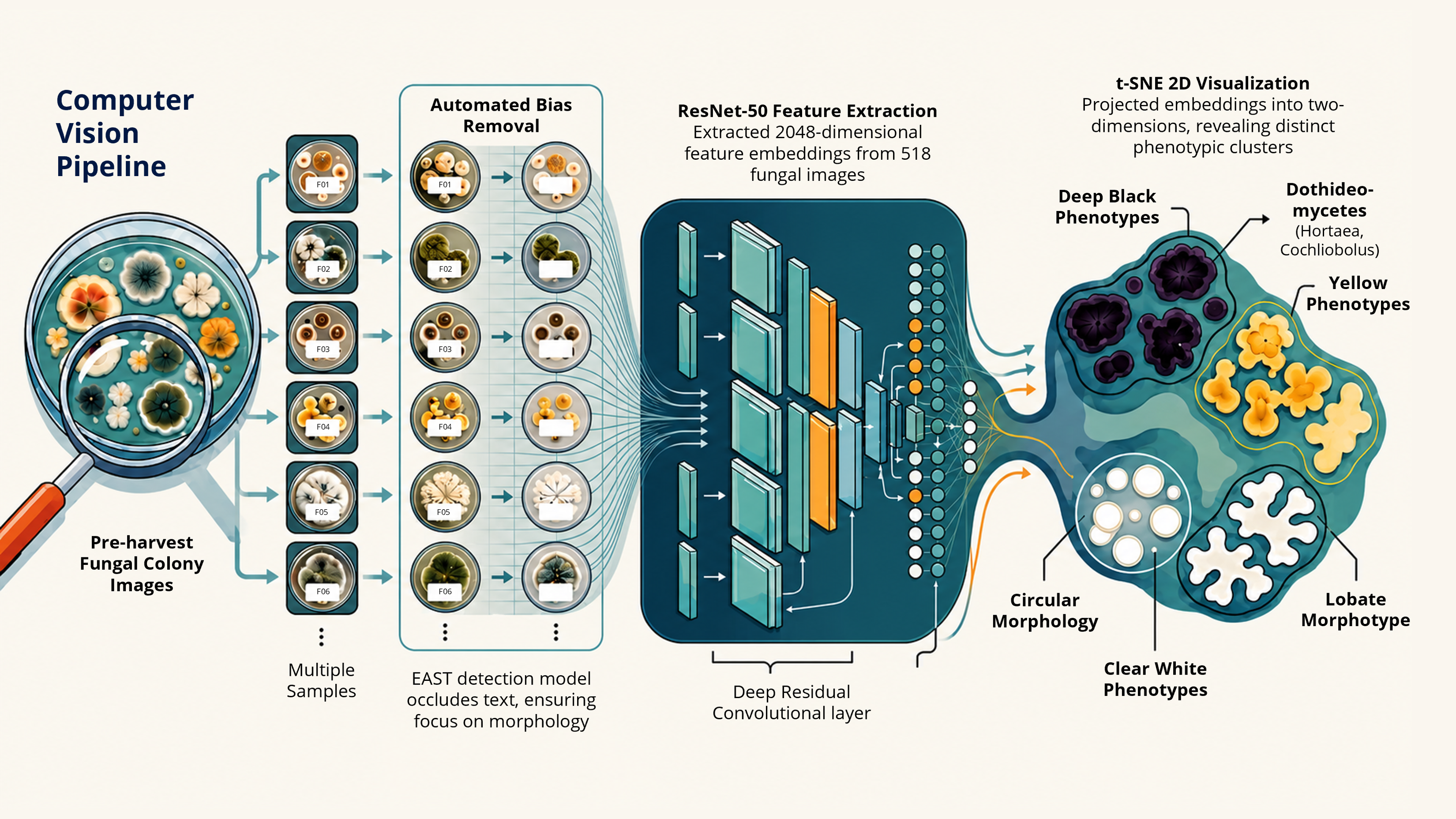
Each pre-harvest image captured a distinct moment in the fungal growth: pigmentation, colony shape, texture, and other morphological cues that can be appreciated individually by eye, but are difficult to compare systematically across hundreds of strains. To bridge this gap, we turned to ResNet-50, a neural network originally developed for image recognition. Instead of using it to identify the fungi outright, we used it as a digital curator, extracting learned image features from each colony photograph.
These features allowed each fungal colony to be represented as a point in a computational image space, where visually similar colonies could sit closer together. Colour, texture, colony shape, and growth patterns began to offer a new way of exploring the collection. Fungi that looked alike could now be grouped together, allowing us to investigate whether shared visual traits might also reflect shared genetic identities and environmental origins.
An Atlas for Exploration
In this manner, the AI ResNet-50 became our looking glass. It did not replace biological interpretation, but helped organise visual complexity into an atlas we could explore. By doing so, it gave researchers a way to move more easily between what they could observe and what they might want to investigate further.
For us, this was where the dataset became more than just a collection of fungal images and sequences. It became an entry point into Singapore’s hidden fungal diversity, a starting point for discovery, and a space where biodiversity, imaging and genomics meet.
Follow the Topic
-
Scientific Data
A peer-reviewed, open-access journal for descriptions of datasets, and research that advances the sharing and reuse of scientific data.

Related Collections
With Collections, you can get published faster and increase your visibility.
Data to support cancer treatment, diagnosis, and disease understanding
Publishing Model: Open Access
Deadline: Jan 02, 2027
Computer vision in plant science and agriculture
Publishing Model: Open Access
Deadline: Oct 10, 2026


Please sign in or register for FREE
If you are a registered user on Research Communities by Springer Nature, please sign in