PIM2 inhibition promotes MCL1 dependency in plasma cells involving integrated stress response-driven NOXA expression
Published in Biomedical Research


We are thrilled to announce that our latest research on the PIM2 kinase and its pivotal role in cellular stress response and tumor biology has been published in Nature Communications!
I've always been fascinated by how B cells differentiate into plasma cells—remarkable antibody factories that persist for decades in survival-promoting niches. This transformation is a high-stakes process, fraught with stress. How do plasma cells navigate this metamorphosis without succumbing to apoptosis?
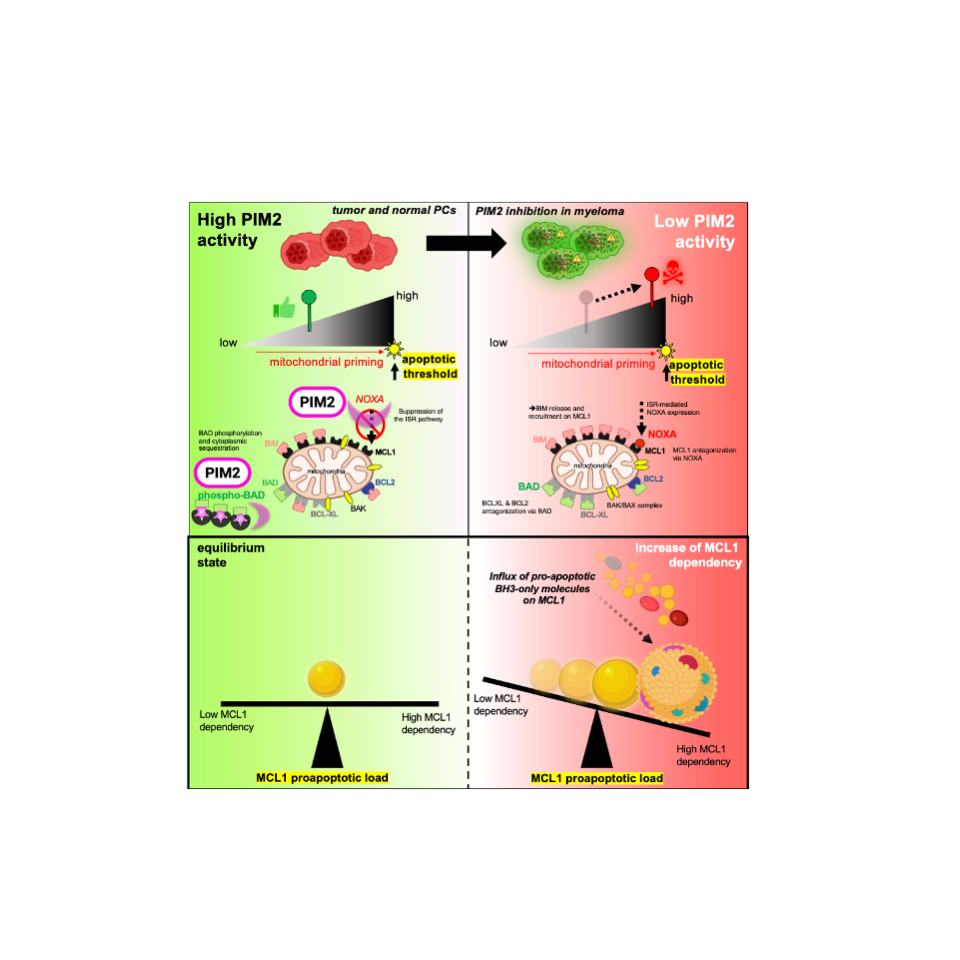
Our study reveals that PIM2 kinase plays a crucial role in this differentiation, acting as a key regulator of plasma cell survival. This kinase operates on multiple levels, particularly at the mitochondria, by lowering the apoptosis threshold through inhibition of the integrated stress response (ISR) pathway.
In this article, we show that inhibiting PIM2 restores the ISR, leading to NOXA production and increased plasma cell dependence on MCL1. In tumor plasma cells, this mechanism reduces the apoptosis threshold, paving the way for synergistic effects with anti-myeloma therapies. An innovative xenograft model of myeloma cell lines in mice confirmed that combining PIM2 inhibition with MCL1 inhibition significantly enhances therapeutic efficacy.
Importantly, PIM2 is not only a key player in plasma cell biology but is also elevated in several solid cancers during their progression, highlighting its broader significance as a therapeutic target.
These findings offer exciting new insights into PIM2's role as a therapeutic target, unveiling novel strategies to exploit stress regulation pathways in cancer.
We invite you to explore our work and join the conversation on how these discoveries may shape future research and therapeutic approaches. Stay tuned for more updates and a link to the full article soon!

As a hematologist, I am deeply passionate about uncovering the mechanisms behind the malignant transformation of hematopoietic cells, with a particular focus on mature B lymphocytes and their progression into lymphoma or multiple myeloma. To better understand these oncogenic processes, my research delves into the molecular pathways governing the terminal differentiation of B lymphocytes into plasma cells, providing insights into both physiological and pathological states.
Follow the Topic
-
Nature Communications
An open access, multidisciplinary journal dedicated to publishing high-quality research in all areas of the biological, health, physical, chemical and Earth sciences.

Related Collections
With Collections, you can get published faster and increase your visibility.
Women's Health
Publishing Model: Hybrid
Deadline: Ongoing
Tumor Microenvironment Crosstalk and Therapeutic Implications
Publishing Model: Hybrid
Deadline: Nov 02, 2026