Political economy of administrative responses to informal housing and land tenure security in Sheger City Ethiopia
Published in Earth & Environment, Sustainability, and Economics


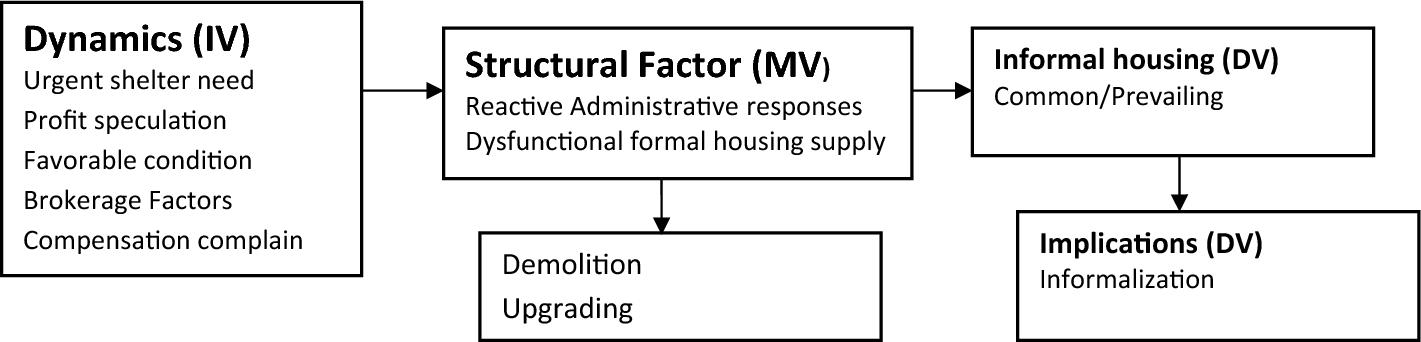

This research, published in Discover Cities, delves into the political economy of administrative responses to this phenomenon, exploring how power dynamics, vested interests, and historical legacies shape the lives of those living on the margins of the city.
The study reveals that the state’s approach to informal housing is often characterized by a lack of transparency and accountability, leading to arbitrary evictions, forced displacements, and a constant state of insecurity for residents. The research also highlights the role of patronage networks and clientelism in shaping the allocation of land and the provision of services, further marginalizing those who lack access to these networks.
Despite these challenges, the research also documents the resilience and agency of informal housing residents, who engage in various forms of resistance and negotiation to secure their land and improve their living conditions. The study concludes with a call for a more inclusive and rights-based approach to urban planning and land management, one that recognizes the contributions of informal housing residents to the city’s economy and society.
The research was inspired by the author’s personal experiences and observations of the challenges faced by informal housing residents in Sheger City. The author conducted extensive fieldwork, including interviews, focus groups, and participant observations, to gain a deep understanding of the perspectives and experiences of those affected by informal housing and land tenure insecurity.
The research is a significant contribution to the literature on urban studies, political economy, and land tenure. It provides important insights into the challenges and opportunities for achieving sustainable and equitable urban development in Ethiopia and beyond.
Efa Tadesse Debele is a researcher with a focus on urban studies, land tenure, and political economy. Efa Tadesse Debele is also a member of the Springer Nature Research Communities, where Efa Tadesse Debele discusses and discovers new ideas, expands their network, and shares the challenges and successes of their work.

Follow the Topic
-
Discover Cities
This is a fully open access, peer-reviewed journal that supports multidisciplinary research and policy developments across the field of urban science.

Related Collections
With Collections, you can get published faster and increase your visibility.
Green Spaces and Sustainability in Cities
In recent decades, with the rapid development of urbanization, it has brought about rapid economic development and convenient life, while it has also brought a series of environmental problems, including global warming, air pollution, ecosystem chaos, biodiversity decline and other environmental problems, which will also lead to the physical and mental health of residents in cities. Green spaces in cities plays multiple roles in the city of ecological, social and economic services, is an integral part of the urban ecosystem, and plays an indispensable role in improving environmental problems and promoting sustainable development in cities.
This series aims to discuss the role of green spaces in alleviating environmental problems in cities, as well as research on the use and management of green spaces in sustainable urban development. Through this series of studies, we will explore how to better play the ecological and social service functions of green spaces in cities and promote the sustainable development of cities.
The research collected in this series includes, but is not limited to, the following topics:
• Evaluation of green spaces and ecological services value in cities;
• Evaluation the accessibility and equity of green spaces in cities;
• The impact of green spaces on microclimate in cities;
• Green spaces and health in cities;
• Green spaces and resilient cities;
• Green spaces and social justice;
• Green spaces and the well-being of residents in cities;
• Governing, planning and management of green spaces in cities.
• Green spaces in smart cities;
• Sustainable development in cities.
Keywords: Green space; Environmental sustainability; Climate change; Social justice; Resilient cities; Smart cities; Health; Urban planning; Urban service
Publishing Model: Open Access
Deadline: Jan 31, 2027
Improving Habitability in Informal Settlements: Challenges and Innovations
Rapid urbanization across the Global South has led to the proliferation of informal settlements, where over a billion people reside, often lacking adequate housing, basic infrastructure, and secure tenure. These communities are disproportionately vulnerable to multifaceted challenges, including the escalating impacts of climate change and significant health risks. While the scale of this issue is daunting, informal settlements are also sites of remarkable resilience and innovation. This Collection seeks to bring together cutting-edge research that explores both the persistent challenges and the novel strategies for improving habitability in these complex urban environments. We welcome original research articles, case studies, and review papers that address, but are not limited to, the following interconnected themes:
• Housing and Basic Infrastructure: Innovations in low-cost, sustainable housing materials and construction techniques; strategies for incremental upgrading of water, sanitation, and energy infrastructure.
• Climate Resilience and Adaptation: Community-based strategies for adapting to climate risks such as flooding and heat stress; the role of green infrastructure and nature-based solutions in enhancing resilience.
• Health and Well-being: Analysis of environmental health risks within settlements and interventions aimed at reducing exposure to pollutants and improving access to healthcare.
• Community and Planning: The role of participatory planning processes in slum upgrading projects; examining the effectiveness of community-led initiatives and institutional frameworks that support resident empowerment.
This Collection aims to foster a multidisciplinary dialogue, highlighting integrated approaches that bridge the gap between top-down policies and bottom-up community action. By showcasing evidence-based innovations and critically assessing existing challenges, we intend to provide a valuable resource for academics, policymakers, and practitioners dedicated to creating more equitable, resilient, and habitable cities for all.
Keywords: informal settlements; urban slums; global south; Sustainable Development; housing environment; infrastructure.
This Collection supports and amplifies research related to SDG 11.
Publishing Model: Open Access
Deadline: Mar 15, 2027