Preserving Strength, Preserving Independence
Published in Healthcare & Nursing and Anatomy & Physiology





Why this research mattered to us
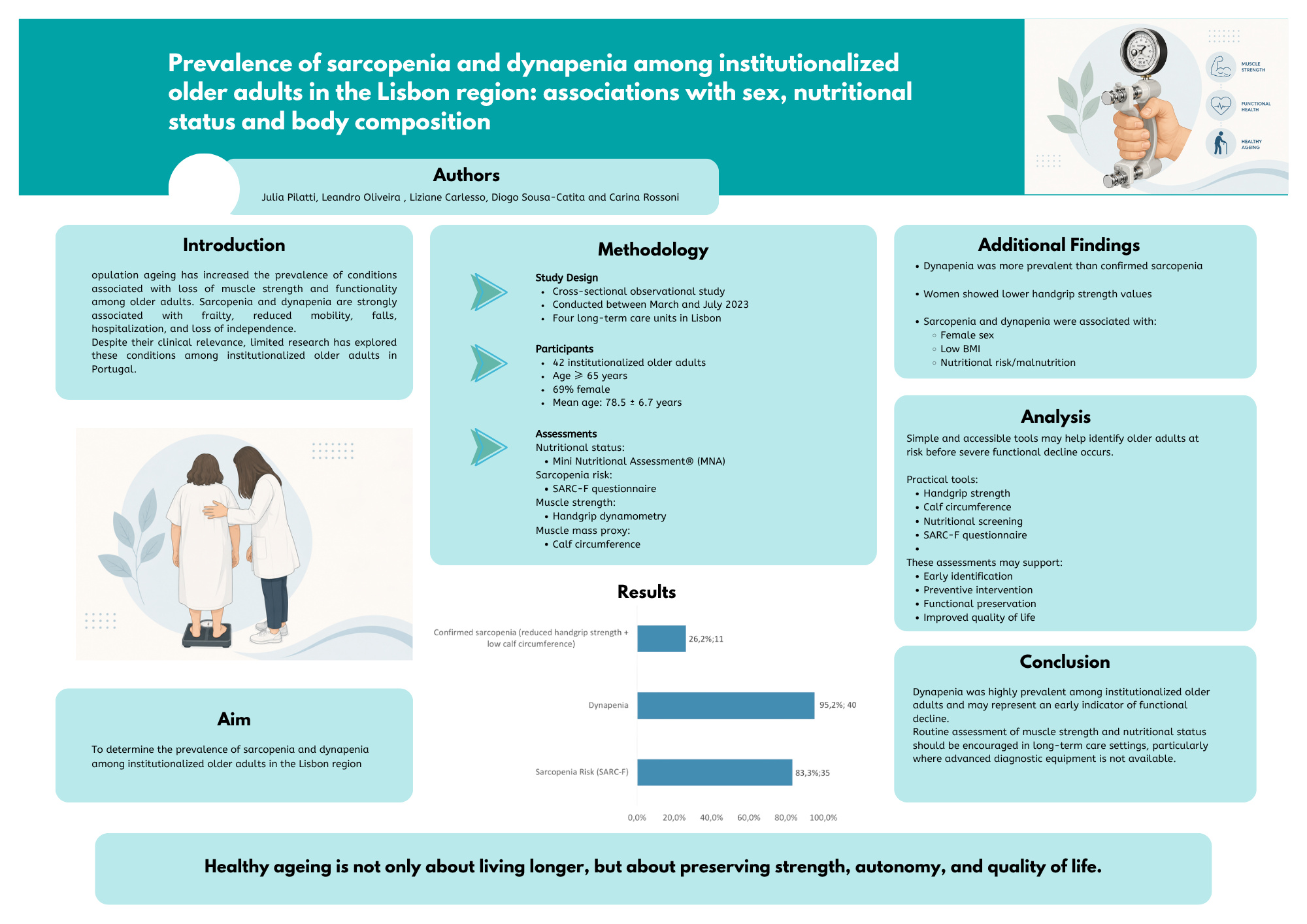
During my internship in long-term care units in Lisbon, I became increasingly interested in healthy ageing and the importance of preserving muscle strength and functionality throughout life. While “active ageing” is often discussed in public health, working closely with institutionalized older adults exposed me to a very different reality, one marked by frailty, dependence, reduced mobility, and, at times, loneliness.
This experience inspired our study on sarcopenia and dynapenia among institutionalized older adults in the Lisbon region. Despite the growing ageing population in Portugal, there is still limited research on muscle weakness and functional decline.
What surprised us during data collection
One of the most memorable moments during data collection involved the handgrip dynamometer used to assess muscle strength. Some residentes, especially older men who initially believed they still had good strength, looked surprised when the device barely moved during the test. As researchers, we tried not to react, but those moments stayed with us long after the assessments ended.
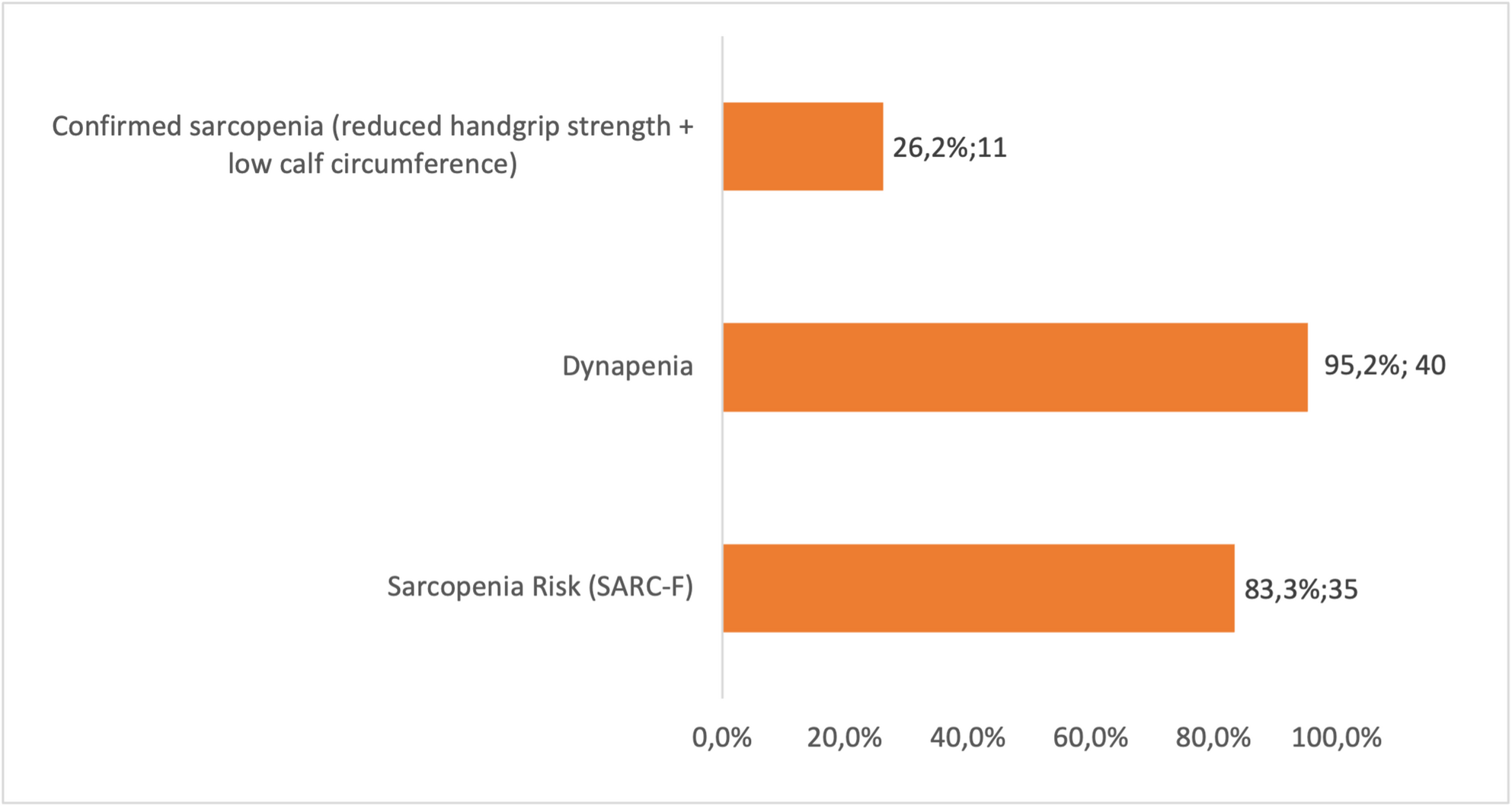
The results reflected what we had been observing in practice. While confirmed sarcopenia affected around one quarter of participants, dynapenia, reduced muscle strength independently of muscle mass, was present in almost all participants.
Looking beyond the numbers: reflections and challenges
Beyond the numbers, the study also made us reflect on the daily lives of many institutionalized older adults. Several residents spent long hours seated, with limited movement and little social interaction. Although loneliness was not directly assessed in our study, these observations made us reflect on how physical decline and social isolation may coexist during ageing.
Conducting research in long-term care facilities also brought practical and ethical challenges. Some residents preferred discussing participation with family members before consenting to the study, reminding us that research involving vulnerable populations requires patience, empathy, and trust.
Another challenge was the lack of access to advanced body composition tools such as DEXA or BIA. However, this limitation reinforced one of the most important messages of our study: even simple and low-cost tools can provide valuable clinical information. Measures such as handgrip strength, calf circumference, and nutritional screening may help identify older adults at risk before severe functional decline occurs.
What we hope people take from this research
This study changed the way we personally understand ageing. Preserving muscle strength is not only about mobility — it is closely connected to autonomy, dignity, quality of life, and potentially preventing falls, hospitalizations, and long-term institutional dependency.
As populations continue to age, promoting healthy ageing must involve more than increasing life expectancy. It should also mean preserving strength, independence, and quality of life for as long as possible.

Follow the Topic
-
BMC Nutrition
BMC Nutrition is an open access, peer-reviewed journal that considers articles on all aspects of nutritional sciences.

Related Collections
With Collections, you can get published faster and increase your visibility.
Climate change and nutrition
The interconnections between climate change and nutrition are increasingly recognized as critical to global health and sustainability. Understanding this nexus is vital as we confront the multifaceted challenges posed by a rapidly changing climate. The food system is a significant contributor to greenhouse gas emissions but is also vulnerable to the adverse impacts of climate change. This creates a pressing need for research that informs nutrition-sensitive climate policies and promotes climate-resilient nutrition strategies.
Recent advances in this area highlight the progress being made. Studies have revealed the potential of climate-resilient systems that not only withstand climate stresses but also enhance nutritional outcomes. For example, agroecological practices are being adopted globally, demonstrating benefits for both farmer livelihoods and local dietary diversity. Furthermore, the development of innovative frameworks for assessing the climate nutrition nexus allows for more robust evaluations of policy interventions. These efforts have laid the groundwork for more nuanced understanding and strategies.
Looking forward, the field must increasingly move beyond documenting impacts towards identifying, testing and scaling practical solutions. Climate change disproportionately affects populations in the Global South, where fragile health systems, conflict, displacement and humanitarian crises compound existing vulnerabilities and magnify the nutritional consequences of climate shocks. There is therefore an urgent need for locally driven, contextually adapted and equitable solutions that can strengthen resilience and improve nutrition in the most vulnerable settings.
Addressing these challenges will require stronger interdisciplinary collaboration, bringing together nutritionists with social scientists, anthropologists, implementation scientists, global health researchers, environmental and agricultural scientists, economists and policymakers. Advances in implementation science, biotechnological methods, systems thinking, data analytics and climate-informed decision support offer exciting opportunities to accelerate the translation of evidence into effective policies and programs. By integrating nutrition with climate adaptation and resilience strategies, researchers can help shape healthier, more equitable and sustainable food systems for the future.
Topics of interest include, but are not limited to:
- Climate-resilient systems for nutrition
- Nutrition-sensitive climate policies
- Implementation science for climate-resilient nutrition interventions
- Locally led and contextually adapted solutions in climate-vulnerable settings
- Community-based and participatory approaches to climate adaptation
- Planetary health diets
- Diet-related greenhouse gas emissions
- Climate change adaptation strategies including early warning systems for nutrition
- Climate nutrition nexus assessments including vulnerability, impacts, coping and resilience
- Global policy implications
- Nutrition equity in a changing climate
- Nutrition and climate adaptation frameworks
This Collection supports and amplifies research related to SDG 3: Good Health and Well-being.
All manuscripts submitted to this journal, including those submitted to collections and special issues, are assessed in line with our editorial policies and the journal’s peer review process. Reviewers and editors are required to declare competing interests and can be excluded from the peer review process if a competing interest exists.
Publishing Model: Open Access
Deadline: Apr 14, 2027
Diet quality and food security in public health
The relationship between diet quality and food security is a pivotal aspect of public health nutrition, with profound implications for individual and community well-being. Continued exploration in this area is essential in addressing endemic malnutrition and ensuring nutritional security for all populations. With substantial global challenges such as rising food insecurity and escalating rates of diet-related chronic diseases, advancing our understanding of these interconnected domains provides critical insights for creating effective, sustainable public health strategies.
Recent advances have addressed the complex interactions between food systems, socioeconomic determinants, and health outcomes. Studies have demonstrated that improved dietary diversity correlates strongly with better nutritional adequacy and reduced rates of micronutrient deficiencies. For instance, researchers have established that access to a variety of food groups significantly enhances the micronutrient profile of diets, reducing the risk of prevalent deficiencies in essential vitamins and minerals. Furthermore, emerging research has highlighted the impact of household food insecurity as a key determinant of diet quality; families experiencing food insecurity often resort to less nutritious, calorie-dense options, exacerbating issues of malnutrition.
Public health nutrition has made notable strides in identifying and addressing the diverse factors that contribute to food security challenges. In particular, the integration of behavioral and community-based approaches has yielded promising results in improving dietary practices among vulnerable populations. These advances have laid the groundwork for more targeted interventions, which have proven effective in managing the dual burden of malnutrition—both undernutrition and obesity—coexisting in many regions.
Looking ahead, the potential for future advances in this field is vast. Continuous research can provide insights into innovative food systems that promote both diet quality and food security, particularly in low- and middle-income countries. The application of technology, such as data analytics and machine learning, may allow us to better understand patterns of food consumption and the socioeconomic factors impacting dietary choices. Additionally, interdisciplinary approaches that bring together specialists in nutrition, agriculture, and public policy will enhance our capacity to devise comprehensive strategies that strengthen food security while promoting healthy dietary practices.
Topics of interest include, but are not limited to:
- Nutritional adequacy and health outcomes
- Socioeconomic determinants of diet quality
- Household food insecurity assessments
- Impacts of food systems on public health
- Strategies for enhancing dietary diversity
- Policy approaches to food security
- Interventions to combat micronutrient deficiencies
- Innovations in public health nutrition
This Collection supports and amplifies research related to SDG 3: Good Health and Well-being.
All manuscripts submitted to this journal, including those submitted to collections and special issues, are assessed in line with our editorial policies and the journal’s peer review process. Reviewers and editors are required to declare competing interests and can be excluded from the peer review process if a competing interest exists.
Publishing Model: Open Access
Deadline: Mar 24, 2027


