Prevalence and correlates of food insecurity among Bangladeshi university students: associations with psychological distress and academic performance—a cross-sectional study
Published in Agricultural & Food Science and Behavioural Sciences & Psychology
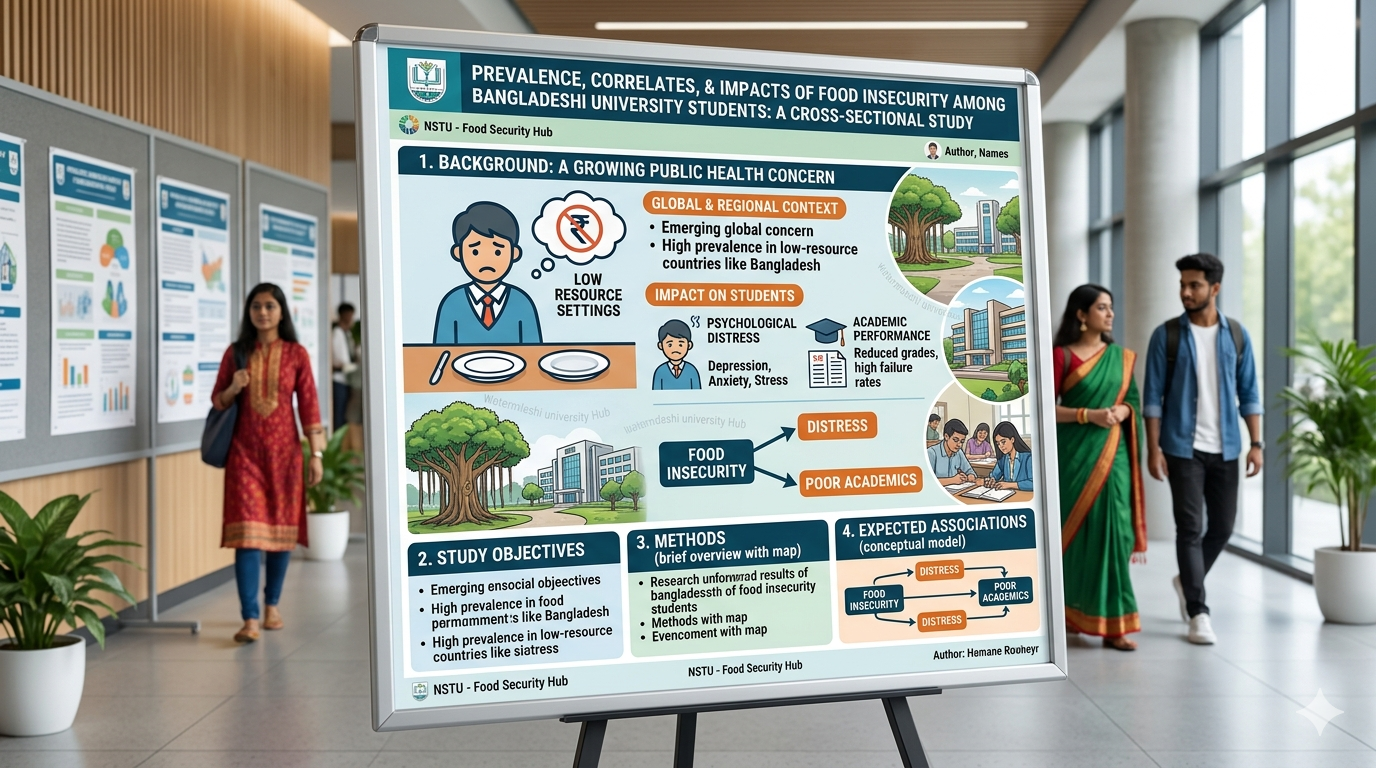
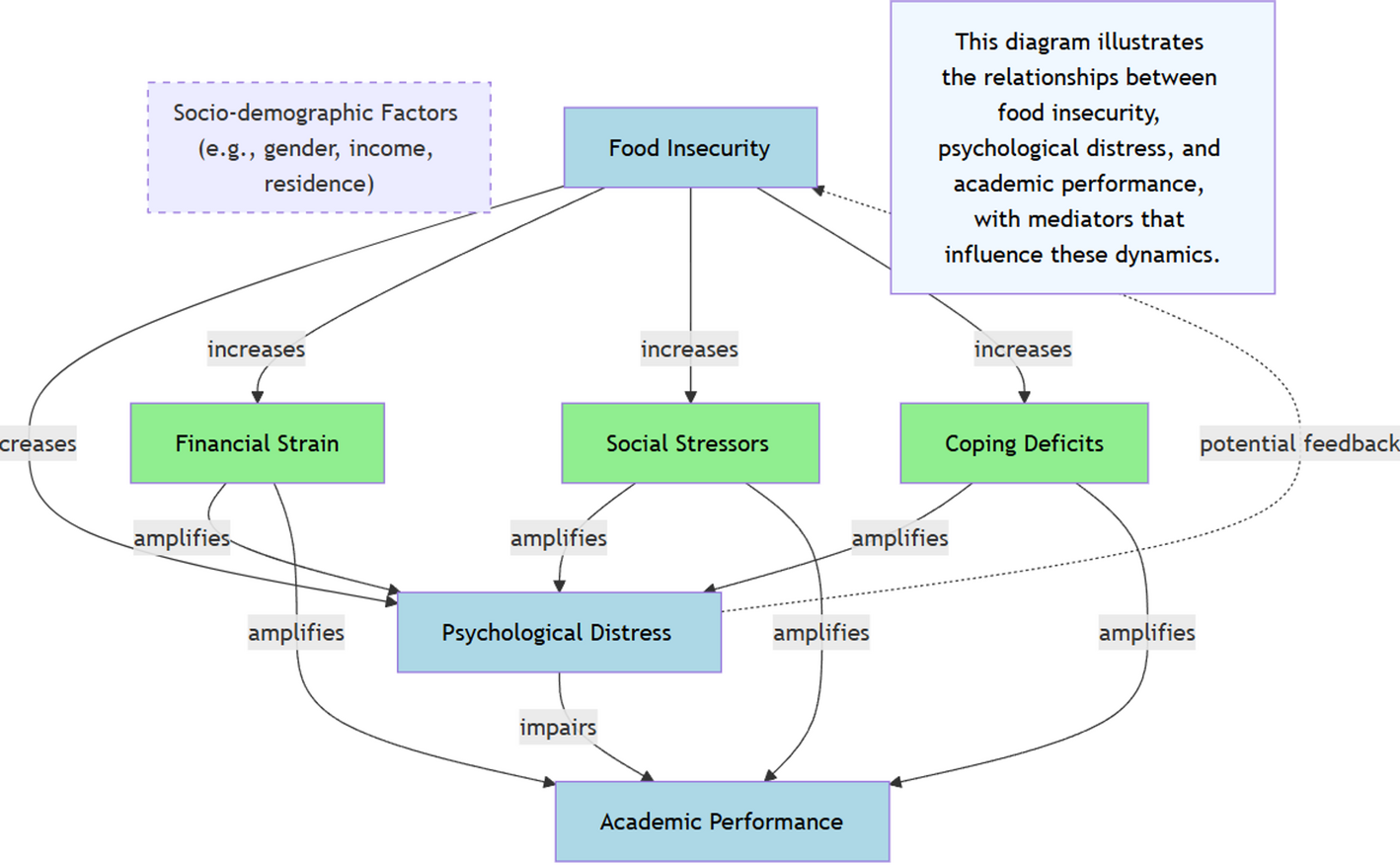

Our paper investigates the critical issue of food insecurity among university students in Bangladesh, focusing on its impact on psychological distress and academic performance. Conducted at Noakhali Science and Technology University, the study involved 397 students and utilized the Food Insecurity Experience Scale (FIES) and the Depression, Anxiety, and Stress Scale-21 (DASS-21). Findings revealed that 65.5% of students experienced food insecurity, which was significantly linked to anxiety, stress, and academic challenges. These results underscore the urgent need for interventions like food assistance programs and mental health services to support student well-being. Read the full paper here.

Follow the Topic
-
Discover Social Science and Health
Discover Social Science and Health is an open access journal publishing research across the full range of disciplines at the intersection of health, social and biomedical sciences.

Related Collections
With Collections, you can get published faster and increase your visibility.
Health as a Multidimensional Social Phenomenon: Evidence-Based Theoretical Perspectives
Health has traditionally been approached from biomedical and individualistic perspectives. However, the processes that shape health and illness go beyond the individual and are embedded in social, cultural, political, and economic contexts. Durkheim, Marx, and Weber, for example, provided the theoretical foundations for understanding health as a social and structural phenomenon. Parsons introduced the concept of the “sick role,” defining the normative expectations of illness in modern societies. Later scholars such as Foucault and Illich expanded this view by examining power, professional authority, and the social construction of medical knowledge. Luhmann and Beck explored the sociology of risk, which is closely related to the social dimensions of health. These perspectives show that health is a historically and socially constructed and configured reality. This Collection aims to gather research that analyzes health as a multidimensional social phenomenon, understood as the result of complex interactions between social structures, institutional practices, power relations, community dynamics, cultural imaginaries, and subjective experiences.
Objectives:
• Explore health through multidimensional approaches that integrate social, cultural, economic, political, and environmental variables.
• Foster a plural dialogue among different theoretical approaches (sociology of health, critical social theory, public health, medical anthropology, cultural studies, etc.).
• Bring together theoretical research and rigorous case studies that provide evidence and help to understand health as a collective and interdependent phenomenon.
• Promote interpretations of health that move away from biomedical reductionism, while remaining open to dialogue with that perspective.
Scope and types of contributions:
Original manuscripts that meet the following criteria will be considered:
1. A focus on the social and multidimensional interpretation of health.
2. Acceptance of different theoretical perspectives (critical, interpretative, systemic, phenomenological, etc.).
3. Manuscripts must be theoretical or theoretical–empirical, but always supported by evidence, whether qualitative, quantitative, comparative, or from systematic reviews.
4. Case studies with strong theoretical articulation will also be considered.
5. Special attention will be given to contributions that analyze health as a collective, structural, or institutional phenomenon, avoiding its reduction to individual-level variables.
6. Manuscripts that explore the multidimensionality of the factors associated with health (social determinants, inequalities, policies, subjectivities, territory, etc.) will be valued.
7. Articles related to social health or the health of the social system, in the broadest sense (institutional well-being, social cohesion, sustainability of care systems, etc.), will also be accepted.
Keywords: Social health, Multidimensionality of health, Social theory, Interpretive studies, Sociohermeneutics and sociosemiotics, Politics, Culture, Social values, Sociohistory, Collective health.
This Collection supports and amplifies research related to SDG 3, SDG 10, and SDG 16.
Publishing Model: Open Access
Deadline: Dec 31, 2026
Climate Shocks, Health, and Demographic Change in LMICs
Low- and middle-income countries (LMICs) are at the forefront of climate disruptions, where the effects of rising temperatures, extreme weather, and environmental degradation intersect with complex demographic dynamics and health vulnerabilities. These shocks have contributed to increasing burdens of disease, disrupted health systems, food and water insecurity, and altered migration patterns — with disproportionate impacts on already marginalized populations.
This Collection seeks submissions that examine the multifaceted impacts of climate shocks on health and population dynamics in LMICs. We encourage contributions that consider the interactions between environmental stressors and demographic processes such as migration, fertility, mortality, and urbanization. Submissions focusing on the mechanisms driving disparities in exposure, health outcomes, and service access are particularly welcome.
We invite empirical, methodological, and theoretical papers that employ qualitative, quantitative, or mixed methods. Papers centering local knowledge, community-based perspectives, and innovative approaches — such as geospatial analyses, biomarkers, or participatory methods — are strongly encouraged. Topics may include, but are not limited to:
• Climate-related health burdens (e.g., infectious diseases, heat stress, malnutrition)
• Population mobility and displacement linked to environmental change
• Urban-rural disparities in health access amid climate events
• The role of health systems and policy in mitigating climate-related risks
• Local adaptations and community resilience to environmental shocks
• Methodological innovations in studying health, climate, and population interactions
We welcome diverse formats including original research articles, case studies, brief reports, methodology papers, perspectives, and data notes. Contributions should clearly articulate their relevance for understanding and addressing health inequities in LMICs under climate stress.
The goal of this collection is to advance interdisciplinary dialogue and promote evidence-based responses to one of the most pressing global challenges of our time.
Keywords: Climate Shocks, Health Inequities, Migration, Demographic Change, LMICs, Resilience, Environmental Health, Mixed Methods.
Publishing Model: Open Access
Deadline: Aug 31, 2026




Please sign in or register for FREE
If you are a registered user on Research Communities by Springer Nature, please sign in