Religiosity Weakens Gaming Disorder Risk
Published in General & Internal Medicine and Behavioural Sciences & Psychology

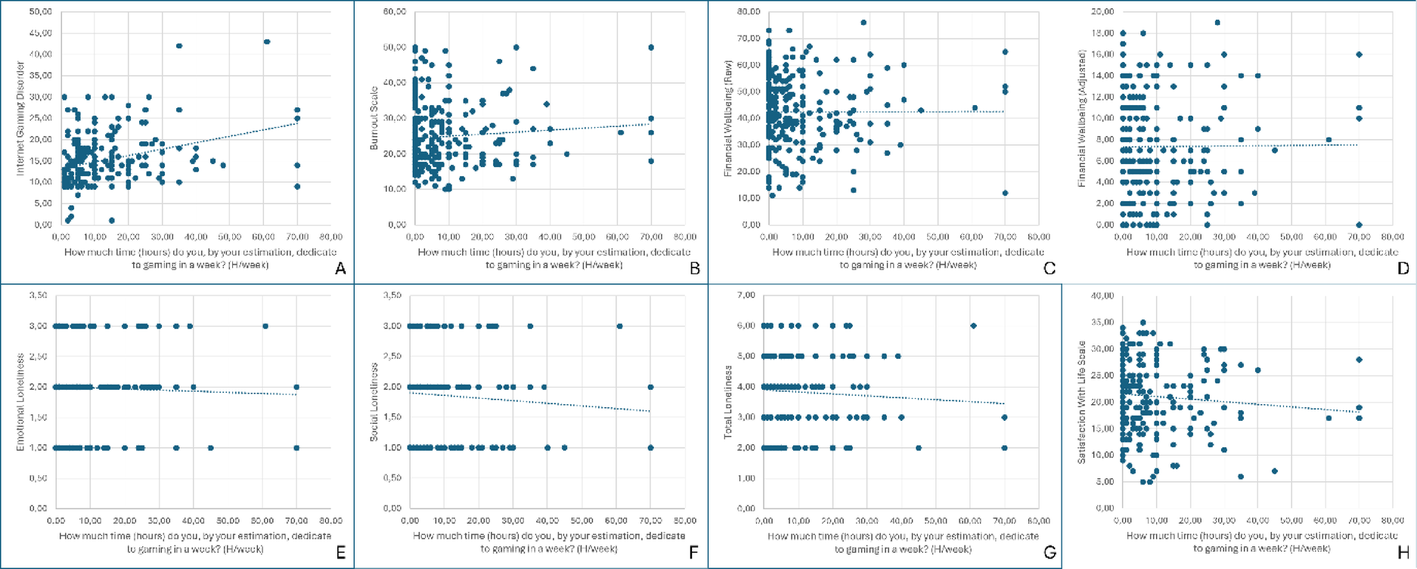

Study overview
This work explores how weekly gaming duration relate to mental health outcomes in young university students in Georgia. We assessed gaming hours alongside IGD severity, burnout, loneliness, life satisfaction, financial wellbeing, and self-reported religiosity.
Although overall gaming time in our sample was modest (mean ≈ 8 hours/week), increased gaming hours were associated with higher IGD severity. Male students demonstrated significantly higher IGD scores than female students.
A protective role of religiosity
One of the central findings is that religiosity may act as a protective factor. Students with higher religiosity reported lower IGD severity, and religiosity moderated the relationship between gaming hours and IGD symptoms. This suggests that cultural and psychosocial resources could buffer some of the risks associated with problematic gaming behaviour.
Collaboration
The study was conducted in partnership with the RADAR Center at Ben-Gurion University of the Negev (Israel). Working with RADAR allowed us to integrate a broader cross-cultural perspective on digital behavior and mental health, and strengthened the methodological and analytical framework of the project. This collaboration highlights the importance of multidisciplinary and international teamwork in understanding emerging behavioral health challenges.
Why this matters
Most evidence on IGD originates from Western Europe, North America, and East Asia. Our data add insights from the Caucasus region, where cultural norms—including the role of faith communities—may shape coping strategies, socialization, and digital behavior. These findings offer valuable context for public health planning and student mental-health services.
Future directions
We anticipate that longitudinal and interventional research will clarify causal pathways (e.g., whether gaming intensity predicts burnout or vice-versa), and test whether community- or faith-based engagement can mitigate IGD-related harms in young adults.
We welcome discussion, replication efforts, and collaborative work—particularly comparisons across countries and cultures interested in youth mental health, digital behavior, and protective psychosocial factors.

Follow the Topic
-
Discover Mental Health
This is an international, open access journal that publishes research across the transdisciplinary field of mental health research.

Related Collections
With Collections, you can get published faster and increase your visibility.
Gender and Psychosocial Factors in Mental Health: Rethinking Determinants, Experiences, and Outcomes
This collection examines the complex interplay between gender and psychosocial factors in shaping mental health across diverse populations. Giving equal attention to both domains, it brings together empirical and theoretical contributions from psychology, psychiatry, public health, and the social sciences to analyze how gender norms, identities, roles, and inequalities intersect with psychosocial dimensions such as social support, stigma, stress, violence, work and family conditions, and broader structural determinants. Adopting intersectional perspectives and context-sensitive methodologies, the contributions seek not only to document how gendered arrangements and psychosocial contexts jointly contribute to mental health disparities, but also to identify protective processes and promising avenues for prevention and intervention. In doing so, this collection aims to advance a more integrated and nuanced understanding of how gender and psychosocial factors influence mental health experiences and to inform policies and practices that promote equity and well-being.
Submissions are welcome on mental health in relation to gender and/or psychosocial factors across diverse populations and settings. We particularly encourage contributions that adopt a gender perspective, an intersectional approach, or other critical frameworks that illuminate how social positions, identities, and contexts shape mental health outcomes, access to care, and experiences of distress and well-being. Empirical, theoretical, and methodological articles that advance understanding of these issues or offer innovative insights with clear implications for research, practice, or policy will be considered especially relevant for this Collection.
These are some suggested, though by no means exhaustive, thematic lines and study designs for contributions. Submissions may, for example, address: (1) gender norms, roles, and systemic imbalances in relation to common psychological problems and health; (2) how gender interacts with other social locations such as sexual orientation, ethnicity/race, disability, migration, and chronic illness; (3) psychosocial processes including stigma, social support, caregiving, work–family balance, discrimination, and stress/trauma; and (4) implications for prevention, clinical practice, and policy (e.g., gender-transformative interventions, workplace or educational policies, etc.). We particularly welcome longitudinal and cross-sectional empirical studies, qualitative and mixed-methods research, intervention or implementation studies, and theoretical or model papers that address a wide range of determinants (e.g., gendered labor, caregiving, stigma, minority stress, chronic illness, body image, sexuality, etc.). However, other innovative and relevant proposals that fall within the broader scope of gender and mental health are also highly encouraged.
Keywords:
Gender; Mental Health; Psychosocial Factors; Well-being
Publishing Model: Open Access
Deadline: Dec 31, 2026
Mental Health Inequities and Disparities: Behavioral Pathways, Intervention Targets, and Global Policy Implications
This collection seeks to advance understanding of mental health inequities by explicitly focusing on behavioral pathways that link structural, social, and economic inequities to mental health outcomes. Rather than addressing social determinants in broad terms, the Collection emphasizes how inequities rooted in socioeconomic status, race and ethnicity, gender, geography, and disability shape health-related behaviors (e.g., substance use, diet, physical activity, sleep, and help-seeking), and how these behaviors constitute modifiable targets for intervention, service design, and policy action.
Health inequities are systematic, avoidable, and unjust differences in health that both contribute to and result from mental health problems. These inequities often operate through behavioral and psychosocial mechanisms that exacerbate mental and physical health disparities across the life course. The Collection welcomes large-scale epidemiological and cohort studies, registry-based analyses, qualitative and mixed-methods research with marginalized populations, implementation and dissemination studies, natural experiments and policy evaluations, as well as digital, community-based, and behavioral interventions grounded in behavioral science and health psychology.
By integrating perspectives from public health, epidemiology, behavioral science, health psychology, and intervention research, this interdisciplinary Collection aims to generate evidence that is directly relevant for translating research into policies and practices that promote mental health equity in diverse global contexts.
Keywords:
Mental health disparities; Health inequities; Social determinants of mental health; Health behavior; Structural inequity; Psychosocial stress; Health equity interventions; Global mental health; Socioeconomic status; SDG 3 (Good Health and Well-being); Behavioral science; Health psychology; Behavioral interventions; Policy translation
Publishing Model: Open Access
Deadline: Oct 21, 2026


