Restoring Contaminated Soils: The Hidden Power of Green Compost
Published in Sustainability and Agricultural & Food Science
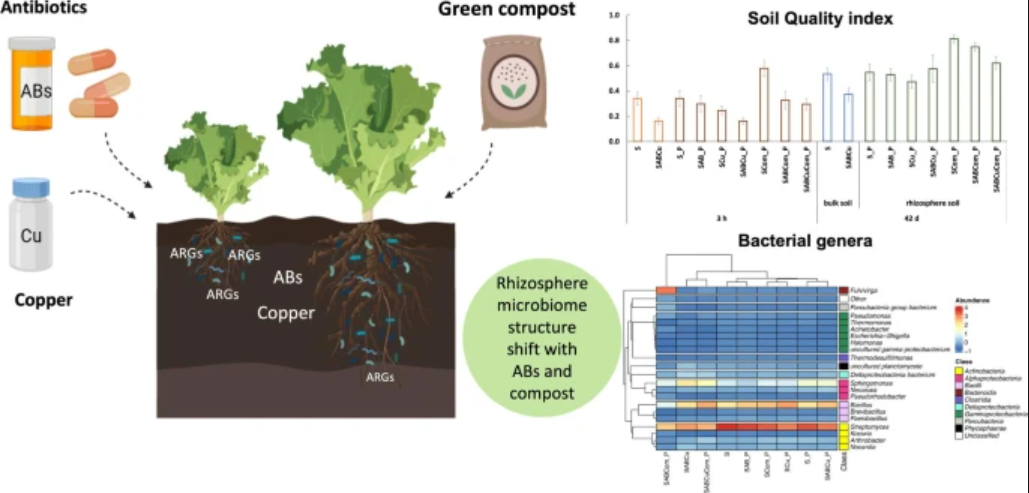
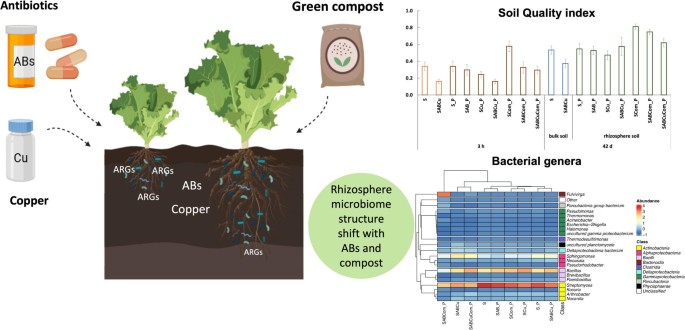

Agricultural soils are increasingly exposed to complex contamination, including antibiotics and heavy metals such as copper. These pollutants often originate from common practices like manure application or fungicide use, and their combined presence creates a difficult challenge: they degrade soil quality, disrupt microbial communities, and can even promote the spread of antibiotic resistance. This study tackles that problem head-on, exploring whether a simple, nature-based solution—green compost—can help restore contaminated soils.
The research focuses on a degraded agricultural soil with low organic matter and biological activity, conditions that are common in intensively managed systems. By introducing a compost derived from plant residues, the scientists aimed to evaluate not just whether soil fertility could be improved, but whether the compost could counteract the negative effects of a mixture of antibiotics and copper. The experiment, carried out with lettuce as a test crop, integrates chemical, biological, and microbiological indicators into a comprehensive assessment of soil quality.
The results are striking. Green compost significantly improved overall soil quality, increasing organic carbon and stimulating microbial activity—key drivers of soil function. These changes translated directly into better plant performance, with lettuce showing higher biomass, larger leaf area, and improved root growth compared to untreated soils. Even in the presence of contaminants that would normally inhibit plant development, the compost-amended soil supported stronger, healthier growth.
Perhaps more importantly, the study sheds light on the biological dimension of soil recovery. The addition of compost reshaped the soil microbial community, enhancing its activity and diversity. While the presence of antibiotics and copper tended to promote antibiotic resistance genes, the green compost helped limit their spread—an especially relevant finding given concerns about resistance transfer from soils to crops and, ultimately, to humans.
From a broader perspective, the work demonstrates how organic amendments can serve multiple functions at once: improving fertility, restoring biological processes, and mitigating contamination risks. Unlike some conventional organic inputs, such as manure, the plant-based compost in this study proved capable of enhancing soil health while reducing the proliferation of resistance markers. This positions green compost as a particularly promising tool for sustainable soil remediation.
For researchers across agricultural disciplines, the message is clear: addressing soil degradation requires integrated solutions that consider chemistry, biology, and ecology together. This study highlights how waste-derived inputs can go beyond nutrient supply to actively repair damaged systems. In doing so, it points toward a future where restoring soil health and managing contamination are not separate goals, but part of the same regenerative strategy.
This post was created with the assistance of AI.

Follow the Topic
-
Journal of Soil Science and Plant Nutrition
The Journal of Soil Science and Plant Nutrition is an international, peer reviewed journal devoted to publishing original research findings in the areas of soil science, plant nutrition, agriculture, and environmental science.

What are SDG Topics?
An introduction to Sustainable Development Goals (SDGs) Topics and their role in highlighting sustainable development research.
Continue reading announcement