Sea level rise threatens terrestrial coastal aquaculture production
Published in Earth & Environment, Sustainability, and Agricultural & Food Science







The full study is available at https://aquaculturesciencemanagement.biomedcentral.com/articles/10.1186/s44365-025-00009-3
Our key findings:
-
Around one-third of Australia’s coastal land-based aquaculture facilities are projected to be exposed to sea level rise by the end of the century.
-
In Queensland, over 43% of current productive aquaculture sites are expected to be impacted.
-
88% of currently productive prawn ponds and 42% of barramundi ponds are projected to face inundation.
- Estimated annual economic losses due to these impacts range between AUD$12.6–22.6 million for barramundi and AUD$36.9–127.6 million for prawns by 2100.
Why sea level rise?
Sea level rise is one of the most direct and damaging consequences of climate change. As global temperatures rise, melting ice sheets and thermal expansion are causing the ocean to rise at an average of 3.4 mm per year. This may sound small, but the impacts accumulate rapidly—especially in low elevation coastal zones (LECZs), where infrastructure is often dense and economic assets, like industrial facilities and residential developments, hold a high value.
For coastal infrastructure, even modest sea level increases lead to more frequent and severe inundation, flooding, saltwater intrusion, and erosion—damaging roads, buildings, and critical services. When combined with high tides, storm surges, and waves, the risks multiply.
How can sea level rise impact terrestrial, coastal aquaculture?
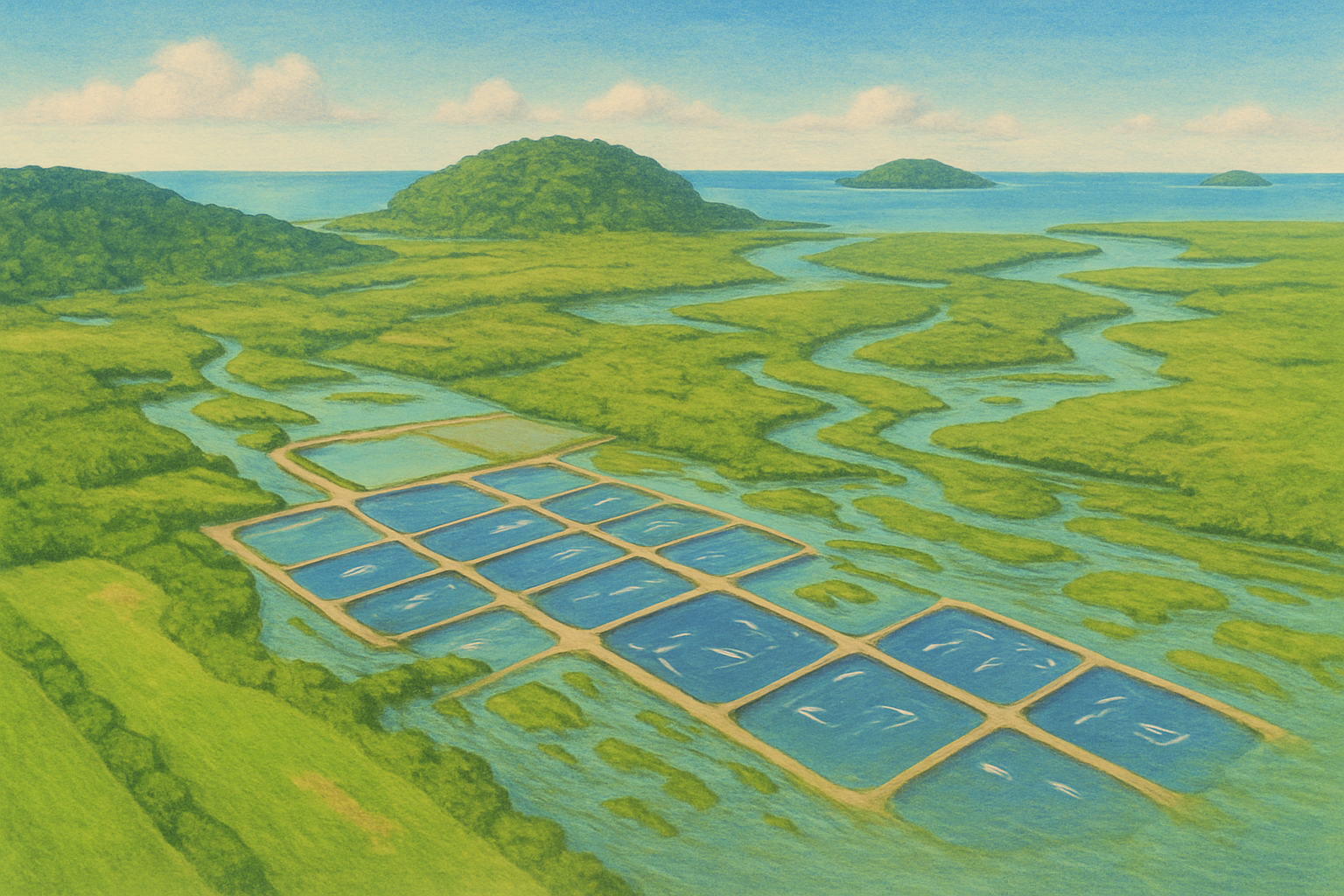
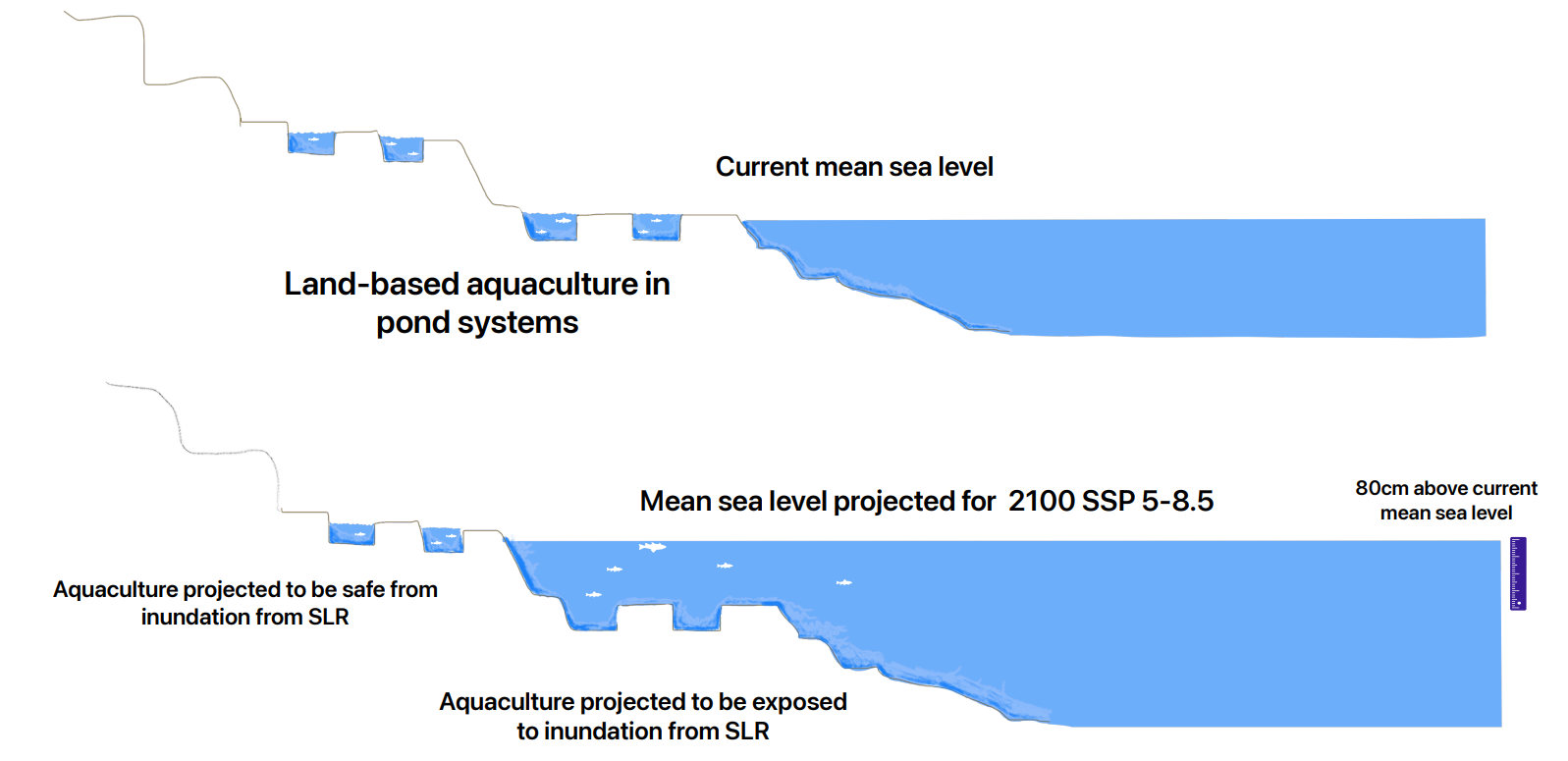
Sea level rise poses a significant threat to coastal, land-based aquaculture by increasing the risk of both temporary and long-term inundation. These impacts can disrupt man-made ponds, compromise water quality, damage essential and accessory infrastructure (like raceways, ponds, roads and buildings) and lead to stock escape and to saltwater intrusion into freshwater systems.
Why Queensland, Australia?
Queensland is Australia’s largest producer of land-based (terrestrial) aquaculture, with most production occurring in coastal pond-based systems. However, under high-emissions scenarios, Queensland is also projected to experience a sea level rise of approximately 0.8 meters by 2100—placing its aquaculture industry at considerable risk. Queensland is a relatively small aquaculture producer globally, but with state and national targets to expand production in coming years, understanding these risks can help the industry be more sustainable and resilient in the long-term.
Why does it matter?
Aquaculture plays a critical role in global food security, livelihoods, and local economies. As sea level rise threatens coastal, land-based aquaculture areas, it not only poses risks to physical infrastructure but also the sustainability of production. Over time, affected regions may become unsuitable for farming, endangering investments, reducing supply, and impacting the communities and industries that rely on aquaculture products for food and livelihoods. When we explored this issue in a small subset of the world (Queensland, Australia), we expect to see similar results in other areas with coastal, terrestrial aquaculture production and rising seas. Given the global nature of seafood trade, aquaculture production losses in one area will impact supply in other areas. Careful planning is needed to ensure aquaculture production locations are equipped to deal with changing environmental conditions in the short and long-term.
What can be done?
Adapting to sea level rise in coastal aquaculture requires a strategic and multifaceted response. Climate-informed planning can guide new developments toward lower-risk areas, while vulnerable sites may need to be relocated or retrofitted. Infrastructure upgrades—such as elevated platforms, barriers, and protective fencing or netting around ponds and reservoirs—can help reduce damage from inundation, debris while preventing stock escapes. Restoring coastal ecosystems like mangroves also offers natural protection against storm surge and erosion. Targeted government support through policy, funding, and research will be key to enabling proactive and locally appropriate adaptation.
The finer details - data and methods:
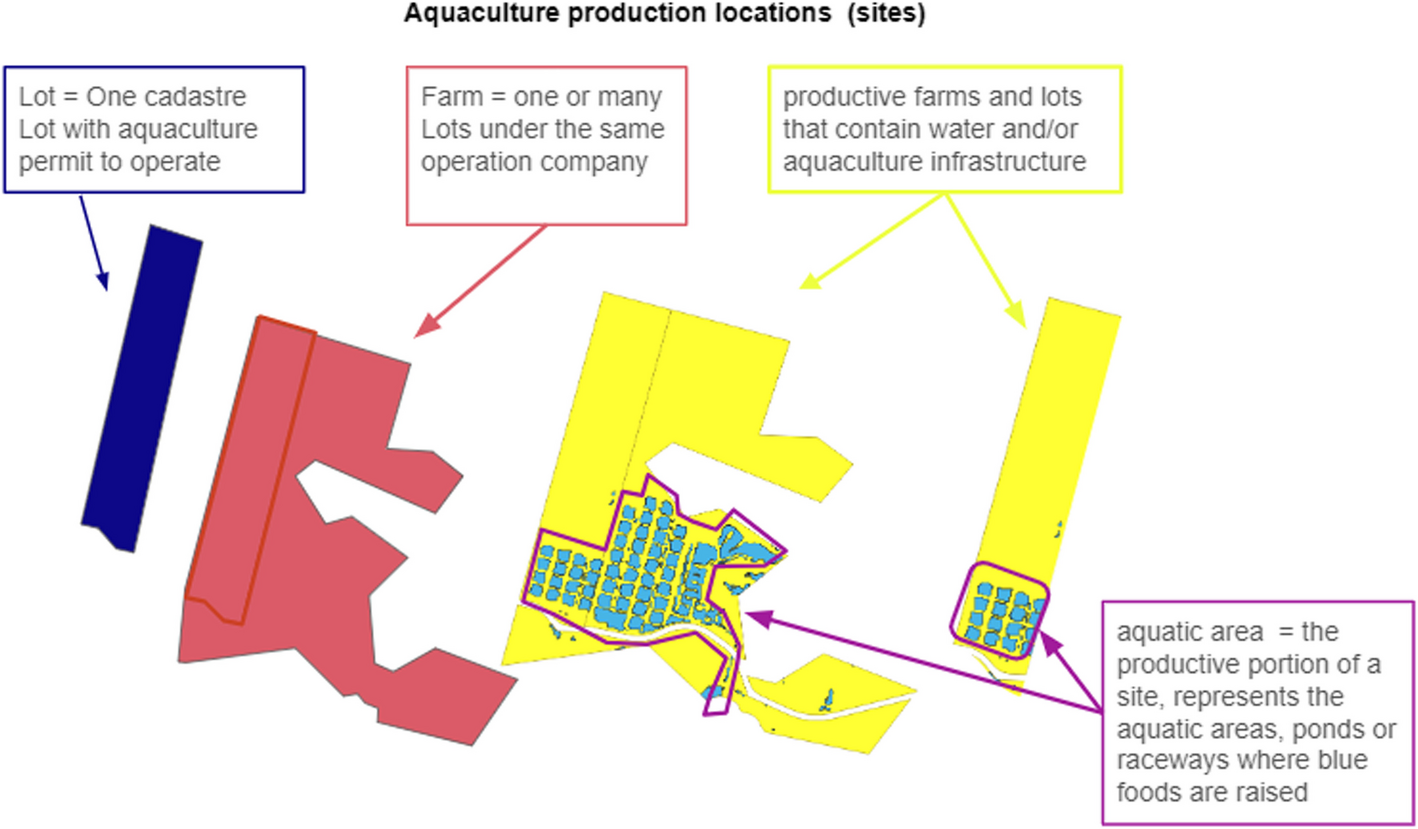
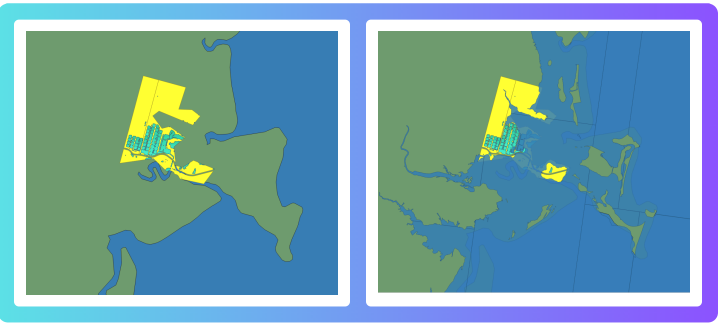
To report exposure, we verified how projected sea level rise hazard overlapped with the land-based aquaculture systems including ponds and open water and also the land permitted for aquaculture activities using geospatial data.
We used projected coastal inundation and erosion layers under a high-emissions scenario for 2100, along with spatial data on current aquaculture permit sites and designated Aquaculture Development Areas (ADAs), all sourced from the Queensland Government. Additionally, we developed a novel dataset by detecting water bodies (i.e., aquaculture ponds) using the Normalized Difference Water Index (NDWI) derived from satellite imagery in Google Earth Engine to be able to identify areas that were actively undertaken aquaculture production, as opposed to being leased for aquaculture but not actively producing.
Our methodology provides a scalable framework to assess climate-related risks to terrestrial, coastal aquaculture and can also inform assessments of coastal infrastructure vulnerability more generally.
Follow the Topic
-
Aquaculture Science and Management
This is an open access peer-reviewed journal that aims to publish innovative research about the management of aquaculture species, the related food security considerations, and the industry’s relationship with the environment.

Related Collections
With Collections, you can get published faster and increase your visibility.
Synergizing aquaculture & blue carbon in a changing climate
Aquaculture Science and Management calls for contributions to a Collection centred on "Synergising aquaculture & blue carbon in a changing climate." We invite researchers to share original studies that investigate the intersection of aquaculture practices and blue carbon sequestration in coastal ecosystems. This Collection aims to elucidate how aquaculture can contribute to climate mitigation strategies, including the enhancement of carbon storage and the restoration of coastal habitats. Uniting four journals and scientific communities, this Collection is a part of the Climate Change and Livestock super Collection which highlights innovative, climate-smart approaches to safeguarding animal health and welfare across aquaculture, porcine, dairy and poultry. Topics of interest include but are not limited to:
- Carbon sequestration mechanisms in aquaculture
- Corporate or product level climate accounting for seafood
- Coastal ecosystem restoration practices
- Aquaculture systems and their climate resilience
- Integration of blue carbon strategies in fisheries
- Socioeconomic impacts of restorative aquaculture
- Policy frameworks for synergies in aquaculture and blue carbon
- Technological innovations in sustainable aquaculture practices
Join us in fostering interdisciplinary dialogues that highlight the critical role of aquaculture in the sustainability of our marine environments.
This Collection supports and amplifies research related to SDG 13, Climate Action and SDG 14, Life Under Water.
All submissions in this Collection undergo the journal’s standard peer review process. Similarly, all manuscripts authored by a Guest Editor(s) will be handled by the Editor-in-Chief. As a newly launched open access publication, this journal has waivers to cover article-processing charges (APCs). For more information about receiving a waiver, please contact alex.waite@springernature.com before submitting a manuscript. For additional support please visit OA funding and support, or email OAfundingpolicy@springernature.com or the Editor-in-Chief.
Publishing Model: Open Access
Deadline: Mar 25, 2027




Please sign in or register for FREE
If you are a registered user on Research Communities by Springer Nature, please sign in