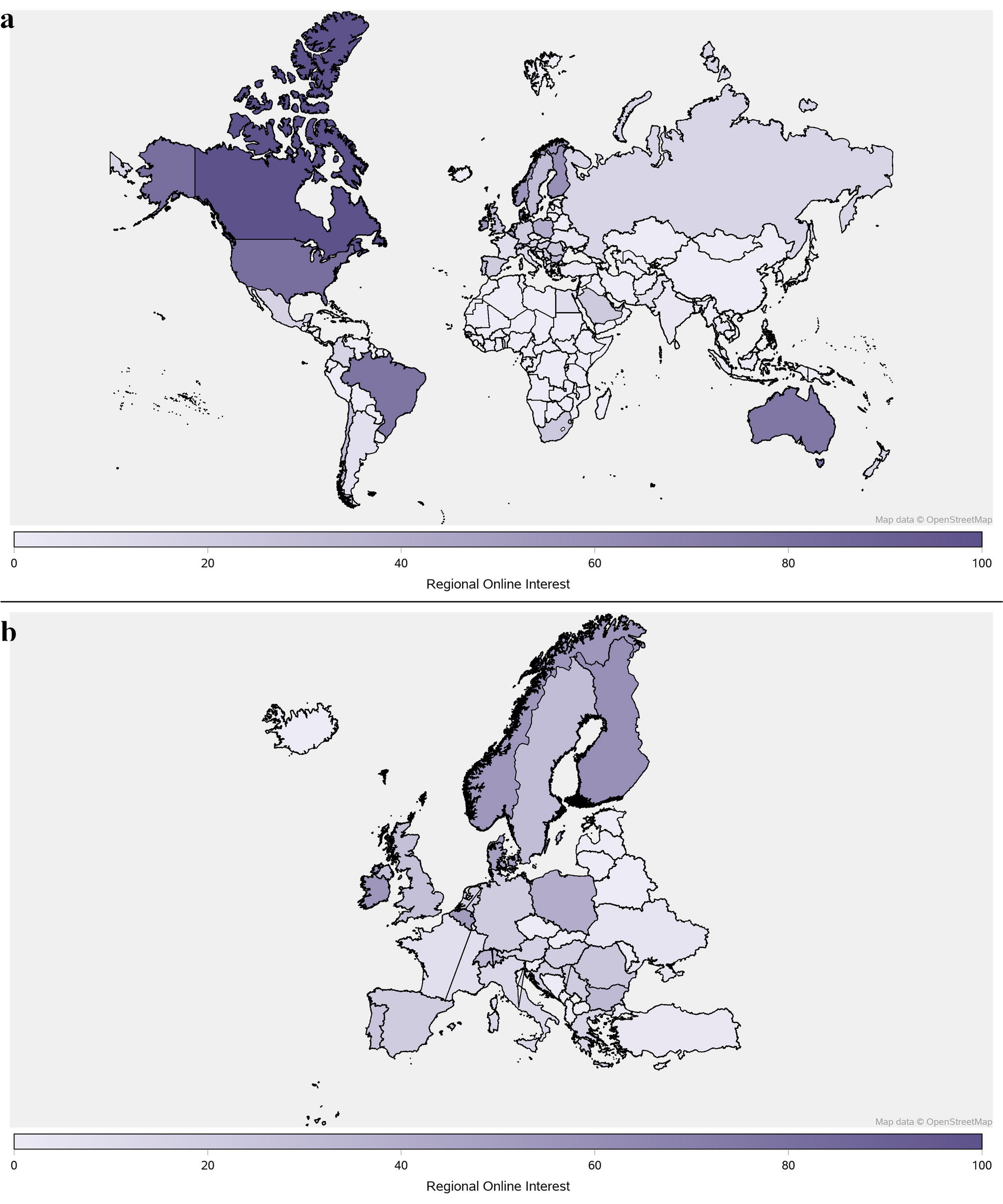

As the obesity epidemic grows, interventions to mitigate related health complications become increasingly important. In recent years, using medicines off-label for weight loss has become an appealing option for many people. Yet just how wide-spread people's interests are, and what the nature of interest in such options is, is relatively unknown.
Changing lifestyle and diet is recognised for achieving better outcomes for a range of non-communicable diseases, including diabetes. The global burden of diabetes is significant [1], giving rise to the development of pharmaceutical interventions to tackle this epidemic [2]. Semaglutide is an insulin production-targeting drug intended to treat people with diabetes by inducing weight loss [3]. However, the use of this prescribed medication is increasingly being considered in non-medical contexts and especially promoted on social media. Indeed, social media influencers who are endorsing the use of this medicine are suggested to have contributed towards recent worldwide shortages in semaglutide [4].
What inspired this study?
There are a host of medical and non-medical-related factors driving the supply and demand of medicines for weight loss. The interest in off-label use of semaglutide will likely vary between countries and given the far-reaching access to the internet, people’s perspectives on semaglutide can be captured from nations across the globe. The internet is therefore a useful resource in understanding the international viewpoint on semaglutide and Dr Raubenheimer (the lead author for this research) and his co-authors aimed to explore online behaviours to help explain the drivers (often non-clinical) behind the increasing interest in this product.
Why is it important?
A healthy lifestyle can contribute towards prolonging life, preventing disease and reducing economic burdens on healthcare systems. However, maintaining a healthy lifestyle can be challenging—quick fixes become more alluring. This study helps to understand why the use off-label medicine for weight loss (like semaglutide) is of interest across a range of populations, where people’s motives may be influenced by a host of environmental, social and situational factors. Understanding patterns of interest in semaglutide usage may help explain recent shortages in supplies of the drug and conceptualise interventions to prevent this happening again.
Did this study show anything unexpected?
Dr Raubenheimer and colleagues conducted an infodemiology study (a type of epidemiological study using data from internet searches [5]) of Google Trends related to semaglutide between Janurary 2021 and August 2023. The findings highlight some countries where there was increased interest in semaglutide, although media coverage only partly explained the interest. There were specific media and social media events of note that the authors indicated to spike online interest in semaglutide across numerous countries, including an episode of the Dr Oz Show and tweets from Elon Musk. Dr Raubenheimer’s team thematically analysed the Google Trends data, highlighting that weight loss (but not diabetes) was a major theme across most countries related to searches for semaglutide. Interest in many countries was also dominated by searches on how to obtain semaglutide.
What is the wider significance of the study findings?
The study illuminates the potential power of the internet in exploring what drives people's interests to search for information about medicinal weight loss interventions. The trends identified in different countries may elucidate specific drivers underlying the increased interest in semaglutide, which may be attributed to off-label use for non-clinical purposes. The subsequent shortage in semaglutide, potentially as a consequence of the rapidly growing interest online, may prevent these medicines reaching those who need it most. Furthermore, supply and demand challenges may increase the production of counterfeit and unregulated medicines flooding the markets, further exacerbating the problem.
References
- World Health Organization (WHO). The top 10 causes of death. Fact Sheets. 2020. https://www.who.int/news-room/fact-sheets/detail/the-top-10-causes-of-death. Accessed 19 May 2023.
- Khan N. How to ‘drug’ our way out of the obesity crisis (or not): the roll-out of semaglutide. Br J Gen Pract. 2024;74:218–218.
- Walmsley R, Sumithran P. Current and emerging medications for the management of obesity in adults. Med J Aust. 2023;218:276–83.
- Therapeutic Goods Administration (TGA). About the Ozempic (semaglutide) shortage 2022 and 2023. Therapeutic Goods Administration (TGA). 2022. https://www.tga.gov.au/safety/shortages/information-about-major-medicine-shortages/about-ozempic-semaglutide-shortage-2022-and-2023. Accessed 12 Feb 2024.
- Eysenbach G. Infodemiology and Infoveillance: Tracking online health information and cyberbehavior for public health. Am J Prev Med. 2011;40:S154–8.

Follow the Topic
-
BMC Global and Public Health
An open access, transparent peer review journal publishing outstanding and influential research and opinion of broad interest to all professional communities involved in global and public health research, policy-making, implementation and delivery worldwide.

Related Collections
With Collections, you can get published faster and increase your visibility.
Advanced data-driven analytical frameworks to support and improve policy decisions
BMC Global and Public Health is calling for submissions to our Collection on how the integration of advanced data-driven methods in public health policy is rapidly transforming how we understand and respond to global health challenges. This Collection focuses on the application of innovative statistical modelling, machine learning, and geographic information systems (GIS) to inform health policy decisions. By integrating data from surveys and health records with information on social and environmental determinants, researchers can uncover actionable insights that enhance the effectiveness and efficiency of health interventions across diverse populations.
The relevance of these advanced methodologies is underscored by recent advancements in methods for data collection and analysis, which have enabled researchers to create more precise models for predicting disease outbreaks, evaluating health interventions, and addressing health disparities. As public health continues to confront complex issues such as pandemics and non-communicable diseases, the ability to leverage data-driven strategies becomes increasingly vital for crafting evidence-based policies that are responsive to real-world challenges.
Continued research in this area could lead to groundbreaking methodologies that enhance our understanding of health dynamics and improve public health responses. Future advancements may include the development of real-time data analytics for tracking disease spread, enhanced spatial epidemiological models that account for environmental variables, and improved collaboration between data scientists and public health professionals. By further integrating data science with public health, we can pave the way for more effective interventions and ultimately improve health outcomes globally.
We encourage submissions in the following areas, with a particular interest in studies relevant to low- and middle-income countries (LMICs); however, contributions from all settings are welcome, including:
- Applications of Machine Learning in Public Health
- Spatial Epidemiology and Disease Mapping
- Statistical Modeling for Health Policy Decisions
- GIS in Public Health Decision Making
- Evidence-Based Approaches to Infectious and Non-communicable Diseases
This Collection supports and amplifies research related to SDG 3: Good Health and Well-being.
All manuscripts submitted to this journal, including those submitted to collections and special issues, are assessed in line with our editorial policies and the journal’s peer-review process. Reviewers and editors are required to declare competing interests and can be excluded from the peer review process if a competing interest exists.
Publishing Model: Open Access
Deadline: Nov 14, 2026
Environmental exposure, maternal health and child health
BMC Global and Public Health is pleased to announce a call for papers for our upcoming collection entitled Environmental exposure, maternal health and child health, guest edited by Dr. Nuria Güil from the Barcelona Institute for Global Health, Spain, Dr. Pengfei Guo from University of South Carolina, USA and Dr. Wei Li from Yale University, USA. The aim of the collection is to capture global efforts and novel approaches in this multi-disciplinary area. Maternal and child health is a substantial domain of global public health, with outcomes that shape individual well-being and societal development. Pregnancy and early life are periods of heightened biological sensitivity, during which exposures exert lasting effects. Complications such as hypertensive disorders, gestational diabetes, and perinatal mental health challenges, as well as birth and child outcomes including preterm birth, growth restriction, and neurodevelopmental impairment, highlight the need for continued research and intervention to reduce risks and promote health equity.
Environmental exposures are increasingly recognized as critical and modifiable determinants of maternal and child health. Adverse exposures such as ambient air pollution, environmental tobacco or cannabis smoke, contaminated water, pesticides, endocrine disruptors, heavy metals, noise, light pollution, natural disasters, and other emerging pollutants contribute to reproductive and developmental risks, often acting in mixtures and interacting with social or neighborhood determinants. At the same time, positive environmental influences such as access to clean air and water, green space, safe housing, and supportive community environments, have been shown to promote healthier pregnancies, enhance child neurodevelopment, and reduce stress for families. Advancing knowledge of both harmful and protective pathways is essential for developing effective interventions, guiding policy, and addressing environmental challenges that threaten maternal and child health.
We are now inviting the submission of manuscripts of outstanding interest covering the breadth of multi-disciplinary studies, ranging from observational to interventional that are focused on the effect of environmental exposure on maternal and child health. We envision this work to inform future research, conceptual frameworks, intervention development, and policy advancement.
Sample foci of papers include:
- Epidemiological studies on environmental exposures (e.g., air pollutants, per- and polyfluoroalkyl substances, pesticides, heavy metals, plastics, greenspace, noise, climate-related hazards) and maternal, fetal, and child health outcomes
- Environmental tobacco or cannabis secondhand smoke exposure and postpartum physical and mental health on maternal and child health (e.g., postpartum depression and anxiety, maternal sleep and recovery, breastfeeding outcomes, infant respiratory illness and neurodevelopment)
- Population-level insights into contextual pathways and disparities (e.g., social determinants, neighborhood environment, climate vulnerability) that influence reproductive, perinatal, and developmental health outcomes
- Policy, intervention, and prevention strategies to reduce environmental risks and improve maternal and child health globally
- Interactions between environmental exposures and social determinants of health
- Novel data collection/assessment tools (e.g., mixture, exposome, or omics approaches)
This Collection supports and amplifies research related to SDG 3: Good Health and Well-being.
We encourage work from local, regional and global partnerships and collaboration among scientists from multi-disciplinary fields and using multiple methodologies. We ask that authors be attentive to the use of non-stigmatizing/preferred language in their manuscripts as outlined in relevant language guidelines for their respective fields.
All manuscripts submitted to this journal, including those submitted to collections and special issues, are assessed in line with our editorial policies and the journal’s peer-review process. Reviewers and editors are required to declare competing interests and can be excluded from the peer review process if a competing interest exists.
Publishing Model: Open Access
Deadline: Oct 30, 2026
