See the 'Unseen', Clearer and Beyond: real-time clearer imaging and beyond diffraction-limit recovery with speckles
Background
Imaging through diffusive media is long-existing problem and challenge of great practical significance in many fields. Real-time imaging and remote sensing through the highly scattering media such as atmosphere turbulence, tissues, turbid water, and fog, are fundamental and great challenges, ranging from astronomy to microscopy. Previous techniques such as holography, transmission matrix, active wavefront shaping are studied for imaging through scattering. However, these techniques required highly strict stability of operation and calibration. Novel computational reconstruction methods using speckle-correlation is highly sensitive to input initial guess [1]. Meanwhile, orientation and location information of the object will be lost in the process.Innovations
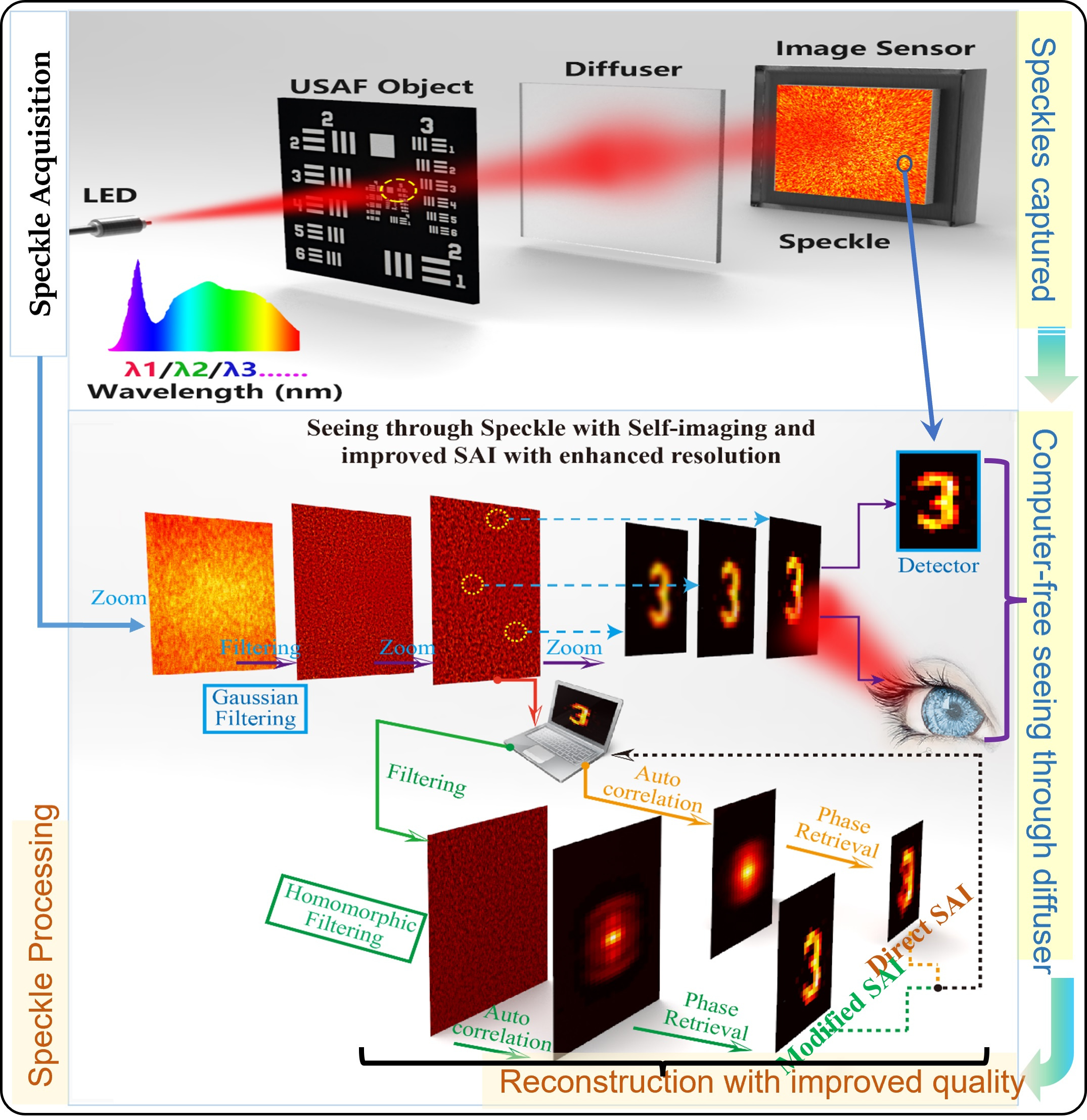
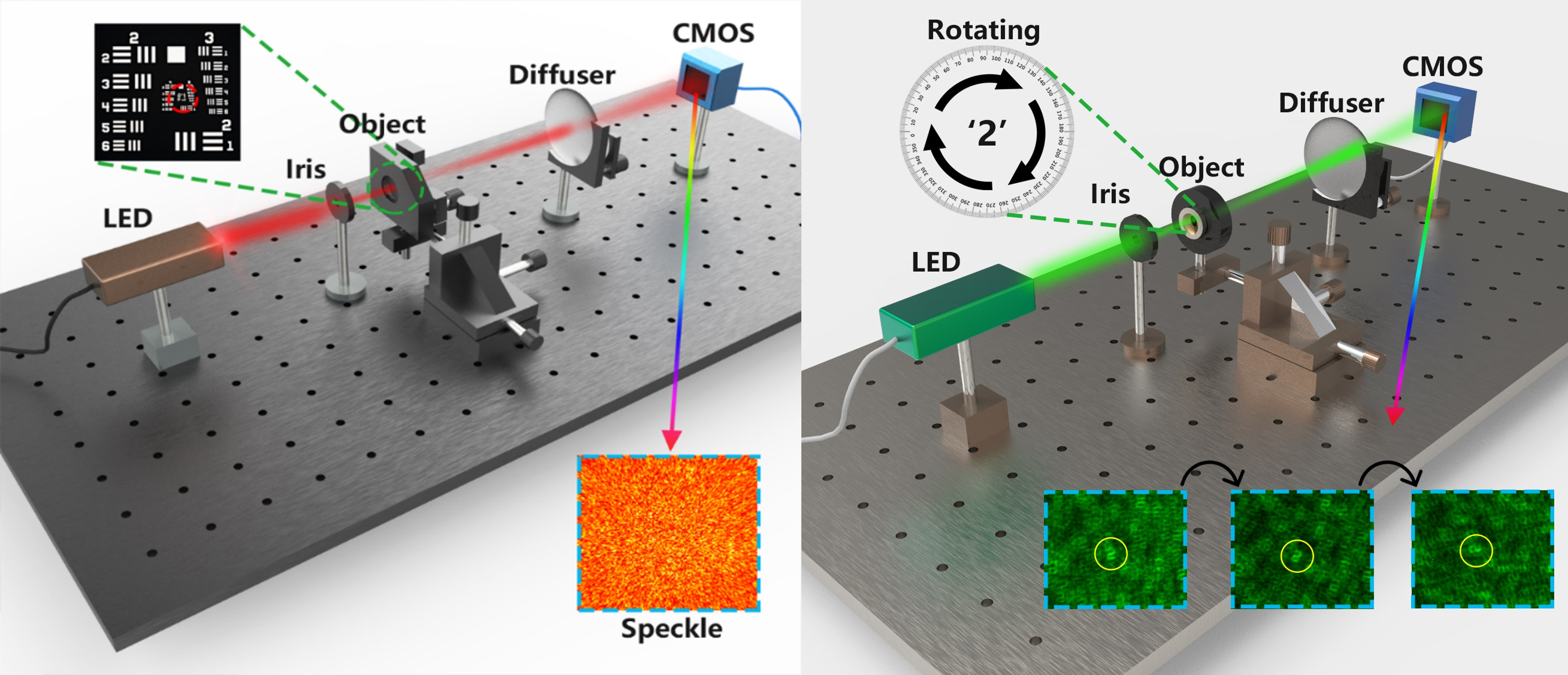
In this research, Prof. J. T. Liu, in collaboration with Prof. Q. Q. Gan leader of the SuPER Lab at KAUST, has developed a novel strategy for real-time clearer imaging through scattering diffuser, under narrow-band laser, and broadband white light, for still objects, moving targets, and even multitargets [2]. photoniX
-
How to see through chaos?
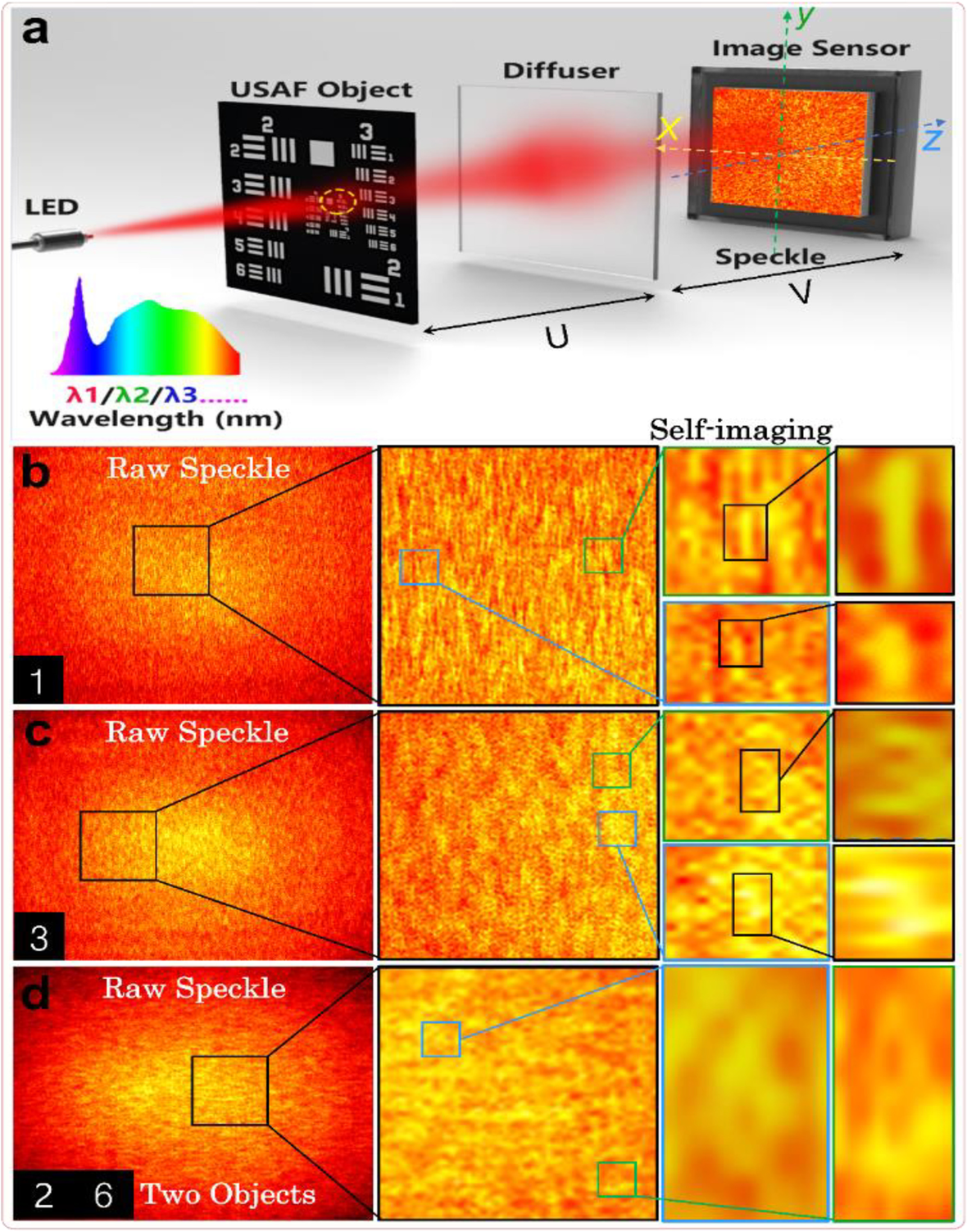
Remarkably, we predicted and discovered general but easily-omitted self-imaging observations in speckle, which is always considered as scrambled patterns. From the physical view, the generation of speckle and its statistics features are revisited and revealed. Remarkably, new diffuser-medium imaging model is proposed: according to previous studies, self-imaging is predicted as impossible. From the applicational point of view, for the first time, directly seeing through random diffusers with the naked eye and real-time video imaging of multitargets are demonstrated. - See the 'unseen', clearer, and beyond
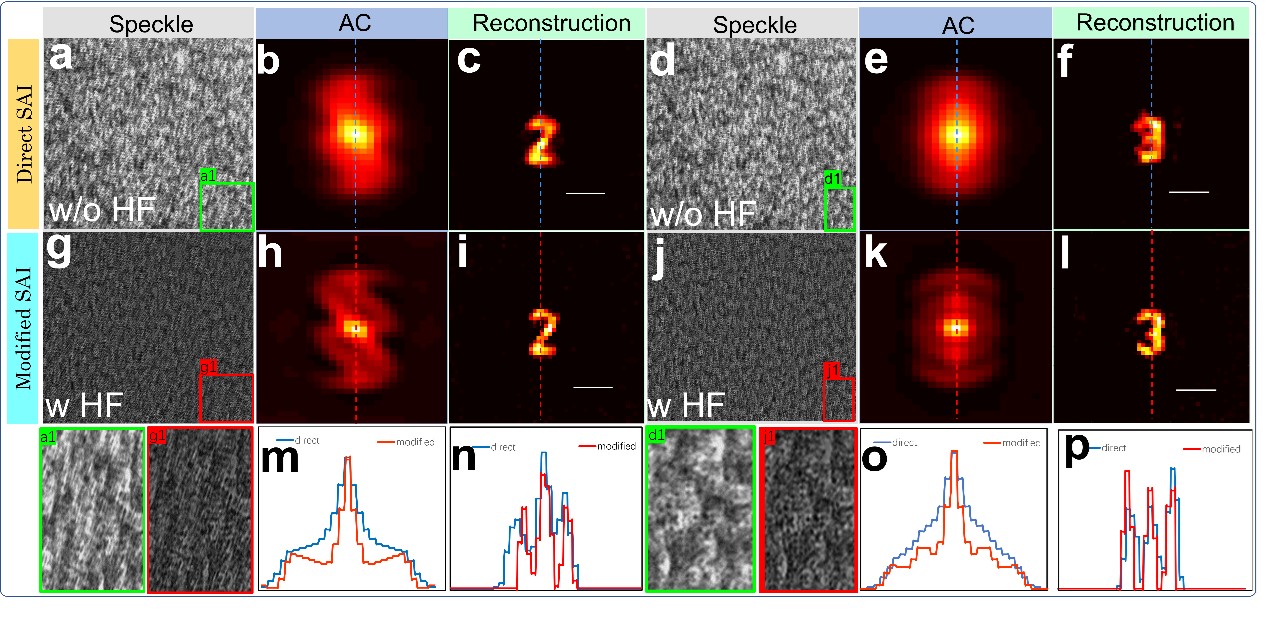
The results unveiled a counterintuitive general phenomenon, which leads to further new understanding and strategy of utilizing speckles. We have developed a novel strategy for directly obtaining a clearer image from a single shot of the speckle image, without the need for time-consuming image acquisition, set-up calibration, and computational reconstruction. Strategy of calibration-free, reconstruction-free, real-time video-imaging of static and moving objects with exact orientation information was achieved. The experimentally demonstrated result in this research further enlightens the modified algorithm of improved reconstruction beyond the diffraction-limit.
The research shed light on new avenues for imaging through diffusive media. Moreover, with the active wavefront control of incident light with feedbacked and guided of speckle [3], seeing and information transmission through volume-diffusive-media, such as multimode-fiber, dynamic scattering medium are thrilling adventures in this field [4]. More fascinating emerging practical innovations are expected to light the way to a brighter and broader future together.
- References
[1] O. Katz, P. Heidmann, M. Fink, and S. Gigan, "Non-invasive single-shot imaging through scattering layers and around corners via speckle correlations," Nature Photonics 8, 784-790 (2014).
[2] J. Liu, W. Yang, G. Song, and Q. Gan, "Directly and instantly seeing through random diffusers by self-imaging in scattering speckles," PhotoniX 4, 1 (2023).
[3] O. Haim, J. Boger-Lombard, and O. Katz, "Image-guided computational holographic wavefront shaping," Nature Photonics (2024).
[4] H. Liu, F. Wang, Y. Jin, X. Ma, S. Li, Y. Bian, and G. Situ, "Learning-based real-time imaging through dynamic scattering media," Light: Science & Applications 13, 194 (2024).

Theoretical, and computational Nanophotonics; Computional Optical, and imaging; Dynamic meta-photonics devices; Extreme plenoptic Information Perception;Ongoing collaborations with several groups;
Follow the Topic
-
PhotoniX
PhotoniX aims to present brave endeavors in promoting X-disciplinary research, latest progress of engineering applications and breakthroughs in scientific discoveries, all enabled by photonics. Original scientific letters, articles, reviews, and technology progress reports are equally welcome.

Related Collections
With Collections, you can get published faster and increase your visibility.
Photonics X Metaverse
Metaverse is a comprehensive concept because it is not a single technology, but an expansive, interconnected framework composed of multiple disciplines. Therefore, to fully realize the metaverse, it is necessary to integrate expertise from traditionally siloed fields. Photonics, among them, is acting as a powerful catalyst, driving waves of innovation across all layers of the metaverse hardware ecosystem. This special Issue aims to highlight the latest breakthroughs and insights at the intersection of metaverse and photonics and to foster continuous, cross-disciplinary dialogue and collaboration.
Scope:
Topic 1: Photonics-powered near-eye displays (magnifiers, birdbaths, waveguides, etc.)
Topic 2: Photonics-powered microdisplays (Micro LED, Micro OLED, LCoS, DMD, laser, etc.)
Topic 3: Photonics-powered three-dimensional displays (holography, light field, etc.)
Topic 4: Nanophotonics-powered lenses (freeform lenses, Fresnel lenses, pancake lenses, metalenses, contact lenses, etc.)
Topic 5: Biophotonics-powered bionics (bionic eyes, retinal implants, etc.)
Publishing Model: Open Access
Deadline: Dec 31, 2026
Solar Light-Matter Interactions: Energy Regulation, Conversion and Its Interdisciplinary Applications
The interaction between Solar Light and Matter constitutes a core foundational topic, covering interdisciplinary fields such as optics, energy science, materials science, environmental engineering, and biomedicine science. More critically, it serves as a pivotal technological breakthrough to address the pressing global energy crisis and mitigate climate change. Spanning from large-scale solar energy utilization (such as photovoltaic and photothermal conversion) to micro/nano-scale photon manipulation and interfacial energy transfer, research in this field has steadfastly embraced the multiple mission of "decoding the inherent laws governing natural energy exchange and empowering human sustainable development and health security." Driven by the rapid advancement of micro/nanofabrication technologies, metamaterial design, photonics theories, and biosensing technology, human understanding of solar light-matter interactions has evolved beyond traditional macro-phenomenon observation to the precise regulation of mechanisms at the atomic, quantum and biomolecular levels. This paradigm shift has spawned a series of transformative advances, including plasmonic enhancement effects, metamaterial-based spectral selective control, directional interfacial energy transfer and cross-scale photobio regulation—innovations that have opened up entirely new technical pathways for high-efficiency solar energy utilization, radiative cooling, environmental remediation, and related fields. Nevertheless, the field still grapples with numerous critical scientific challenges and technical bottlenecks: the multi-physics coupling mechanisms governing underlying solar radiation and energy transfer at the micro/nano scale remain incompletely elucidated; the large-scale fabrication, long-term stability and biocompatibility of high-efficiency energy conversion devices are insufficient to meet practical application demands; and the depth and breadth of interdisciplinary technological integration require further enhancement. This Special Issue aims to systematically synthesize cutting-edge theoretical achievements and technological breakthroughs in this domain, construct a robust bridge between basic research and engineering applications, and assemble top-tier global researchers to collectively tackle core challenges. By providing academic support for technological innovation in key areas such as high-efficiency solar energy utilization, radiative cooling, environmental governance and life and health, it will contribute to green and low-carbon development under the "dual carbon" goals, which holds significant academic value and profound practical implications.
Scope:
Topic 1: Fundamental physical and chemical mechanisms underlying solar light-matter interactions
Topic 2: Design, fabrication, and solar radiation regulation performance of micro/nanostructures (e.g., metamaterials, plasmonic materials, porous materials)
Topic 3: High-efficiency solar photothermal/photovoltaic conversion devices and systems
Topic 4: Daytime radiative cooling materials, devices, and their engineering applications
Topic 5: Applications of solar energy conversion technologies in water treatment, environmental remediation, building energy efficiency, and other related fields
Topic 6: Research on the photothermal dynamic regulation mechanisms between solar light and organisms (including humans and other mammals, etc.)
Publishing Model: Open Access
Deadline: Ongoing