Share your insights: The Collection from the International Conference for the Developmental Biology of the Sea Urchin and Marine Invertebrates in Discover Developmental Biology is now open for submissions
Published in Ecology & Evolution, Cell & Molecular Biology, and Genetics & Genomics



The DBSUMI XXIX Conference Collection: Selected Papers from the International Conference for the Developmental Biology of the Sea Urchin and Marine Invertebrates
Discover Developmental Biology is please to collaborate with the 2026 International Conference for the Developmental Biology of the Sea Urchin and Marine Invertebrates (DBSUMI XXIX, taking place from 7 to 11 October 2026 at the Marine Biological Laboratory) to launch a new Conference Collection, inviting all participants of DBSUMI XXIX to contribute their latest research.
What is this collection about?
For over a century, echinoderm embryos have served as foundational model organisms in developmental biology. Research in echinoderms has yielded critical insights into gene regulatory network architecture, cell lineage specification, and the dynamic morphogenetic processes, driving early embryonic development. Recent transgenic creation of several of the echinoderm species further provide unprecedented research tools for making exciting discoveries in developmental processes.
This Collection invites participants of the DBSUMI XXIX conference to submit your work including but not limited to research, review, methodology, brief report and perspective articles. Topics span from reproduction, cell fate specification, gene regulatory mechanisms, signaling pathways, regeneration, and organogenesis.
The submission deadline will be 30 July 2027.
Championing the conference collection

Dr. Mamiko Yajima is an Associate Professor (Research) in the Division of Biology and Medicine, Department of Molecular Biology, Cell Biology, and Biochemistry at Brown University, USA. Her research focuses on the mechanisms of asymmetric cell division and molecular segregation that contribute to asymmetric cell fate during early embryogenesis, using sea urchin embryos as a major model system. Further interests include extending the biological findings through computational analysis and mathematical simulations. Dr. Yajima will serve as Lead Guest Editor for this collection.

Prof. Smadar Ben-Tabou de-Leon obtained her PhD in theoretical physics from the Hebrew University of Jerusalem and later transitioned to developmental and evolutionary biology during postdoctoral research at the Davidson lab at Caltech. She is an Associate Professor and Head of the Department of Marine Biology at the University of Haifa. She is also an Associate Editor for Frontiers in Cell and Developmental Biology and Frontiers in Ecology and Evolution. Her research uses sea urchin embryos to study the biological regulation and evolution of development. Dr. Ben-Tabou de-Leon is one of the co-Guest Editors of this collection.

Dr. Gary Wessel is Professor of Biology at Brown University, experienced teacher and researcher with over 250 peer reviewed publications, former Editor-in-Chief and Editorial Board member to several journals in the area of reproduction and development. Chair and member of several NIH study sections and author of a textbook in the area of reproduction and development (Concepts in Reproduction, pub March 2026). Dr. Wessel will co-lead this collection alongside the other Guest Editors.

Dr. Rossella Annunziata is an evolutionary developmental biologist. She earned her PhD at the Stazione Zoologica Anton Dohrn (SZN, Naples), where she investigated the evolution of gut patterning Gene Regulatory Networks in echinoderms. She subsequently carried out two postdocs: the first at Sorbonne University in Paris, focusing on the evolution of circadian rhythms in diatoms, and the second at SZN, studying the molecular regulation of diatom life cycles. In 2019, she joined SZN as a researcher in the Department of Biology and Evolution of Marine Organisms. Her research uses sea urchin embryos to study the biological regulation and evolution of development. Dr. Annunziata is one of the co-Guest Editors of this collection.
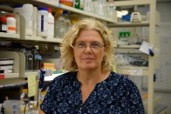
Dr. Veronica Hinman received her PhD from the University of Queensland in 2000 and completed postdoctoral training with Eric Davidson at the California Institute of Technology. She joined the faculty at Carnegie Mellon University in 2006, where she was Professor of Biological Sciences until 2025. In 2025, she moved to the University of Florida to become Director of the Whitney Laboratory for Marine Bioscience. Dr. Hinman will co-lead this collection alongside the other Guest Editors.
How can I submit my paper?
Visit the Collection page to find out more about this collection and submit your article.
Follow the Topic
-
Discover Developmental Biology
Formerly Development Genes and Evolution, this journal is a fully open access, peer-reviewed journal supporting multidisciplinary research across all fields of biological development relevant to animals, plants and microorganisms.

Related Collections
With Collections, you can get published faster and increase your visibility.
Molecular Control of Cardiac Development and Congenital Heart Disease
This proposed collection will highlight recent advances in understanding the molecular mechanisms that regulate heart development and how their disruption leads to congenital heart disease. We welcome original research, reviews, and perspectives addressing genetic, epigenetic, transcriptional, and signaling pathways that govern cardiac cell specification, morphogenesis, chamber formation, and functional maturation. Particular interest will be given to studies that connect developmental mechanisms with disease pathogenesis, including work using animal models, stem cell systems, human genetics, and multi-omics approaches. By bringing together studies across basic and translational developmental biology, this collection aims to provide new insights into the origins of congenital heart disease and to promote emerging strategies for diagnosis, modeling, and therapeutic intervention.
Keywords: cardiac development, congenital heart disease, transcriptional regulation, epigenetics, cardiogenesis, animal models
Publishing Model: Open Access
Deadline: Jan 29, 2027
Environmental Cues and Plant Developmental Plasticity
Plants have evolved sophisticated regulatory networks to integrate environmental signals (e.g., light, temperature, drought, and nutrient availability) into developmental programs, from seed germination to flowering and senescence. This Collection aims to showcase cutting-edge research on molecular, physiological, and ecological mechanisms underlying plant-environment interactions in development.
Topics include but are not limited to:
- Environmentally regulated plant development across key stages, including germination, meristem function, flowering, and senescence
- Regulatory networks linking environmental signals to developmental decisions, including gene regulation and network modeling
- Epigenetic and chromatin-based regulation of developmental plasticity
We welcome original research papers, reviews, and brief report that advance our understanding of how plants tailor their development to thrive in a changing world. Submissions should highlight rigor and practical implications for agriculture and ecological restoration.
Keywords: environment, plant development, regulatory network, interaction, signal
This Collection supports and amplifies research related to SDG 13.
Publishing Model: Open Access
Deadline: Jan 20, 2027