Shedding New Light on SDGs
Published in Earth & Environment and Sustainability




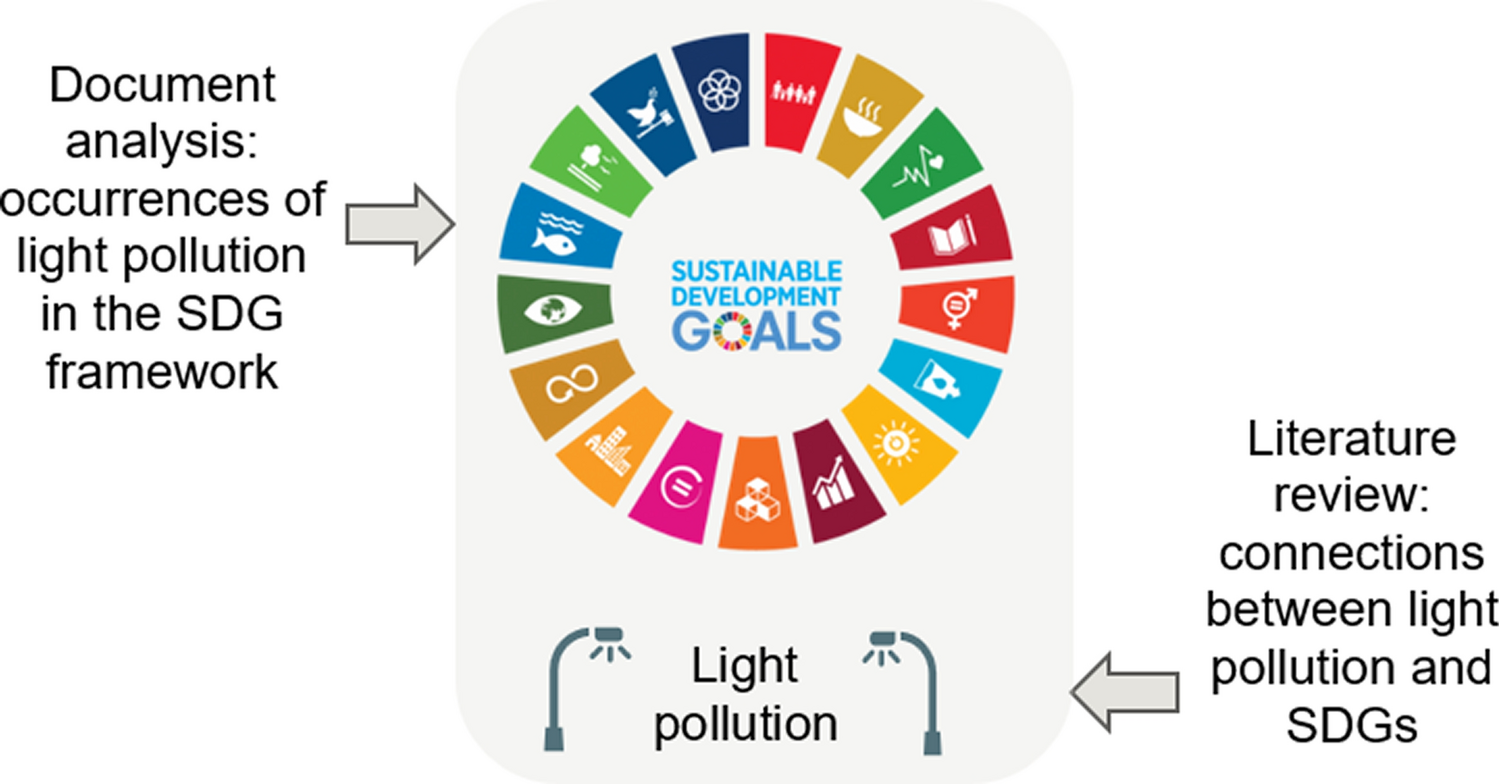

The UN 2030 Agenda and the Sustainable Development Goals (SDGs), agreed upon in 2015 and targeting 2030, provide a key global framework for sustainability. With the midpoint of their implementation already passed, it is clear that more progress is needed. Numerous assessments indicate that the development trajectories for many of the 17 overall goals and 169 more detailed targets defined under the SDG framework are unsatisfactory.
I reviewed the opportunities and risks related to the management of an often-overlooked global environmental problem—light pollution—in the implementation of SDGs. The first task was to examine how light pollution has been considered, or ignored, by the SDG framework. The second task was to assess how successful light pollution abatement would contribute to the fulfilment of the SDGs and how the implementation of SDGs affects light pollution abatement.
Research demonstrates the growing impact of light pollution on human health, well-being, societies, cultures, and ecosystems. However, it turned out that despite its importance, light pollution is absent from the UN 2030 Agenda and the SDGs.
Light pollution is a growing global phenomenon that is often overlooked despite its impacts on the night sky and environment. It can interfere with astronomical observations, harm terrestrial and marine environments, and contribute to higher energy consumption and emissions. It disrupts natural cycles of dark and light, affecting both nocturnal and diurnal species, including humans. Addressing light pollution is crucial for preserving natural darkness, protecting biodiversity, and improving human health and environmental quality.
Responsible, efficient, and sufficient lighting is crucial for sustainable development, but Agenda 2030 and the SDGs fail to explicitly address lighting systems. Nevertheless, the SDGs’ focus on increasing clean energy production, improving energy efficiency, and building well-functioning infrastructure could encourage lighting solutions that prevent or reduce light pollution. However, my review highlighted that aiming for cheap energy together with the adoption of more efficient lighting technologies creates a risk of radically increasing the use of artificial light and increased levels of light pollution.
The review indicated a particular risk that implementing certain SDGs could exacerbate light pollution problems. Three SDGs stand out in this regard. First, SDG 7 aims to increase access to affordable and clean energy. However, this could lead to overly intense outdoor lighting, especially in areas previously lacking electricity. Second, SDG 9 includes a risk of developing infrastructures and industries that involve the installation of more extensive lighting. Third, similar concerns regarding elevated light use, particularly from new street lighting, arise with the implementation of SDG 11 on sustainable cities and communities. Managing these risks demands a comprehensive approach that incorporates regulatory, economic, and technological solutions to abate light pollution.
Many measures to minimize light pollution can be implemented with national and local level regulations, public lighting infrastructures, and intelligent technologies that provide sufficient illumination for specific activities and lighting zones. Key interventions include developing lighting technologies designed to minimize light spill and implementing smart lighting systems equipped with sensors to adjust both timing and brightness based on need. Intelligent lighting can enhance the quality of the outdoor environment and help respond to power shortages, balancing peaks in electricity consumption and resulting price volatility. Importantly, automated light-saving solutions require little to no effort from individuals if they are properly maintained and function as intended.
Alongside top-down approaches, measures strongly dependent on the activity and willingness of individual residents and consumers to use low-intensity lighting and avoid over-lighting are also needed. Motivating such activities requires more widespread public awareness of best illumination practices and light pollution, especially since current consumer marketing often encourages the purchase of stronger and brighter lights for safety and spectacle. Improvement of public awareness is needed. Similarly, policymakers, planning professionals, and lighting experts need to recognize the potential negative effects of lighting to develop regulations and other top-down management strategies aimed at curbing light pollution.
People living in intensively and continuously illuminated urban environments may not even recognize the lack of natural darkness as a problem. On the contrary, natural darkness is often unfamiliar and fear of darkness persists, whereas artificial lighting is associated with personal safety and societal progress. Experiences of natural darkness are framed as extraordinary exceptions – during blackouts or as exotic tourist attractions – rather than a part of the normal and natural living environment. This extinction of experience contributes to the shifting baseline syndrome where, based on their personal experiences, people consider the current situation to be the typical or normal state, even when the system has changed considerably compared to earlier states.
Partly because of the shifting baseline syndrome, socio-technical systems maintaining over-illuminated environments can be highly resilient against management strategies aiming for need-based, careful lighting and the restoration of natural darkness. Light pollution management questions the approach focused on maintaining the resilience of lighting systems. It calls for transformative resilience, where the focus shifts from “bouncing back” after a disturbance to “bouncing forward” to avoid it altogether.
A key opportunity for transformative resilience is provided by SDG 3 with new practices of lighting and non-lighting to support human health, particularly in terms of undisturbed sleep. Within the context of SDG 9 and SDG 11, innovations and infrastructure development should include smart lighting solutions and sustainable practices designed to minimize light while simultaneously supporting the creation of inclusive, safe, and sustainable cities. Especially for urban environments, this requires new types of narratives and practices of “dark design” or “dark infrastructure”. Transformative resilience in relation to environmentally focused SDGs 13–15 means minimizing environmental pressures and restoring terrestrial and aquatic environments towards their naturally nocturnal states.
Fundamentally, fostering transformative resilience within the context of sustainable development involves considering the interconnectedness between different goals. By addressing issues like light pollution during the planning and implementation of development goals, communities can bring in novel perspectives that challenge prevailing assumptions.
(Photo by Viktor Talashuk on Unsplash)

Follow the Topic
-
Discover Sustainability
A multi-disciplinary, open access, community-focussed journal publishing results from across all fields relevant to sustainability research whilst supporting policy developments that address all 17 of the United Nations Sustainable Development Goals (SDGs).

What are SDG Topics?
An introduction to Sustainable Development Goals (SDGs) Topics and their role in highlighting sustainable development research.
Continue reading announcementRelated Collections
With Collections, you can get published faster and increase your visibility.
Food, Societies and Sustainability: Contemporary Concerns around Local Food Production and Consumption
Food goes far beyond nutrition. It reflects sociocultural identities and territorial heritage, consumption dynamics, economic development, public policies, sustainability concerns, food production, distribution and consumption. Understanding food production and food products, practices and strategies offers key insights into both historical traditions and contemporary lifestyles. Around the world, food and drink serve as powerful symbols of identity and attract interest through diverse value chains, economic interests and cultural expressions. On the other hand, traditional and local food systems contribute to cultural heritage, biodiversity conservation and sustainability matters from environmental, sociocultural and economic concerns.
The Collection "Food, societies and sustainability: Contemporary concerns around local food production and consumption" explores how food is locally produced, promoted and protected through public and private initiatives, food-based experiences, media platforms, and sustainable dietary and productive practices. It encourages contributions that examine how food concerns are shaped in contemporary societies, how globalization is affecting local food cultures, emphasizing the role of food as both tangible and intangible cultural heritage. Food preferences, food stereotypes, and attitudes towards food sustainability, analysed through the lenses of generational gaps and gender differences are also welcomed. This Collection seeks original research and case studies using both qualitative and quantitative methods.
Keywords: Food Systems, Food culture, Food Production, Locality, Heritage, Tourism, Gastronomy, Agricultural Biodiversity, Livestock Biodiversity, Food Sustainability, Regenerative Tourism.
This Collection supports and amplifies research related to SDG 2, SDG 3, SDG 4, SDG 5, SDG 10, SDG 12, and SDG 17.
Publishing Model: Open Access
Deadline: Sep 30, 2026
Clean Water and World Sustainability
Water is the lifeblood of our planet, fundamental to all life forms and a cornerstone of human progress. Yet, despite its critical importance, ensuring universal access to clean and safe water remains a pressing global challenge. In the face of complex issues such as climate change, urbanization, and population growth, the need for sustainable water management has never been more urgent. Water security, quality, and accessibility are integral to fulfilling the United Nations' Sustainable Development Goal (SDG) 6, which emphasizes ensuring the availability and sustainable management of water and sanitation for all. However, the path to water sustainability is laden with challenges, ranging from the pollution and contamination of freshwater resources to the degradation of ecosystems that support vital water cycles.
In this context, the proposed research collection, “Clean Water and World Sustainability”, aims to compile pioneering research that addresses the multifaceted issues surrounding clean water, ecosystem health, and global sustainability. This collection seeks to showcase groundbreaking solutions and interdisciplinary approaches that promote sustainable water practices while considering the broader environmental, economic, and social impacts of water use.
We welcome contributions from scholars worldwide that present original research on topics such as: (i) the impact of industrial and agricultural practices on water quality and availability; (ii) advances in water treatment technologies and wastewater management; (iii) the role of freshwater ecosystems in mitigating climate change; (iv) sustainable water governance models and policy frameworks; and (v) the interaction between water scarcity, human health, and socioeconomic development.
This collection provides a unique platform for researchers to disseminate their cutting-edge findings on transformative solutions to the world’s water crisis and contribute to global sustainability efforts. The research presented will not only inform policy decisions but also empower local communities, industry leaders, and environmental advocates to take action in safeguarding and rejuvenating this invaluable resource.
This Collection supports and amplifies research related to: SDG 6 & SDG 11
Keywords: Water Accessibility and Management; Water Security; Water Treatment Technologies; Sustainable Development; Ecosystem Health; Interdisciplinary Approaches; Sewage/Wastewater Reuse
Publishing Model: Open Access
Deadline: Sep 30, 2026



Please sign in or register for FREE
If you are a registered user on Research Communities by Springer Nature, please sign in