Strategic timing of immune evasion in liver cancer
Published in Cancer
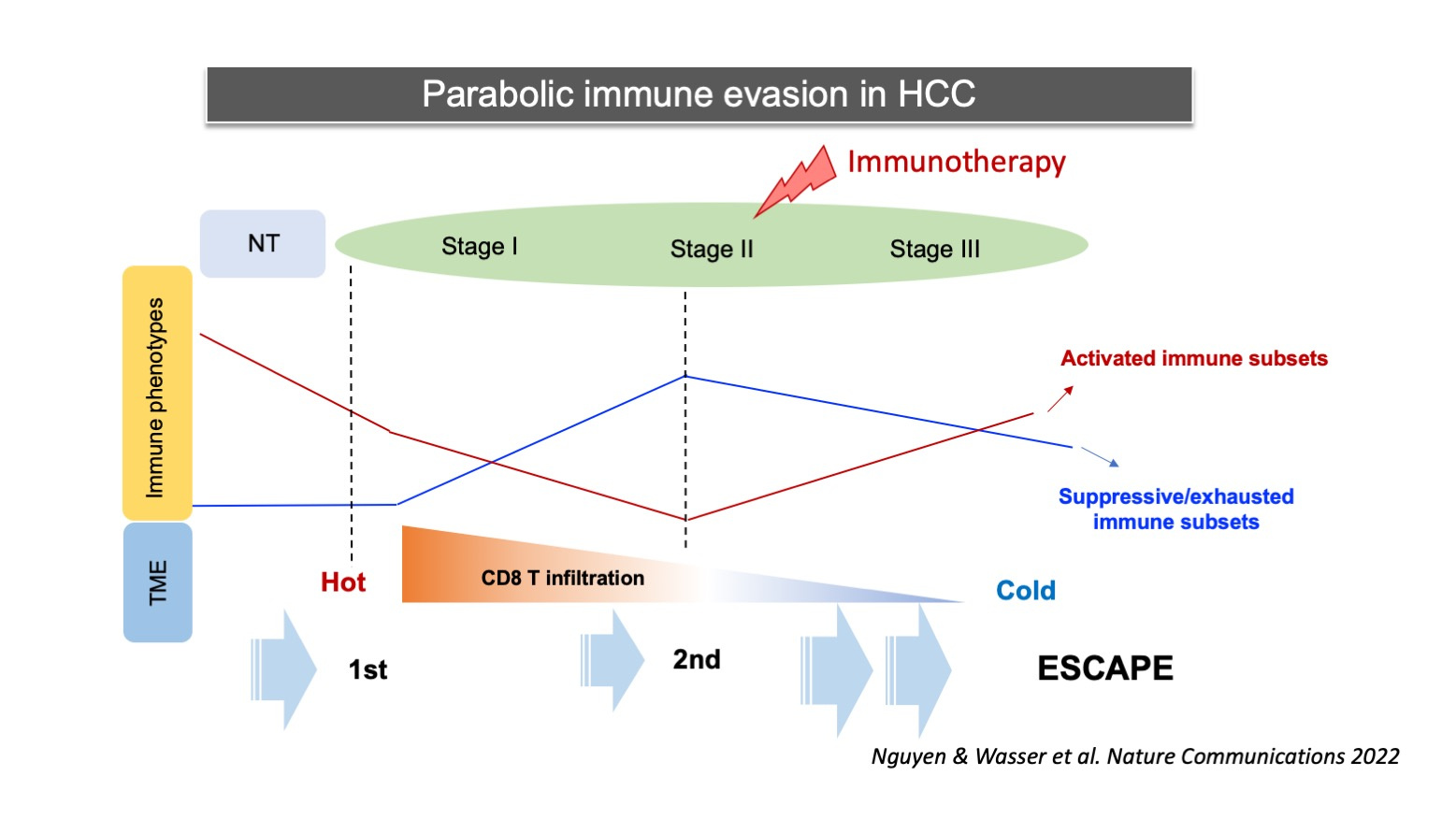


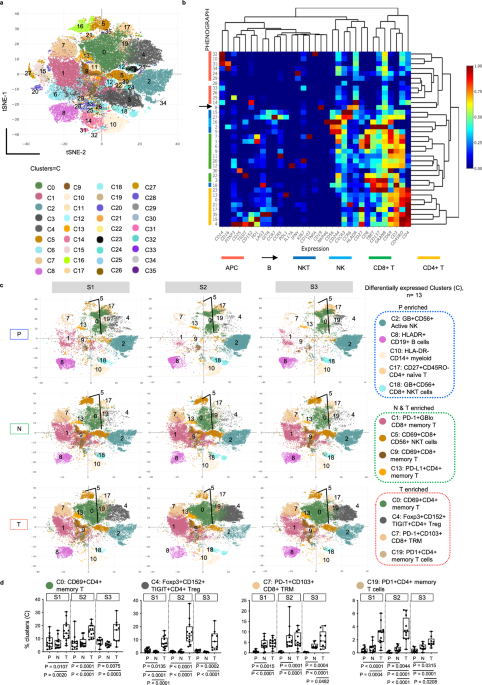

The current dogma suggests that immune evasion occurs either early prior to tumour establishment1,2 or late before metastasis3. The strategic timeline of immune evasion allows tumour cells to escape the immunosurveilance to either establish itself or to spread to other parts of the body. However, it is not known if the process of immune evasion continues on in a progressive manner between the timepoints after tumour is established and before metastasis occurs. In our current study (https://www.nature.com/articles/s41467-022-29122-w), we found that in hepatocellular carcinoma (HCC), immune evasion occurs as a progressive process that peaks at intermediate stage II tumours, following a parabolic pattern (Figure 1).
This immune evasion peak coincides with the higher frequencies of the exhausted and immunosuppressive subsets and reduced frequencies of activated immune subsets particularly in the tumour microenvironment (TME) of stage II HCC tumours (Figure 1). It is also at intermediate stage of tumours, the immune landscape turns “cold”, with progressively reduced numbers of infiltrating CD8+ T cells, rendering tumours refractory to immunosurveilance. This immune evasion is largely shaped by the tumour transcriptomic landscape, which co-evolved with its immune microenvironment. For instance, we observed progressive reduction in the expression of the genes involved in several immune-related pathways as well as upregulation of the CTNNB1-related genes associated to immune exclusion along HCC progression.
The significant benefit of immune checkpoint blockade in advanced HCC4,5 is well established. Our current findings however raise the possibility that immunotherapy, if timed carefully could also be a potentially powerful intervention in intermediate-stage HCC, where the immune exhaustion peaks. We previously described immune intratumoural heterogeneity (immune-ITH) as a hallmark of tumour-immune co-evolution in HCC6. In fact, we did observe the highest level of immune-ITH at intermediate HCC (data not shown), which will be an interesting area for further study.
To conclude, our in-depth analysis of intratumoural immune dynamics during HCC progression has profound implications for our understanding of HCC evolution and will help guide the strategic timing of immunotherapeutic interventions for HCC.
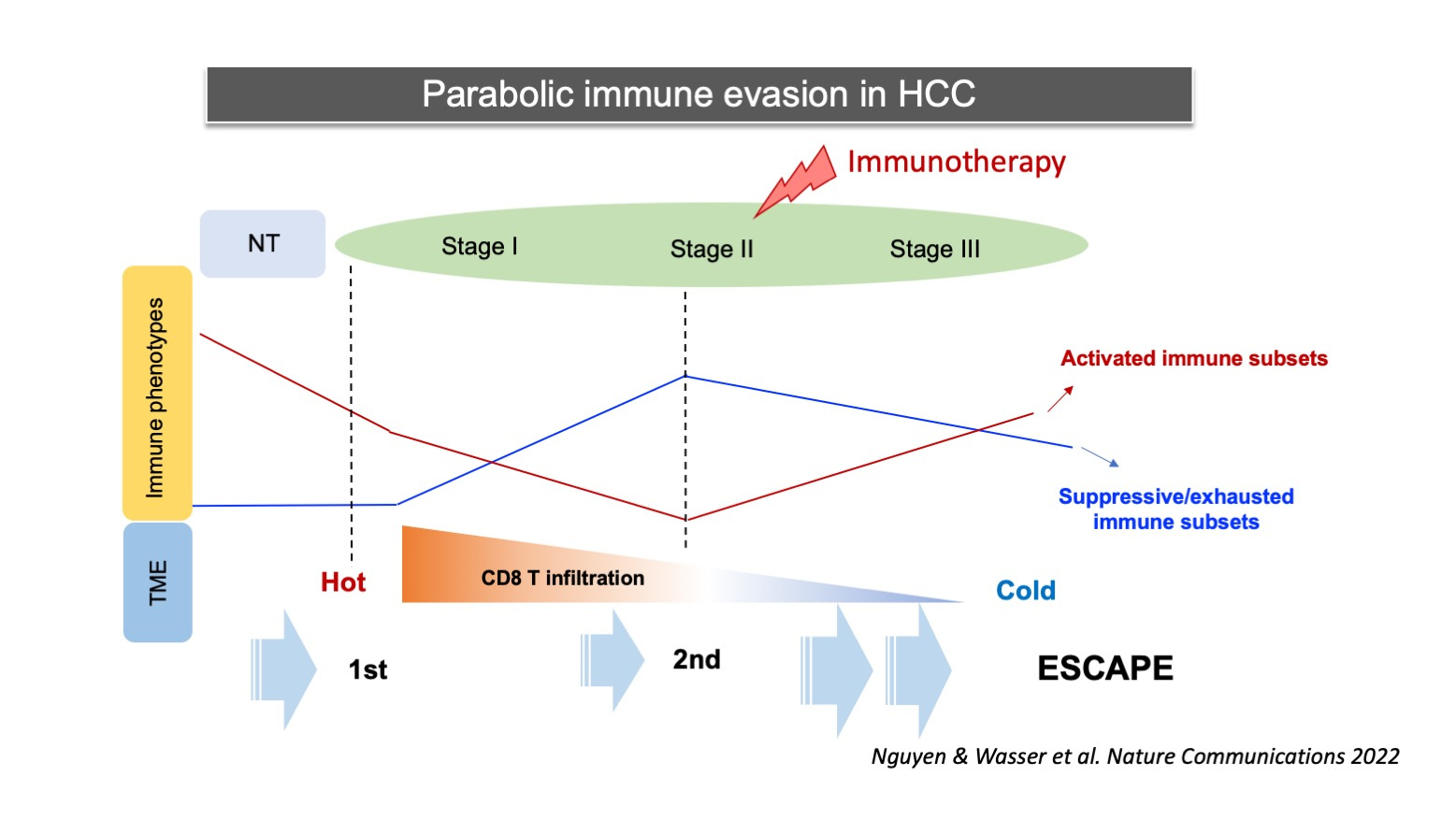
Figure 1: Schematic illustration of immune evasion in HCC. The first phase of immune evasion occurs before HCC establishment and continues on with a second immune evasionto peaking at intermediate stage of HCC before further escape from the immunosurveilance. The exhausted and immunosuppressive immune subsets peaks while activated immune subsets tanks at intermediate stages along with progressive immune exclusion turning the tumours from “Hot” to “Cold”.
References:
1 Mascaux, C. et al. Immune evasion before tumour invasion in early lung squamous carcinogenesis. Nature, doi:10.1038/s41586-019-1330-0 (2019).
2 Rosenthal, R. et al. Neoantigen-directed immune escape in lung cancer evolution. Nature, doi:10.1038/s41586-019-1032-7 (2019).
3 Angelova, M. et al. Evolution of Metastases in Space and Time under Immune Selection. Cell 175, 751-765 e716, doi:10.1016/j.cell.2018.09.018 (2018).
4 Yau, T. et al. Nivolumab (NIVO) + ipilimumab (IPI) combination therapy in patients (pts) with advanced hepatocellular carcinoma (aHCC): Results from CheckMate 040. Journal of Clinical Oncology 37, 4012-4012, doi:10.1200/JCO.2019.37.15_suppl.4012 (2019).
5 Zhu, A. X. et al. Pembrolizumab in patients with advanced hepatocellular carcinoma previously treated with sorafenib (KEYNOTE-224): a non-randomised, open-label phase 2 trial. The Lancet Oncology 19, 940-952, doi:10.1016/S1470-2045(18)30351-6 (2018).
6 Nguyen, P. H. D. et al. Intratumoural immune heterogeneity as a hallmark of tumour evolution and progression in hepatocellular carcinoma. Nat Commun 12, 227, doi:10.1038/s41467-020-20171-7 (2021).

Cancer immunologist specialising in immune microenvironment of hepatocellular carcinoma.
Follow the Topic
-
Nature Communications
An open access, multidisciplinary journal dedicated to publishing high-quality research in all areas of the biological, health, physical, chemical and Earth sciences.

Related Collections
With Collections, you can get published faster and increase your visibility.
Women's Health
Publishing Model: Hybrid
Deadline: Ongoing
Tumor Microenvironment Crosstalk and Therapeutic Implications
Publishing Model: Hybrid
Deadline: Nov 02, 2026