Systematic review and meta‑analysis of acaricidal properties of plant derived products against Ixodid ticks population

Like

Share this post

Choose a social network to share with, or copy the URL to share elsewhere

This is a representation of how your post may appear on social media. The actual post will vary between social networks

Explore the Research

SpringerLink
SpringerLink SpringerLink

Systematic review and meta-analysis of acaricidal properties of plant derived products against Ixodid ticks population - Discover Applied Sciences

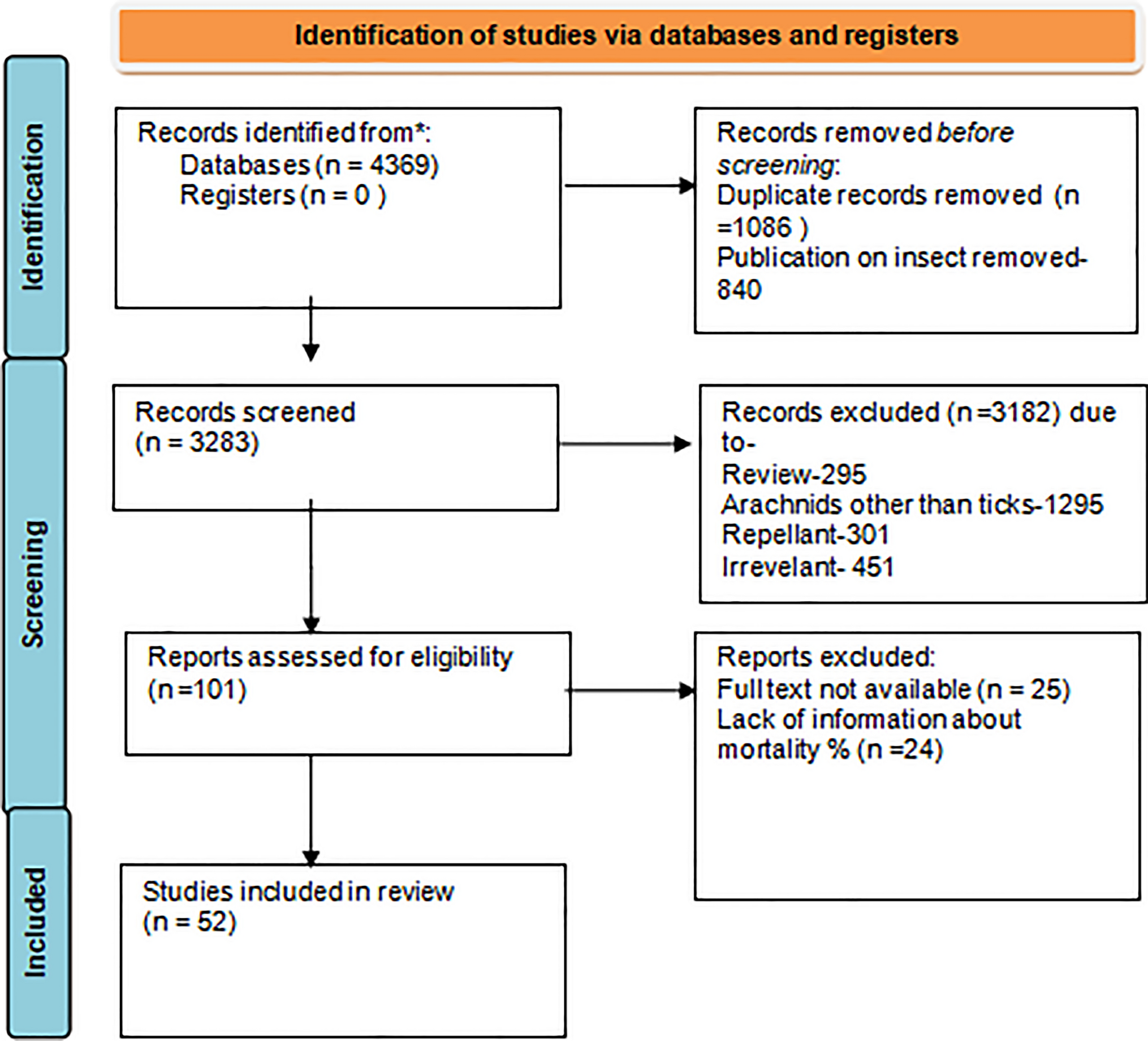
Application of plant extracts and plant-based formulations is one of the sustainable methods for the management of resistant ticks and thus managing the tick-borne diseases. In the present study, we comprehensively analyzed the research papers based on the acaricidal activity of plant extracts. A meta-analysis was conducted with an aim to highlight the potential candidates for further research for the development of ecofriendly and sustainable anti-tick herbal formulations. A total of 52 papers were analyzed up until December 2023, sourced from extensive searches of databases such as PubMed, Scopus, Science Direct and Google Scholar, focusing on the acaricidal activity of various plants against tick species. The plants belonging to Annonaceae and Burseraceae families were found significantly effective against ticks. Amongst the tick species, Rhipicephalus microplus was the highly studied tick species followed by Haemaphysalis bispinosa and Hyalomma dromedarii. The most responsive tick species to plant extracts were Hyalomma dromedarii and Ambylomma cajannense. With respect to the parts of the plants used, leaf (45%) was extensively utilized while the extracts prepared from the resin, stem and fruit peel of the plant showed highest acaricidal activity. The present study highlighted significant variability in the effectiveness of plant extracts depending on the plant species, plant parts used, type of extractant, and the tick species tested. These findings emphasize the need to develop a Standard Operating Protocol (SOP) for evaluating phytocompounds. Future research should prioritize isolating active compounds, elucidating their mechanisms of action, and optimizing formulations to ensure sustainable and effective tick management strategies.


Application of plant extracts and plant-based formulations is one of the sustainable methods for the management
of resistant ticks and thus managing the tick-borne diseases. In the present study, we comprehensively analyzed the
research papers based on the acaricidal activity of plant extracts. A meta-analysis was conducted with an aim to highlight
the potential candidates for further research for the development of ecofriendly and sustainable anti-tick herbal
formulations. A total of 52 papers were analyzed up until December 2023, sourced from extensive searches of databases
such as PubMed, Scopus, Science Direct and Google Scholar, focusing on the acaricidal activity of various plants against
tick species. The plants belonging to Annonaceae and Burseraceae families were found significantly effective against
ticks. Amongst the tick species, Rhipicephalus microplus was the highly studied tick species followed by Haemaphysalis
bispinosa and Hyalomma dromedarii. The most responsive tick species to plant extracts were Hyalomma dromedarii and
Ambylomma cajannense. With respect to the parts of the plants used, leaf (45%) was extensively utilized while the extracts
prepared from the resin, stem and fruit peel of the plant showed highest acaricidal activity. The present study highlighted
significant variability in the effectiveness of plant extracts depending on the plant species, plant parts used, type of
extractant, and the tick species tested. These findings emphasize the need to develop a Standard Operating Protocol
(SOP) for evaluating phytocompounds. Future research should prioritize isolating active compounds, elucidating their
mechanisms of action, and optimizing formulations to ensure sustainable and effective tick management strategies.