Teff: The Ancient Grain with a Modern Mission
Published in Chemistry, Sustainability, and Agricultural & Food Science

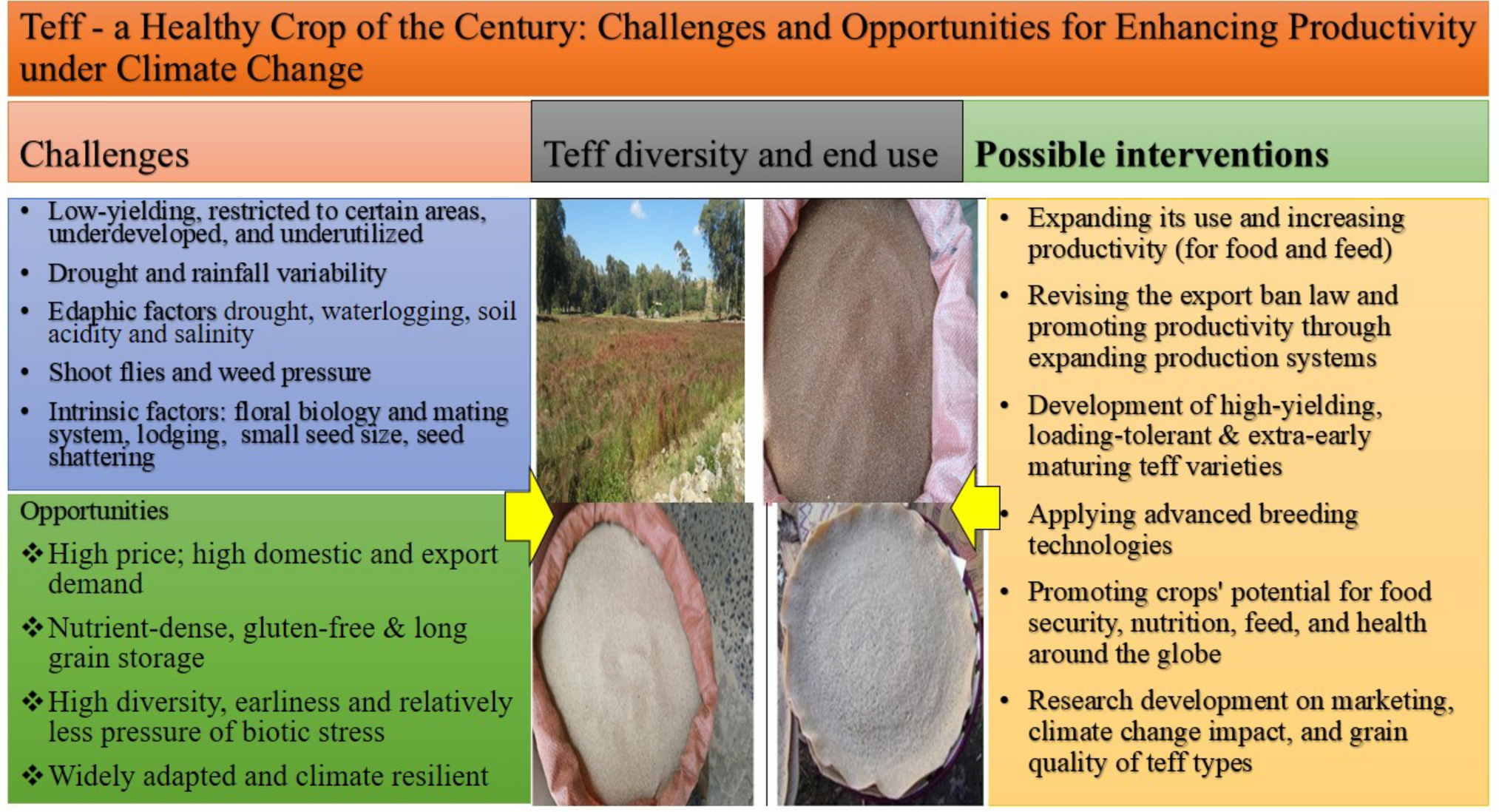

Teff is a true marvel of nature, boasting a unique nutritional profile that sets it apart from conventional cereals. Rich in carbohydrates, unsaturated fatty acids, minerals, and phytochemicals, teff is a veritable "superfood" that can play a crucial role in addressing global challenges related to food security, nutrition, and health. Beyond its exceptional nutritional value, teff is also a testament to the resilience of nature. Adapted to thrive in the harsh environmental conditions of Ethiopia, teff exhibits remarkable tolerance to drought, waterlogging, and other abiotic stresses. This climate-smart property makes teff an invaluable asset in the face of the ever-increasing challenges posed by climate change. Yet, despite these remarkable attributes, teff's productivity remains alarmingly low, with an average yield of just 1.76 tons per hectare. This stark contrast between teff's potential and its current performance presents a pressing challenge that demands our collective attention.
Unlocking the barriers to Teff’s productivity: The reasons behind teff's low productivity are complex and multifaceted. Our review has identified several intrinsic and extrinsic factors that have hindered the crop's improvement efforts over the years. Intrinsically, teff faces a unique set of challenges, including its delicate floral biology, susceptibility to lodging, small seed size, and shattering. These inherent complexities have made conventional breeding approaches arduous and time-consuming, limiting the progress in developing high-yielding, climate-resilient teff varieties. Extrinsically, teff is also vulnerable to abiotic stresses such as drought, soil acidity, and waterlogging, which further exacerbate the challenges faced by smallholder farmers. The impact of climate change on teff production has become increasingly evident, underscoring the urgent need for innovative solutions.
A call to Action for Global Researchers: To unlock the full potential of teff and secure its place as a key player in the global food system, we call upon the global research community to join us in a concerted effort to address the existing challenges and capitalize on the opportunities presented by this remarkable crop. We invite you to explore the vast genetic diversity of teff, which holds the key to unlocking new avenues for improvement. By leveraging advanced breeding techniques, such as mutation breeding, TILLING, and gene editing, we can overcome the intrinsic barriers that have long hindered teff's productivity.
Moreover, the integration of omics technologies, including transcriptomics, proteomics, and metabolomics, can provide invaluable insights into the underlying mechanisms governing teff's growth, development, and stress responses. These cutting-edge tools can enable us to develop targeted interventions and tailor-made solutions for enhancing teff's resilience and productivity. Speed breeding and marker-assisted selection also hold immense promise in accelerating the breeding process and delivering climate-resilient, high-yielding teff varieties to smallholder farmers. By harnessing these advanced techniques, we can significantly reduce the time required to develop and deploy improved teff cultivars, thereby addressing the urgent need for food security and sustainable agriculture.
Fostering Global collaboration and Capacity building: To truly unlock the potential of teff, we must also invest in strengthening the research infrastructure and building the necessary capacity within the global research community. This includes enhancing access to comprehensive data on teff's genetic resources, improving the quality and completeness of the existing genome information, and fostering collaborative networks that transcend geographical boundaries. By working together, we can leverage the expertise and resources of researchers from diverse backgrounds, combining our knowledge and skills to tackle the complex challenges facing teff. This collaborative approach will not only accelerate the pace of innovation but also ensure that the benefits of our research reach the smallholder farmers and communities who rely on teff as a staple crop.
A future bright with Teff’s Potential: as we embark on this journey of teff's transformation, we are filled with a sense of optimism and determination. By addressing the existing barriers and capitalizing on the crop's remarkable attributes, we can unlock a future where teff becomes a global powerhouse – nourishing people, supporting livelihoods, and contributing to a more resilient and sustainable food system of the globe. We invite you, the esteemed members of the global research community, to join us in this endeavor. Together, let us unravel the untold story of teff and unleash its full potential, paving the way for a more food-secure, nutritious, and climate-resilient future, to ensure that the legacy of teff shines brightly for generations to come globally.
Follow the Topic
-
Discover Agriculture
This journal covers basic science and applied research relating to the agricultural sector in areas such as crop and soil sciences, environmental science, and advances in relevant technologies.

What are SDG Topics?
An introduction to Sustainable Development Goals (SDGs) Topics and their role in highlighting sustainable development research.
Continue reading announcementRelated Collections
With Collections, you can get published faster and increase your visibility.
Resilient Food Systems: Underutilized Crops, Improved Agricultural Practices, and Policy Levers for Food Security
The FAO's The State of Food Security and Nutrition in the World (SOFI) 2025 report indicates that approximately 2.3 billion people worldwide experienced moderate or severe food insecurity in 2024 – an increase of 335 million since 2019 (nearly 28% of the global population). This escalating crisis demands resilient and diversified food systems, as traditional agriculture faces pressures from climate change, land degradation, and volatile markets, disproportionately impacting vulnerable populations.
This research area focuses on enhancing food security by strategically integrating underutilized crops (teff, fonio, bambara groundnut, etc.), improved agricultural practices, and supportive policies. Underutilized crops offer a significant, untapped resource for diversifying food production and improving nutrition, as they are often nutrient-rich and well-adapted to local environments. Sustainable practices like agroforestry and climate-smart agriculture are crucial for resource efficiency and environmental resilience.
However, these advancements are insufficient without effective policy levers, particularly regarding land tenure security and market access. Policies supporting agricultural extension and R&D are also vital. This Collection aims to identify pathways to resilient, equitable, and sustainable food systems by exploring the interplay between underutilized crops, improved agricultural practices, and policy interventions.
The Collection addresses food insecurity exacerbated by climate change, biodiversity loss, and staple crop reliance. We explore solutions through: underutilized crops as climate-resilient alternatives; improved practices like agroecology for sustainable productivity; and policy levers to promote adoption. By integrating these, we can build resilient and diverse food systems ensuring food security and environmental sustainability.
This Collection explores pathways toward resilient food systems through underutilized crops, innovative agricultural practices, and effective policy frameworks. This Collection invite contributions addressing:
• Nutritional Composition & Bioaccessibility: Analyzing macro-and micronutrient content, bioavailability, and processing impacts on nutritional value in underutilized crops.
• Genetic Improvement & Breeding: Developing improved, climate-resilient varieties with enhanced yield and nutrition through breeding and genetic analysis.
• Optimizing Agronomic Practices: Enhancing productivity and sustainability in underutilized crop cultivation via efficient irrigation, soil management, nutrient use, and pest/disease control.
• Climate-Resilient Farming & Diversification: Evaluating climate-smart practices and diversified systems using underutilized crops to mitigate climate change impacts.
• Postharvest Handling & Value Addition: Investigating innovative technologies to reduce food loss, extend shelf life, and create value-added products from underutilized crops.
• Market Development & Consumer Acceptance: Researching consumer preferences and effective strategies to integrate underutilized crops into diverse diets and markets.
• Policy & Regulatory Frameworks: Analyzing policies (subsidies, incentives, labeling) to support the adoption, production, and commercialization of underutilized crops.
• Land Governance & Resource Rights: Examining land tenure security, resource rights, and equitable access for smallholders involved in underutilized crop cultivation.
• Socioeconomic Impacts: Assessing impacts on income, livelihoods, food security, and nutrition for vulnerable populations, with attention to gender and inclusion.
• Traditional Knowledge & Modern Science: Integrating traditional knowledge with modern science for sustainable and resilient systems using underutilized crops.
Keywords: Food Security, Resilient Food Systems, Sustainable Agriculture, Agricultural Policy, Climate Change Adaptation, Underutilized Crops, Livelihoods, Rural Development, indigenous crops
This Collection supports and amplifies research related to SDG 1, SDG 2, SDG 12, and SDG 13.
Publishing Model: Open Access
Deadline: Jan 31, 2027
Innovations in Sustainable Agriculture for Resilient Agroecosystems
Agriculture faces unprecedented challenges due to climate change and its associated impacts, including water scarcity, soil degradation, and the increasing incidence of pests and diseases. These pressures pose significant threats to food security and the stability of agroecosystems, highlighting the urgent need to develop and implement sustainable practices that enhance long-term resilience. This Collection invites contributions that advance the understanding of innovative and sustainable agricultural strategies, including soil and water management, plant breeding, climate-smart technologies, and other approaches that strengthen agroecosystem resilience. Submissions may include experimental research, case studies, and reviews that provide practical solutions for diverse cropping systems.
Keywords: Sustainable Agriculture, Agroecosystem Resilience, Climate Change Adaptation, Climate-smart Agriculture, Sustainable Practices, Innovative Practices
This Collection supports and amplifies research related to SDG 13.
Publishing Model: Open Access
Deadline: Jan 24, 2027


