Ten benefits of having a teaching website
Published in Education




Nearly 20 years ago, when I began my academic career as an assistant professor, I made a big decision: to embrace teaching as a key part of my life as an academic, and to make my teaching materials freely available to anyone who wanted them. In a world that cares about monetizing knowledge, I chose to give away my content. Why? Knowledge is a strange thing - unlike many things, it grows when you give it away!
When I was a PhD student, I was inspired by academics who made their teaching materials publicly available, and I decided to follow their path. I created a website dedicated to teaching (www.teachepi.org) and started posting all my slides, handouts, videos, etc, on this website. On the home page, my website has this note: all the resources in this website can be freely used for educational purposes with due credit. I did not want anyone to write to me asking for permission to use my materials for teaching.
My teaching website is separate from my lab website (https://www.paitbgroup.org/) which focuses on my research, students, and other contributions. Years later, the teaching website is a highly accessed resource, and people from all over the world email me to express their gratitude.
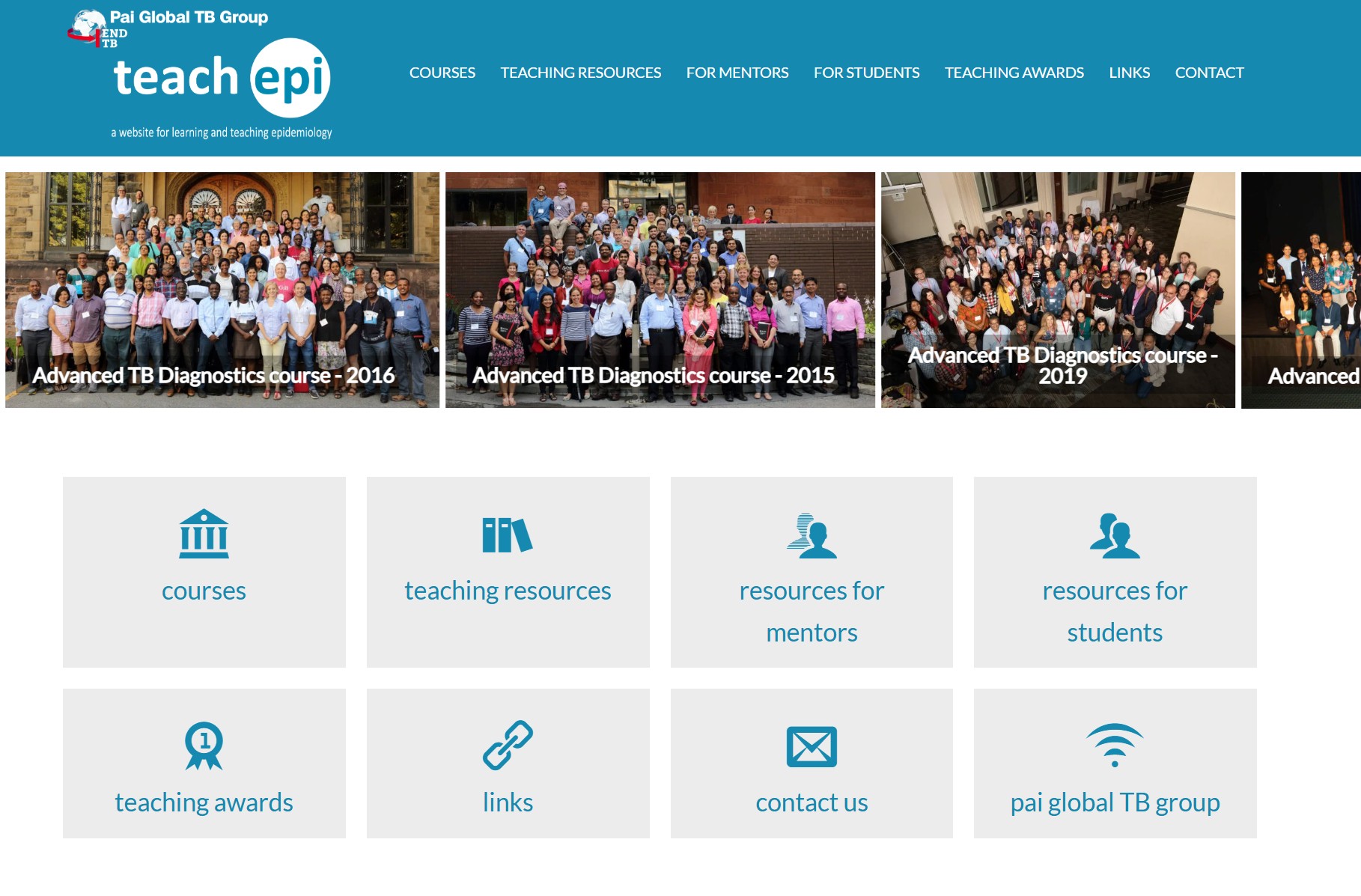
I encourage other young academics to consider creating their own teaching websites for these 10 reasons:
- A teaching website is a clear signal to your department and colleagues that you care about teaching. And teaching is key part of tenure and promotions processes. So, you can brag about your teaching website in your promotion dossier. I did!
- When students see that you have your own teaching website, they see you as a serious teacher. They are more likely to enrol in your courses, contact you for graduate supervision, and be more inclined to want to help you as teaching assistants (TAs). So, it is a good way to recruit your own students and TAs!
- Some professors post draft chapters of their new textbooks on their teaching website, and keep improving the chapters, based on feedback they receive. So, when their books finally get published, they have been battle-tested and improved!
- Good materials from the teaching website will get taken up by teachers around the world, and your slides or graphics will show up in their courses, conferences, etc. A nice way for you to get known in the broader community.
- By developing good teaching content, you will get to collaborate with colleagues who care deeply about pedagogy. For example, I’ve developed teaching case studies and handouts with some wonderful colleagues.
- A teaching website helps you organize all your teaching materials in one single place. So, wherever you are in the world, you are ready to teach!
- When you apply for teaching awards (or get nominated for them), a good teaching website helps you convince the jury that you are passionate about teaching.
- Having a teaching website and making my content freely available prepared me well for the massive online pivot during the Covid-19 pandemic. During the initial years of the pandemic, I taught several, free, online courses on epidemiology for journalists. It connected me with journalists around the world.
- Creating a teaching resource inspired me to do similar free, open access resources. For example, I’ve published an open access book on TB, created a learning network on TB, a World Atlas of BCG vaccination policies and practices, curated lists of great books, films, and podcasts on global health.
- Lastly, every teaching content I’ve developed has made me understand my field better, and made me a better teacher. As Miguel Hernan put it beautifully, “I only understand a problem when I find a way to teach it.”

I am a Professor and a Canada Research Chair in Epidemiology & Global Health at McGill University, Montreal. I serve as the Inaugural Chair of the Department of Global and Public Health at the School of Population and Global Health. URL: http://www.paitbgroup.org/ & https://www.linkedin.com/in/madhukar-pai/





Please sign in or register for FREE
If you are a registered user on Research Communities by Springer Nature, please sign in