The Abda’u Ritual: Ethnographic Communication Study of Tulehu Society in the Moluccas, Indonesia
Published in Social Sciences and Arts & Humanities
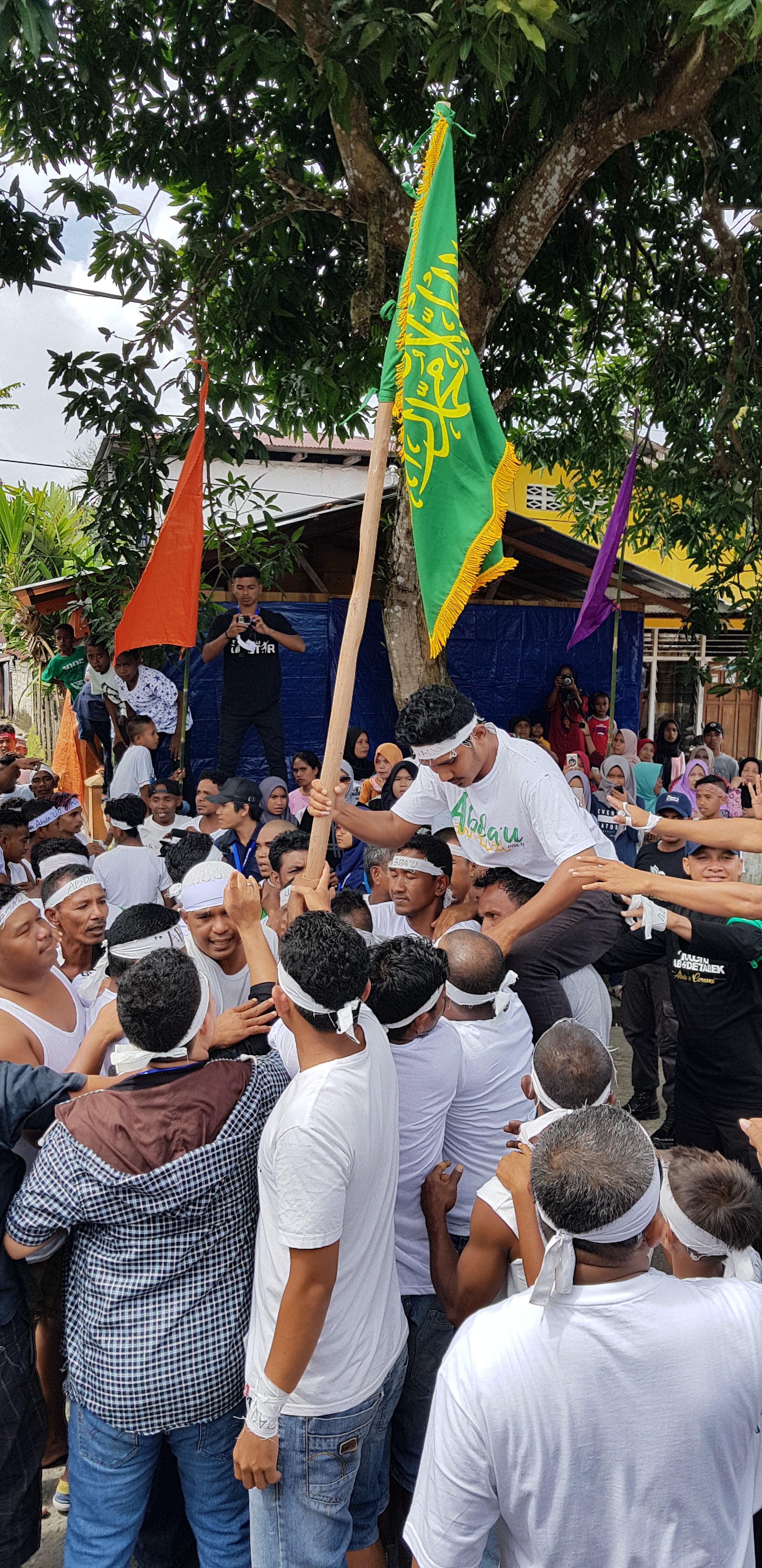
The study focuses on the abda'u ritual, an emerging phenomenon during the Eid al-Adha celebration in the Tulehu society of the Moluccas, Indonesia. The abda'uritual involves the use of three goats as sacrificial animals, which are distributed to three indigenous villages and contested by the participants. The ritual is seen as a form of struggle, defense, and upholding of Islamic teachings, as well as a way to promote social solidarity and the syiar (propagation) of Islam. The study employs an ethnographic communication approach to understand the symbolic meaning and significance of the abda'u ritual within the Tulehu society.
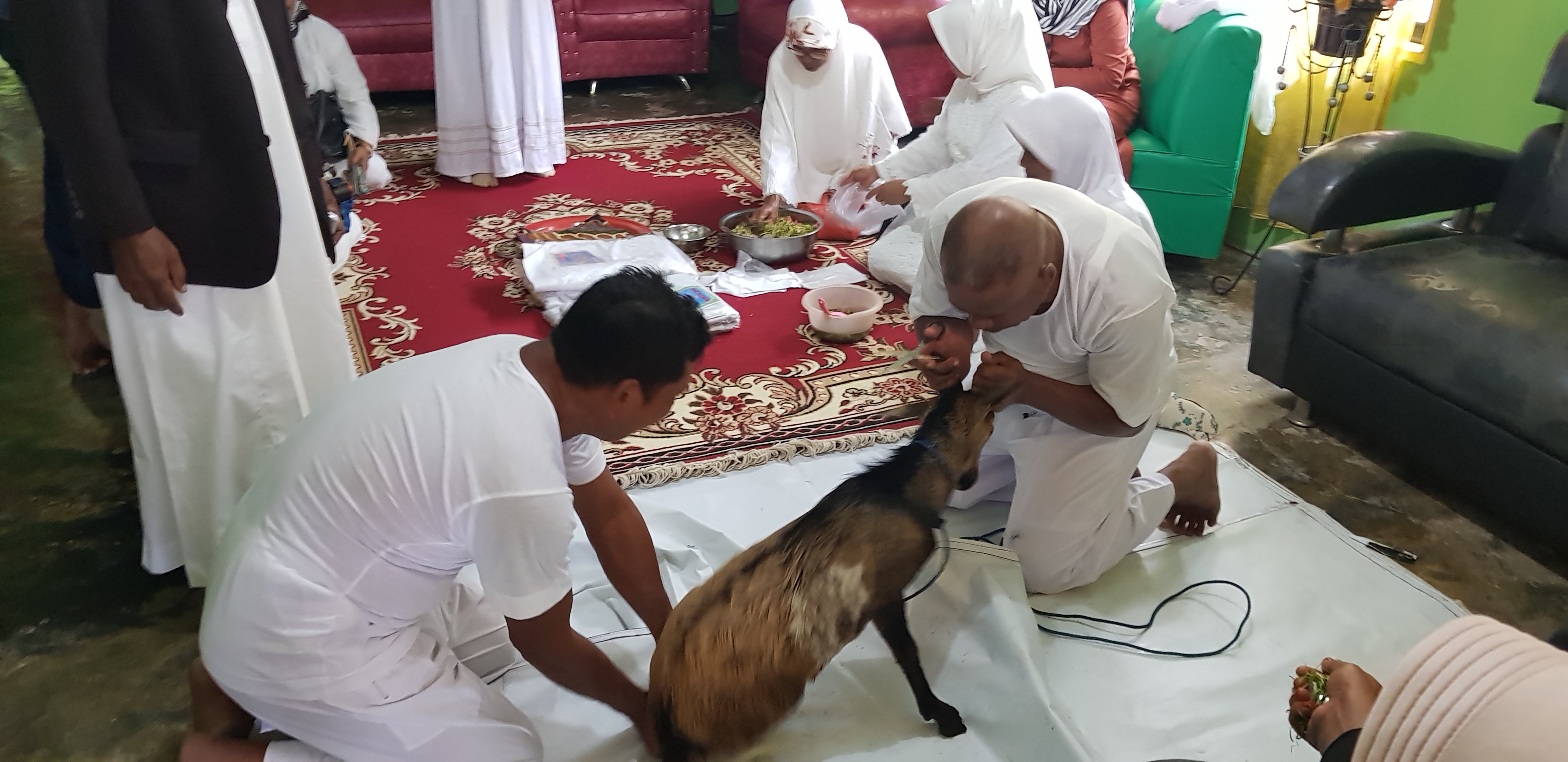
- The abda'u ritual is a communication ritual that reflects the Tulehu society's local traditions, values, and beliefs.
- The ritual involves the sacrifice of animals and the distribution of the meat to three indigenous villages, which is seen as a symbol of devotion to Allah and the upholding of Islamic ideology.
- The ritual promotes social solidarity and the syiar (propagation) of Islam within the Tulehu community.
- The study uses an ethnographic communication approach to understand the symbolic meaning and significance of the abda'u ritual.
- The findings suggest that the abda'u ritual is a way for the Tulehu society to preserve their cultural heritage and religious identity in the face of social change.
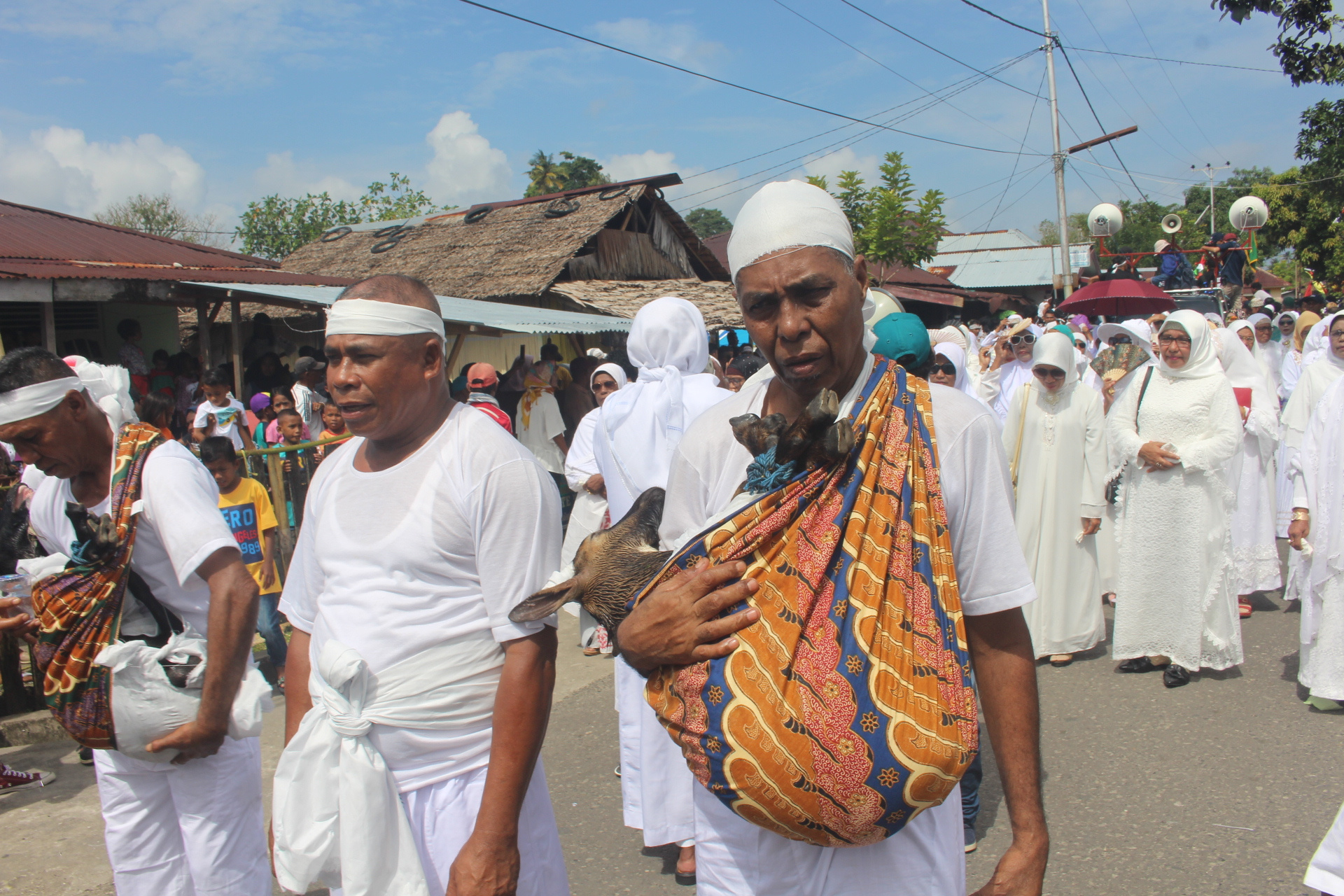
The Tulehu society as the subject of research has constructed the symbol of abda’u, which is the meaning of petition, respect, and solidarity together. The meaning does not occur by itself, but a process of communication ritual in interpreting through the symbolic of purified sacrificial animals, Islamic ideology flag uphold, and the struggle for sacrificial animals at the Eid al-Adha celebration in the tenth day of Dhu al-Hijjah is the considered to be something that has been handed down from previous generations.
The process of ritual symbols is believed and believed to be related to aspects of adat and religion through prayers, upheld flags, social identity, devotion to Allah, self-identity, messages conveyed in a religious tone with the use of the Tulehulanguage with mutual respect and glue to arouse sacrifice, social solidarity among people to uphold the identity of Islamic ideology. The symbolic of the abda’u communication ritual procession in the meaning of collective action, transcendental laden with sacred values, building social solidarity in developing togetherness.
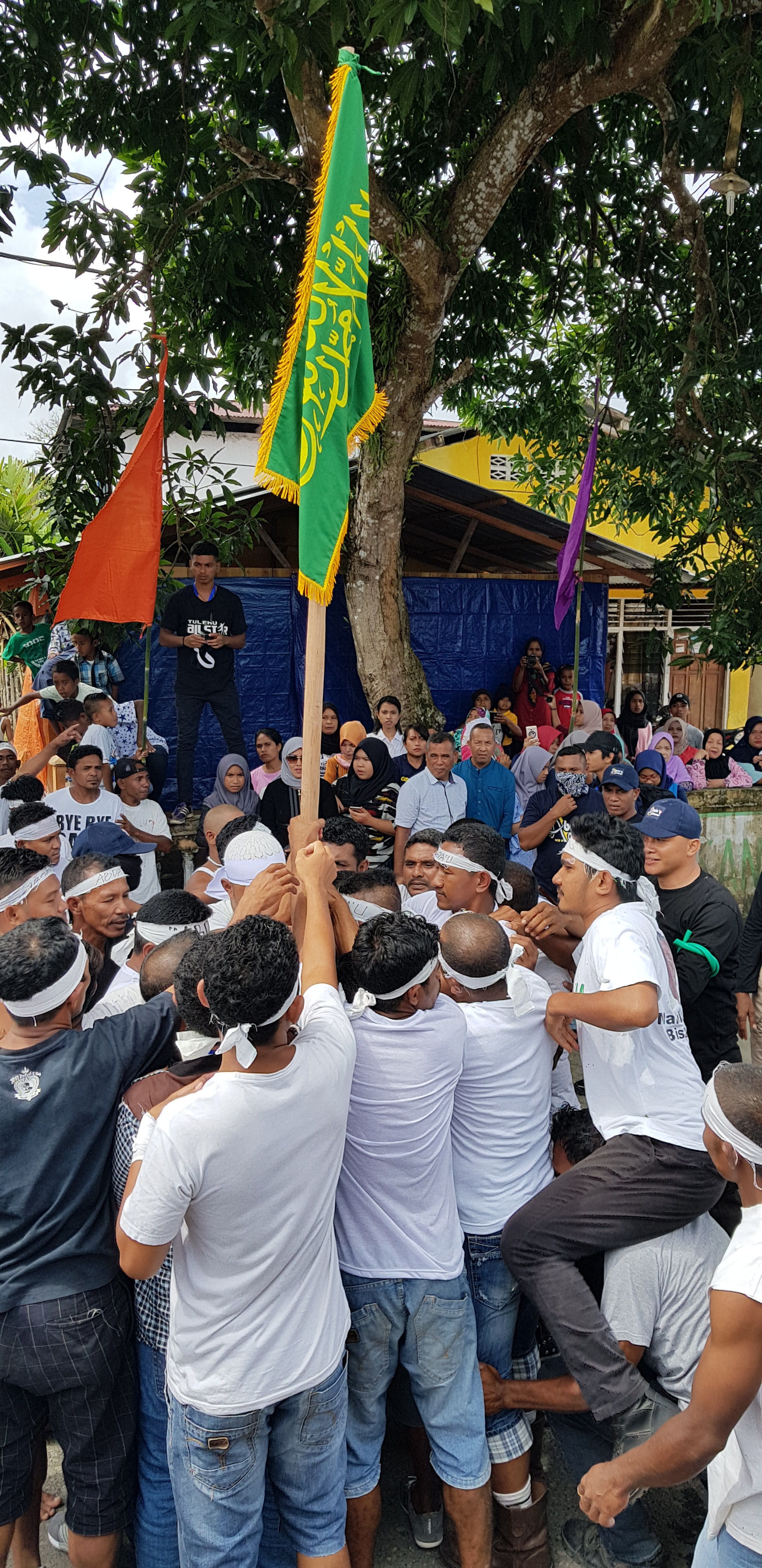
The abda’u ritual procession of carried out by the Tulehu needs to be preserved and introduced to the wider community, for this reason, it is hoped that government intervention in the promotion of cultural tourism, so that it can bring benefits to the Tulehusociety as an indigenous community, especially improving the level of economic prosperity. The society does not only the ritual participate at the Eid al-Adha but also how the society engages in preserving and maintaining the principles of local beliefs and values.
Recommendations from the theoretical context that research that is natural or subjectivity can be reviewed in other aspects by using theoretical communication in accordance with the phenomenon under study. That in a qualitative approach gives its own significance, the abda’u ritual can be studied from other theoretical aspects of communication.
This qualitative research approach can also be an approach to strengthen the values and norms of local wisdom of the people Moluccas. It is hoped that indigenous peoples will continue to preserve the rituals of abda’u and become a characteristic of ritual communication in Moluccas, given the increasing influence of globalization in the digital era. Through this research it is hoped that related parties, especially in the fields of culture and tourism, need to preserve and introduce the abda’u rituals in the world community and/or incorporate them intopatented international culture.

Communication Sciences, Media Studies, Culture Studies, Ritual Communication, Health Communication, and Journalism.