The Adverse Impact of Negative Moral Character on Health and the Improving Role of Spirituality
Published in Biomedical Research and Philosophy & Religion

Introduction
The term “character” originates from the Greek word “charaktêr,” meaning the mark on a coin. Today, character refers to the qualities that distinguish one person from another. Morality involves principles related to one’s own and others’ well-being and rights, while moral character includes both positive and negative behaviors.
Research suggests that moral development begins early in life. The neonatal brain can distinguish distressed voices from neutral sounds, even during sleep. Emotional aspects such as empathy and compassion appear earlier than cognitive components in neonates. Newborns often become distressed when hearing other infants cry and display social smiles that reflect compassion. Early maternal touch also plays a significant role in moral development, as affectionate and non-punitive touch is associated with positive social and moral engagement.
Certain brain regions, including the ventromedial prefrontal cortex, thalamus, and brainstem, may serve as centers for natural morality. Moral foundations are often categorized into five key dimensions: care versus harm, honesty versus deception, loyalty versus betrayal, respect versus insolence, and purity versus degradation.
Spirituality refers to the search for meaning, purpose, interconnectedness, and a relationship with supernatural realities. It reflects an understanding of life beyond material possessions and promotes qualities such as compassion, affection, honesty, patience, tolerance, friendship, and hope. Spiritual well-being includes relationships with oneself, others, the environment, and God.
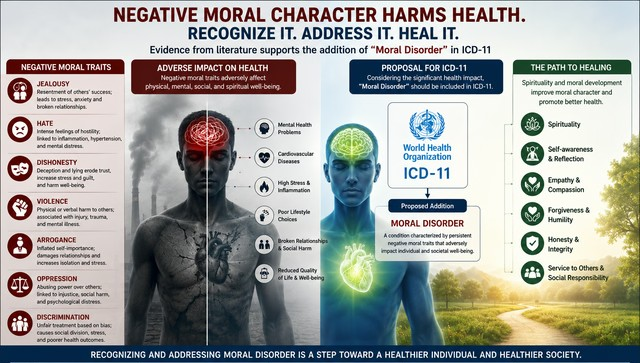
The decline of moral and spiritual values has been considered a major contributor to social and economic challenges. Despite advances in technology, economics, and politics, emotional and moral disorders remain important concerns. Although the ICD-11 includes personality disorders and antisocial behavior, it does not comprehensively address moral disorders or the effects of negative moral character on health, diseases, clinical manifestations, and related influencing factors.
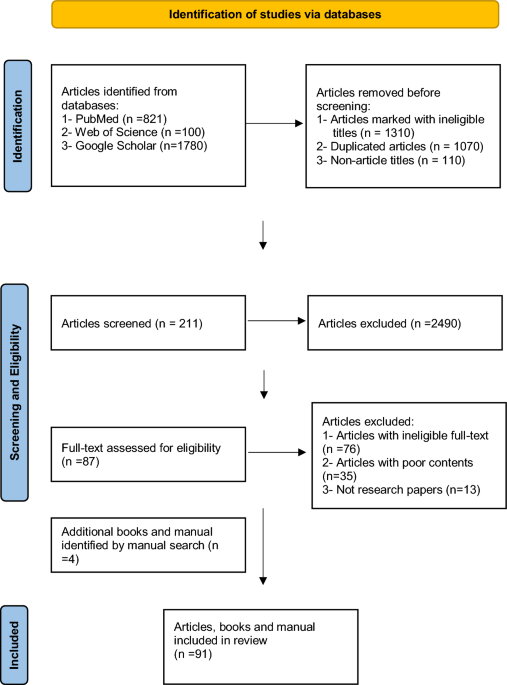
We conducted a literature review in 2024. The primary aim of this literature review was to examine the impact of negative moral character on human health and well-being. The study identified several universally recognized negative moral traits, including jealousy, hatred, dishonesty, violence, arrogance, oppression, and discrimination. It also explored the potential role of spirituality in improving negative moral character. The limited availability of evidence in this area highlights an important scientific gap that requires further investigation. If negative moral character significantly affects health and well-being, it should be recognized as a distinct issue within the International Classification of Diseases. Spirituality may contribute to improving negative moral traits through positive effects on cognitive and emotional personality systems. The findings of this review may assist individuals and organizations in developing policies and strategies to prevent and address negative moral character.
Findings and Conclusion
This narrative literature review demonstrates the significant negative effects of negative moral character traits on human health and well-being. Jealousy, hatred, dishonesty, violence, arrogance, oppression, and discrimination were identified as the most common negative traits. The review suggests that the persistence or recurrence of one or more of these traits should be recognized as a moral disorder, highlighting the need to include moral disorder in the International Classification of Diseases. Increasing awareness about negative moral character, its harmful health effects, and methods of management may encourage individuals and societies to pursue better health and well-being.
The findings also indicate a strong positive relationship between spirituality and morality, both of which contribute to improved physical and mental health, life satisfaction, social relationships, work performance, organizational commitment, and leadership. Therefore, opportunities should be provided in schools, universities, and communities to promote spiritual education and extracurricular activities aimed at reducing negative moral traits.
The review further emphasizes that spirituality is one of the most effective approaches for reducing harmful moral characteristics and replacing them with positive traits. Heart-centered activities and meaningful social interactions can positively influence cognitive and emotional personality systems, suppress negative behaviors, and encourage admirable qualities. Spirituality also strengthens relationships among individuals, families, organizations, and societies, promoting friendship, peace, and social harmony.
Alongside scientific and technological progress, reducing negative moral character is an essential step toward achieving true human well-being. Strengthening positive moral traits is equally important for building a peaceful, healthy, and happy world. Spirituality plays a central role in achieving these goals and fostering unity across communities and societies.
Based on these findings, the article proposes consideration of “moral disorder” within future revisions of the WHO International Classification of Diseases (ICD), while also recognizing spirituality as a potentially important preventive and rehabilitative dimension of health.
Importantly, it is encouraging to see that systematic reviews on this topic are now in progress, reflecting increasing academic attention to this important global issue.
Key Message:
Integrating spirituality, moral development, and character education within schools, universities, and communities may positively influence public health and well-being.
#PublicHealth #Spirituality #MedicalResearch #GlobalHealth #MentalHealth #WHO #ICD11 #HealthResearch #Ethics #PreventiveMedicine
Follow the Topic
-
Journal of Religion and Health
This journal provides a scholarly forum for the discussion of topical themes on both a theoretical and practical level for scholars and professionals of all religious faiths and backgrounds.